 COPPER
Traditional food of Greece: 13 dishes to know
Greek food is built on olive oil, vegetables, pulses, bread, cheese such as feta, and grilled or slow-baked meat, seasoned with oregano, mint, garlic, dill and lemon rather than heat. The most emblematic dishes are moussaka, layered aubergine and lamb under béchamel, souvlaki skewers, the bean soup fasolada, often called the national food, and the village salad horiatiki.
What Greek food is built on
Greek cooking rests on the old Mediterranean triad of olive oil, wheat and wine. Olive oil goes into almost every dish, raw or cooked, and many vegetable stews and baked dishes use it as their main cooking fat. Beans, chickpeas and lentils, fresh vegetables, bread and barley rusks fill the everyday table; lamb, pork, chicken and fish are the main proteins.
Cheese and yogurt matter as much as meat: feta, kasseri, graviera and thick strained yogurt appear at nearly every meal. The seasoning is herbal and bright, with oregano, mint, dill, garlic and plenty of lemon, while the north adds warm spices such as cinnamon, allspice and cloves to meat stews.
Meals are shared. Small plates, or meze, come to the table together and are eaten with bread, often with ouzo, the anise-flavoured spirit. Greek Orthodox fasting periods, when meat and dairy are avoided, explain why so many traditional dishes are made only with vegetables, pulses and olive oil. For the dish most often named as the national dish of Greece, see our dedicated article.
Baked dishes and home cooking
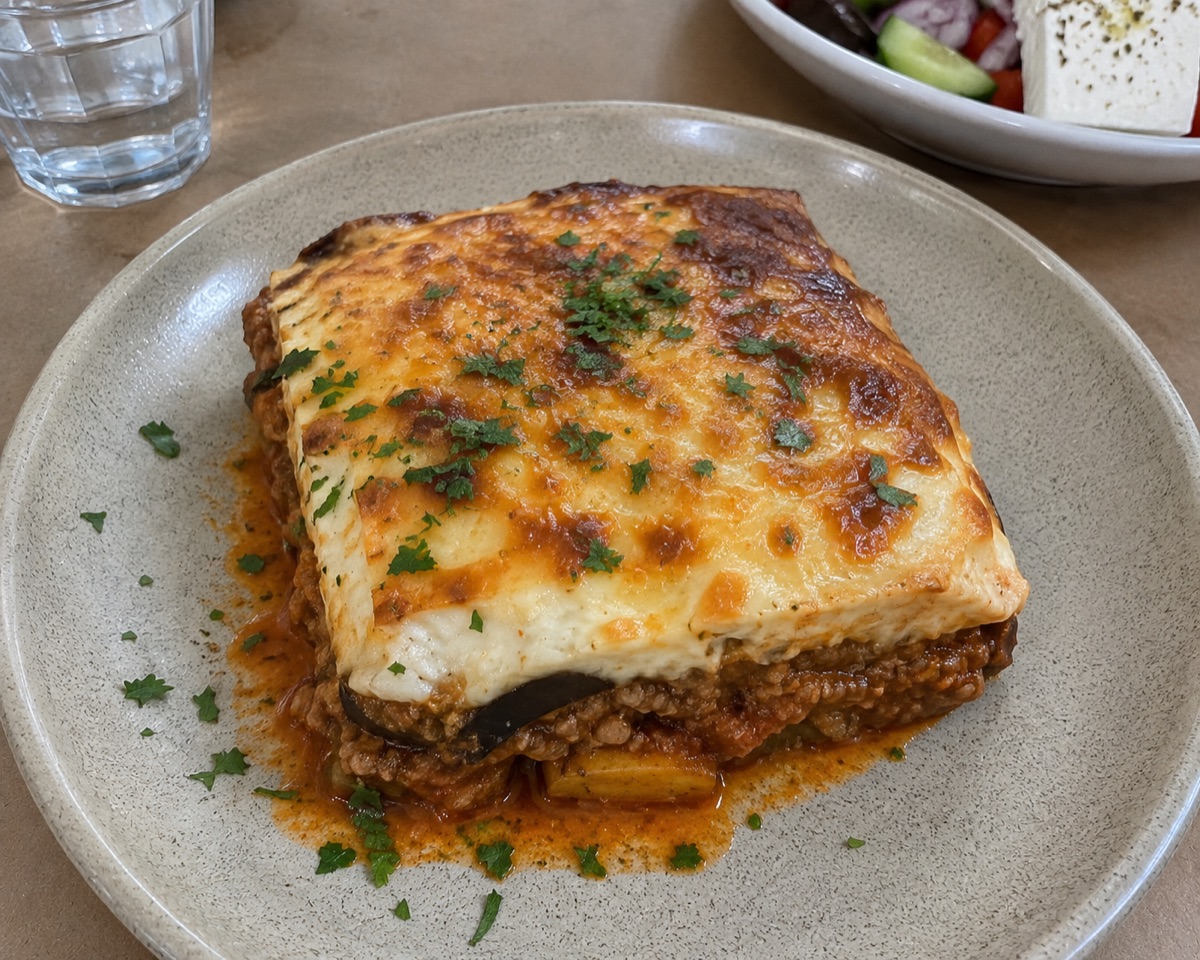
- Moussaka — Fried aubergine slices layered with lamb mince cooked in tomato and cinnamon, under a thick layer of béchamel, then baked. The modern Greek version was fixed in the 1920s by the French-trained chef Nikolaos Tselementes. It is baked in a deep tray and served in squares.
- Pastitsio — Baked pasta from the Ionian Islands: tubular pasta at the bottom, beef or beef-and-pork mince with tomato, cinnamon and cloves in the middle, and béchamel on top. The name comes from the Venetian *pasticcio*, a baked pie. Like moussaka, it owes its béchamel topping to Tselementes.
- Gemista — Tomatoes and bell peppers hollowed out and stuffed with rice, onion, mint, parsley and olive oil, sometimes with minced meat, then baked. It is a summer dish, made when tomatoes and peppers are at their best. Potato wedges are often baked in the same tray.
- Gigantes plaki — Giant white beans baked in an olive oil and tomato sauce with onion, carrot and parsley until the top browns. They are served warm or at room temperature, as a meze or a main course with feta and bread. With no meat or dairy, they are a classic dish for fasting days.
Soups
- Fasolada — A soup of dried white beans, olive oil and vegetables such as carrot, onion and celery, with tomato, thyme and bay leaf. It is often described as the national food of the Greeks. Recipes vary from house to house, and some add meat.
- Avgolemono — Egg and lemon whisked together and stirred into hot broth so it thickens without curdling. As a soup, it is usually chicken broth with rice or orzo; the same mixture is also used as a sauce. The starch from the rice or pasta helps keep the soup smooth.
Grills, pies and street food
- Souvlaki — Small pieces of meat, usually pork in Greece, grilled on skewers. It is eaten straight off the skewer or wrapped in pita with tomato, onion, sauce and fried potatoes. In Athens a single skewer is called a kalamaki.
- Gyros — Meat, normally pork or chicken, seasoned and stacked on a vertical rotisserie, then shaved off in thin slices. It is wrapped in pita with tomato, onion, fries and tzatziki. It became popular fast food in Athens by 1970.
- Spanakopita — A pie of phyllo pastry filled with spinach, feta, spring onion, egg and herbs such as dill. It is sold in bakeries as a large tray pie or individual pastries and is a common breakfast or snack. A Lenten version leaves out the egg and cheese.
Salads and meze
- Horiatiki — The village salad: tomato wedges, cucumber, onion and olives, topped with a whole slab of feta, oregano and olive oil, with no lettuce. It is served unmixed, and the juices left at the bottom are mopped up with bread. It is on almost every table in summer.
- Dakos — A Cretan dish of barley rusk softened with water or olive oil, rubbed with garlic and topped with grated tomato, crumbled feta or mizithra cheese, oregano and olives. It is eaten as a meze or a light meal. The rusk is called paximadi.
- Tzatziki — Strained yogurt mixed with grated cucumber, garlic, olive oil, vinegar or lemon and herbs such as dill or mint. It is served cold as a meze with bread and as the sauce for souvlaki and gyros.
Sweets
Greek desserts lean on honey, nuts, phyllo and syrup, and many are sold as street food.
- Loukoumades — Small balls of yeast dough deep-fried until golden and soaked in honey or syrup, topped with cinnamon and chopped walnuts. They descend from honey-sweetened fried dough described by ancient Greek writers. They are especially popular in the south of Greece and are eaten warm, straight from the fryer.
Regional food and where to go next
Food changes across the mainland and the islands. Crete is known for dakos, rusks, mountain greens and its olive oil; the Ionian Islands, under Venetian rule for centuries, gave Greece pastitsio; northern Greece uses more sweet spices, such as cinnamon, allspice and cloves, in its meat stews. Greek food shares pies, stuffed vegetables and yogurt with its neighbours in the Balkan kitchen; compare it with the traditional food of Turkey and the traditional food of Cyprus.
Moussaka, gigantes plaki and horiatiki all have full recipes in Copper. You will find them, with ingredients and step-by-step methods, on our page about the food of Greece.
The recipes
- Moussaka🇬🇷 Greece · 2 hours and 30 minutes
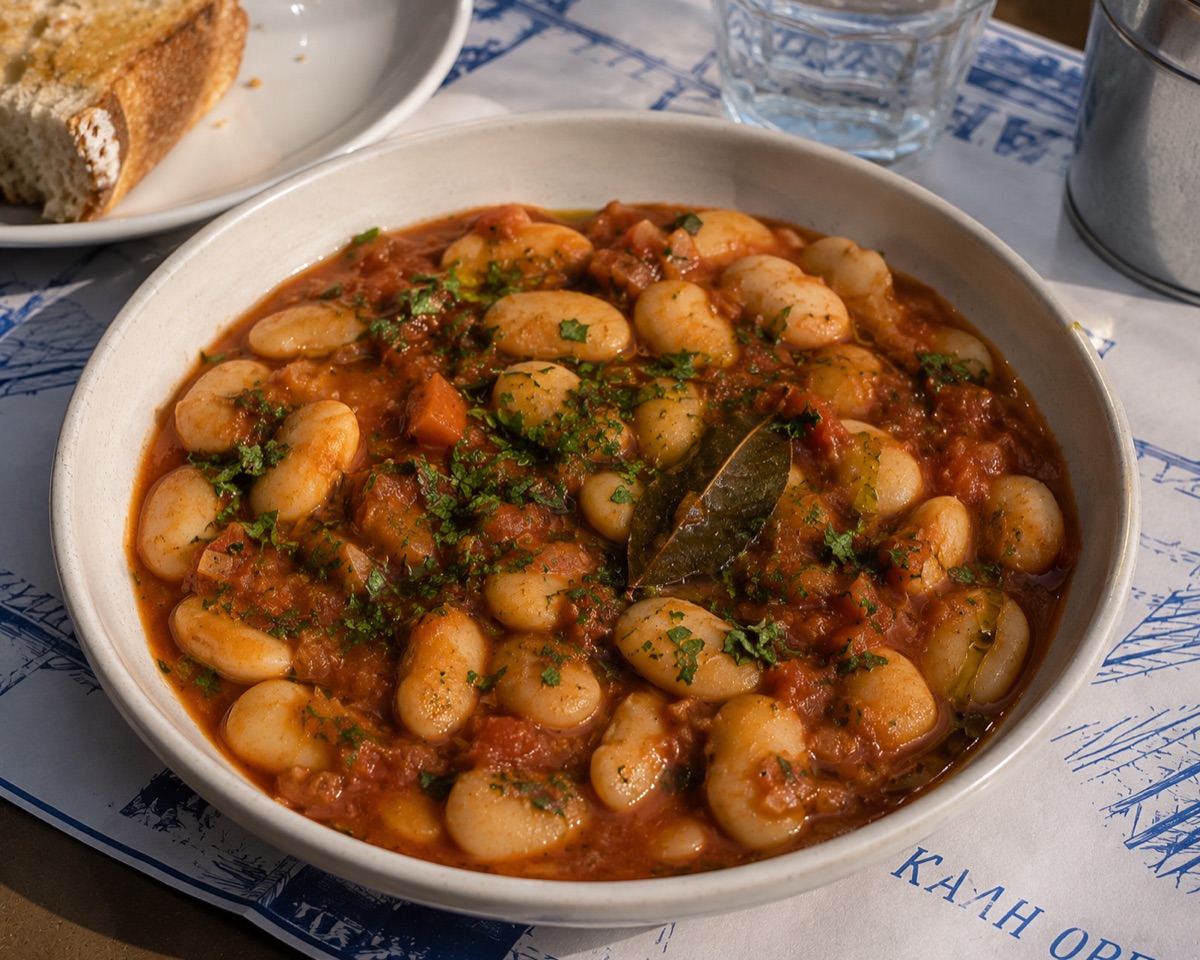 Gigantes plaki🇬🇷 Greece · 10 hours
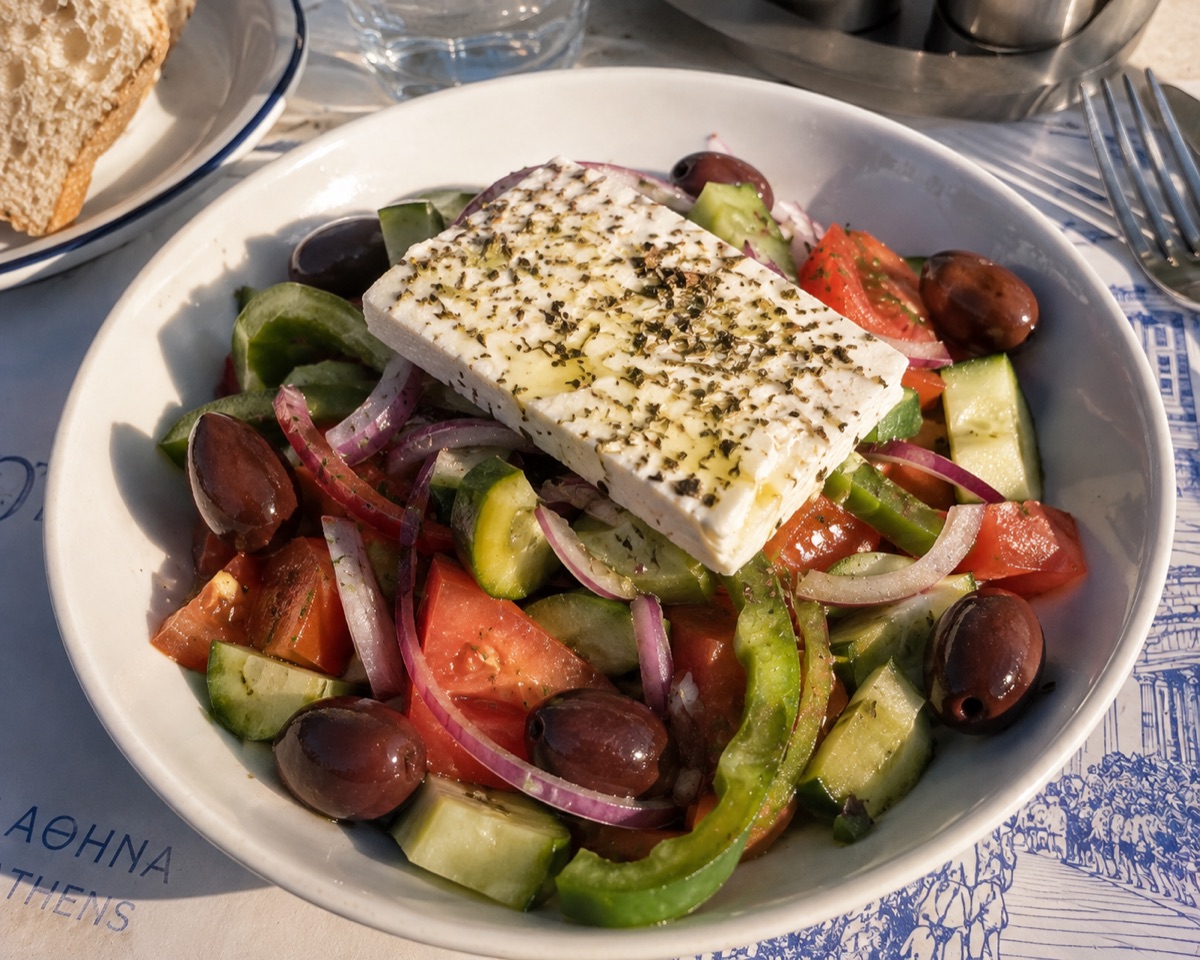 Horiatiki🇬🇷 Greece · 15 minutes
Questions people ask
What is the most popular food in Greece?
Souvlaki and gyros are the most common everyday foods, while moussaka, horiatiki (Greek salad) and spanakopita are the best-known traditional dishes. Fasolada, a white bean soup, is often called the national food.
What do Greeks eat for breakfast?
A typical Greek breakfast is light: Greek coffee or frappé, bread or rusks with honey or jam, strained yogurt, and a pastry such as tiropita, spanakopita, bougatsa or a sesame koulouri bread ring.
Is Greek food spicy?
No. Greek food uses plenty of herbs, garlic and lemon, but very little chili. Northern Greece adds warm spices such as cinnamon and allspice to meat dishes, which give aroma rather than heat.
What is the difference between souvlaki and gyros?
Souvlaki is small pieces of meat grilled on a skewer. Gyros is meat stacked on a vertical rotisserie and shaved off in thin slices. Both are often served wrapped in pita with tomato, onion and tzatziki.
Why is so much Greek food vegetarian?
Greek Orthodox fasting periods exclude meat and dairy on many days of the year. Dishes like gigantes plaki, fasolada and the vegetable stews cooked in olive oil were developed for those days.
Keep reading
- What is the national dish of Greece?
- Traditional food of Albania: 13 dishes to know
- Traditional food of Bosnia and Herzegovina: 13 dishes to know
- Traditional food of Bulgaria: 13 dishes to know
- Traditional food of Croatia: 13 dishes to know
- Traditional food of Montenegro: 12 dishes to know