 COPPER
Traditional food of Bulgaria: 13 dishes to know
Bulgarian food leans on vegetables, herbs, yogurt and sirene, a white brine cheese, with water-based stews, grilled minced meat and filo pastries rather than deep-fried food. Ottoman cooking left many dishes it shares with Turkey and Greece. The most emblematic dishes are shopska salad, banitsa, tarator cold soup and kebapche, with kavarma among the stews.
What Bulgarian food is built on
Bulgaria's climate suits a wide range of vegetables, herbs and fruit, and its cooking shares much with its Balkan neighbours, especially Turkey and Greece. Ottoman cuisine left moussaka, gyuvech, kyufte, baklava, ayran and shish kebab. Meals usually open with a salad, often with a glass of rakia. Main courses are typically water-based stews, with or without lamb, goat, veal, chicken or pork; deep-frying is uncommon, while grilling, especially of sausages and minced meat, is everywhere. Lamb is eaten above all in spring.
Dairy is central. Bulgarians traditionally eat more yogurt per person than the rest of Europe, and the bacterium that makes it, Lactobacillus bulgaricus, is named after the country. Sirene, a white brine cheese close to feta, goes into salads and pastries. Summer savory (*chubritsa*) and spearmint are the signature herbs. Bulgaria has no official national dish, but two are usually named; read about them in our article on the national dish of Bulgaria.
Salads, cold soups and starters
- Shopska salad — Diced tomatoes, cucumber, onion and peppers, raw or roasted, dressed with sunflower oil and buried under a thick layer of grated sirene. It was created by chefs of the state tourism company Balkantourist on the Black Sea coast in the mid-1950s, and its white, green and red happen to match the Bulgarian flag.
- Tarator — A cold soup of yogurt thinned with water, diced cucumber, garlic, dill, oil and often walnuts, served chilled. It is the classic Bulgarian summer dish; a thicker version made with strained yogurt is the Snezhanka (Snow White) salad.
- Shkembe chorba — Tripe soup: pork, beef or lamb tripe boiled for hours, chopped and returned to the broth, seasoned with paprika fried in fat and often a little milk. It is served with garlic in vinegar and hot red pepper and has a reputation as a hangover cure; shkembe restaurants once served nothing else.
- Lyutenitsa — A relish of red peppers, tomatoes and carrots, smooth or chunky, mild or hot; its name comes from the word for spicy. It is spread on bread, often topped with white cheese, or used as a dip with kebapche.
Grilled meat, stews and main dishes
- Kebapche — Minced pork and beef seasoned with black pepper, cumin and salt, shaped into a long stick and always grilled, never fried or baked. The classic order is three kebapcheta with fries covered in grated sirene, washed down with beer. Its round cousin, kyufte, adds onion and parsley; kebapche is close to the former Yugoslav ćevapčići, but larger.
- Kavarma — Pork stewed with onion, peppers and dried savory, then baked in individual clay pots called gyuvetche, often finished with an egg cracked on top. The name comes from a Turkish word meaning fried. Bulgarians of Bessarabia make a very different kavarma of lamb boiled in a cauldron over an open fire.
- Gyuvech — A spicy stew of vegetables, sometimes with meat, often cooked slowly in a clay pot. It is one of the dishes Bulgaria shares with Ottoman cooking.
- Sarmi and stuffed peppers — Cabbage or vine leaves and bell peppers stuffed with rice, with or without minced meat. On Christmas Eve tradition requires the meatless versions, while the everyday sarma is filled with rice and minced meat.
- Mish-mash — A spring and summer dish of peppers and tomatoes stewed in oil, then thickened with eggs and sirene and finished with parsley. It is served warm with fresh bread, as a starter or a main course.
- Patatnik — The potato dish of the Rhodope Mountains: grated potatoes squeezed dry, mixed with onion, salt and gyosum, a very mild local mint, and cooked slowly into a thick cake turned once in the pan. The name comes from *patato*, the local Rhodope word for potato.
Pastries, dairy and cured meat
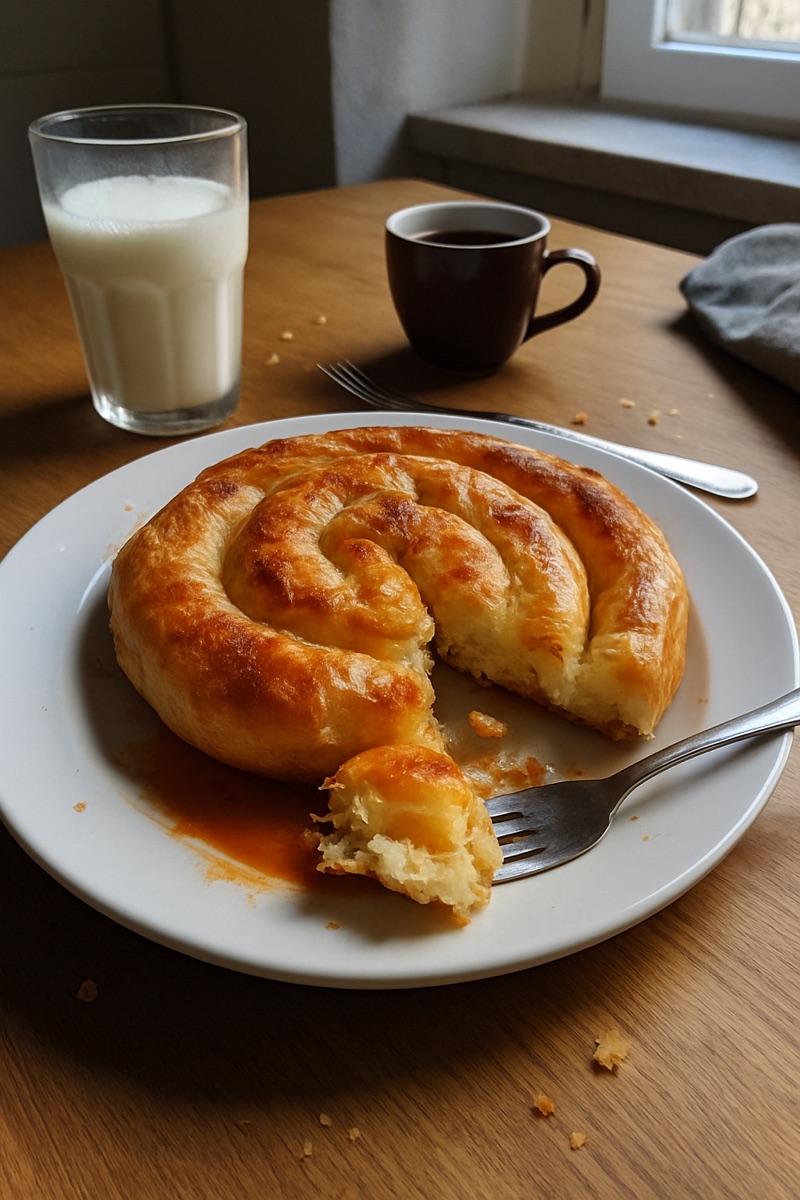
- Banitsa — Filo pastry layered or rolled with whisked eggs, yogurt and crumbled sirene, the most popular pastry in the country. It is breakfast on ordinary days, with yogurt, ayran or boza, and on Christmas and New Year's Eve it hides lucky charms. Tikvenik (with pumpkin) and zelnik (with greens) are its relatives.
- Kiselo mlyako — Bulgarian yogurt, made with Lactobacillus delbrueckii subsp. bulgaricus. It is eaten on its own and goes into tarator, banitsa, sauces and ayran, the cold yogurt drink.
- Lukanka — A flat, semi-dried salami of pork, veal, black pepper, cumin and salt, hung to dry for 40 to 50 days and pressed into its flattened shape. It is sliced thin and served cold as a starter. Lukanka from Panagyurishte has been registered as an EU and UK traditional speciality guaranteed.
Feasts and regional cooking in Bulgaria
Feast days have their own dishes. Christmas Eve is vegetarian, with stuffed peppers and sarmi; New Year's Eve usually brings cabbage dishes and banitsa with charms; St. Nicholas's Day (Nikulden, 6 December) is celebrated with carp, often stuffed; and St. George's Day (Gergyovden, 6 May) with roast lamb. For weddings and big celebrations, a whole animal may be turned on a wooden spit for 4 to 7 hours as cheverme.
Regions add their own touches: patatnik in the Rhodopes, the spicy banski starets sausage around Bansko, mussels in butter at Sozopol on the Black Sea, halva from Yablanitsa and Haskovo. Rakia is the national spirit, boza a traditional fermented drink, and Mavrud and Melnik are among the best-known wines. Compare with the traditional food of Romania and the traditional food of Greece, or explore the wider Balkan kitchen.
Cook Bulgarian food at home
Shopska salad, banitsa and kavarma each have a full recipe with quantities and step-by-step methods in the Copper app. You will find all three on our page dedicated to Bulgarian recipes.
The recipes
- Banitsa🇧🇬 Bulgaria · 1 hour and 25 minutes
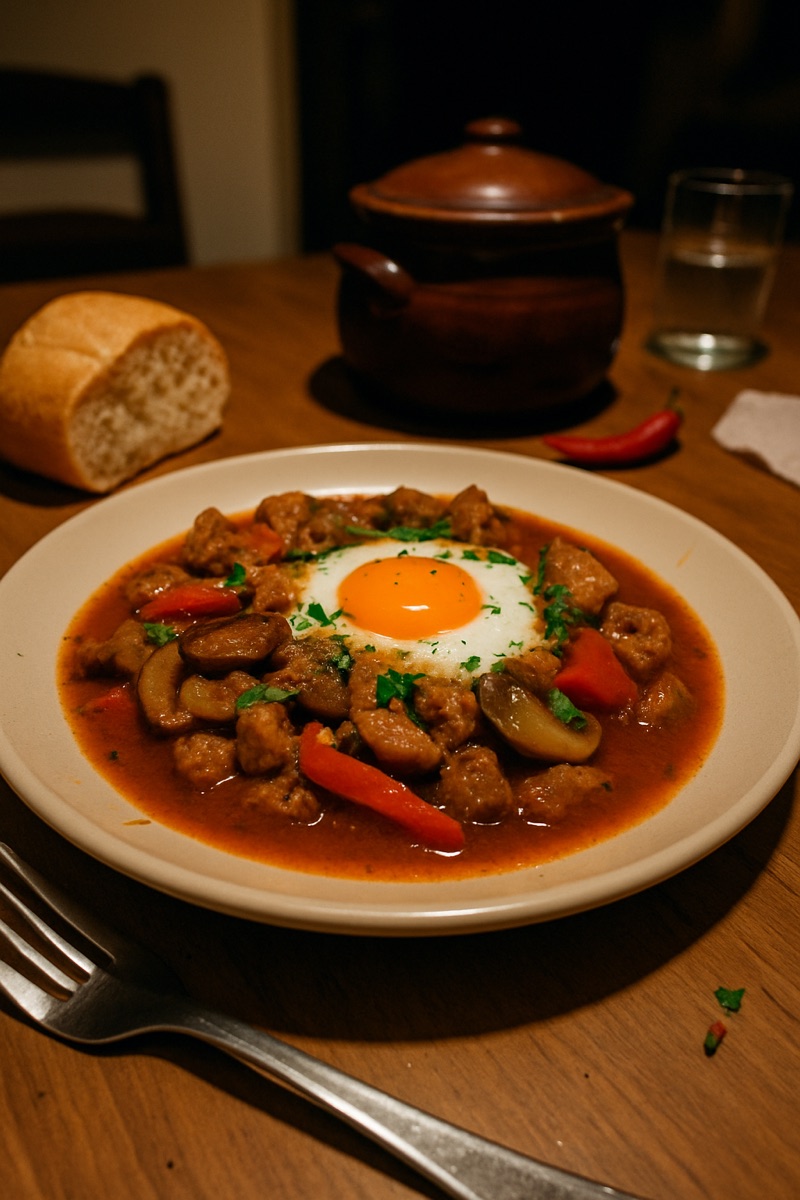 Kavarma🇧🇬 Bulgaria · 1 hour and 50 minutes
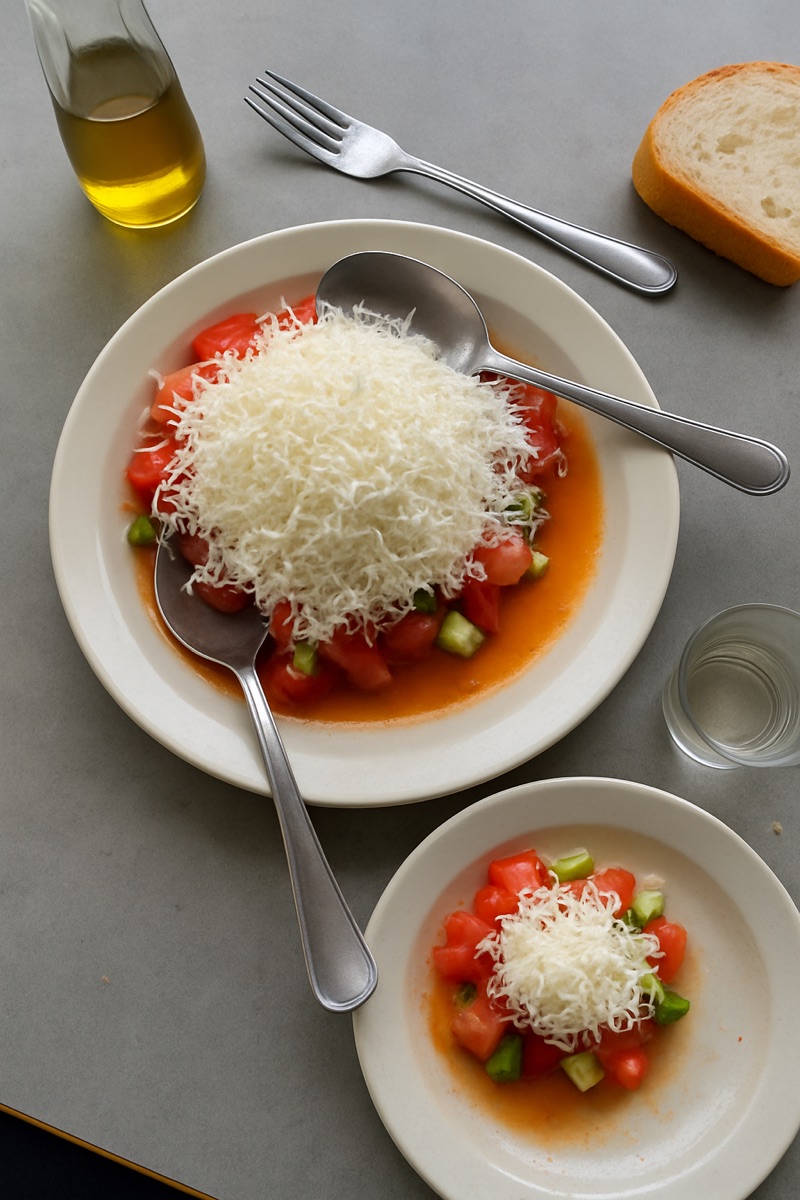 Shopska salad🇧🇬 Bulgaria · 25 minutes
Questions people ask
What is the most popular food in Bulgaria?
Shopska salad and banitsa are the two dishes most often named as national dishes. Tarator, kebapche, kavarma, mish-mash and Bulgarian yogurt are also part of everyday eating.
What do Bulgarians eat for breakfast?
Banitsa is the classic breakfast, with yogurt, ayran or boza. Mekitsi (fried dough with jam, honey or sirene), tutmanik, milinki and popara are other traditional breakfast foods.
Is Bulgarian food spicy?
Mostly no: the signature flavours come from herbs such as summer savory and spearmint. Heat appears in specific foods, such as hot lyutenitsa, the spicy banski starets sausage and the hot pepper served with shkembe chorba.
Is shopska salad Bulgarian?
Yes. It was created by Balkantourist chefs on the Bulgarian Black Sea coast in the mid-1950s. Neighbouring countries also serve it, and Serbian, Croatian and Macedonian claims have been reported in the press.
What is special about Bulgarian yogurt?
It is made with Lactobacillus bulgaricus, a bacterium named after Bulgaria, and Bulgarians traditionally eat more yogurt per person than the rest of Europe. It goes into tarator, banitsa and ayran.
Keep reading
- What is the national dish of Bulgaria?
- Traditional food of Albania: 13 dishes to know
- Traditional food of Bosnia and Herzegovina: 13 dishes to know
- Traditional food of Croatia: 13 dishes to know
- Traditional food of Greece: 13 dishes to know
- Traditional food of Montenegro: 12 dishes to know