 COPPER
What is the national dish of Bulgaria?
Bulgaria has no official national dish, but two are named most often: shopska salad, diced tomatoes, cucumber, onion and peppers buried under grated sirene, a white brined cheese, and banitsa, a filo pie filled with eggs, yogurt and sirene. Shopska salad was created in the mid-1950s by the state tourism company Balkantourist; banitsa is the dish of Christmas and New Year's Eve.
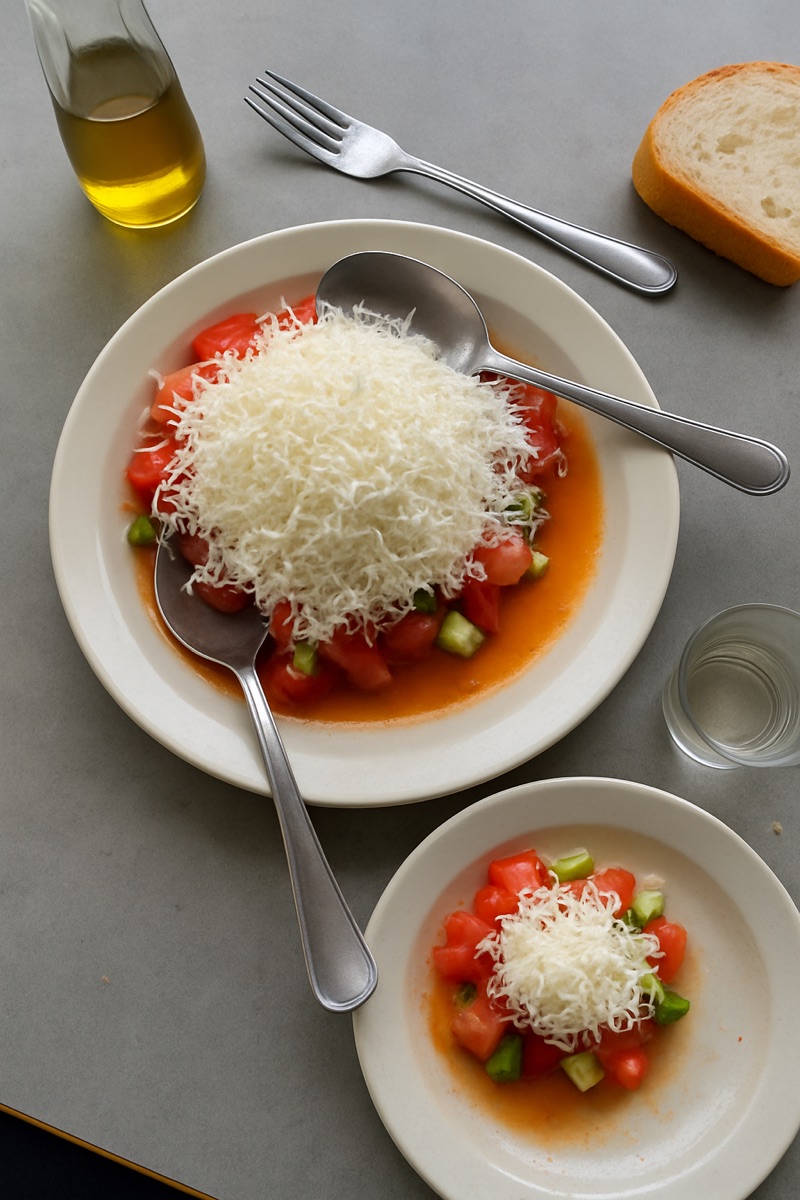
Two national dishes
No law names Bulgaria's national dish. Wikipedia's list of national dishes gives two: shopska salad and banitsa. The article on shopska salad calls it "Bulgaria's most famous salad and national dish", and the article on banitsa calls the pie "a symbol of Bulgarian cuisine and traditions". One is a summer salad served with rakia, the other a pie eaten at breakfast and on feast days.
What is in shopska salad?
Shopska salad is simple. Its whole character comes from the cheese on top:
- tomatoes and cucumber, diced
- onion or spring onion
- peppers, raw or roasted
- sunflower oil, sometimes a little vinegar
- sirene, a white brined cheese, grated in a thick layer over everything
How shopska salad is made
In our shopska salad recipe, two red peppers are charred for about 10 minutes and peeled, the tomatoes and cucumber are cut into 1.5 cm cubes, and the vegetables are salted and dressed with 3 tablespoons of sunflower oil and 1 of red wine vinegar. Then 200 g of sirene is grated finely straight over the top. It is never stirred in: the cheese is a blanket, not part of the mix.
The white cheese, green cucumber and red tomato match the colours of the Bulgarian flag. According to Wikipedia, that was a coincidence that Balkantourist saw as a bonus. In Bulgaria it is often eaten as a starter with a glass of rakia.
Where shopska salad comes from, and who claims it
Salads themselves are fairly recent in Bulgaria. Tomatoes reached Southeastern Europe in the mid-1800s, and vegetable seeds were only imported in an organised way in the 1930s. The term "shopska salad" appears in a 1940 Bulgarian cookbook, but there it meant a kind of lyutenitsa, a pepper relish, not the salad.
The salad is younger than most people think. Bulgarian and English sources agree it was created by Balkantourist chefs in the mid-1950s, at the Chernomorets restaurant in the Druzhba resort near Varna, now Sts. Constantine and Helena. Sources place it between 1954 and 1956. The name comes from Shopluk, the region around Sofia, even though the salad was invented on the Black Sea coast. The recipe appears in a state cookbook from 1956, and by 1970 a Bulgarian recipe manual gave four versions, with or without onion and with roasted peppers.
It spread quickly, and neighbours claim it. Deutsche Welle reported a Croatian restaurant presenting it as a Croatian national dish. Radio Bulgaria and the Sofia News Agency reported that the Serbian newspaper Politika called it Serbian in the 2000s. The Bulgarian weekly 168 Hours reported that North Macedonia also claims it. We record those claims without ruling on them; see also the national dish of North Macedonia and the national dish of Serbia.
Its reach today is wide. It was the most popular recipe in A Taste of Europe, a European Parliament initiative, and in 2025 CNN ranked it among the 24 best salads in the world.
Banitsa, the festive pie
Banitsa layers filo pastry with whisked eggs, plain yogurt and crumbled sirene. On Christmas and New Year's Eve, Bulgarians hide lucky charms inside, usually small pieces of dogwood branch for health and long life, and cut one slice for each member of the family. On ordinary days it is breakfast, hot or cold, with yogurt, ayran or boza. Variants include spanachnik with spinach, tikvenik with pumpkin and a sweet milk banitsa.
Our banitsa recipe whisks baking soda into the eggs and yogurt so it fizzes, which keeps the filling light. Twelve filo ropes are coiled into one spiral and baked at 180 °C for 40 minutes, then sprinkled with water and covered for 10 minutes to soften the crust.
Other dishes to know from Bulgaria
Kavarma is pork stewed with onion, peppers and dried savory, then baked in individual clay pots called gyuvetche. In our version an egg is cracked onto each pot for the last few minutes. The word comes from Turkish and means "fried". Bulgarians of Bessarabia, in Ukraine and Moldova, make a very different kavarma: lamb boiled in a large cauldron over an open fire with paprika and onion.
Banitsa also has relatives on the same table: tikvenik, filled with pumpkin, and zelnik, made with greens. Wikipedia's article on Bulgarian cuisine calls banitsa the most popular pastry in the country, with many varieties.
You will find all three dishes on our page about the food of Bulgaria. For the neighbouring kitchens, see our guide to Balkan food.
The recipes
- Shopska salad🇧🇬 Bulgaria · 25 minutes
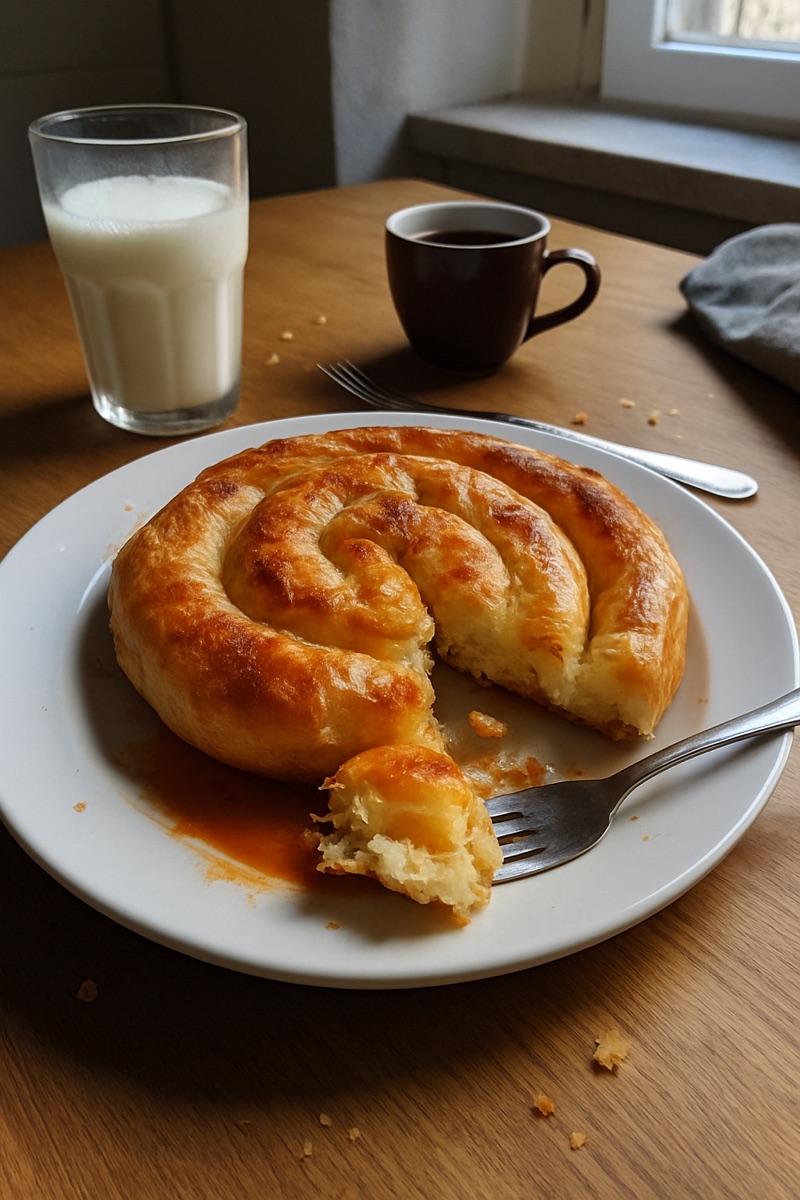 Banitsa🇧🇬 Bulgaria · 1 hour and 25 minutes
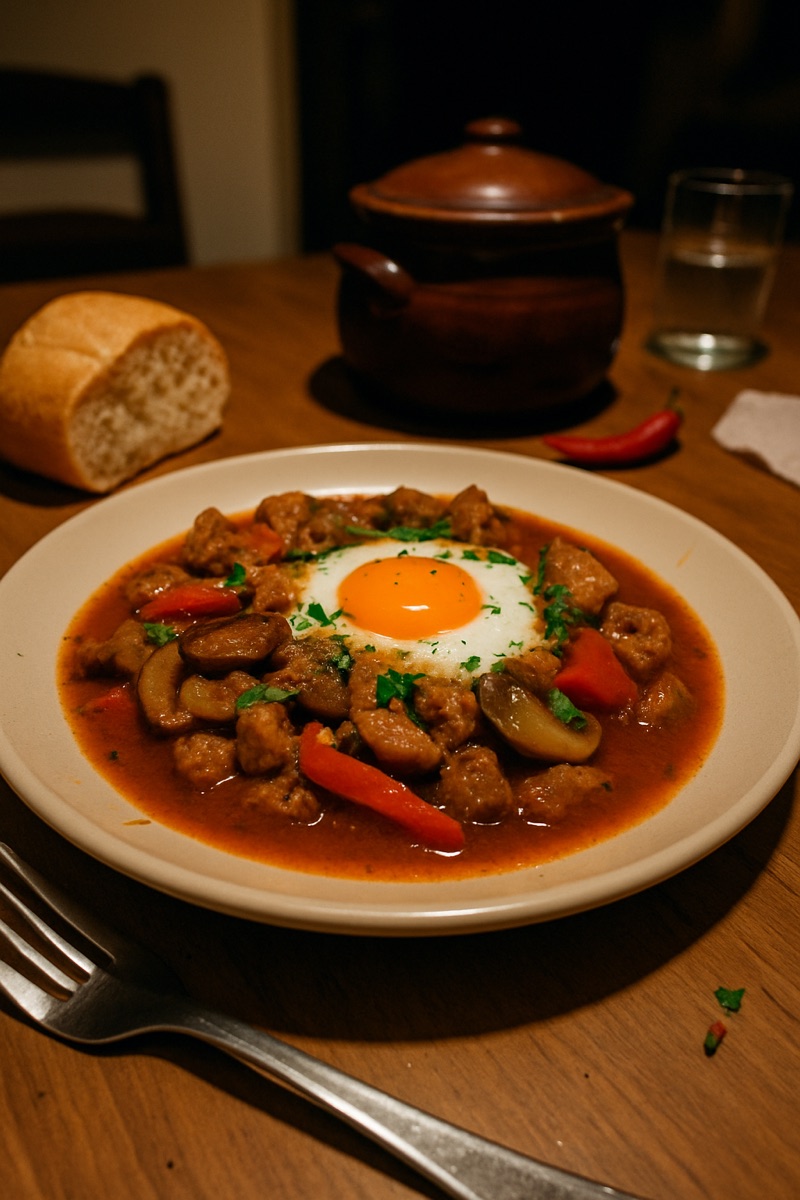 Kavarma🇧🇬 Bulgaria · 1 hour and 50 minutes
Questions people ask
Is shopska salad Bulgarian or Serbian?
It was created in Bulgaria by Balkantourist chefs in the mid-1950s. Serbian, Croatian and Macedonian claims have been reported in the press, but the documented origin is the Bulgarian Black Sea coast.
What cheese is in shopska salad?
Sirene, a white brined cheese similar to feta but milder. It is grated over the top of the salad, not mixed in.
Why is shopska salad in the colours of the Bulgarian flag?
White cheese, green cucumber and red tomato happen to match the flag. Sources describe it as a coincidence that helped the salad become a national symbol.
When is banitsa eaten?
Usually at breakfast, with yogurt, ayran or boza, and above all on Christmas and New Year's Eve, when lucky charms are baked inside.
What is the difference between banitsa and burek?
In Bulgaria, byurek is treated as a kind of banitsa with sirene and added eggs. Elsewhere in the Balkans, burek usually means a filo pie with meat or cheese.
Keep reading
- Traditional food of Bulgaria: 13 dishes to know
- What is the national dish of Albania?
- What is the national dish of Bosnia and Herzegovina?
- What is the national dish of Croatia?
- What is the national dish of Greece?
- What is the national dish of Montenegro?