 COPPER
What is the national dish of Greece?
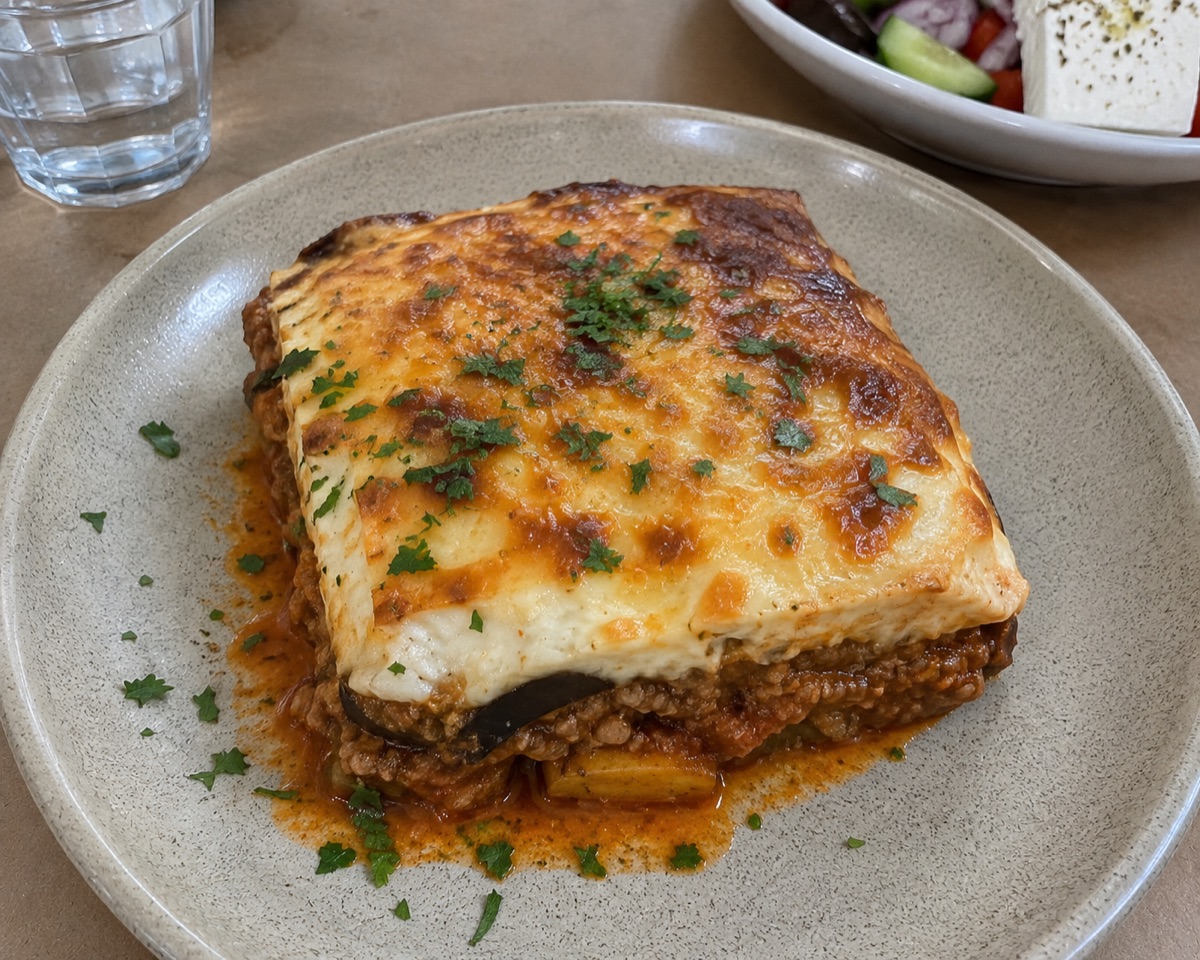
Greece has no official national dish. The title is usually given to fasolada, a soup of dry white beans, tomato, vegetables and olive oil that Greek dictionaries call "the national food of the Greeks". Outside Greece, moussaka, baked layers of aubergine and spiced lamb under béchamel, is the dish most often named, with the horiatiki village salad close behind.
Why Greece has more than one answer
No Greek law or decree names a national dish. What exists is usage, and usage points in two directions.
Inside Greece, the answer is fasolada. Two reference dictionaries of modern Greek, the Triantafyllidis dictionary (1998) and Babiniotis (2002), describe it as the national food of the Greeks. It is a cheap, everyday pot of beans, eaten at home far more than in restaurants.
Outside Greece, travel guides and food writers mostly name moussaka, followed by the village salad (horiatiki), souvlaki and gyros. These are the dishes visitors meet first in tavernas, which is why they dominate the lists.
Greek Reporter's answer to the question adds two festive dishes: magiritsa, the lamb offal soup of Orthodox Easter, and kokoretsi, lamb or goat intestines wrapped around seasoned offal and grilled. In practice the answer depends on who is asked and whether they mean everyday food or festive food.
What is fasolada?
Fasolada is a soup of dry white beans simmered with tomatoes, carrots, onion, celery, parsley, thyme and bay leaf, finished with a generous amount of olive oil. Some cooks use lima beans instead of white beans, and recipes vary a lot from house to house.
The same idea runs across the eastern Mediterranean: Turkey cooks kuru fasulye, and Arabic kitchens cook fasoulia. If you know the national dish of Turkey, you will recognise the family resemblance.
Copper does not have a fasolada recipe yet. The closest dish in our collection is gigantes plaki, giant beans baked in an olive-oil tomato sauce: the beans are soaked at least 8 hours, simmered about 45 minutes, then baked about 45 minutes at 180°C until the top browns.
Gigantes are cooked in two stages for a reason. The beans are drained while still whole, keeping a cup of their cooking water, then folded into a sauce of onion, carrot, garlic, grated tomato and tomato purée softened in olive oil. They finish softening in the oven, so they must not burst on the stove. The dish rests 10 minutes and is eaten warm or at room temperature.
What is in Greek moussaka?
Greek moussaka is three layers cooked separately, then baked together. In our moussaka recipe they are:
- Aubergines: sliced 1 cm thick, salted for 30 minutes, squeezed, then fried or roasted until soft.
- Lamb mince: browned with onion, deglazed with red wine, then simmered about 30 minutes with tomatoes and cinnamon until thick and dry.
- Béchamel: butter, flour and warm milk, with two eggs beaten in off the heat so it sets in the oven.
- Baking and resting: about 50 minutes at 180°C, then 20 minutes out of the oven so the slices hold their layers.
Where moussaka comes from
Layered aubergine and meat dishes are old: a 13th-century Arabic cookbook by Muhammad bin Hasan al-Baghdadi already alternates slices of aubergine with spiced minced meat. The word itself reached Greek through Ottoman Turkish, from Arabic.
The béchamel version that the world calls Greek moussaka is more recent. It was created in the 1920s by Nikolaos Tselementes, a French-trained Greek chef whose cookbook set the recipe: aubergine sautéed in olive oil, lamb with tomato, cinnamon, allspice and black pepper, and a béchamel or custard top. Elsewhere in the Balkans, moussaka is usually made with potatoes instead of aubergine.
Other countries kept other forms. In Turkey, musakka is thinly sliced fried aubergine in a tomato and meat sauce, eaten warm or at room temperature. In Egypt it can be made entirely without meat, and in Lebanon it is a cooked aubergine and tomato dish, sometimes with chickpeas, served cold as a mezze. Tselementes himself printed a fast-day version with no meat and no dairy, for Orthodox fasting periods, with ground aubergine standing in for the mince.
Other dishes to know from Greece
The third dish most often cited is horiatiki, the village salad. Its name means "village" or "rustic" salad, and the original has no lettuce: tomato wedges, cucumber, green pepper, red onion and olives, with a whole slab of feta laid on top, never crumbled, then oregano and olive oil. Bread is used to mop up the juices.
In Greece the salad is put on the table unmixed, often eaten by everyone from the same plate. Outside Greece, "Greek salad" is frequently a lettuce salad with feta and olives, which is exactly what the original is not.
Greek food belongs to a wider family of Balkan dishes, and moussaka has relatives across that region. Neighbouring Cyprus shares fasolada; see the national dish of Cyprus.
You will find all three recipes, with ingredients and step-by-step methods, on our page about the food of Greece.
The recipes
- Moussaka🇬🇷 Greece · 2 hours and 30 minutes
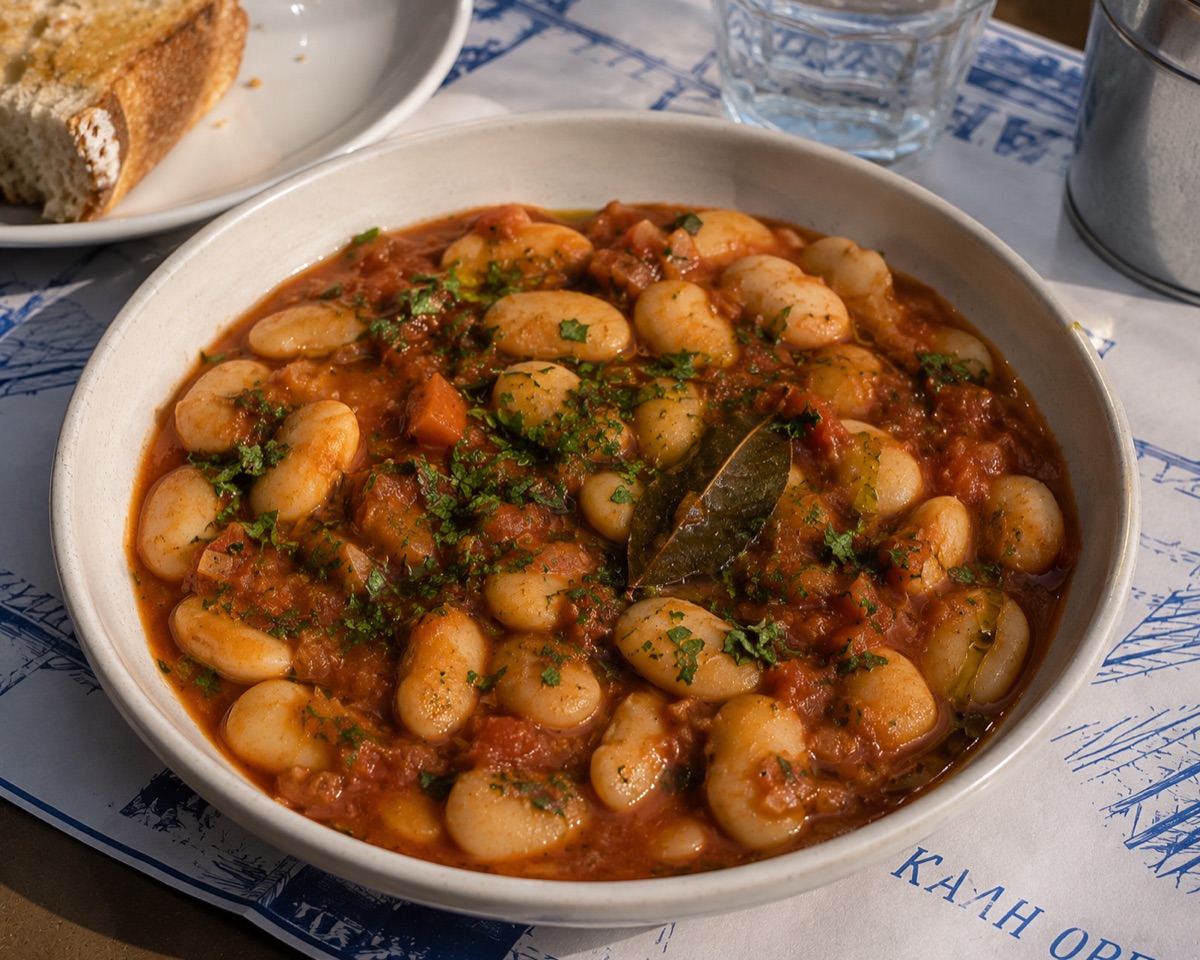 Gigantes plaki🇬🇷 Greece · 10 hours
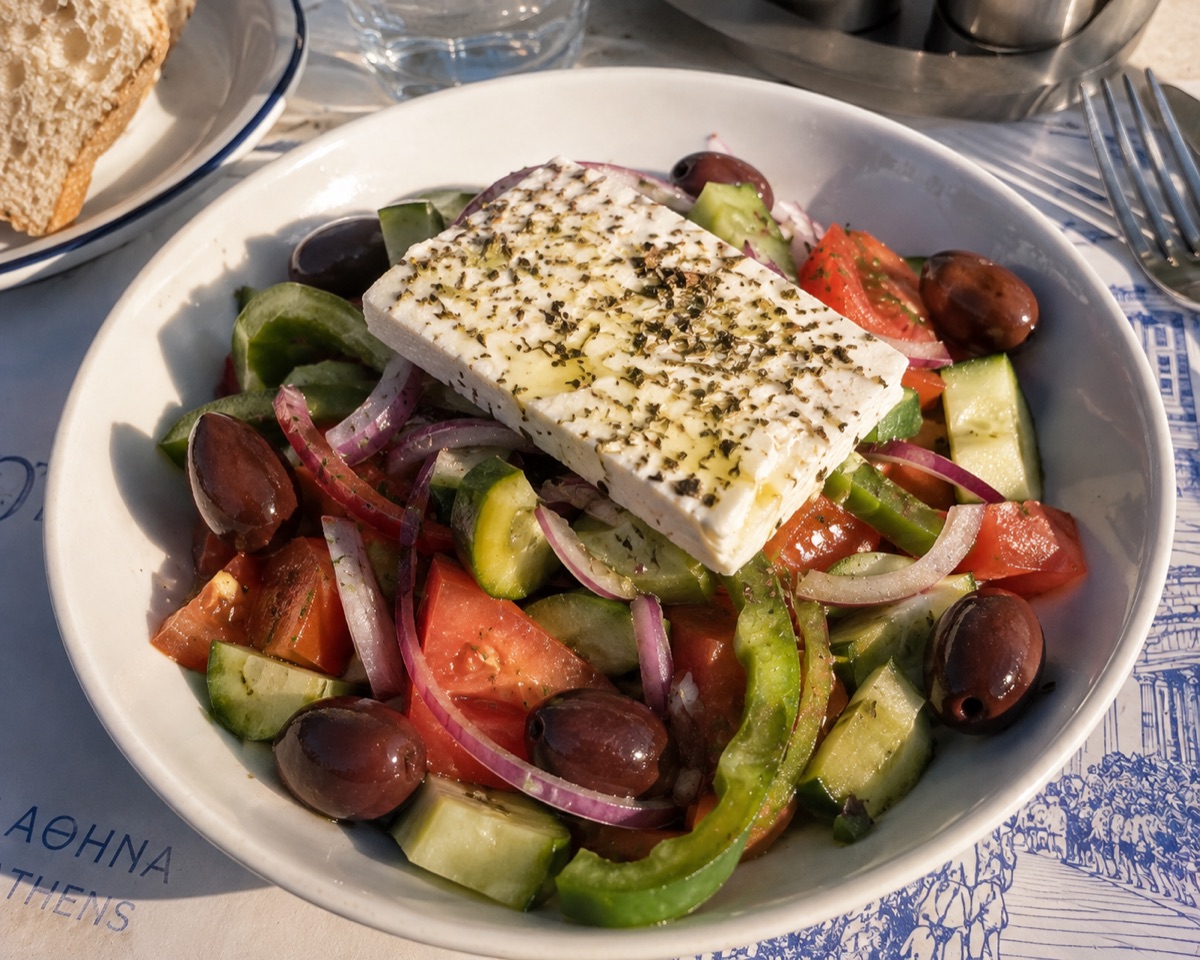 Horiatiki🇬🇷 Greece · 15 minutes
Questions people ask
Does Greece have an official national dish?
No. No law or decree names one. Fasolada is the dish Greek dictionaries call the national food of the Greeks, while moussaka is the one most often named abroad.
Is moussaka Greek or Turkish?
Both countries cook a dish called moussaka, and the name came into Greek through Ottoman Turkish from Arabic. The layered version with béchamel was created in Greece in the 1920s by chef Nikolaos Tselementes; the Turkish version is fried aubergine in a tomato-meat sauce.
What is fasolada made of?
Dry white beans simmered with tomatoes, carrots, onion, celery, parsley, thyme and bay leaf, with plenty of olive oil. Some cooks use lima beans.
Does a real Greek salad have lettuce?
No. Horiatiki, the original village salad, is made without lettuce: tomato, cucumber, green pepper, onion, olives and a slab of feta with oregano and olive oil.
How do you pronounce moussaka?
In English it is usually said moo-SAH-ka; in Greek the stress falls on the last syllable, moo-sa-KAS.
Keep reading
- Traditional food of Greece: 13 dishes to know
- What is the national dish of Albania?
- What is the national dish of Bosnia and Herzegovina?
- What is the national dish of Bulgaria?
- What is the national dish of Croatia?
- What is the national dish of Montenegro?