 COPPER
What is the national dish of Turkey?
Turkey has no officially declared national dish, but the one most often given the title is kuru fasulye with pilav: dried white beans stewed with onion, tomato paste and olive oil, served with rice pilaf. Turkey's Ministry of Culture and Tourism says beans and pilaf hold a place in Turkish culture as the "national dish". Abroad, kebab is the better-known candidate.
What is kuru fasulye?
Kuru fasulye means "dry beans". It is a stew of dried white beans cooked with olive oil, onion and, almost always, tomato paste or tomato sauce. Some cooks add other vegetables or meat, most often pastırma, the cured beef that Turks also fry with eggs at breakfast.
It is served with rice pilaf or bulgur pilaf and often with cacık, a cold mix of diluted yogurt, cucumber and garlic. The beans are eaten with a spoon and the cooking juice is mopped up with bread. It belongs to Turkish home cooking, the stews and pilavs that the esnaf lokantası, the modest tradesmen's restaurants found in every province, serve at low prices. The bean itself is a New World crop: the species used, Phaseolus vulgaris, comes from Mesoamerica.
Why beans and pilaf, and not kebab?
Turkey's Ministry of Culture and Tourism writes that a simple white pilaf served with white beans cooked in tomato sauce "definitely has a place in the Turkish culture as the 'national dish'". It adds that when young men remember their military service, they almost always mention the pilaf and beans they ate. The same text notes that Turks never call cooked rice just rice: once cooked, it is pilav.
Kebab is the answer most visitors give, and lists of Turkey's national dishes also include döner kebab, dürüm, baklava and simit. But although kebabs dominate Turkish food abroad, home meals in Turkey center on rice, vegetables and bread. A typical meal starts with soup, then a dish of vegetables or legumes, often cooked with meat, served with pilav and a salad or cacık. Kuru fasulye with pilav is exactly that kind of everyday meal.
Regional versions of kuru fasulye
Several provinces have their own bean stew, and one is legally protected:
- Çayeli (Rize): sugar beans with lean raw beef, butter, onion and tomato paste, registered as a geographical indication by the Turkish Patent and Trademark Office on 2 January 2018.
- Karaman: etli kuru fasulye, beans with diced meat, butter, tomato paste and red pepper.
- Nevşehir: tandır fasulyesi, beans and meat cooked in an earthenware güveç.
- Ordu: Akkuş sugar beans with minced meat, pul biber and butter.
- Denizli: beans stewed with lamb, onion and tomato paste.
Adana kebab, the most tightly defined kebab
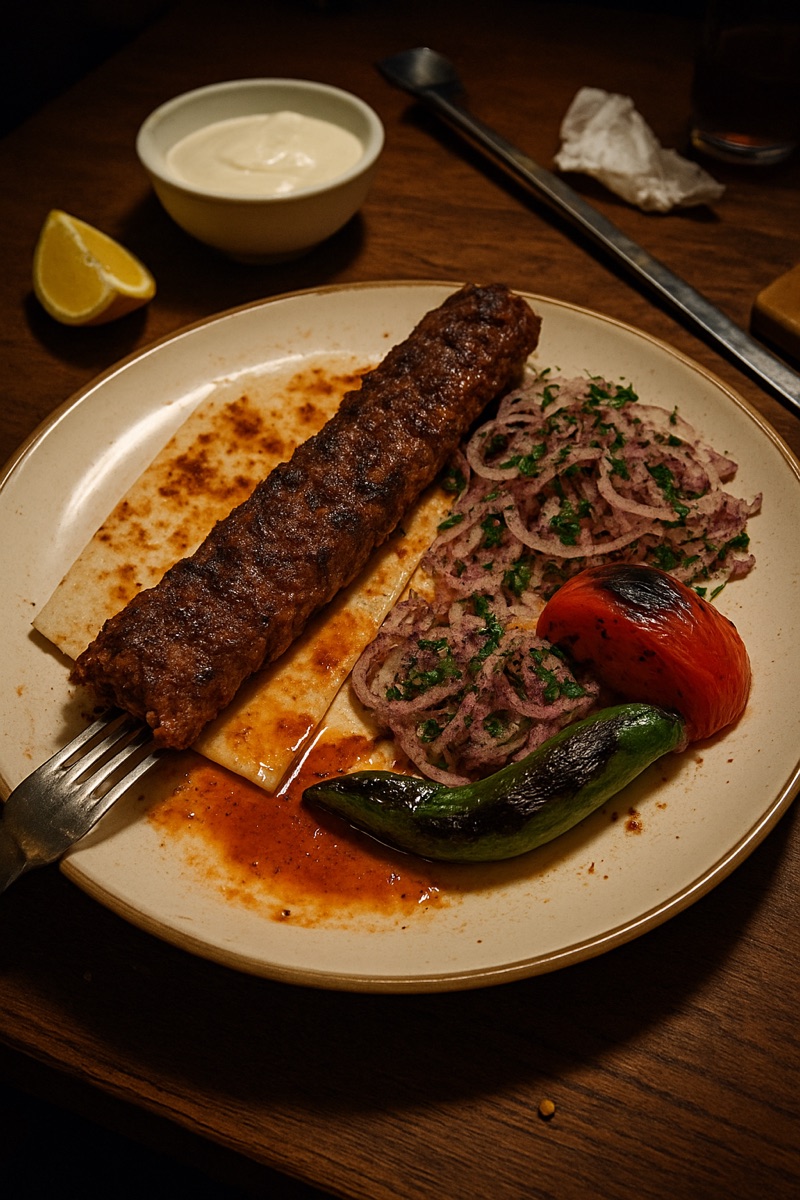
In Turkey the word kebab covers far more than skewers: it also takes in stews and casseroles. The most strictly defined is Adana kebab, which received a controlled designation of origin in February 2005. The rules call for the meat of a male lamb under one year old and tail fat, chopped by hand with a curved iron cleaver called a zırh, seasoned only with sweet red pepper and salt, pressed onto a wide iron skewer and grilled over charcoal.
Our Adana kebab recipe follows the same logic: 500 g of lamb shoulder and 150 g of tail fat chopped by hand, rested 4 hours so the paste grips the flat skewer, then grilled 8 to 10 minutes over oak charcoal. Flatbreads are laid on the meat for the last minute to soak up the fat, and it is served with onion tossed in sumac and parsley.
Another kebab with a precise origin is İskender kebap from Bursa: thin slices of döner served with yogurt, tomato sauce and butter. It is credited to İskender Efendi, who in 1867 took the horizontal spit of Erzurum's cağ kebab and turned it vertical. Urfa kebab, from the southeast, is the milder, thicker cousin of Adana kebab.
Other dishes to know from Turkey
Lahmacun is a flatbread rolled to barely 1 mm, spread with raw minced lamb, red pepper paste, onion, pepper, tomato and parsley, and baked 4 to 6 minutes in an oven heated to 250 to 300 °C. The meat goes on raw and cooks with the bread. Its name comes from the Arabic lahm bi ajeen, "meat with dough", a dish still made in Lebanon and Syria. In English it is sometimes called Turkish pizza, but it has neither cheese nor tomato sauce, and the crust is much thinner. The Ottoman explorer Evliya Çelebi already mentions it by name in his Seyahatnâme.
Menemen is a summer egg dish: onion and green pepper softened in olive oil, tomatoes cooked down for 5 to 7 minutes, then eggs stirred in for 2 to 3 minutes and taken off the heat while still soft. With çılbır, it is one of the egg dishes typical of the hot Turkish summer.
Across the Aegean, Greece has its own white bean dish, fasolada, which is usually named Greece's national dish. Turkish food belongs to the wider Middle Eastern kitchen, and you will find all three dishes, with ingredients and step-by-step methods, on our page about the food of Turkey.
The recipes
- Adana kebab🇹🇷 Turkey · 5 hours and 30 minutes
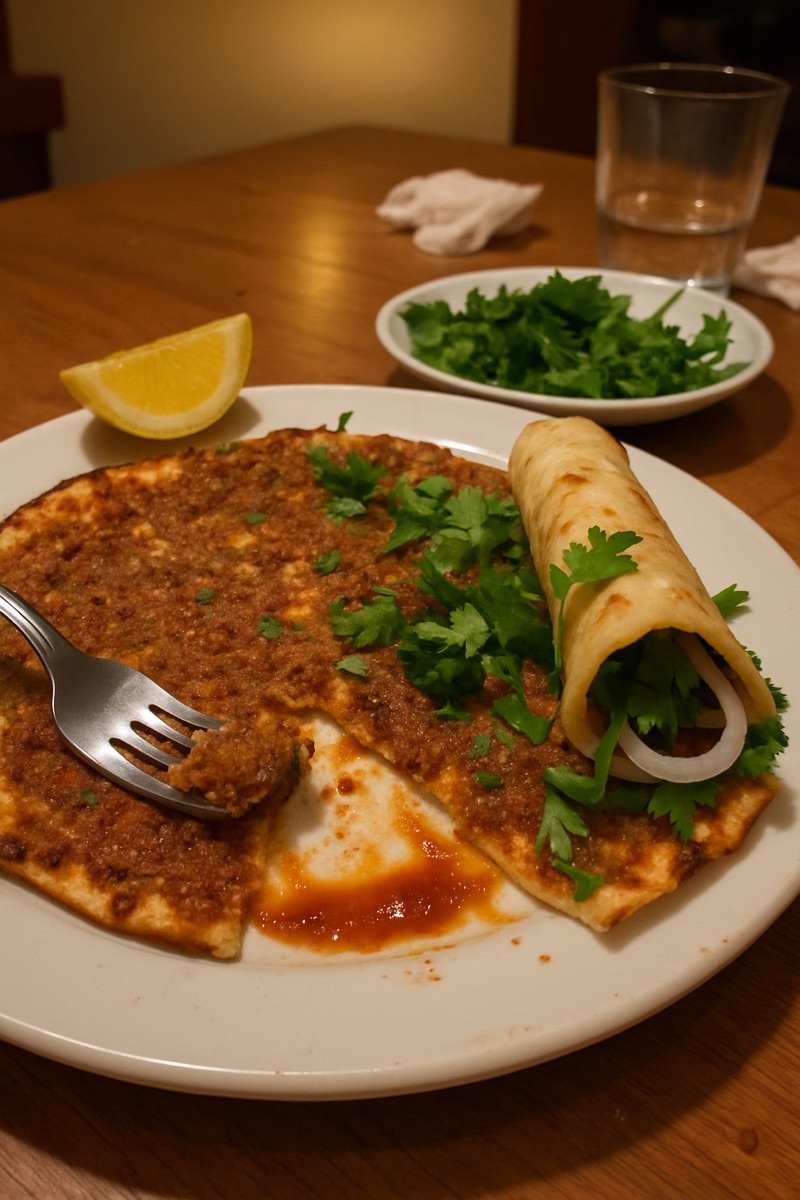 Lahmacun🇹🇷 Turkey · 2 hours and 30 minutes
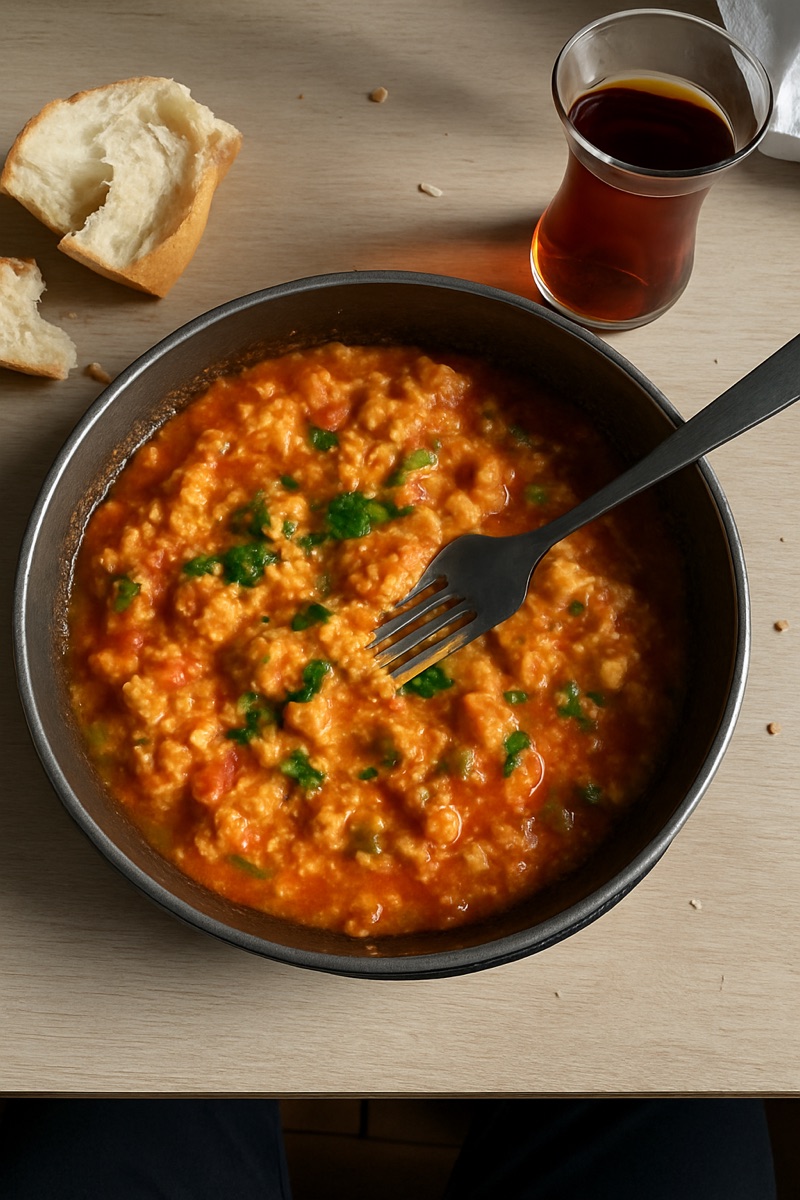 Menemen🇹🇷 Turkey · 25 minutes
Questions people ask
Is kebab the national dish of Turkey?
Not officially. Kebab is the dish most associated with Turkey abroad, but inside Turkey the title usually goes to kuru fasulye with pilav, which the Ministry of Culture and Tourism describes as the "national dish".
Does Turkey have an official national dish?
No. Turkey has not officially designated one; kuru fasulye with pilav is simply the dish most often given the title.
What does kuru fasulye mean?
It means "dry beans" in Turkish: kuru is dry and fasulye is beans. The name refers to the dried white beans the stew is made from.
What is kuru fasulye served with?
Rice pilaf or bulgur pilaf, usually with cacık (yogurt with cucumber and garlic) and bread to mop up the juice.
Is Adana kebab spicy?
Today it is the spicy minced kebab, while Urfa kebab is the mild one. The original Adana kebab was not spicy: the protected recipe uses sweet red pepper and salt.
Keep reading
- Traditional food of Turkey: 14 dishes to know
- What is the national dish of Bahrain?
- What is the national dish of Iran?
- What is the national dish of Iraq?
- What is the national dish of Israel?
- What is the national dish of Jordan?