 COPPER
What is the national dish of Israel?
Israel has no official national dish, but falafel is the one most often cited: deep-fried balls of ground, soaked chickpeas with herbs and spices, usually stuffed into a pita with salad, tahini and hummus. Hummus is also called an unofficial national dish. Both labels are disputed, because falafel most likely comes from Egypt and both dishes are shared with Arab cuisines.
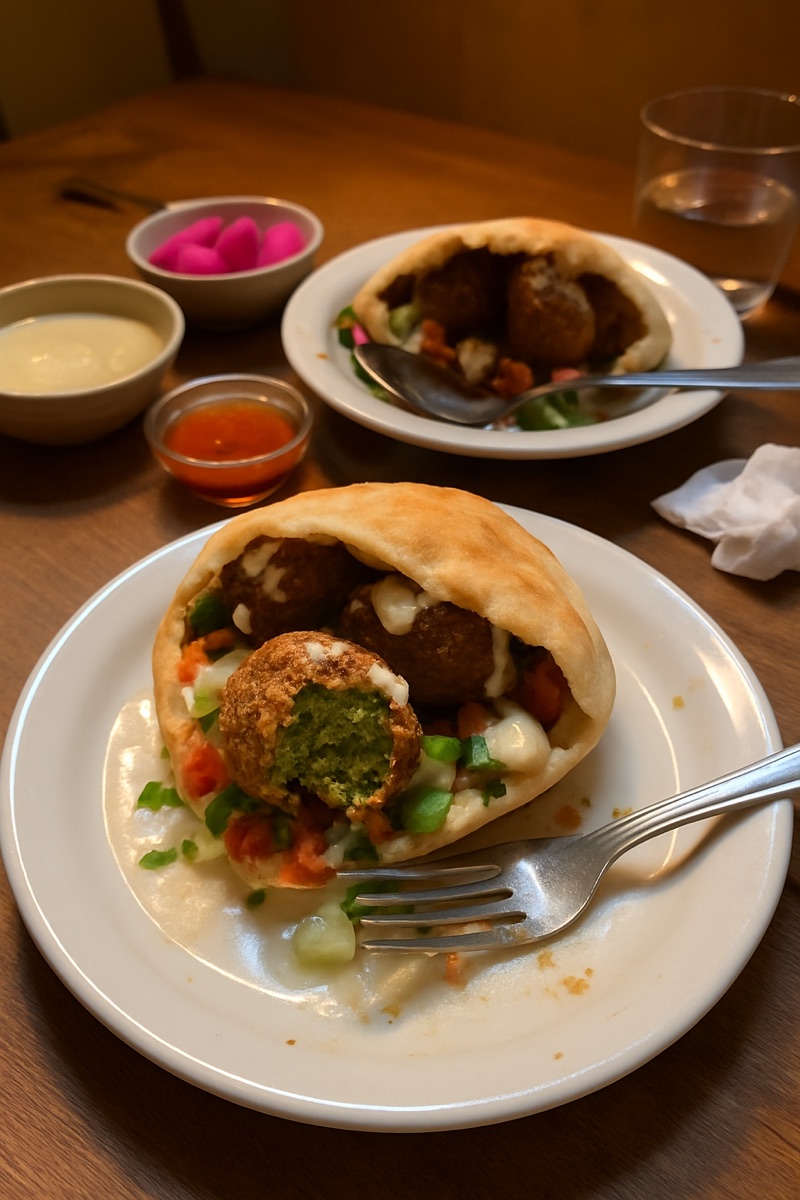
Does Israel have a national dish?
Not officially. The reference article on Israeli cuisine states plainly that Israel has no universally recognised national dish. Two candidates come up again and again:
Falafel is the dish most lists and food writers name, and Israelis widely view it as their national dish. In 2012 the newspaper Haaretz ran the headline "No matter where it originated, falafel is still Israel's national food". It is still sold from kiosks in every neighbourhood, although it is now less often eaten as the only filling in a pita.
Hummus is also described as an unofficial national dish, because of how central it is to daily eating: hummus in pita is a common school lunch, and some Israelis travel to a hummusia, a restaurant that serves almost nothing else.
What is in Israeli falafel?
In Israel, as in Palestinian cuisine, falafel is made from chickpeas, while in Egypt it is usually made from fava beans. The chickpeas are soaked, never cooked, then ground with onion, garlic, parsley, cumin and coriander. In our falafel recipe the mixture is blended only to a coarse paste, chilled for 30 minutes, shaped into balls and fried at 180°C for 4 to 5 minutes.
It is served in a pita with the garnishes the customer chooses:
- Chopped vegetable salad and pickles.
- Tahini sauce and hummus.
- Skhug, a green or red chilli paste brought by Yemenite Jews.
- Amba, a pickled mango sauce introduced by Iraqi Jews.
- Extras such as chips or fried eggplant, which stands add to stand out from their neighbours.
Where falafel and hummus come from
Falafel most likely originated in Egypt, where it is called ta'amiya and made with fava beans; the earliest written references from Egyptian sources date to the 19th century. After the First World War it spread across the region: a falafel shop had opened in Beirut by 1933, and in Mandatory Palestine the dish was adopted by some Jews and Arabs. It had long been eaten by Syrian and Egyptian Jews. A 1939 article in The Palestine Post is the first known mention of falafel served in pita as street food, and food historian Gil Marks credits Yemenite Jewish immigrants with popularising the falafel sandwich in the 1950s.
For hummus, the evidence is not sufficient to name a place or date of invention. Its ingredients have been eaten together in Egypt and the Levant for centuries, the first cold purées of chickpeas with tahini appear in records from the Abbasid period, and an 1885 Lebanese cookbook gives a recipe with garlic. Mizrahi Jews from Arab countries brought their own versions to Israel.
Why the national dish label is disputed
Calling falafel and hummus Israeli has led to accusations of cultural appropriation from Palestinians, Lebanese and other Arab critics, who object to Arab dishes being presented as Israeli. Palestinian-Jordanian academic Joseph Massad has described the marketing of Arab dishes as Israeli in Western restaurants as part of a broader pattern of "colonial conquest". Food scholars call this kind of dispute gastronationalism. Those who defend the Israeli label note that hummus was traditionally part of the cooking of Mizrahi Jews in Arab lands, that falafel had long been eaten by Syrian and Egyptian Jews, and that both are now everyday food for the whole Israeli population.
The argument has also played out in public. In 2008 the Association of Lebanese Industrialists asked the Lebanese government to seek protected status for hummus as a Lebanese food in the European Union. Lebanese and Israeli cooks then traded the Guinness World Record for the largest dish of hummus between 2008 and 2010; the record set by Lebanon in May 2010 in al-Fanar, near Beirut, weighed about 10,450 kg and was still standing in the latest reports.
Copper does not settle the question. The same dishes appear on our pages for Palestine and Egypt, each with its own history.
Other dishes to know from Israel
Sabich began as an Iraqi-Jewish Shabbat breakfast: fried eggplant slices and slow-cooked eggs in a pita with hummus, salad, tahini and amba. Without the amba, it is just a fried eggplant sandwich.
Shakshuka, a North African dish, has become a national favourite: eggs poached in a thick tomato, pepper and harissa sauce, eaten straight from the pan with bread.
All three recipes are on our page about the food of Israel, and the shared kitchens of the region are in our guide to Middle Eastern food.
The recipes
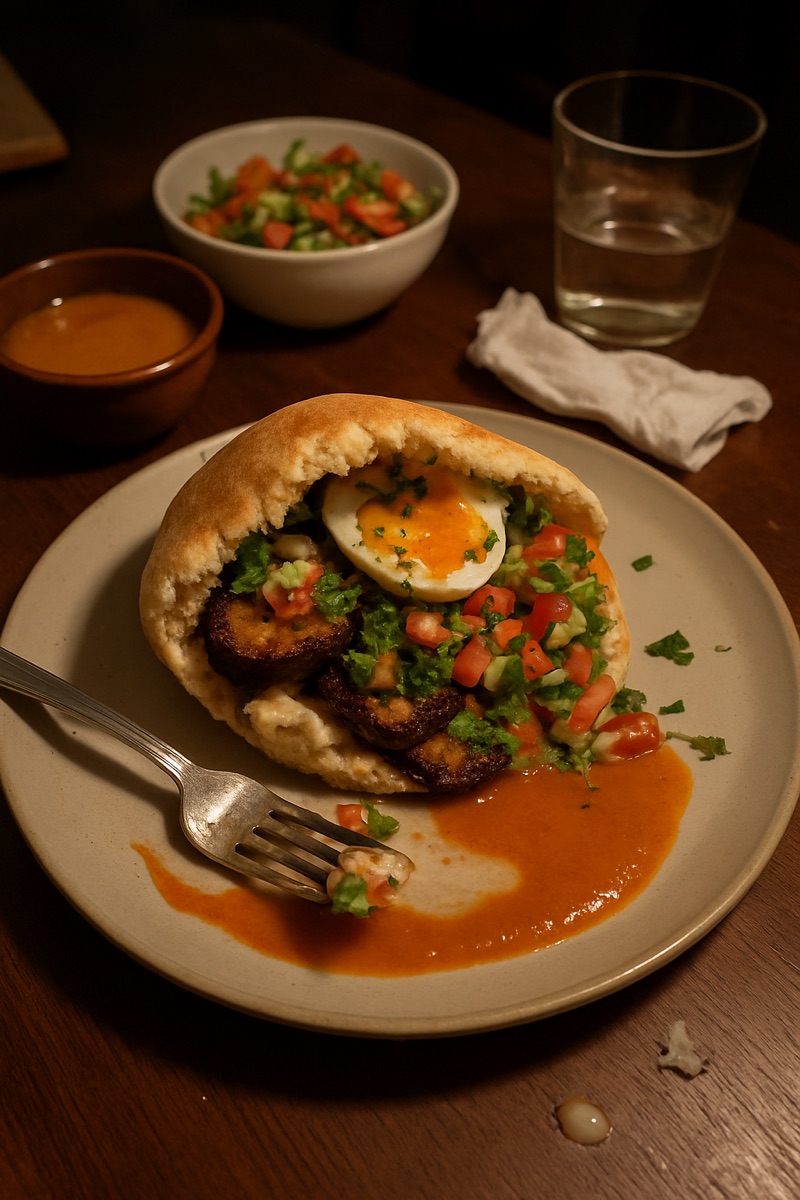 Sabich
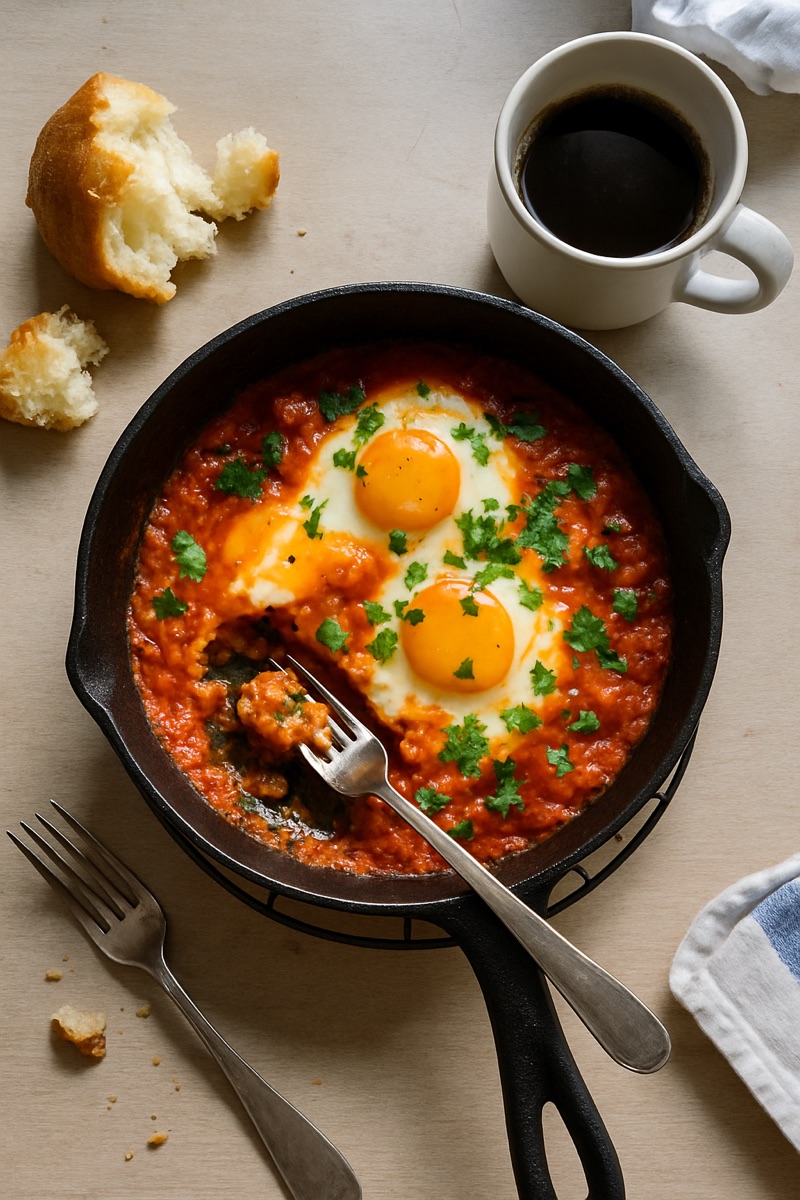 Shakshuka
Questions people ask
Is falafel Israeli or Arab?
Falafel most likely originated in Egypt and is eaten across the Arab world. The chickpea version became a staple in Israel and is often called its national dish, a label Palestinians and other Arabs criticise as appropriation.
Is hummus the national dish of Israel?
Hummus is often described as Israel's unofficial national dish because it is eaten almost daily, but Israel has no official national dish and the claim is contested, notably by Lebanon.
What is Israeli falafel made of?
Soaked raw chickpeas ground with onion, garlic, parsley, cumin and coriander, shaped into balls and deep-fried. Egyptian falafel is usually made with fava beans instead.
What is served with falafel in Israel?
It is usually eaten in a pita with chopped salad, pickles, tahini, hummus and hot sauces such as skhug, often with amba.
Who holds the record for the largest hummus?
According to the latest reports, Lebanon, with a dish of about 10,450 kg made in May 2010, after Israel and Lebanon had traded the Guinness record since 2008.
Keep reading
- Traditional food of Israel: 14 dishes to know
- What is the national dish of Bahrain?
- What is the national dish of Iran?
- What is the national dish of Iraq?
- What is the national dish of Jordan?
- What is the national dish of Kuwait?