 COPPER
What is the national dish of Palestine?
Palestine has no official national dish, but musakhan is the one most often cited. It is roast chicken laid on taboon bread covered with red onions slow-cooked in olive oil and a large amount of sumac, then baked so the bread soaks up the oil. Maqluba, an upside-down pot of rice, chicken and fried vegetables, is the other dish often named.
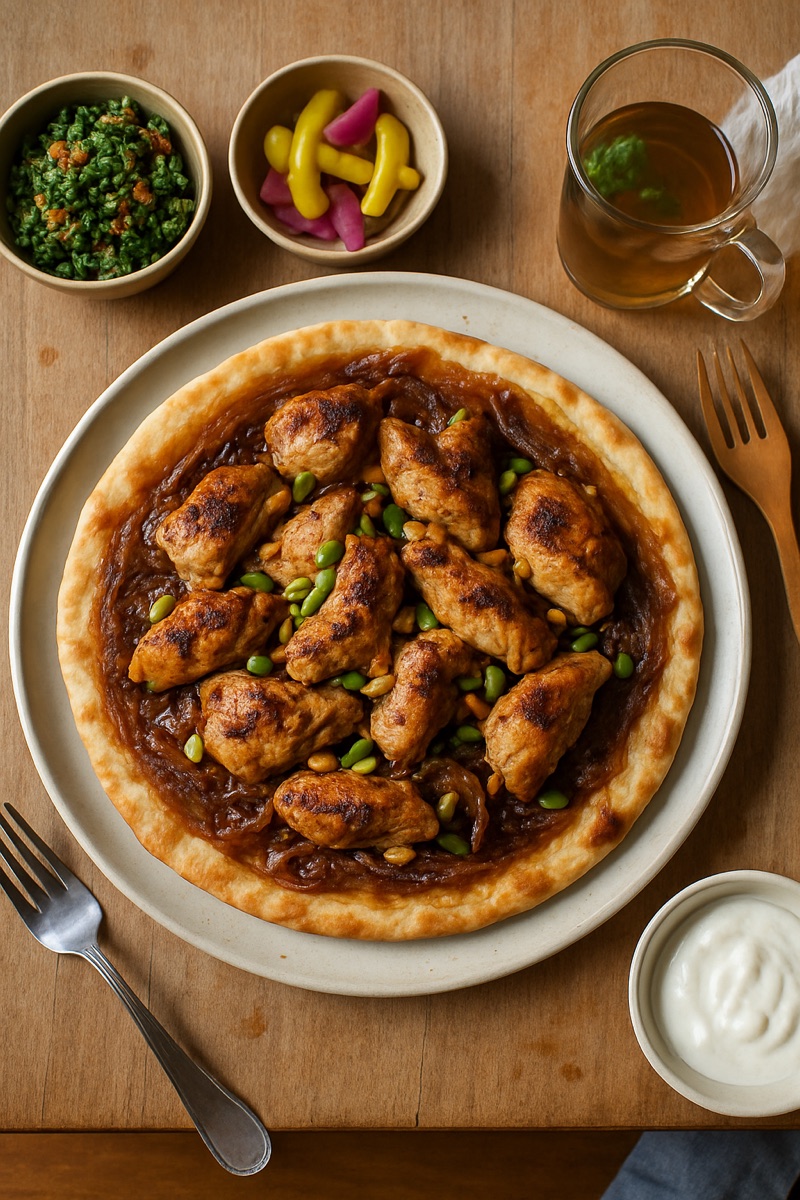
Why musakhan is called the national dish
No decree names a national dish for Palestine. Musakhan is the one most often described that way, and lists of national dishes also give maqluba and falafel. Musakhan's claim rests on its ingredients: olive oil, sumac and pine nuts are staples of Palestinian cooking, and the dish spread through a country of olive groves. It is cooked above all in the olive-pressing season, at Ramadan iftars and at family gatherings.
It comes from the Tulkarm and Jenin area in the north of the West Bank. Its exact origin is unclear, but it appears in 19th-century Palestinian folk songs, and different versions have existed for about 150 years. On 20 April 2010, the largest musakhan ever made was prepared in Ramallah and entered the *Guinness Book of World Records*; Prime Minister Salam Fayyad called it an honour for the Palestinian people and stressed that it depended on Palestinian products, above all olive oil.
What is in musakhan?
The name means "something reheated"; it is also called *muhammar*, "reddened", after the colour sumac gives it. The ingredients are few:
- Chicken, cut into pieces, marinated with olive oil, sumac and allspice, then roasted.
- Red onions, as much onion as chicken by weight.
- Sumac, a lot of it: 50 g for a 1.5 kg chicken in our recipe.
- Olive oil, 250 ml for the onions alone.
- Taboon bread, a thick flatbread from a clay oven.
- Pine nuts, toasted and scattered on top.
How musakhan is made
In our musakhan recipe, the chicken roasts at 200 °C for 45 to 55 minutes while 1.5 kg of sliced red onions cook in 250 ml of olive oil over low heat for 40 minutes. They should collapse without browning: this is not caramelising. The sumac goes in off the heat and the mixture turns purple and very oily. The oil is not cut; it is what soaks the bread.
The breads are spread with a thick layer of sumac onions, moistened with the chicken juices, topped with the chicken and baked for 10 to 15 minutes. It is eaten by hand, tearing and folding the bread, with yogurt or a thin yogurt drink, and often with a chicken and vermicelli soup. Newer versions roll it up in thin saj bread or turn it into a *fatteh*.
Maqluba, the other contender
Maqluba means "upside-down". A dish of that name appears in a 13th-century Baghdad cookbook, but as an egg dish; the rice version was described in Palestine by the American scholar Elihu Grant in 1921. It is eaten across the Levant and Iraq, and in Palestine it is a dish for feasts and large gatherings. Cauliflower and eggplant are the usual vegetables, though tomatoes and potatoes also appear.
Our maqluba recipe deep-fries eggplant and cauliflower until deep brown, layers them over chicken thighs in a heavy pot, covers them with rice and the chicken broth, and cooks it 30 minutes on the lowest heat. After resting, the pot is flipped onto a platter in one move and left a minute before being lifted. It is finished with fried pine nuts and served with yogurt.
Maqluba has also become a political symbol: Palestinians object to it being labelled Israeli, and it has been cooked at protests, including gatherings at Al-Aqsa Mosque in Jerusalem; in 2017 Israeli police arrested a Palestinian woman who had organised one.
Other dishes to know from Palestine
Knafeh in its best-known form, *knafeh nabulseyeh*, comes from Nablus, which has been linked to the dessert since at least 1923. It is made with nabulsi cheese, a firm white brined cheese soaked for 6 to 8 hours until barely salty, spread over buttered kataifi dough, cooked on the stovetop, flipped and covered with cool syrup and pistachios. Knafeh is considered a cultural touchstone of Palestinian identity. Gaza has its own version, *knafeh ghazawiya*, made with semolina and bulgur, where nutmeg and cinnamon replace the cheese.
Mansaf, lamb in a dried yogurt sauce, is the main festive dish of the central and southern West Bank; it is better known as the national dish of Jordan.
All three recipes, with ingredients and step-by-step methods, are on our page about the food of Palestine. For the neighbouring kitchens, see our guide to Middle Eastern food.
The recipes
- Musakhan🇵🇸 Palestinian Territory · 2 hours and 20 minutes
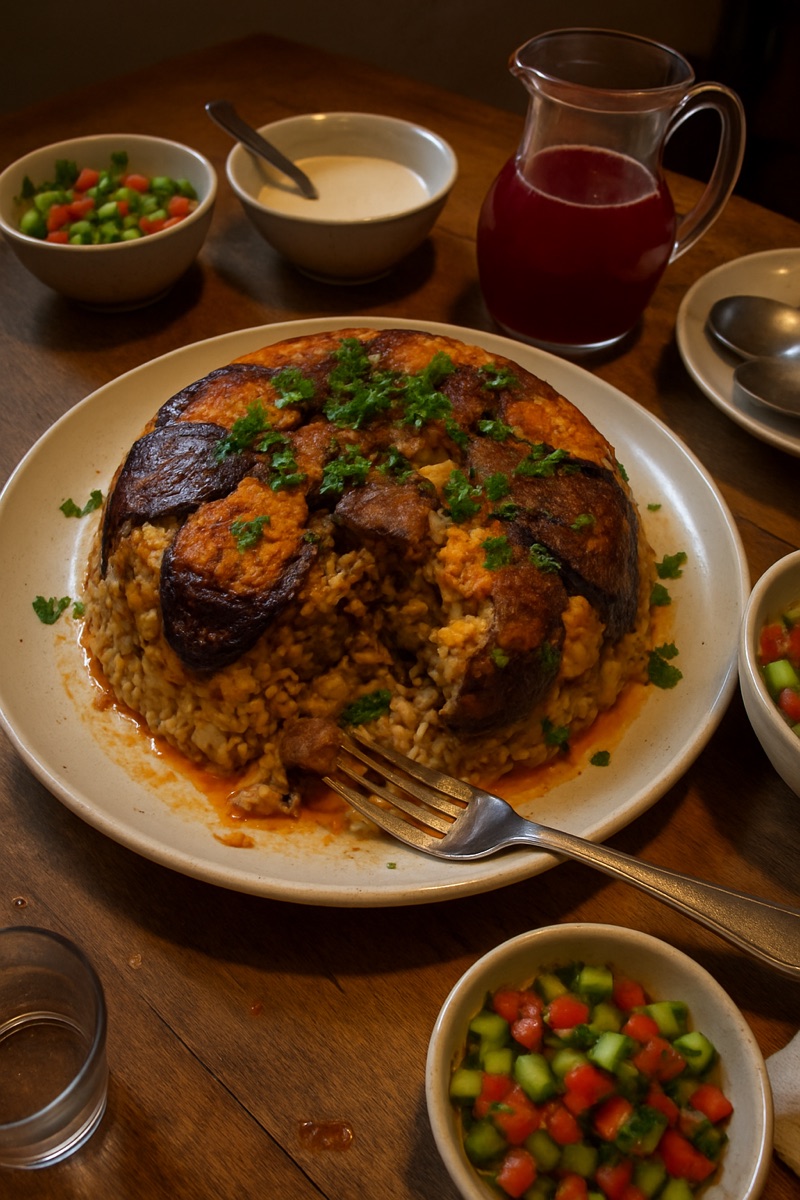 Maqluba🇵🇸 Palestinian Territory · 2 hours
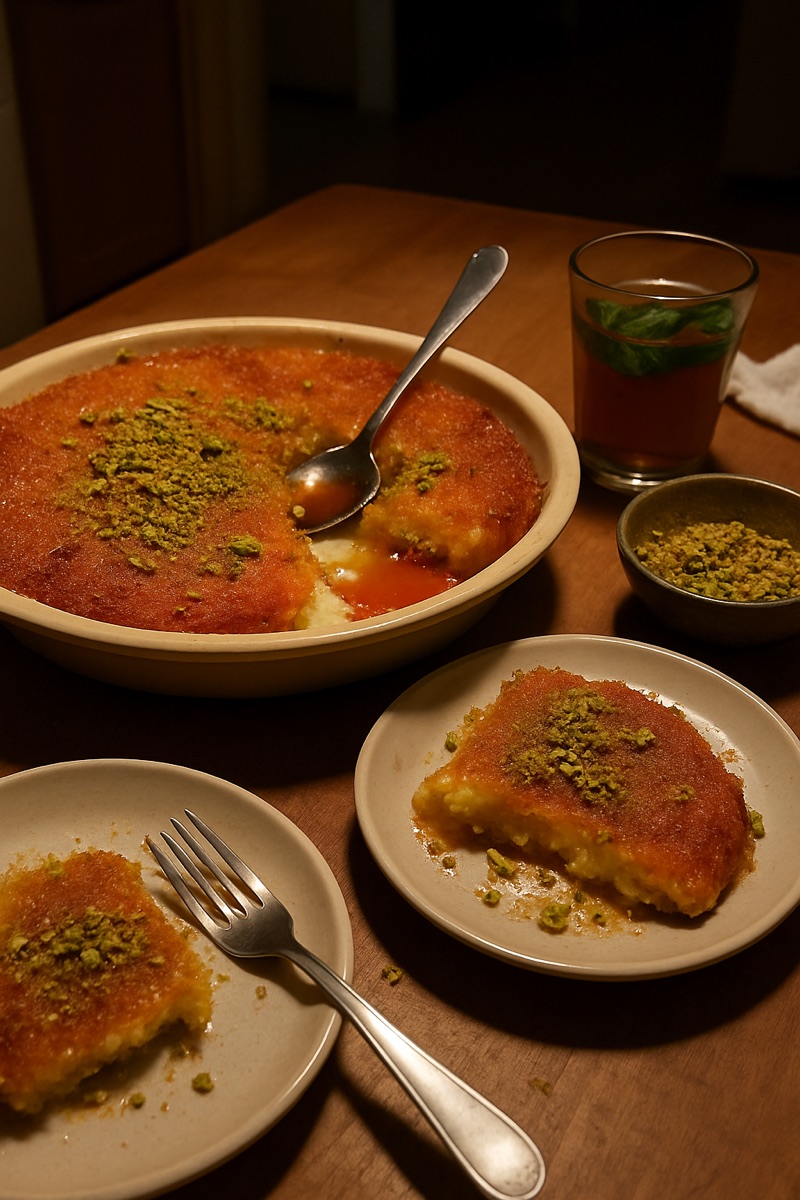 Knafeh🇵🇸 Palestinian Territory · 7 hours and 50 minutes
Questions people ask
Is musakhan Palestinian or Jordanian?
Musakhan is Palestinian, from the Tulkarm and Jenin area. It is also very popular in Jordan, where it arrived with Palestinian families.
What does musakhan mean?
Musakhan means "something reheated" in Arabic. It is also called muhammar, "reddened", after the colour of the sumac.
What bread is used for musakhan?
Taboon bread, a thick flatbread baked in a clay oven. Some modern versions use thin saj bread and roll it up.
Is maqluba the national dish of Palestine?
Maqluba is often named alongside musakhan, but neither has official status. Musakhan is the one cited most often.
Where is knafeh from?
The best-known version, knafeh nabulseyeh, comes from Nablus, and it is made with the city's white brined nabulsi cheese.
Keep reading
- Traditional food of Palestine: 14 dishes to know
- What is the national dish of Bahrain?
- What is the national dish of Iran?
- What is the national dish of Iraq?
- What is the national dish of Israel?
- What is the national dish of Jordan?