 COPPER
Traditional food of Palestine: 14 dishes to know
Palestinian food is built on olive oil, taboon bread, rice, wheat, lamb and chicken, seasoned with sumac, allspice, za'atar and lemon. Lunch is the main meal, often a large platter of rice and meat. The most emblematic dishes are musakhan, maqluba, hummus and knafeh, with falafel as the everyday street food.
What Palestinian food is built on
Palestinian cooking is a Levantine cuisine, close to that of Lebanon, Syria and Jordan, shaped by the Umayyad and Abbasid caliphates and then by four centuries of Ottoman rule. Until the 1950s and 1960s, rural cooking rested on olive oil, oregano and bread baked in a taboon, a clay oven. Over the 20th century rice replaced bulgur and freekeh in many dishes, and mutton remained the main meat. Families still keep mooneh, the year-round store of jams, pickles, labaneh in olive oil, dried yogurt and clarified butter, and forage wild plants such as mallow and purslane.
Lunch, eaten late in the afternoon, is the heaviest meal: rice, lamb or chicken, cooked vegetables and stuffed dishes. Breakfast and dinner are lighter, built on bread, olives, labaneh, eggs, hummus and salads, with coffee and tea served between meals.
Main dishes and festive platters
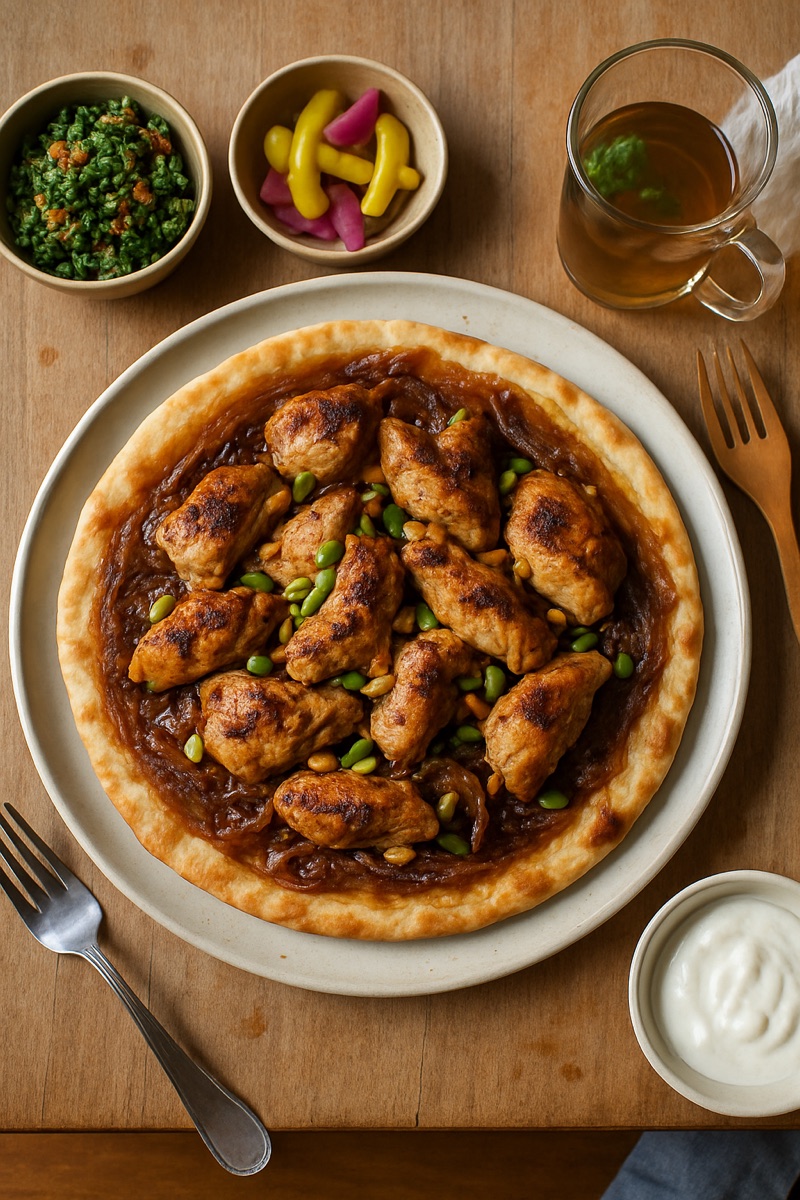
- Musakhan — Roast chicken on taboon bread covered with red onions slow-cooked in olive oil and a large amount of sumac, finished with pine nuts. It comes from the Jenin and Tulkarm area and is cooked above all in the olive-pressing season.
- Maqluba — Fried eggplant and cauliflower layered over chicken or lamb, covered with rice and broth, then flipped out of the pot onto a platter. Its name means "upside-down", and it is a dish for feasts and large gatherings.
- Mansaf — Lamb cooked in a sauce of jameed, dried fermented yogurt, served on taboon bread under yellow rice and garnished with pine nuts and almonds. It is the main festive dish of the central and southern West Bank and the Naqab, eaten with the right hand at weddings and holidays.
- Qidreh — Rice and lamb, sometimes chicken, cooked in a clay or copper pot in an oven, a dish for weddings and feasts. The Hebron original is plain and lightly spiced; in Gaza it takes chickpeas, whole garlic cloves, cardamom and turmeric, and pots were taken to a communal wood-fired oven.
- Sumaghiyyeh — A Gaza holiday dish of ground sumac soaked in water and mixed with tahini, cooked with chard, slow-stewed beef and chickpeas, and seasoned with dill seeds, garlic and chilli. It is eaten cool with bread and shared out among neighbours at weddings and Eid.
- Waraq al-'ainib — Grape leaves rolled around minced meat, rice and diced tomatoes, served by the dozen on a large plate, often with stuffed zucchini (kousa mahshi). Rolling them is shared work among the women of the family, prepared the day before.
Everyday dishes, dips and street food
Bread holds every meal together. Khubz, close to pita, is torn and used to scoop dips; markook is paper-thin and almost transparent; taboon bread is baked on hot stones. Bakeries add manaeesh with za'atar and olive oil, sfiha with lamb, and triangular fatayer filled with meat, spinach or za'atar.
- Hummus — Chickpeas soaked overnight, boiled for at least an hour and blended with tahini and lemon juice, then covered with olive oil and sometimes paprika or pine nuts, a West Bank habit. It is eaten at breakfast and dinner, and mixed with fava beans it becomes mukhluta.
- Falafel — Fried patties of ground chickpeas, sometimes fava beans, with herbs and spices, usually wrapped in khubz, the everyday flatbread, with salad and tahini. Falafel and shawarma shops are a fixture of every Palestinian town.
- Mujaddara — Lentils cooked with rice or bulgur and topped with onions fried in olive oil. Families serve it several times a month, with sheep's milk yogurt from Nablus and a green salad, and Christians eat it during Lent.
- Tabbouleh — Parsley, bulgur, diced tomatoes and cucumber dressed with lemon juice, a staple of the mezze. In 2006 Palestinian cooks in Ramallah prepared the largest bowl of tabbouleh in the world.
- Freekeh soup — Freekeh is green durum wheat harvested in late spring, burned so only the straw and chaff catch fire, then rubbed. Cooked in chicken broth, it is one of the soups that open the evening meal in Ramadan; it also goes into pilaf with lamb, nuts and spices.
Sweets and drinks
Holidays have their own sweets: zalabiyeh, small fried dough balls dipped in syrup, for the Prophet's birthday, and mughli, a spiced ground-rice pudding with almonds, pine nuts and walnuts, to celebrate a newborn.
Arabic coffee, unsweetened and spiced with cardamom, is drunk throughout the day; tea, flavoured with mint or sage, in the evening. In Ramadan the fast is broken with dates and cold drinks of tamarind, carob or apricot, and sahlab, hot sweetened milk with salep, is a winter drink.
- Knafeh — Fine shredded pastry over white brined nabulsi cheese, coloured orange on top, soaked in syrup and scattered with pistachios. The best-known version comes from Nablus.
- Qatayef — The Ramadan dessert: batter cooked on one side only, folded around unsalted goat cheese or walnuts with cinnamon, baked and served with hot syrup or honey. Bethlehem set the Guinness record for the largest qatayef in 2010, at 104.75 kg.
- Ka'ak bi 'ajwa — Semolina shortbread filled with date paste ('ajwa) or walnuts, the Palestinian ma'amoul. Christians bake it for Easter and Muslims for Eid al-Fitr and Eid al-Adha.
Regional Palestine
There are three main culinary regions. The Galilee, close to Lebanon, cooks bulgur and meat into many kinds of kibbee, baked in a tray or served raw. The West Bank eats heavier meals of taboon bread, rice and roasted meat: musakhan in the north, mansaf in the centre and south, grapes and qidreh around Hebron, knafeh in Nablus, apricots in Bethlehem and olive oil in Tulkarm. Gaza lives on fish and spice, with widespread chilli, dill seed and garlic: zibdieh, shrimp baked in a clay pot with tomatoes and hot peppers, dagga, a crushed tomato and chilli salad, and sumaghiyyeh.
Cook Palestinian food at home
Musakhan is the dish most often called the national dish of Palestine. Copper has full recipes for musakhan, maqluba and knafeh, with ingredients and step-by-step methods, on our page about the food of Palestine, alongside other Middle Eastern recipes.
Hummus, mansaf and knafeh are shared across the Levant. Compare with the traditional food of Jordan and the traditional food of Lebanon.
The recipes
- Musakhan🇵🇸 Palestinian Territory · 2 hours and 20 minutes
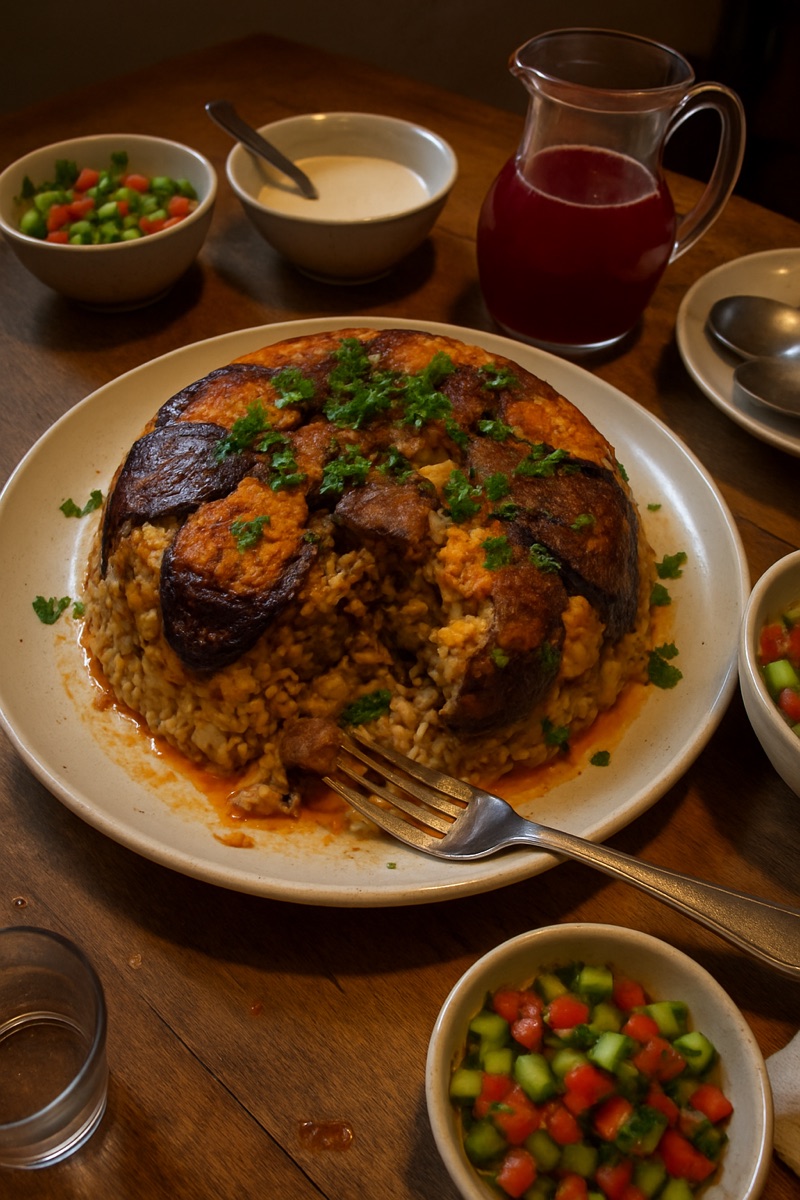 Maqluba🇵🇸 Palestinian Territory · 2 hours
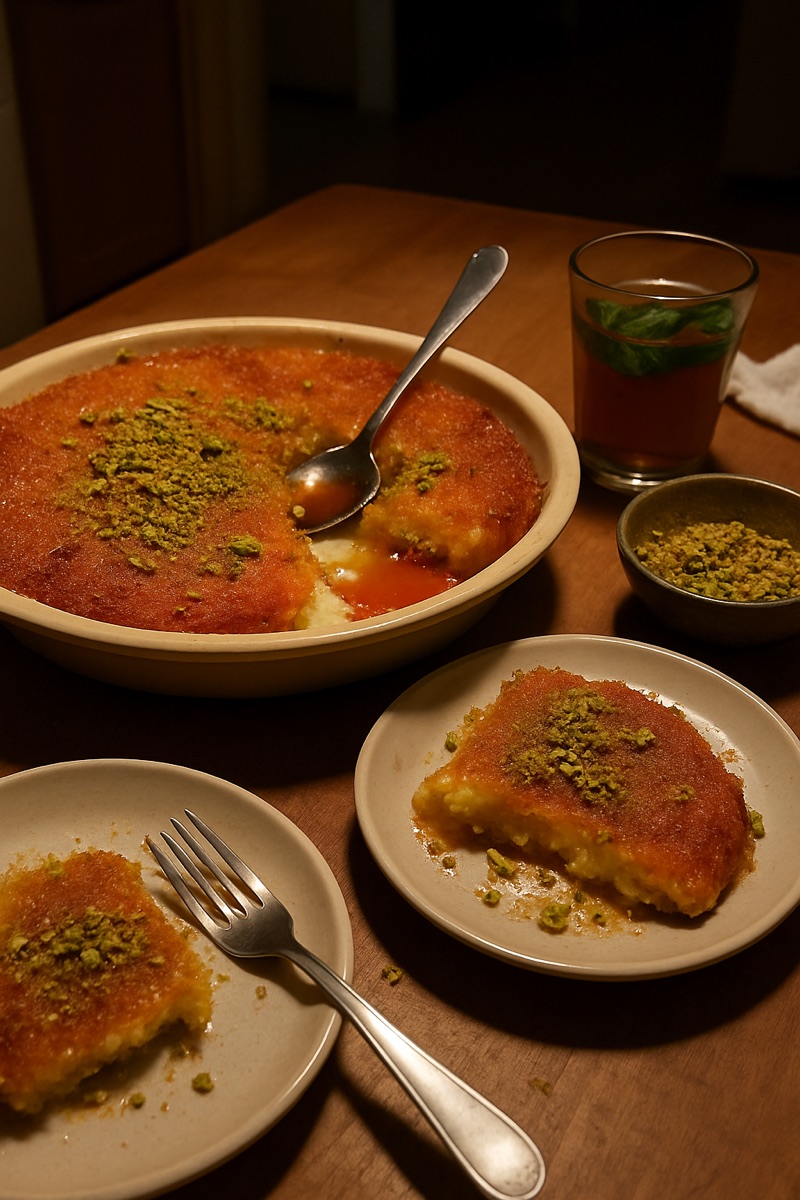 Knafeh🇵🇸 Palestinian Territory · 7 hours and 50 minutes
Questions people ask
What is the most popular food in Palestine?
Hummus and falafel are everyday staples. Musakhan and maqluba are the festive dishes most often called national dishes, and knafeh from Nablus is the best-known sweet.
What do Palestinians eat for breakfast?
A light meal of fried eggs, olives, labaneh with olive oil, jams and hummus, eaten with bread. Lunch, in the late afternoon, is the main meal.
Is Palestinian food spicy?
It depends on the region. Gaza cooking uses chilli widely, in dishes like dagga and sumaghiyyeh, while West Bank dishes such as musakhan are seasoned with sumac, allspice and olive oil.
What do Palestinians eat during Ramadan?
The fast is broken with dates and cold tamarind, carob or apricot drinks, then lentil, vegetable or freekeh soup and a main dish. Qatayef is the Ramadan dessert.
What is Palestinian mansaf?
Lamb cooked in jameed, a dried yogurt sauce, served over rice and taboon bread with pine nuts and almonds. It is the festive dish of the central and southern West Bank.
Keep reading
- What is the national dish of Palestine?
- Traditional food of Bahrain: 13 dishes to know
- Traditional food of Iran: 14 dishes to know
- Traditional food of Iraq: 13 dishes to know
- Traditional food of Israel: 14 dishes to know
- Traditional food of Jordan: 13 dishes to know