 COPPER
Traditional food of Jordan: 13 dishes to know
Jordanian food is Levantine cooking built on olive oil, lamb, yogurt, bulgur, rice and bread, flavoured with garlic, lemon, tomato and za'atar. Meals start with shared mezze and end with sweet pastries and coffee. The most emblematic dishes are mansaf, lamb in a sauce of dried yogurt called jameed, the upside-down rice pot maqluba, the Bedouin pit barbecue zarb and the cheese pastry knafeh.
What Jordanian food is built on
Jordanian cuisine is part of the Levantine family and shares much with the cooking of Palestine, Syria and Lebanon, with Ottoman and Turkish influences and dishes brought by Circassians, Armenians, Iraqis, Palestinians and Syrians who settled in the country. Olive oil is the main cooking fat; Jordan is a major olive producer. Lamb, chicken and beef are the usual meats, and bread, rice, bulgur and freekeh, roasted green wheat, are the grains.
Yogurt is everywhere, thick as labaneh or dried into jameed, the hard fermented yogurt that defines mansaf. Za'atar, a mix of thyme and sesame often with sumac, is eaten with bread and olive oil. Food is the language of hospitality: a "Jordanian invitation" means bringing nothing and eating everything.
Mansaf is Jordan's national dish, and UNESCO inscribed it on its intangible heritage list in 2022; the full story is in our article on the national dish of Jordan.
Feast dishes
Weddings, births, funerals, Ramadan and Independence Day all call for food served to guests in large quantities. To celebrate the birth of a child, Jordanians also serve karawiya, a caraway-flavoured pudding.
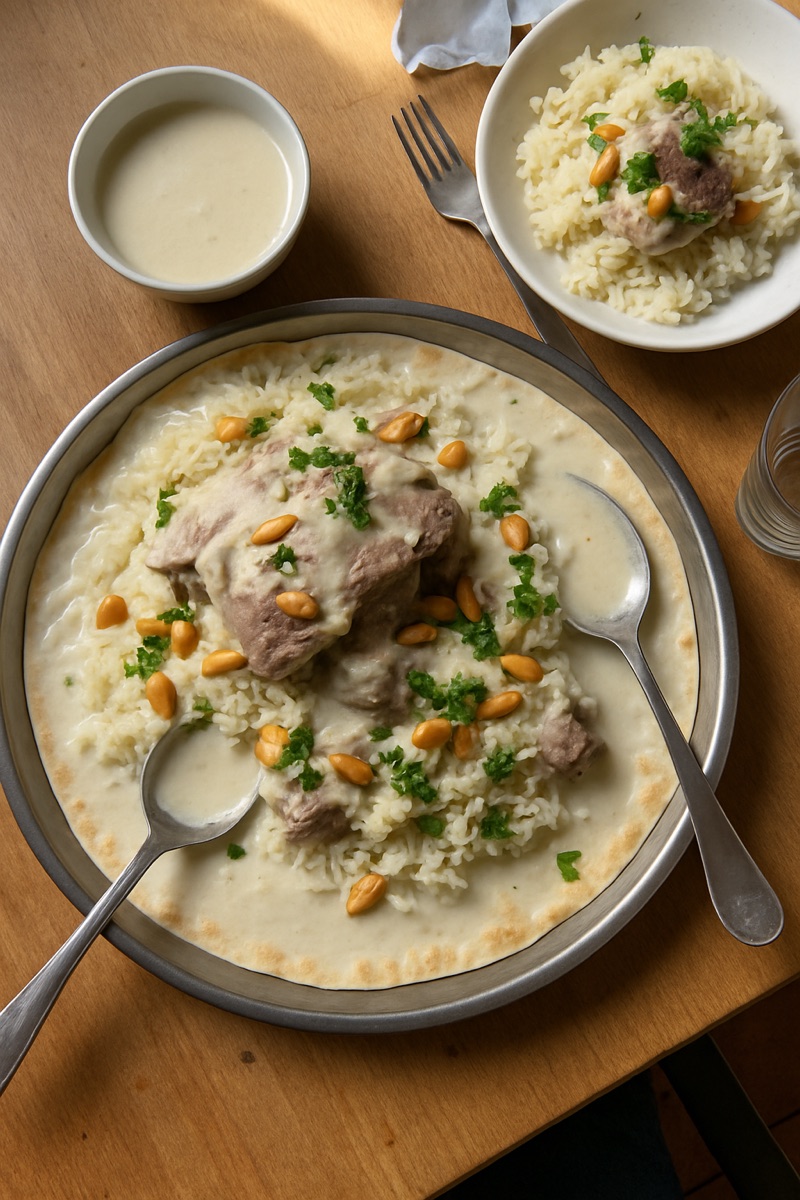
- Mansaf — Bone-in lamb cooked in a sauce of rehydrated jameed, served over rice on a platter lined with thin shrak bread and scattered with almonds and pine nuts. It is the dish of weddings, births, Eid and honoured guests, eaten from the shared platter with the right hand.
- Zarb — The Bedouin barbecue: lamb and chicken with vegetables such as zucchini, eggplant, carrots and potatoes, cooked slowly in a pit oven buried in the ground. It is especially popular around Petra and in the Wadi Rum desert, where it is served to visitors with rice and mezze.
- Maqluba — Meat, rice and fried vegetables such as eggplant and cauliflower layered in a pot that is turned upside down onto a platter to serve; the name means "upside-down". It is popular across Jordan, Palestine, Syria, Lebanon and Iraq.
- Shishbarak — Small parcels of thin wheat dough stuffed with spiced minced beef, cooked in a jameed sauce and served hot. Related dumplings are eaten from Central Asia to the Caucasus.
Everyday plates and mezze
Mezze, small shared plates scooped up with bread, is the dominant way of eating in Jordan, and usually comes before the main dish. A typical spread includes kibbeh, labaneh, baba ghanoush, tabbouleh, fattoush salad with fried bread, olives and pickles, alongside the dishes below.
- Galayet bandora — Tomatoes sautéed with onions, hot peppers, olive oil and salt until thick. It is popular across the Levant but especially in Jordan and Palestine, thanks to its easy preparation, and is usually scooped up with warm bread.
- Mujaddara — Lentils cooked together with rice and topped with onions fried until brown. It is especially popular across the Levant.
- Hummus — Chickpeas blended smooth with tahini, garlic, olive oil and lemon juice, sometimes topped with parsley. It is one of the most common everyday snacks in Jordan.
- Falafel — Fried balls of ground chickpeas and spices, served in bread with hummus, tomato and pickles. Jordanian falafel balls tend to be small.
- Ful medames — Cooked fava beans served with olive oil and toppings such as lemon juice, parsley, chilli and sumac. In Jordan it is part of the mezze table.
Bread and breakfast
A typical Jordanian breakfast is flatbread dipped first into olive oil and then into za'atar. Breads include shrak, thrown paper-thin and baked on the domed saj griddle, taboon bread from the clay oven, and the Bedouin abud, baked in embers.
- Manakish — Flatbread topped with olive oil and za'atar, or with cheese, or with minced meat, when it becomes sfiha. It is baked on a saj or in a taboon oven and eaten for breakfast or lunch.
Sweets and coffee
Baklava and halva are eaten all year, and Ramadan has its own sweets and drinks: warbat, filo filled with custard, tamarind juice (tamar hindi) and apricot juice (qamar eddine). In summer, meals often end with watermelon, figs or prickly pears.
- Knafeh — Shredded pastry and soft white cheese baked in ghee and soaked in sugar syrup, scattered with pistachios. The Nablus style, with the cheese on top of the pastry and an orange crust, is the most common in Jordan.
- Qatayef — Small pancakes cooked on one side, filled with cream or nuts, folded and eaten fresh, fried or baked. In Jordan they appear in bakeries almost only during Ramadan and are eaten after iftar.
- Arabic coffee — Coffee roasted over fire and ground with cardamom, served in small cups on formal occasions and to guests. UNESCO added Jordan in 2024 to its listing of Arabic coffee as a symbol of generosity. Day to day, Jordanians drink Turkish-style coffee and sweet black tea with mint or sage.
Regional food and where to go next
Bedouins in the east and south of Jordan eat more lamb than the rest of the population, and the deserts of Wadi Rum and Petra are the home of zarb. Aqaba, the only coastal city, eats fresh fish and even makes a fish mansaf. Al-Salt and Al-Karak are reputed for their mansaf, Jerash gives its name to a thick labaneh, and the north is known for rashoof, a winter dish of wheat, lentils and yogurt.
Jordanian cooking shares a lot with its neighbours: compare it with the traditional food of Saudi Arabia and the traditional food of Israel, or explore the wider Middle Eastern kitchen. Mansaf, maqluba and knafeh have full recipes in Copper, on our page about the food of Jordan.
The recipes
- Mansaf🇯🇴 Jordan · 14 hours and 50 minutes
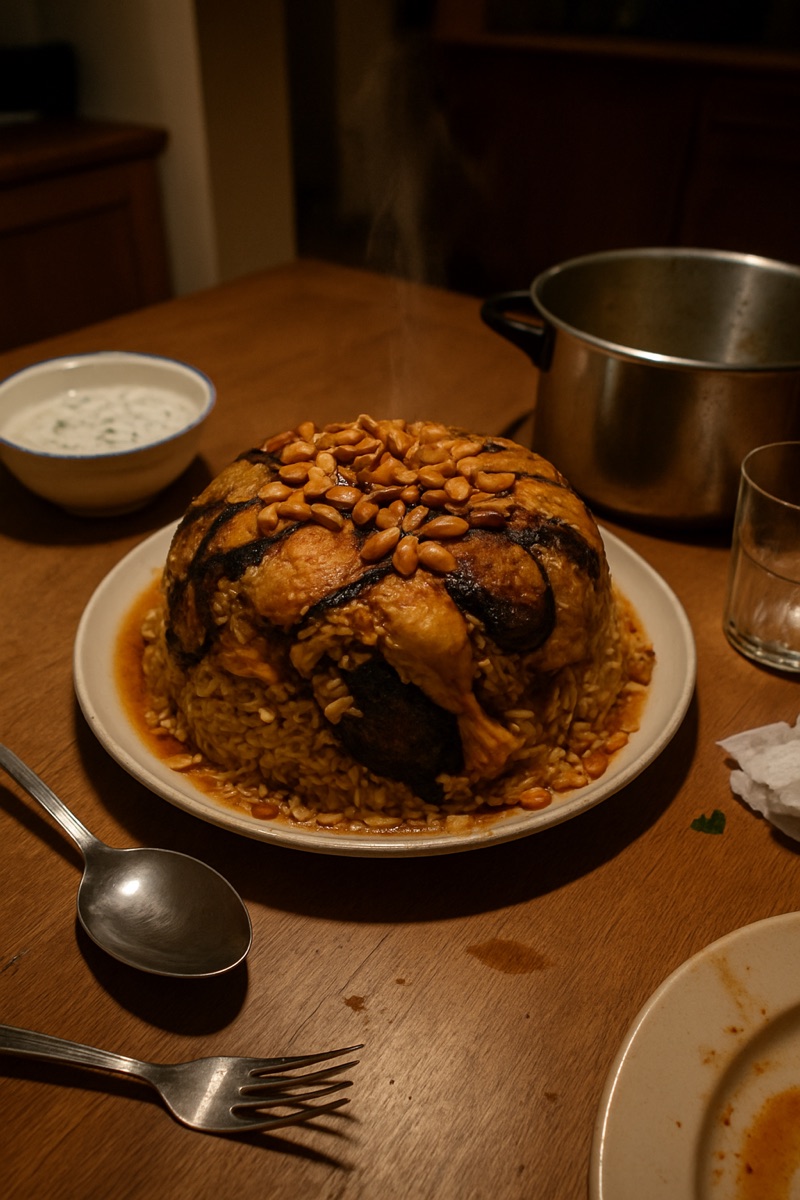 Maqluba🇯🇴 Jordan · 2 hours and 10 minutes
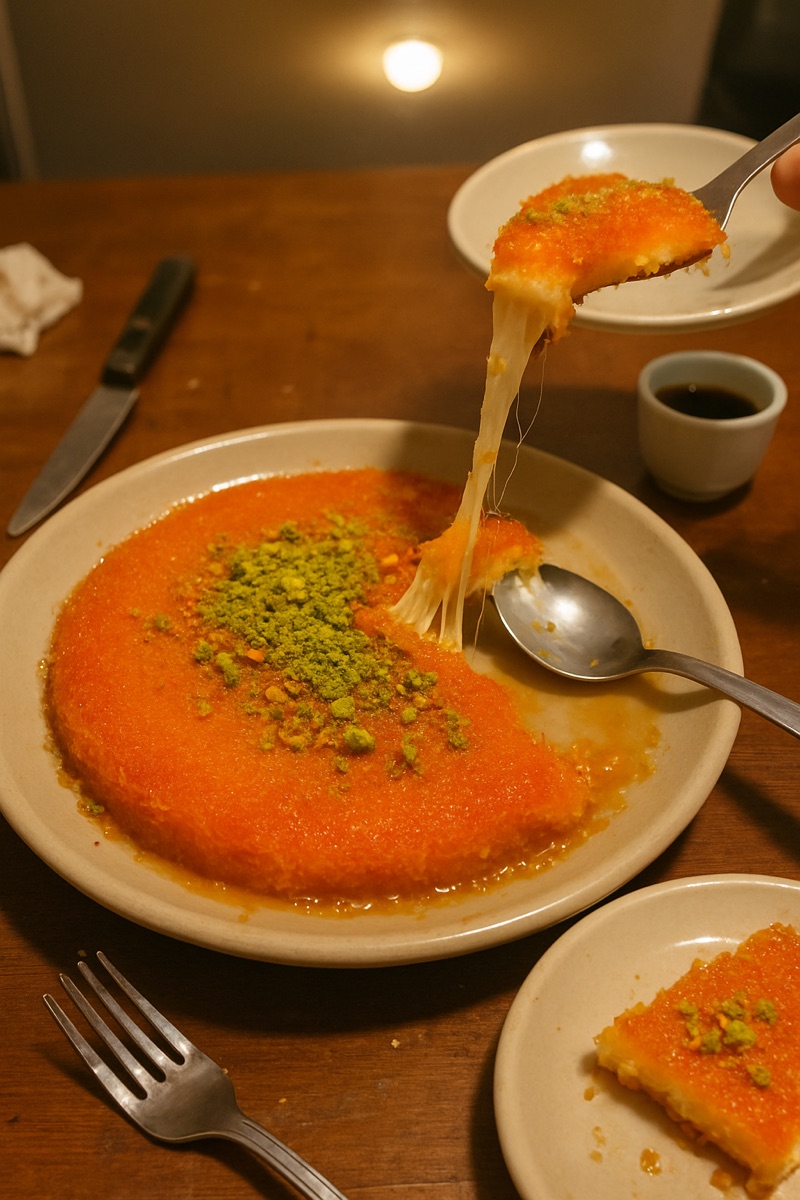 Knafeh🇯🇴 Jordan · 9 hours
Questions people ask
What is the most popular food in Jordan?
Mansaf, lamb cooked in jameed sauce and served over rice and bread, is the national dish and the food of every celebration. Maqluba, hummus, falafel and shawarma are the most common everyday foods.
What do Jordanians eat for breakfast?
Flatbread dipped in olive oil and za'atar is the classic, along with manakish, flatbread baked with za'atar or cheese. Labaneh, hummus and falafel are also everyday staples.
Is Jordanian food spicy?
Generally not. It relies on garlic, lemon, olive oil, za'atar and herbs; hot peppers appear in some dishes, such as galayet bandora.
What is jameed?
A hard, dried yogurt made from fermented sheep's milk. Soaked and blended, it becomes the sour sauce of mansaf and is also used for shishbarak.
What is a traditional Jordanian dessert?
Knafeh, a cheese pastry soaked in syrup, baklava, and qatayef, filled pancakes made during Ramadan.
Keep reading
- What is the national dish of Jordan?
- Traditional food of Bahrain: 13 dishes to know
- Traditional food of Iran: 14 dishes to know
- Traditional food of Iraq: 13 dishes to know
- Traditional food of Israel: 14 dishes to know
- Traditional food of Kuwait: 13 dishes to know