 COPPER
Traditional food of Saudi Arabia: 14 dishes to know
Saudi food is built on rice, wheat, dates, ghee and meat, usually lamb or chicken, seasoned with black pepper, cardamom, cloves, cinnamon and dried lime. Big platters shared by hand are the centre of family meals and feasts. The most emblematic dishes are spiced rice kabsa, the official national dish jareesh, Hejazi milk rice saleeg and the stuffed street pastry mutabbaq, with coffee and dates for every guest.
What Saudi food is built on
Saudi Arabia is a large country, and its cooking differs between the central region of Najd, the Eastern Province, the mountainous south and the Hejaz in the west, whose position on trade and pilgrimage routes brought in many spices. Most ingredients are local: wheat, dates, ghee, meat, fish and vegetables. Rice is now the base of the best-known dishes, but wheat, crushed, cooked as dough or baked into bread, is the older staple of Najd.
Food is closely tied to hospitality. Guests are welcomed with Arabic coffee and dates, the same pairing used to break the fast in Ramadan, and feast dishes are served on one large platter that everyone sits around. Pork and alcohol are forbidden under Islamic law.
In January 2023 the Culinary Arts Commission of the Ministry of Culture named jareesh the national dish and maqshush the national dessert; the full story is in our article on the national dish of Saudi Arabia.
Rice dishes
Rice dishes are the heart of Saudi feasts. For big occasions the meat is served as *mufattah*, a whole roasted lamb laid on a mountain of rice, a sign of generosity. Bukhari rice, meat fried in ghee and cooked with rice, carrots, tomato, cumin and black pepper, is as widespread as kabsa.
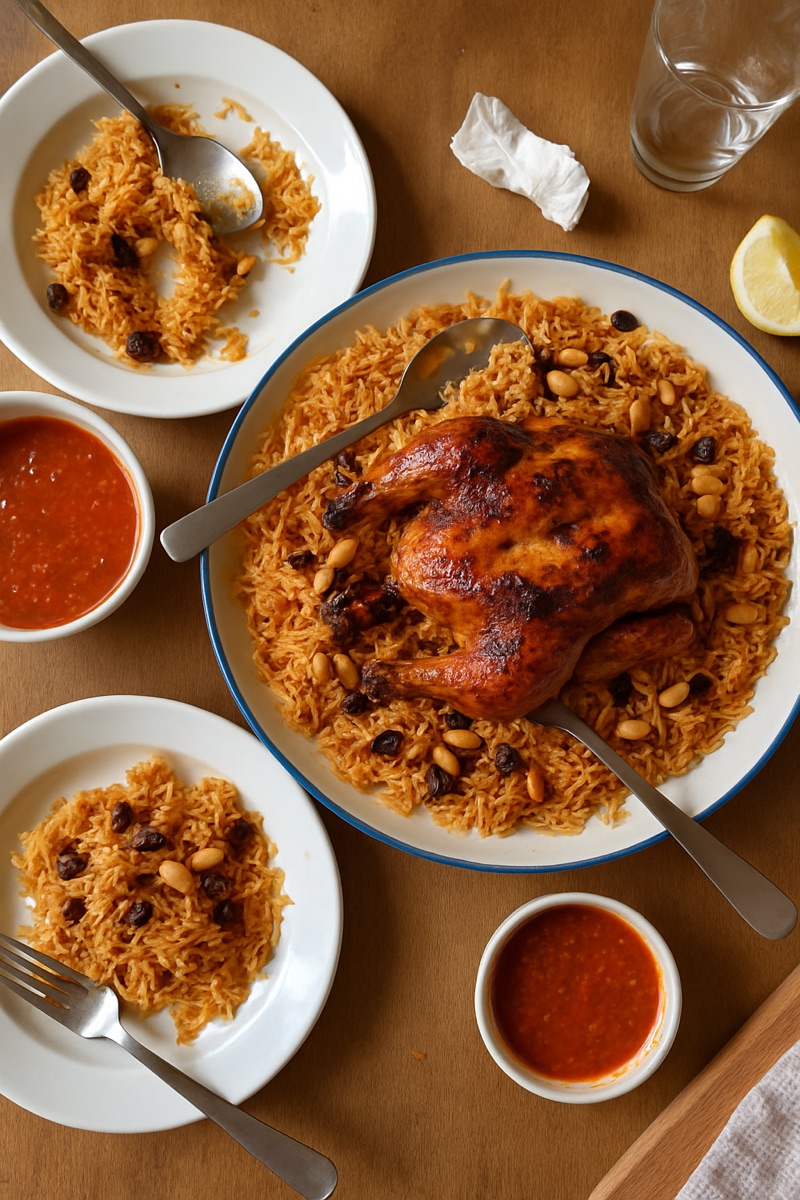
- Kabsa — Rice cooked in the broth of chicken, lamb, camel or beef with black pepper, cardamom, cloves, cinnamon, bay leaves and dried lime, served under the meat on one large platter. Saudipedia calls it the most famous Saudi dish: it is the family lunch and the centrepiece of weddings and Eid. It comes with daqqus, a simple tomato sauce.
- Saleeg — White rice cooked in chicken or meat broth with milk, served with roasted meat on top, ghee and daqqus. It comes from the Hejaz, is especially popular in Taif, and is the official regional dish of the Makkah region.
- Hassawi rice — The dish of al-Ahsa, in the Eastern Province, made with a local short red rice grain. It is cooked much like kabsa; traditionally the rice was cooked in a sealed copper pot, today usually in a pressure cooker.
- Haneeth — The dish of Asir, in the south-west: meat layered with the markh plant and cooked for two to three hours in an iron pot or in a pit heated with firewood. It is served with rice.
Wheat dishes of Najd and the north
Before rice became common, the people of Najd ate wheat, which needed fewer resources to grow. Wheat is still cooked whole, crushed or as dough in broth, and festive *mathlotha* stacks three layers on one platter: jareesh, shredded thin bread called qursan, and rice topped with meat.
- Jareesh — Crushed wheat simmered for hours with meat, then stirred with laban (buttermilk) into a thick porridge and topped with onions fried in ghee. It comes from Najd and became the official national dish in 2023. A red version from Hail is cooked with tomato.
- Harees — Wheat and meat cooked with ghee, black pepper, cinnamon and salt until smooth. It is commonly eaten in the Gulf states during Ramadan.
- Matazeez — Thick rounds of whole wheat dough from Qassim, cooked in a rich meat and vegetable broth. One of the best-known dishes of the central region, it is eaten mostly in winter and during Ramadan.
- Margoog — Thin rounds of whole wheat dough cooked in a broth of meat and vegetables such as eggplant, pumpkin and zucchini. It is the official regional dish of the Riyadh region.
Street food and breakfast
Fast food has arrived too: Al Baik, a Saudi chain selling broasted fried chicken, has led the way among Saudi-owned chains and has expanded to neighbouring Gulf states.
- Mutabbaq — Dough stretched paper-thin and folded into a square around minced meat, beaten egg, leek and green onion, then fried on a griddle and cut into squares. It is the everyday snack of the west of the country, eaten in Mecca especially during Ramadan, Hajj and Umrah, with lemon and green chilli.
- Ma'soub — A breakfast from Mecca and Jazan: bread, bananas, butter and honey mashed together in a deep wooden bowl. It is served with cream, cheese or dates.
Sweets and drinks
Dates are the first sweet of Saudi Arabia, eaten with coffee and used to break the fast in Ramadan. In Mecca, Eid al-Fitr brings debyaza, a thick compote of dried apricots, dates, sugar and spices finished with roasted nuts.
- Maqshush — The national dessert since 2023: small soft breads of brown and white flour, eggs, yeast and milk, topped with honey or ghee. It is a winter dish of Hail and the north.
- Kleja — A pastry of whole wheat flour filled with sugar, cardamom, cinnamon, ground black lime, ghee and ginger. They are the official regional dish of Qassim.
- Arabic coffee and dates — Roasted coffee ground with cardamom, poured from a dallah pot into small cups called finjan and served with dates. Arabic coffee as a symbol of generosity was inscribed on UNESCO's intangible heritage list in 2015, on a file shared by Saudi Arabia, the United Arab Emirates, Oman and Qatar.
- Sobia — A cold, lightly fermented drink from the Hejaz, made in the Saudi version from wheat flour, malt, sugar and spices. It is now sold across the country, especially during Ramadan.
Regional dishes and where to go next
In January 2024 the Culinary Arts Commission named one dish for each of the 13 regions, a useful map of Saudi food: saleeg for Makkah, Madini rice for Al-Madinah, margoog for Riyadh, Hassawi rice for the Eastern Province, kleja for Qassim, stuffed grape leaves for Hail, haneeth for Asir and maghsh, meat cooked in a stone pot, for Jazan.
Saudi cooking shares much with its neighbours, from the Gulf's machboos to the Levant: compare it with the traditional food of Jordan, or explore the wider Middle Eastern kitchen. Kabsa, jareesh and mutabbaq have full recipes in Copper, on our page about the food of Saudi Arabia.
The recipes
- Kabsa🇸🇦 Saudi Arabia · 2 hours
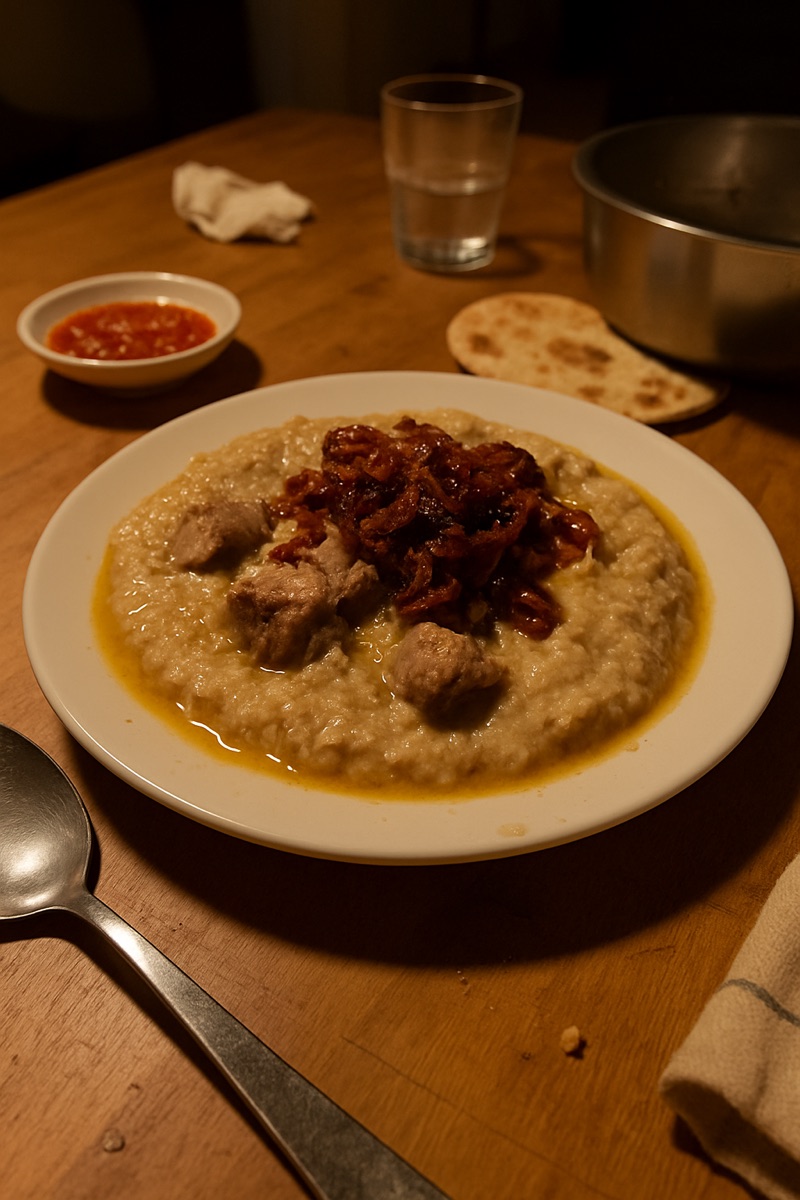 Jareesh🇸🇦 Saudi Arabia · 4 hours
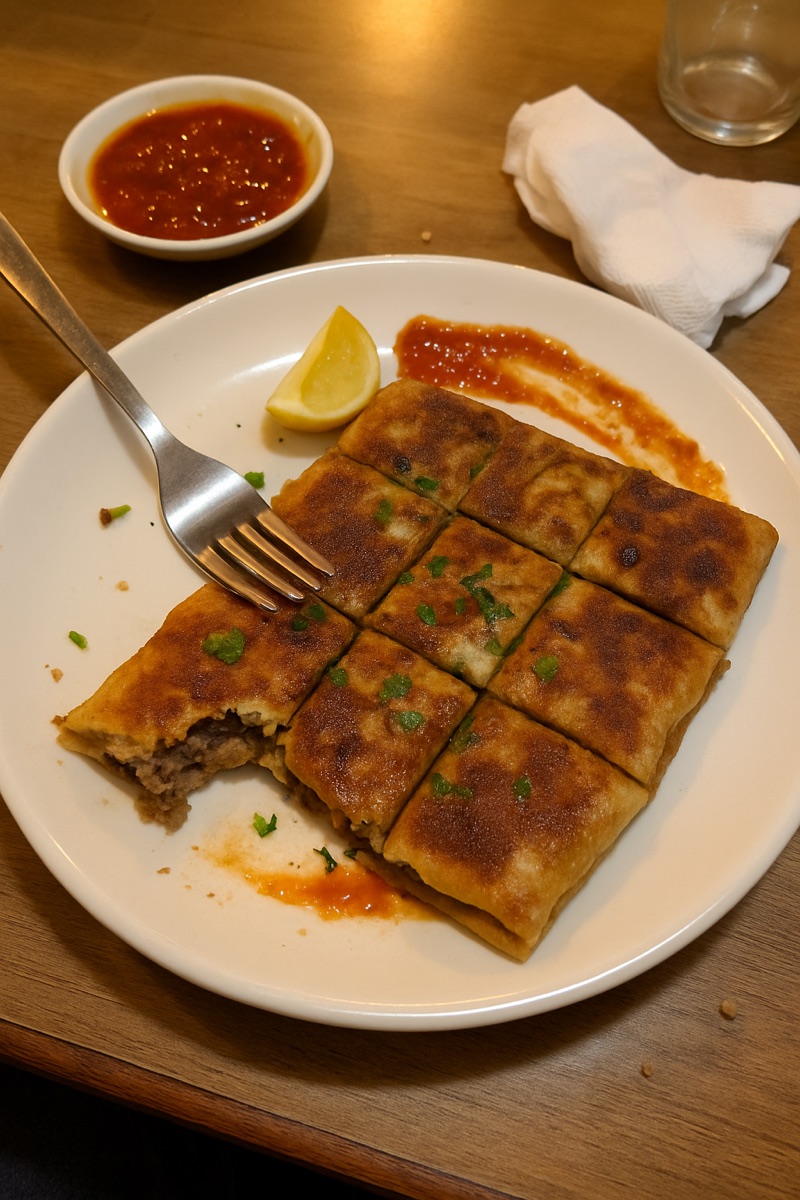 Mutabbaq🇸🇦 Saudi Arabia · 2 hours and 30 minutes
Questions people ask
What is the most popular food in Saudi Arabia?
Kabsa, spiced rice cooked in the broth of chicken, lamb or camel and served under the meat, is the most famous Saudi dish. Jareesh, a wheat and laban porridge, is the official national dish.
What do Saudis eat for breakfast?
Breakfast varies by region: ma'soub, bread mashed with banana, butter and honey, in Mecca and Jazan; maqshush with honey or ghee in Hail; and dates with Arabic coffee across the country.
Is Saudi food spicy?
It is more aromatic than hot. Black pepper, cardamom, cloves, cinnamon and dried lime season dishes like kabsa, and some foods, such as mutabbaq, are eaten with green chilli.
What is the national dish of Saudi Arabia?
Jareesh, chosen in January 2023 by the Culinary Arts Commission of the Ministry of Culture, together with maqshush as the national dessert.
What is Saudi coffee?
Arabic coffee, or gahwa: roasted beans ground with cardamom, poured from a dallah into small finjan cups and served with dates as a sign of hospitality.
Keep reading
- What is the national dish of Saudi Arabia?
- Traditional food of Bahrain: 13 dishes to know
- Traditional food of Iran: 14 dishes to know
- Traditional food of Iraq: 13 dishes to know
- Traditional food of Israel: 14 dishes to know
- Traditional food of Jordan: 13 dishes to know