 COPPER
Traditional food of Iran: 14 dishes to know
Iranian food is built on rice and flatbread, piles of fresh herbs, saffron, dried lime and fruit cooked with meat, from pomegranate to barberries. Slow-simmered stews called khoresh are served over rice, and kebabs over buttered steamed rice. The most emblematic dishes are chelow kabab, the herb stew ghormeh sabzi, the crisp rice crust tahdig and the walnut and pomegranate stew fesenjan.
What Iranian food is built on
Iranian cuisine, also called Persian cuisine, comes from many peoples, Persians, Azerbaijanis, Kurds, Baluch, Turkmen and others, and has influenced kitchens from the Caucasus to India. Its two staples are rice and wheat bread. Rice began as a speciality of the Safavid court and became a major branch of Iranian cooking by the end of the 16th century; bread, such as thin lavash, thick barbari and stone-baked sangak, remained the everyday staple in much of the country.
Herbs are used by the handful, fresh and dried: parsley, coriander, fenugreek, chives, mint and dill. Fruit goes into savoury dishes, with plums, pomegranates, quince, apricots, barberries and raisins cooked alongside meat. Saffron, rose water, cardamom, cinnamon, turmeric and dried lime give the cuisine its taste. Almost every meal comes with *sabzi khordan*, a plate of fresh herbs, radishes and white cheese, and with bread.
There is no official national dish; the two main contenders, chelow kabab and ghormeh sabzi, are covered in our article on the national dish of Iran.
Rice and kebabs
Iranian rice is soaked, parboiled and then steamed so that every grain stays separate. Plain steamed rice is *chelow*; rice cooked with other ingredients is *polow*.
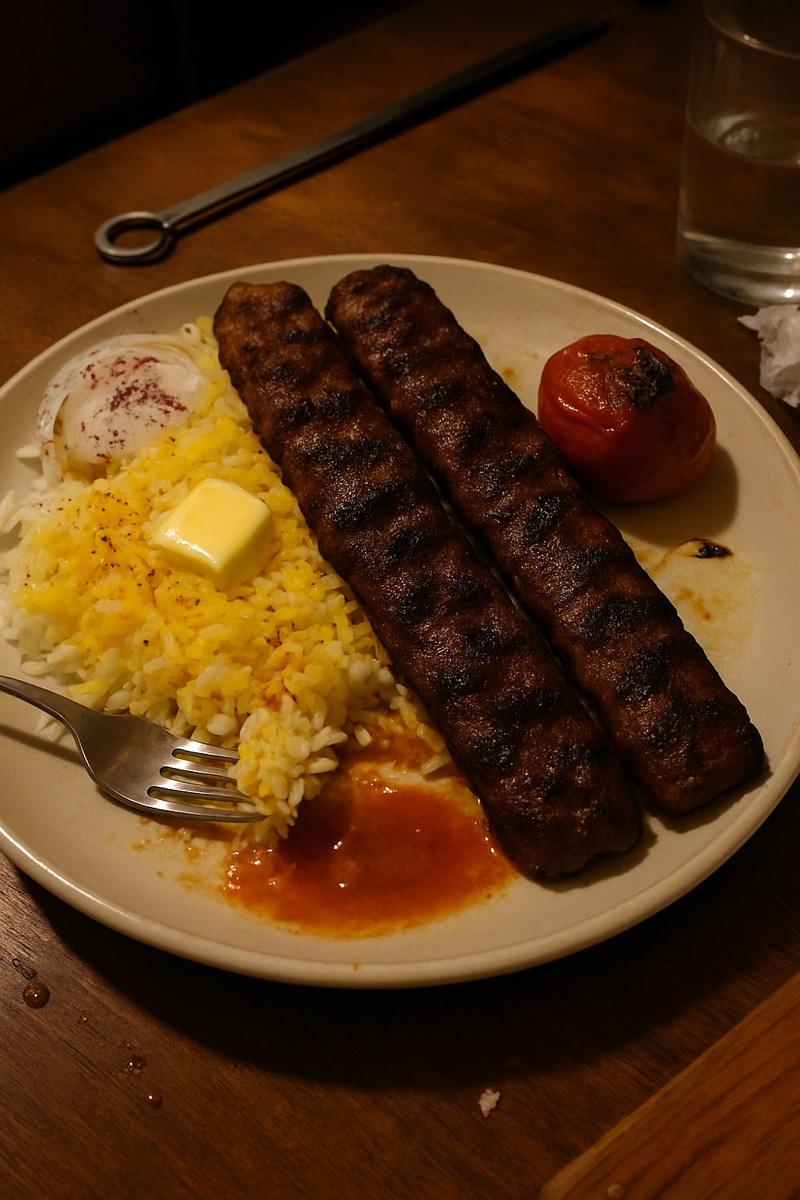
- Kabab koobideh — Minced lamb or beef with grated onion, pressed onto wide flat skewers and grilled over charcoal. Served on steamed rice with butter, sumac and grilled tomatoes, it becomes chelow kabab, the dish most often called Iran's national dish, probably created under the Qajar dynasty. The usual drink with it is doogh.
- Tahdig — The golden crust that forms at the bottom of the rice pot, often made with a layer of yogurt and saffron rice, or with potato or lavash bread. It is turned out whole and served with stews and kebabs. Tahchin, a baked cake of rice, yogurt, egg, saffron and chicken, takes the same idea further.
- Zereshk polo — Basmati rice layered or topped with tart red barberries and saffron, usually served with saffron chicken. It is a festive dish, made for gatherings, weddings and special occasions.
- Sabzi polo — Rice steamed with chopped herbs such as coriander, dill, chives, fenugreek and parsley. Iranians traditionally eat it with fried white fish for lunch on Nowruz, the Persian New Year.
Stews and soups
The most popular meal in Iran is a *khoresh*, a stew of meat, herbs, vegetables or fruit, served over white rice.
- Ghormeh sabzi — Parsley, coriander, leeks and fenugreek fried slowly until dark, then simmered for hours with lamb, kidney beans and dried limes. It is the everyday family stew of Iran and the other contender for national dish.
- Fesenjan — A sweet and sour stew of ground walnuts and pomegranate paste, made with duck, chicken or small meatballs. Encyclopaedia Iranica links it to the Caspian province of Gilan and describes it as an elaborate dish reserved for festive occasions. It is served over rice and appears on the table on Yalda Night, the winter solstice.
- Abgoosht (dizi) — Lamb, chickpeas, white beans, potato, tomato, turmeric and dried lime cooked into a hearty broth. Its second name, dizi, comes from the stoneware crock it is served in. It is eaten with bread rather than rice: the broth first, then the solids mashed.
- Ash reshteh — A thick soup, or *ash*, of thin noodles, kidney beans, chickpeas, lentils and herbs, finished with kashk, a sour dairy product made from yogurt. It is topped with fried onion, garlic and mint.
Starters, eggs and breakfast
A traditional Iranian breakfast is flatbread such as lavash, taftun or barbari with butter, white cheese, walnuts, jam and sarshir, a thick cream often sweetened with honey, with tea. Haleem, wheat or barley slow-cooked with lamb into a thick porridge, is another breakfast dish.
- Kashk-e bademjan — Cooked eggplant mashed with kashk and mint, garnished with fried onions, garlic, saffron and often walnuts. It is eaten as a dip with fresh bread, as a starter or a main dish.
- Mirza ghassemi — Grilled eggplant cooked with garlic, tomato and oil or butter, bound together with eggs. It comes from Gilan, on the Caspian coast, and is served with bread or rice.
- Kuku sabzi — A thick herb omelette: whipped eggs folded with a large quantity of chopped herbs, cooked slowly over low heat. It is served hot or cold with bread and yogurt or salad. Other kukus are made with potato.
Sweets and drinks
- Faloodeh — Thin starch noodles in a semi-frozen syrup of sugar and rose water, served with lime juice and sometimes pistachios. The version from Shiraz is the best known, and it is sold in ice cream shops alongside bastani, the saffron and rose water ice cream.
- Sholezard — A yellow rice pudding of saffron, sugar, rose water, butter and cardamom, topped with cinnamon, almonds and pistachios. It is cooked in large quantities for religious ceremonies and used to break the fast during Ramadan.
- Doogh — A cold, savoury drink of fermented milk, made by diluting yogurt or buttermilk, and sometimes carbonated. It is the traditional drink with chelow kabab. Tea, served first to every guest, is the everyday hot drink.
Regional food and where to go next
The Caspian provinces of Gilan and Mazandaran cook rice by the kateh method, eat fried and smoked fish, and gave Iran mirza ghassemi. Southern Iran and Khuzestan use more seafood and more heat. In the north-west, Iranian Azerbaijan is known for Tabriz meatballs, and in the south-east, Baluchistan cooks with meat and dates.
Iran's kitchen overlaps with its neighbours: compare it with the traditional food of Turkey, or explore the wider Middle Eastern kitchen. Kabab koobideh, ghormeh sabzi and tahdig have full recipes in Copper, on our page about the food of Iran.
The recipes
- Kabab koobideh🇮🇷 Iran · 3 hours and 15 minutes
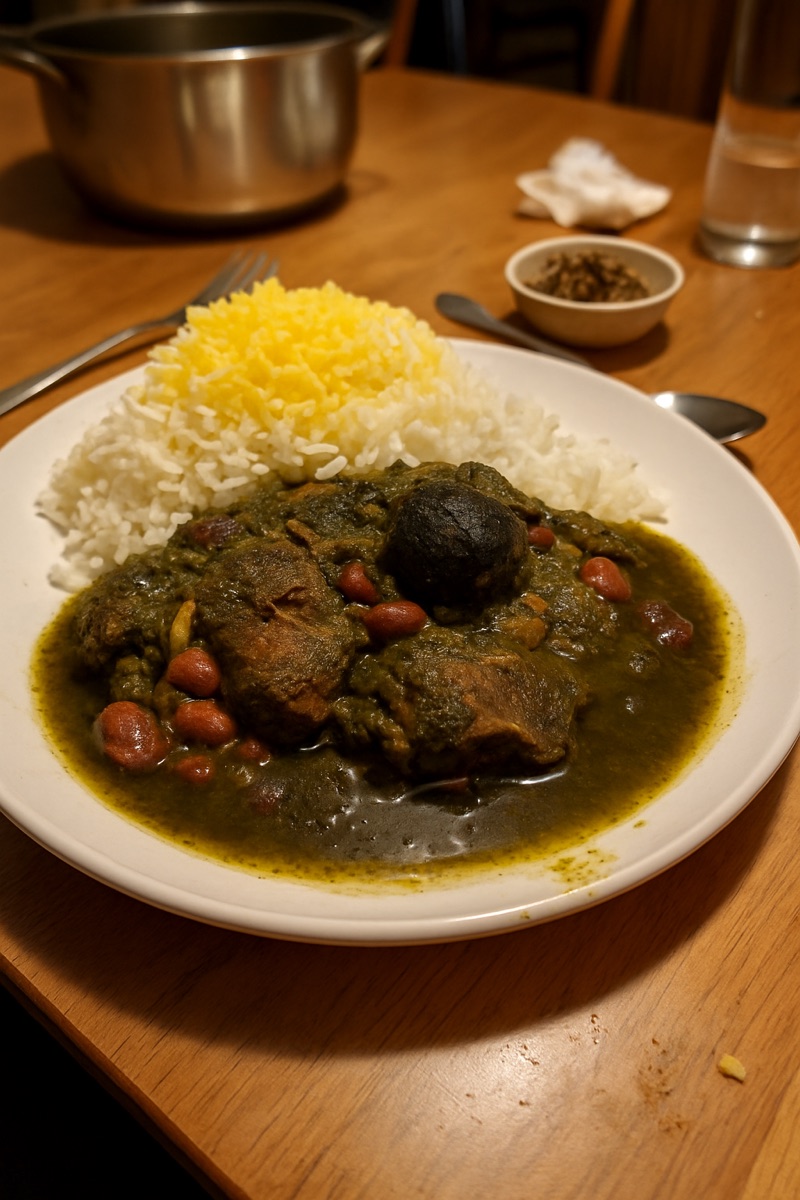 Ghormeh sabzi🇮🇷 Iran · 15 hours and 55 minutes
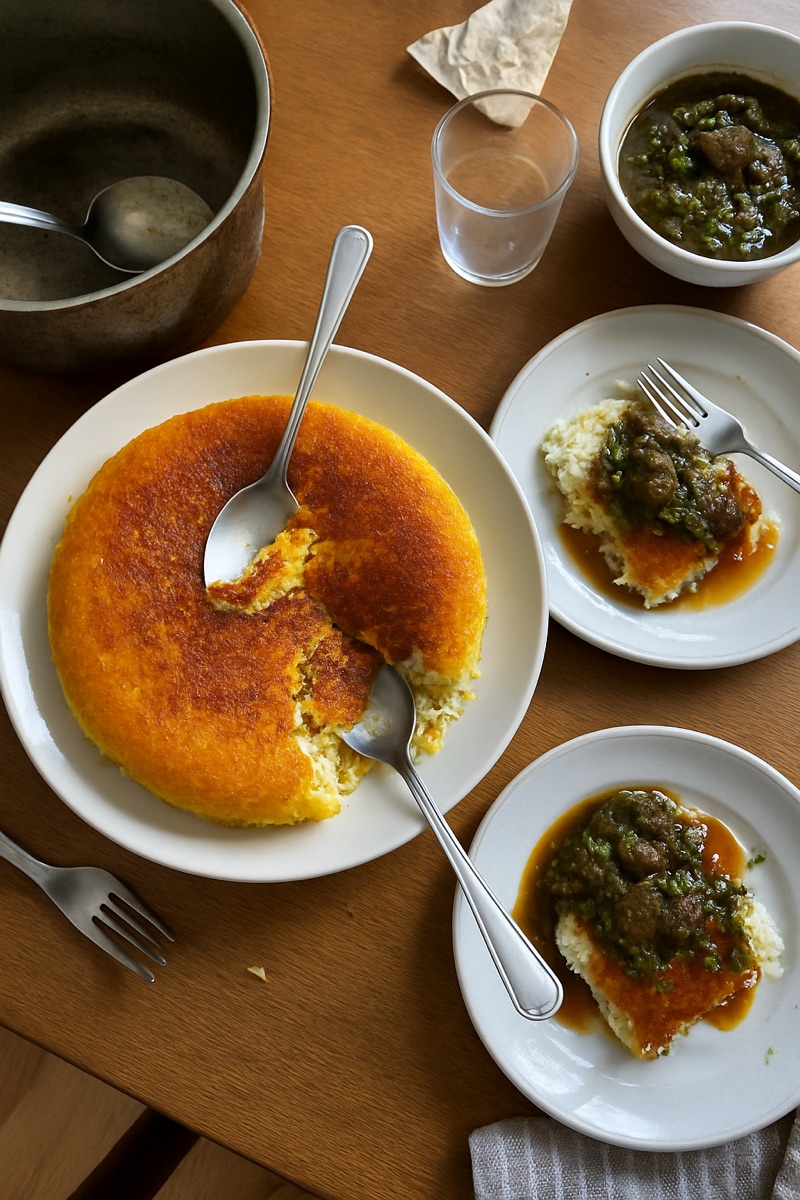 Tahdig🇮🇷 Iran · 3 hours and 35 minutes
Questions people ask
What is the most popular food in Iran?
Chelow kabab, steamed rice with grilled kebab, is the most famous Iranian dish and is often called the national dish. At home, stews such as ghormeh sabzi and gheimeh served over rice are eaten most often.
What do Iranians eat for breakfast?
Flatbread such as lavash, barbari or sangak with butter, white cheese, walnuts, jam or sarshir cream, and tea. Haleem, a wheat and lamb porridge, and omelettes are also common.
Is Persian food spicy?
Not usually. Iranian cooking relies on herbs, saffron, dried lime, cinnamon and turmeric rather than chilli. The food of southern Iran is the exception and is often spicy.
What is the difference between chelow and polow?
Chelow is plain steamed rice, served with kebab or stew. Polow is rice cooked with other ingredients, such as barberries in zereshk polo or herbs in sabzi polo.
What is a traditional Persian dessert?
Faloodeh, frozen rose water noodles from Shiraz, saffron ice cream (bastani), and sholezard, a saffron rice pudding.
Keep reading
- What is the national dish of Iran?
- Traditional food of Bahrain: 13 dishes to know
- Traditional food of Iraq: 13 dishes to know
- Traditional food of Israel: 14 dishes to know
- Traditional food of Jordan: 13 dishes to know
- Traditional food of Kuwait: 13 dishes to know