 COPPER
Traditional food of Turkey: 14 dishes to know
Turkish food grew out of Ottoman palace cooking and is built on bread, rice and bulgur, vegetables cooked in olive oil, yogurt, lamb and red pepper. Meals are more often vegetables, pulses and pilaf than meat. The most emblematic dishes are kebabs such as Adana and İskender, the thin meat flatbread lahmacun, the breakfast eggs menemen and pistachio baklava from Gaziantep.
What Turkish food is built on
Turkish cuisine developed mainly from Ottoman cuisine, which combined the traditions of Central Asian Turkic peoples with those of the Mediterranean and the Middle East. Kebabs are what most visitors know, but everyday meals in Turkey centre on bread, rice and bulgur, vegetables, beans and lentils, with meat often used in small amounts.
Yogurt is everywhere: spooned over dumplings and kebabs, thinned into cacık, or drunk as ayran, salted and diluted with water. Red pepper, as paste or flakes, is the most typical seasoning, together with mint, parsley and sumac. A whole category of dishes, the zeytinyağlılar, is vegetables cooked in olive oil and served at room temperature.
Meals often start with meze, small shared plates of dips, salads and pastries, and end with tea or coffee. Turkey has no officially declared national dish; the one most often given the title, kuru fasulye with pilav, is covered in our article on the national dish of Turkey.
Breakfast: eggs, bread and tea
Turkish breakfast, kahvaltı, literally means "before coffee". It is a spread of small dishes: cheese, olives, eggs, sucuk sausage, börek and bread, with tea.
- Menemen — Eggs softly scrambled into tomatoes and green peppers cooked in olive oil, seasoned with red pepper and black pepper. It is cooked and served in a two-handled pan called a sahan and eaten with bread. Whether onion belongs in it is a national argument: a 2018 online poll with over 437,000 votes split almost exactly in half.
- Simit — A ring of bread crusted with sesame seeds, sold from street carts and bakeries in every Turkish city. It is eaten on the go or at breakfast with tea and cheese. Istanbul already had simit bakeries in the 16th century.
Kebabs and flatbreads
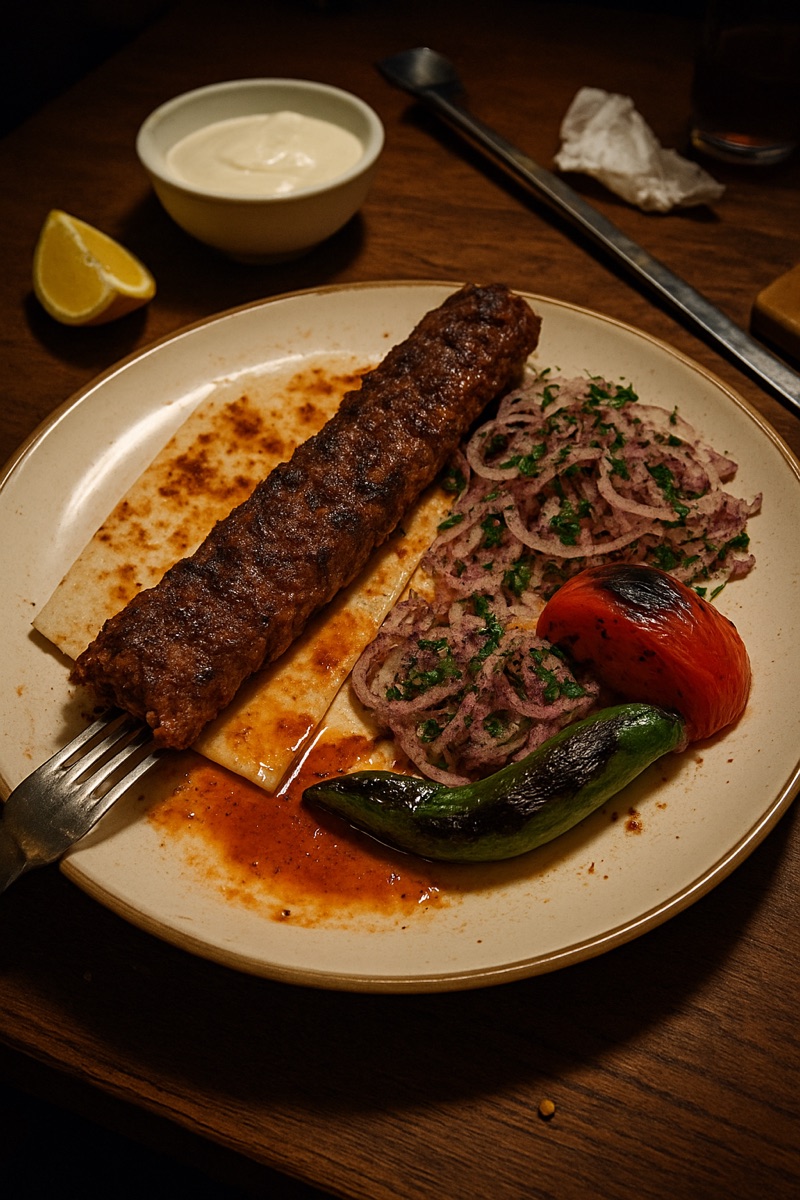
- Adana kebab — Lamb and tail fat chopped by hand with a curved blade called a zırh, seasoned only with red pepper and salt, pressed onto a wide flat skewer and grilled over charcoal. It is served on a plate with flatbread, grilled tomatoes and peppers and an onion, sumac and parsley salad, or wrapped as a dürüm. The name has been protected in Turkey since 2005.
- İskender kebab — Thin slices of meat grilled on a vertical spit, laid over pieces of pide bread, covered with hot tomato sauce and served with yogurt. Melted sheep's milk butter is poured over at the table. It was created in Bursa in the late Ottoman period by İskender Efendi, whose family still runs the original restaurant.
- Lahmacun — A very thin round of dough spread with raw minced meat, tomato, pepper and onion, baked in a very hot oven for a few minutes. It is eaten rolled up around parsley, onion and a squeeze of lemon. It comes from the southeast, around Urfa and Gaziantep, and spread to Istanbul in the 1950s.
Soups and home cooking
- Mercimek çorbası — Red lentil soup, usually puréed smooth and served with lemon to squeeze in. A related soup, ezogelin, adds bulgur to the red lentils.
- Kuru fasulye — Dried white beans stewed with onion, tomato paste and olive oil, sometimes with a little meat, and served with rice pilaf. It is everyday home cooking across Turkey and the dish most often named as the national dish.
- Karnıyarık — Aubergines fried whole, slit open and filled with minced meat, onion, garlic, tomato and pepper, then baked. The name means "split belly". It is usually served with rice.
- İmam bayıldı — The meatless version: whole aubergines stuffed with onion, garlic and tomato and slowly cooked in olive oil. It is served warm or at room temperature. Its name means "the imam fainted", after a folk tale about how good it tasted, or how much oil it used.
- Mantı — Tiny dumplings filled with spiced minced meat, boiled and covered with garlic yogurt, then drizzled with butter melted with red pepper and sprinkled with dried mint. The city of Kayseri in central Anatolia is famous for making them extremely small.
- Börek — Thin sheets of dough, usually yufka or filo, layered or rolled around cheese, minced meat, spinach or potato, and baked or fried. Su böreği is made with sheets boiled before layering; sigara böreği is a thin fried roll. It is eaten at breakfast or as a snack, often with ayran.
Sweets and coffee
- Baklava — Layers of filo brushed with butter and filled with pistachios or walnuts, baked, then soaked with syrup. The Turkish version was refined in the kitchens of Topkapı Palace. In 2013 Antep baklavası, the pistachio baklava of Gaziantep, became the first Turkish product with an EU protected geographical indication.
- Künefe — Shredded kadayıf pastry around a layer of soft, stretchy local cheese, soaked in a sugar and lemon syrup and served hot with pistachios and sometimes kaymak cream. It is a speciality of Hatay, in the south, where the local version is protected.
- Turkish coffee — Very finely ground coffee boiled in a small pot called a cezve, with sugar if wanted, and served unfiltered in small cups with a glass of water and often Turkish delight. Turkish coffee culture and tradition was inscribed on UNESCO's intangible heritage list in 2013.
Regional food and where to go next
Turkey's regions eat very differently. The Black Sea coast is famous for its anchovies (hamsi). The Aegean and Mediterranean coasts cook with vegetables, herbs, fish and olive oil. Central Anatolia is the land of mantı and grain dishes, and the southeast, around Adana, Urfa, Gaziantep and Hatay, is the home of kebabs, lahmacun, baklava and künefe, and the spiciest food in the country.
Turkish food overlaps with its neighbours on all sides; compare it with the traditional food of Greece or explore the wider Middle Eastern kitchen. Adana kebab, lahmacun and menemen have full recipes in Copper, on our page about the food of Turkey.
The recipes
- Adana kebab🇹🇷 Turkey · 5 hours and 30 minutes
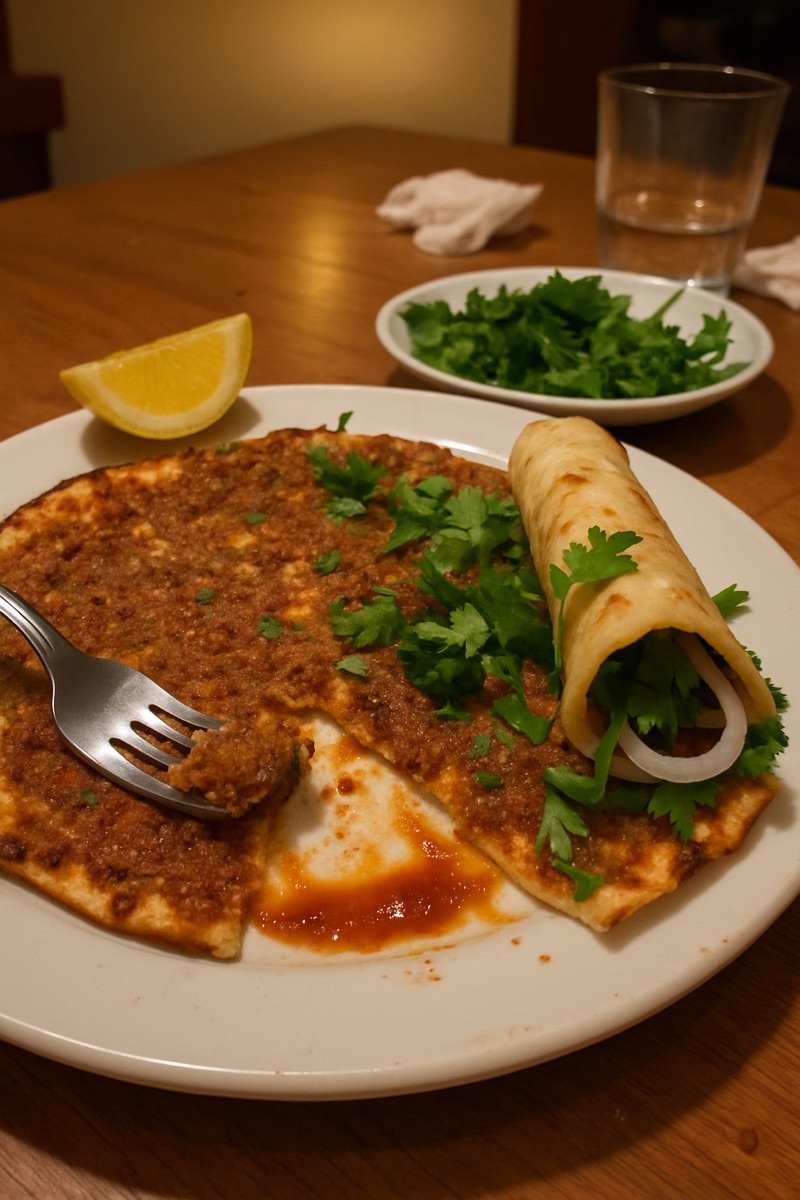 Lahmacun🇹🇷 Turkey · 2 hours and 30 minutes
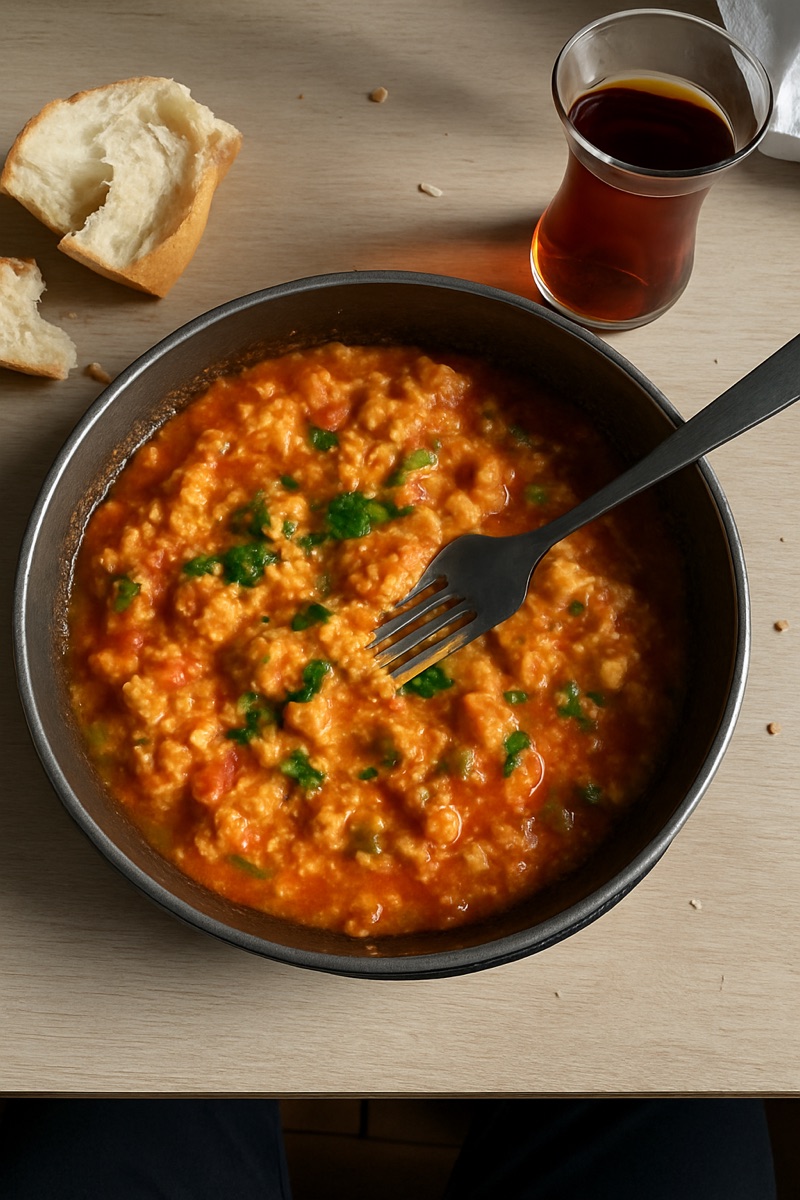 Menemen🇹🇷 Turkey · 25 minutes
Questions people ask
What is the most popular food in Turkey?
Kebabs, such as Adana kebab, İskender kebab and döner, are the best-known Turkish foods, along with lahmacun, pide and baklava. At home, everyday meals are more often lentil soup, kuru fasulye, stuffed vegetables and rice pilaf.
What do Turkish people eat for breakfast?
A Turkish breakfast (kahvaltı) is a spread of small dishes: cheese, olives, eggs, sucuk sausage, börek and bread or simit, often with menemen, and tea.
Is Turkish food spicy?
Mostly mildly. Red pepper flakes are used everywhere but usually for flavour more than heat. The southeast is the spicy exception: Adana kebab is hot, while the similar Urfa kebab is milder.
What is the difference between Adana and İskender kebab?
Adana kebab is hand-chopped lamb with red pepper, grilled on a wide skewer over charcoal. İskender kebab is thinly sliced spit-roasted meat served over bread with tomato sauce, yogurt and melted butter.
What is a traditional Turkish dessert?
Baklava, filo layered with pistachios or walnuts and soaked in syrup, is the most famous, especially from Gaziantep. Künefe, a hot cheese pastry from Hatay, and Turkish delight (lokum) are close behind.
Keep reading
- What is the national dish of Turkey?
- Traditional food of Bahrain: 13 dishes to know
- Traditional food of Iran: 14 dishes to know
- Traditional food of Iraq: 13 dishes to know
- Traditional food of Israel: 14 dishes to know
- Traditional food of Jordan: 13 dishes to know