 COPPER
Traditional food of Israel: 14 dishes to know
Food in Israel mixes the cooking of Jewish communities from the Middle East, North Africa and Europe with Arab and Mediterranean dishes, built on chickpeas, tahini, eggplant, fresh vegetables, olive oil and dairy. Shabbat and holidays shape what is eaten. The most emblematic dishes are hummus, falafel in pita, the egg dish shakshuka and the chopped vegetable salad served at almost every meal.
What Israeli food is built on
Israeli cuisine is mainly made of dishes brought by Jewish immigrants: Mizrahi Jews from the Middle East and North Africa, Sephardi Jews whose families came from Spain, and Ashkenazi Jews from Central and Eastern Europe. It also includes many dishes of the Arab and wider Middle Eastern kitchen, such as hummus, falafel and msabbaha.
The base is Mediterranean: chickpeas and tahini, eggplant, tomatoes and cucumbers, olive oil, fish and plenty of dairy. Lunch, not dinner, is the main meal of a workday. The Jewish dietary laws, kashrut, keep meat and milk apart in many homes and restaurants, and the Friday night Shabbat dinner and holiday meals are the important family meals of the week.
Israel has no official national dish. The one most often named is falafel, a label that is disputed because the dish is shared with Arab cuisines; the history and the debate are covered in our article on the national dish of Israel.
Breakfast and salads
The Israeli breakfast grew out of the kibbutz table: bread, eggs, cheeses, yogurt, olives and raw vegetables. At lunch and dinner, festive meals and restaurant meals open with a meze of salads and dips, such as roasted eggplant with tahini, called salat hatzilim, matbucha, a cooked tomato and pepper salad, and labneh with olive oil.
- Israeli salad — Tomatoes, cucumbers and often onion and peppers diced very small and dressed with olive oil, lemon juice and salt. In Israel it is usually simply called chopped salad, vegetable salad or Arab salad, and similar salads are eaten all over the eastern Mediterranean. It comes with almost every meal, breakfast included.
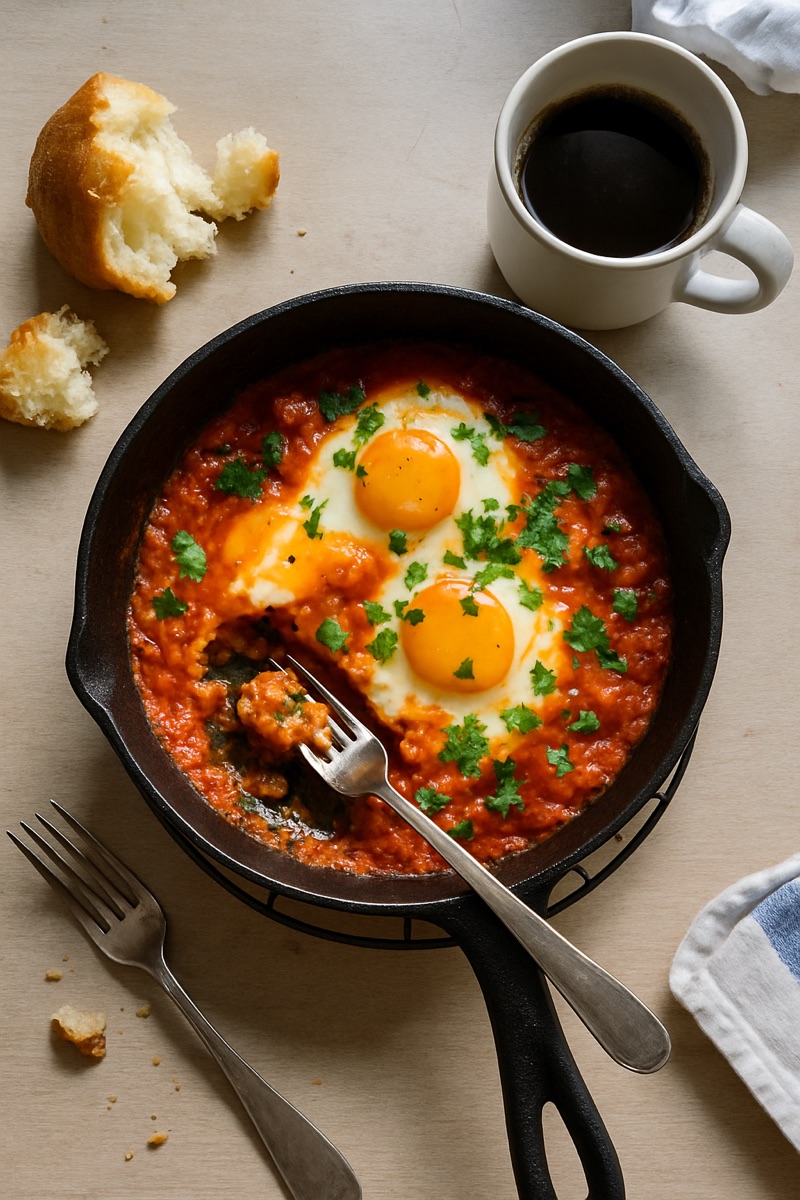
- Shakshuka — Eggs poached in a thick tomato and pepper sauce, served in the pan with bread to mop it up. A North African dish brought by North African Jews, it began as a workman's breakfast and is now a national favourite, especially in winter.
- Jachnun — Very thinly rolled dough brushed with oil or fat and baked overnight at very low heat, from the Jews of Aden and Yemen. It is eaten on Shabbat morning with grated tomato, hard-boiled eggs and skhug, a spicy herb and chilli paste.
Street food
Street food in Israel is often eaten standing up, from kiosks and small grills. Shawarma is usually made with turkey and added lamb fat, roasted on a vertical spit and served in pita or rolled in a large lafa flatbread.
- Hummus — Chickpeas puréed with tahini, lemon and garlic, eaten in Israel almost daily. Hummus in pita is a common school lunch, and some people travel to a *hummusia*, a restaurant that serves little else, for a fresh plate with falafel, egg or pickles.
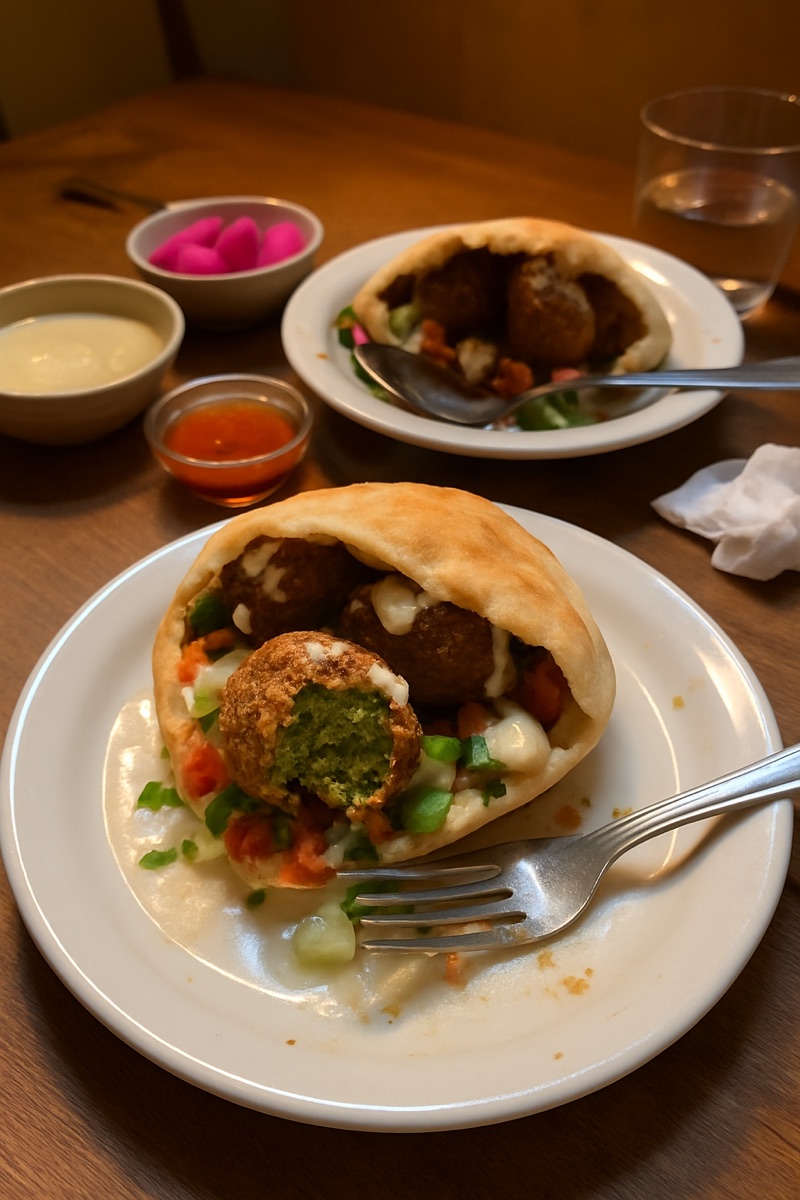
- Falafel — Balls of ground soaked chickpeas, herbs and spices, deep-fried and stuffed into a pita with salad, pickles, tahini and hot sauce. Falafel kiosks are found in every neighbourhood.
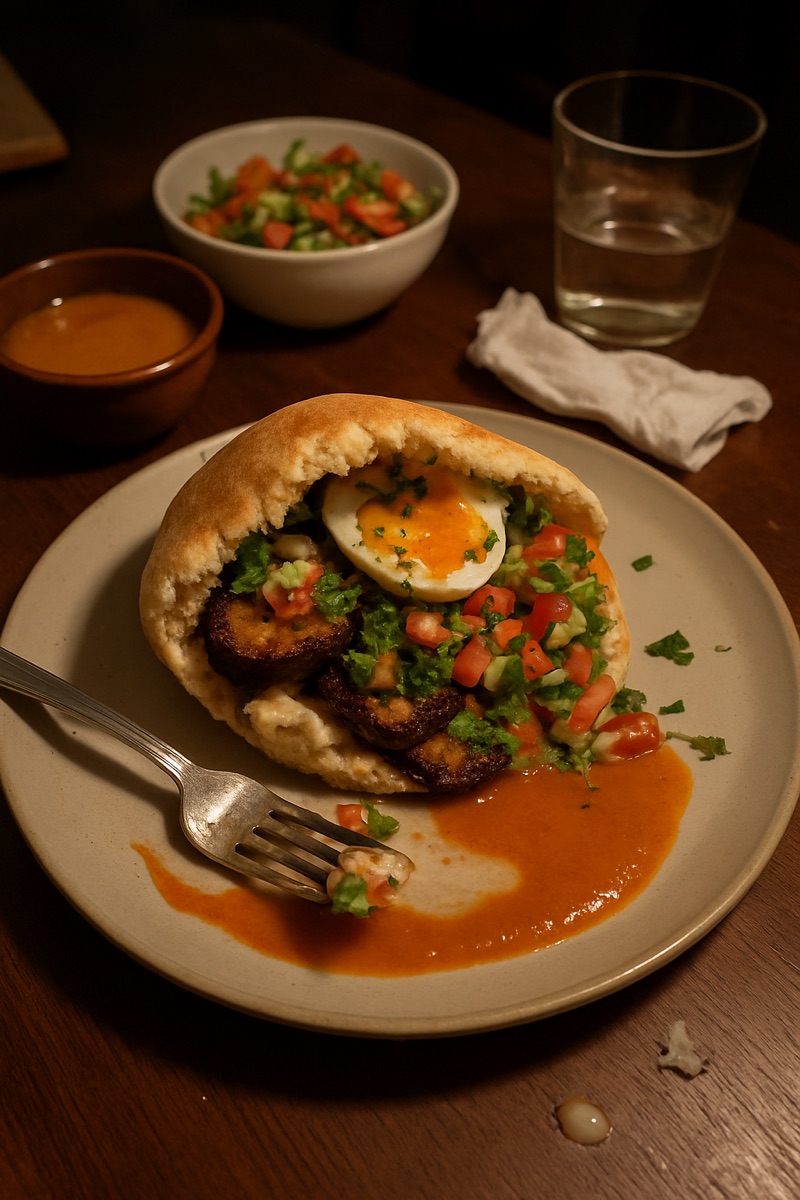
- Sabich — A pita filled with fried eggplant, hard-boiled egg, salad, tahini and amba, a pickled mango sauce. Brought by Iraqi Jews, it is sold at kiosks across the country, especially in Ramat Gan, where it was first introduced.
- Me'orav Yerushalmi — Jerusalem mixed grill: chicken giblets and lamb cooked with onion, garlic and spices, usually eaten in pita. It started in Jerusalem and is now sold throughout Israel.
- Bourekas — Flaky pastries filled with cheese, potato, spinach, mushrooms or meat, often topped with sesame. They were brought by Jews from Turkey and the Balkans and are sold at kiosks, cafés and supermarkets, often with a hard-boiled egg and salad.
Home cooking and Shabbat
Chicken is the most widely eaten meat in Israel, followed by turkey. Ptitim, a small Israeli pasta first shaped like grains of rice, were created in the early years of the state as a wheat substitute for scarce rice, and are nicknamed "Ben-Gurion rice".
- Schnitzel — Thin slices of chicken or turkey, breaded and fried in oil. Central European Jews brought the veal original; chicken and turkey replaced veal when it was unobtainable in the early years of the state. It is a quick weekday meal, served with hummus, tahini and salads.
- Kubbeh — A family of dumplings brought by Iraqi, Kurdish and Syrian Jews. The fried version is a bulgur shell stuffed with minced meat; the soft semolina or rice kubbeh cooked in soup is a Friday lunchtime meal for families of Kurdish or Iraqi heritage.
- Hamin (cholent) — A Shabbat stew of meat, beans or rice and potatoes that starts cooking on Friday before Shabbat and simmers overnight to be eaten at Saturday lunch. The Sephardi hamin includes whole eggs in their shells, called haminados; the Ashkenazi cholent usually adds barley.
- Challah — Egg-enriched bread, braided in the Ashkenazi tradition and round for Rosh Hashanah, baked or bought for every Shabbat and holiday.
Sweets
Bakeries and cafés sell rugelach, babka with chocolate or halva, and semolina cakes soaked in syrup. Halva, made from tahini and sugar, is popular on its own and in desserts.
- Sufganiyot — Deep-fried doughnuts filled with jam, custard or dulce de leche and dusted with sugar, eaten at Hanukkah, when foods fried in oil recall the miracle of the oil. The doughnut came to Israel with Polish Jewish immigrants.
- Malabi — A creamy milk pudding thickened with cornstarch, of Turkish origin, sold from street carts in cups with sweet syrup and chopped pistachios or coconut.
Regional food and where to go next
Some dishes belong to one place. Jerusalem gave Israel its mixed grill, the peppery caramelised noodle pudding kugel yerushalmi and orez shu'it, white beans in tomato over rice. Tiberias, on the Sea of Galilee, is known for tilapia baked with tahini, Ramat Gan for sabich, Safed for its brined white cheese, made there since 1837, and Tel Aviv for its café culture.
Many of these dishes are shared with neighbouring kitchens: compare them with the traditional food of Egypt and the traditional food of Jordan, or explore the wider Middle Eastern kitchen. Falafel, sabich and shakshuka have full recipes in Copper, on our page about the food of Israel.
The recipes
 Sabich
 Shakshuka
Questions people ask
What is the most popular food in Israel?
Hummus and falafel are the most widely eaten, along with Israeli salad, shakshuka, schnitzel and shawarma. Israel has no official national dish; falafel is the one most often named.
What do people in Israel eat for breakfast?
A spread of bread, eggs or shakshuka, white cheese, yogurt or labneh, olives and chopped vegetable salad, with coffee or orange juice. On Shabbat morning, Yemenite families eat jachnun.
Is Israeli food spicy?
Mostly not, but hot sauces are everywhere on the side: skhug, brought by Yemenite Jews, and harissa from North Africa are added to falafel, hummus and sandwiches.
What is eaten on Shabbat in Israel?
Friday night dinner usually has challah, chicken soup, salads and a chicken or meat dish. Saturday lunch is often hamin or cholent, a stew cooked slowly overnight.
Where does Israeli food come from?
Mostly from the cooking of Jewish communities from the Middle East, North Africa and Europe, mixed with Arab and Mediterranean dishes and local produce.
Keep reading
- What is the national dish of Israel?
- Traditional food of Bahrain: 13 dishes to know
- Traditional food of Iran: 14 dishes to know
- Traditional food of Iraq: 13 dishes to know
- Traditional food of Jordan: 13 dishes to know
- Traditional food of Kuwait: 13 dishes to know