 COPPER
Traditional food of Egypt: 13 dishes to know
Egyptian food is built on bread, legumes and vegetables from the Nile Valley and Delta, seasoned above all with cumin, garlic and onion. Eish baladi, a thick local pita, comes with almost every meal and doubles as a spoon. The most emblematic dishes are koshari, ful medames, molokhia and ta'meya, Egypt's fava bean falafel.
What Egyptian food is built on
Egyptian cooking relies heavily on vegetables and legumes grown in the Nile Valley and Delta, which makes it unusually easy for vegetarians. Fava beans, lentils, chickpeas, rice and wheat are the everyday base. The most common meats are pigeon, chicken and duck, often boiled to make the broth for soups and stews, while lamb and beef are kept mostly for grilling: kofta, kebab and cutlets are known together as mashwiyat.
Bread is the backbone of the table. The local loaf is eish baladi, a thick wholewheat pita whose name comes from a root meaning "to live"; a working-class or rural meal can be little more than bread and beans, and the Ministry of Culture's Atlas of Egyptian Popular Heritage lists more than 60 types of bread. Cumin is the most used spice, followed by coriander, cardamom, chili, dill, bay leaves and mint, and garlic and onions go into almost everything.
Breakfast and street food
- Ful medames — Small brown fava beans simmered for hours until they collapse, then crushed with their skins and dressed with olive oil, lemon and cumin. It is a staple food and considered a national dish. In medieval Cairo, huge pots of beans simmered all night in the embers of a public bath near Bab Zuweila to provide the city's breakfast.
- Ta'meya — Egypt's falafel, made from soaked dried fava beans rather than chickpeas, stone ground with leek, parsley and green coriander, then deep-fried. The dish most likely originated in Egypt. It is served in eish baladi with fresh tomatoes, tahina sauce and arugula, and is one of the commonest street foods in the country.
- Feteer meshaltet — A flaky pastry of many thin layers of dough and ghee. It is eaten sweet, dipped in honey or molasses, or savoury with mish cheese, olives and torshi pickles. It is a symbol of hospitality, offered to guests and baked for holidays and weddings.
- Hawawshi — Eish baladi stuffed with minced meat spiced with onions, pepper, parsley and sometimes chili, then baked in the oven. In Alexandria the filling goes between two rounds of dough instead. One story credits a Cairo butcher, Ahmed al-Hawawsh, with inventing it in 1971.
Main dishes
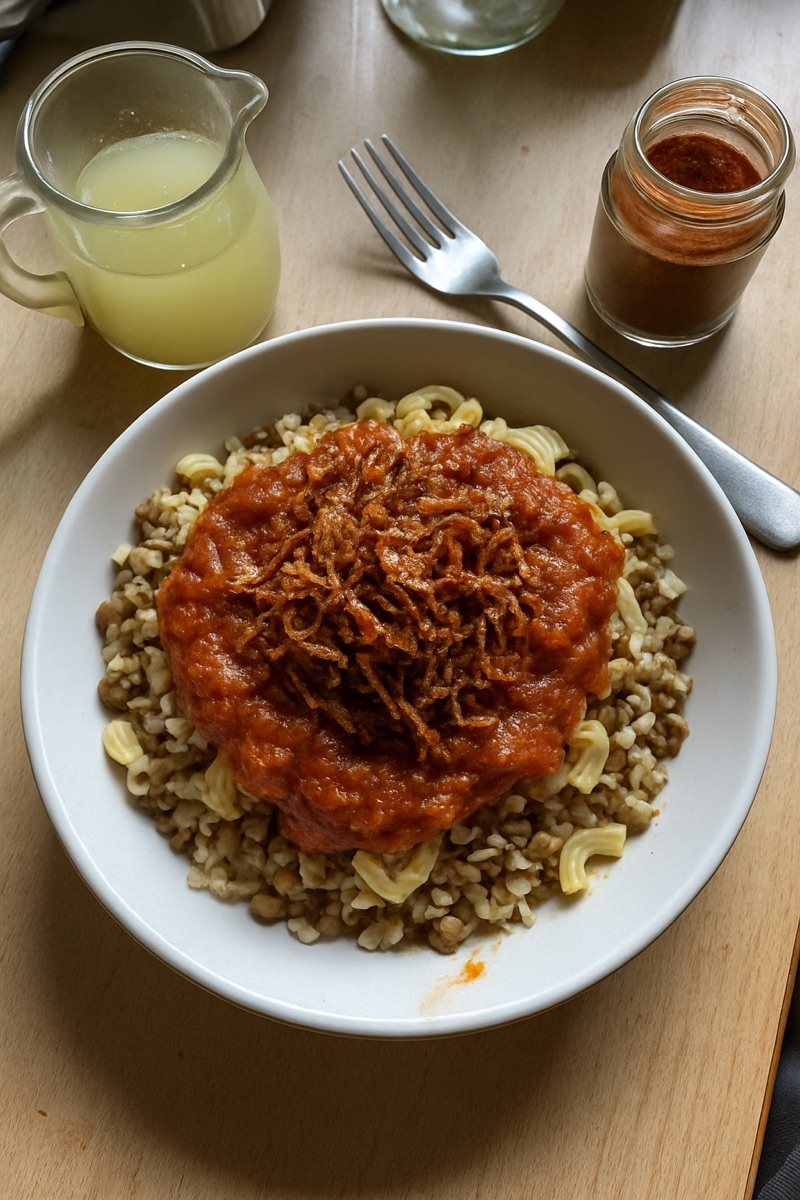
- Koshari — Rice, brown lentils, vermicelli and macaroni layered in a bowl, topped with chickpeas, spiced tomato sauce, a garlic vinegar called daqqa and crisp fried onions. Long called the food of the poor, it is sold from street carts and in restaurants that serve nothing else. In December 2025 it became the first Egyptian dish on UNESCO's intangible heritage list.
- Molokhia — Finely chopped jute mallow leaves cooked in broth, sometimes with chicken or rabbit, and finished with garlic fried with ground coriander. The result is a silky green soup served over rice. It already appears among the staples of 17th-century Egyptian peasants.
- Mahshi — Vegetables and vine leaves stuffed with rice, herbs and spices and simmered. Rice-stuffed vegetables and grape leaves are among the dishes Egypt shares with the Eastern Mediterranean, and stuffed vine leaves, mahshi waraq enab, are typically eaten in summer.
- Fatta — A feast dish of crisp flatbread and rice in a bowl, covered with a garlic and vinegar meat soup and a garlic tomato sauce. Egyptians prepare it for Eid al-Fitr and Eid al-Adha and to celebrate a woman's first pregnancy, and Coptic Christians make it at Christmas.
- Macarona béchamel — Baked pasta layered with béchamel sauce. It came from the kitchens of Egypt's Greek community, adapted from Greek pastitsio, with the béchamel introduced by French-trained chefs of the khedivial palace and the luxury hotels in the 19th century.
- Fesikh — Grey mullet salted, fermented and dried, eaten mostly at Sham Ennessim, the spring festival that goes back to ancient Egypt and is a national holiday. Herodotus already recorded Egyptians eating fish preserved with brine. Badly prepared fesikh causes a few cases of food poisoning every year, especially around the festival.
Desserts and drinks
Tea is Egypt's national drink, often with mint, and comes with breakfast in most homes. In Upper Egypt, Sa'idi tea is boiled for up to five minutes and heavily sugared. Karkadeh, a hibiscus infusion served very sweet and cold or hot, is the other classic, and Ramadan brings liquorice, carob and apricot drinks.
- Basbousa — A semolina cake baked in a sheet pan, soaked in sugar syrup and cut into diamonds or squares. Egyptian versions sometimes add tahini to the batter. It is made throughout the Middle East, North Africa and the Balkans.
- Umm Ali — Pieces of bread or pastry baked with milk, sometimes cream, pistachios, coconut flakes, raisins, sugar and cinnamon until golden. Described as a national dessert of Egypt, it is often eaten at iftar during Ramadan. Its name, "Ali's mother", is tied to a 13th-century legend, though the first known recipe dates only from the 19th century.
- Kunafa — Fine strands of pastry baked with a filling and soaked in syrup. With qatayef, it is one of the desserts served almost only during Ramadan, when families gather at sunset to break the fast.
Regional Egypt
Alexandria and the coast cook far more fish and seafood than the rest of the country, and Alexandria is known for its liver sandwiches: chopped liver fried with peppers, chili, garlic and cumin in an eish fino roll. The city also has its own koshari, with yellow lentils and eggs, and its own hawawshi.
In the south, Nubian villages around Aswan cook with barley, sorghum and wheat and with Nile vegetables such as okra, spinach and beans, and bread is central to every Nubian meal. Egypt's Bedouin cooking is built on their herds: camel milk, and goat meat, milk and cheese.
Cook Egyptian food at home
Koshari is the dish most often called the national dish of Egypt, with ful medames close behind. Copper has full recipes for koshari, ful medames and molokhia, with ingredients and step-by-step methods, on our page about the food of Egypt, alongside other North African recipes.
Ful, ta'meya and karkadeh are shared with the country to the south, and Egypt's tables open onto the Maghreb to the west. Compare with the traditional food of Sudan and the traditional food of Libya.
The recipes
- Koshari🇪🇬 Egypt · 1 hour and 15 minutes
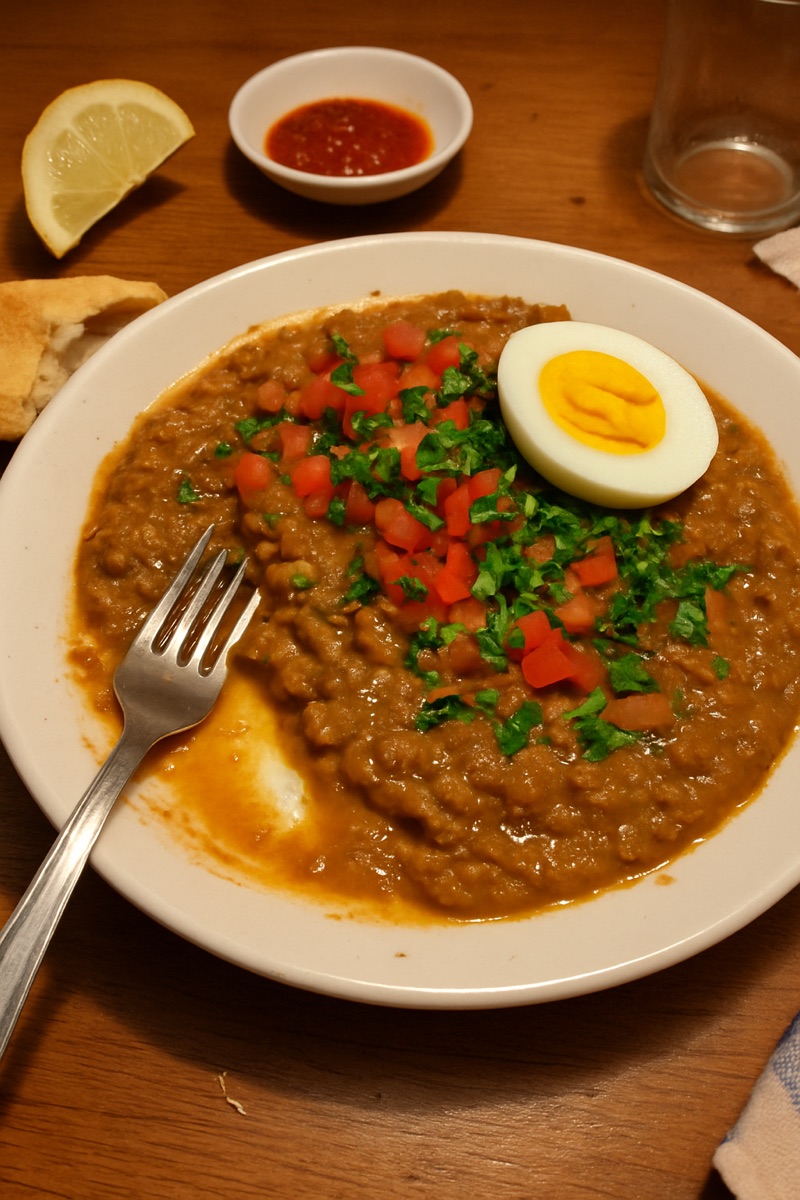 Ful medames🇪🇬 Egypt · 17 hours and 10 minutes
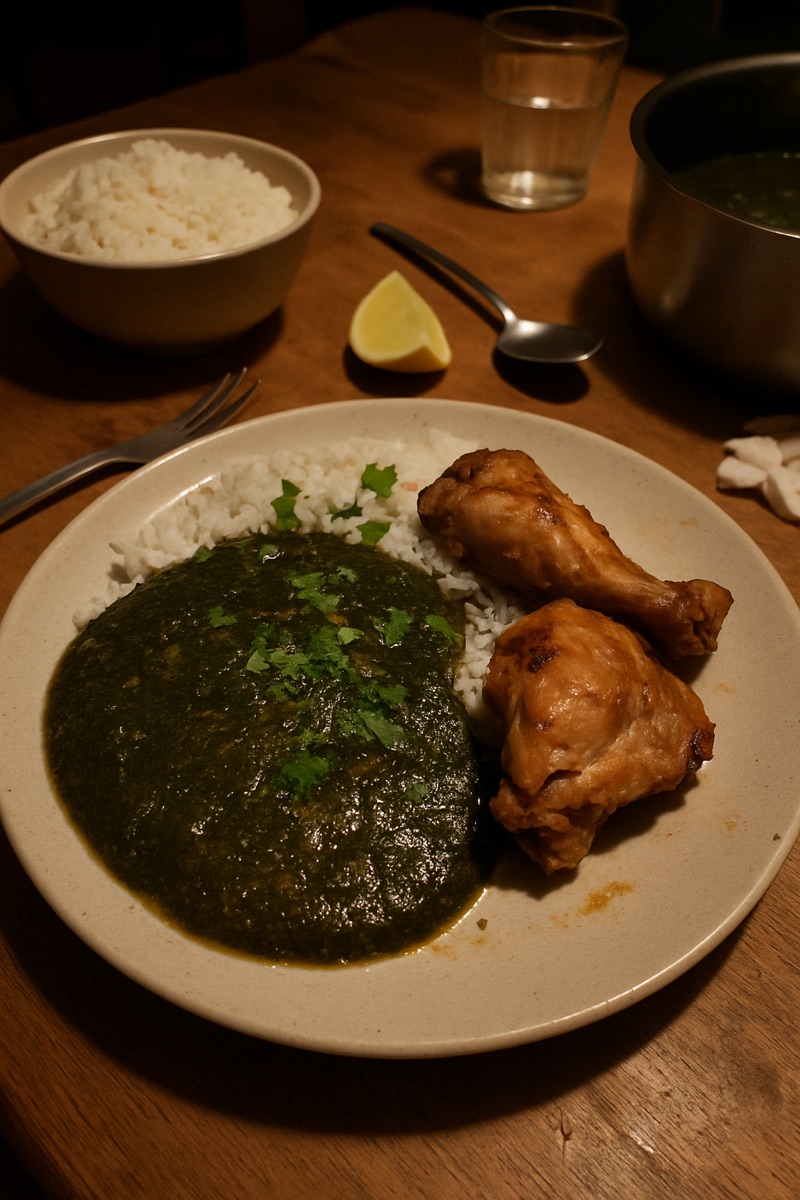 Molokhia🇪🇬 Egypt · 1 hour and 25 minutes
Questions people ask
What is the most popular food in Egypt?
Koshari, a street bowl of rice, lentils and pasta with tomato sauce and fried onions, is the dish most often called Egypt's national dish. Ful medames, slow-cooked fava beans, is the other everyday staple.
What do Egyptians eat for breakfast?
Typically ful medames and ta'meya, the fava bean falafel, scooped up with eish baladi, with tea. Feteer meshaltet with honey or cheese is a festive alternative.
Is Egyptian food spicy?
Mostly it is aromatic rather than hot. Cumin is the most common spice, with coriander, garlic and onions; chili appears in some dishes, such as the spicy tomato salad and Alexandria's liver sandwiches.
Is Egyptian food vegetarian-friendly?
Yes. Egyptian cooking relies heavily on legumes and vegetables, and dishes such as koshari, ful medames, ta'meya and stuffed vine leaves without meat contain no meat.
What do Egyptians eat during Ramadan?
Families break the fast together at sunset. Kunafa and qatayef are served almost only during Ramadan, along with umm ali and drinks of liquorice, carob and dried apricot.
Keep reading
- What is the national dish of Egypt?
- Traditional food of Algeria: 13 dishes to know
- Traditional food of Libya: 12 dishes to know
- Traditional food of Morocco: 13 dishes to know
- Traditional food of Sudan: 13 dishes to know
- Traditional food of Tunisia: 13 dishes to know