 COPPER
Traditional food of Libya: 12 dishes to know
Libyan food mixes Amazigh, Arab, Ottoman and Italian influences: lamb and mutton, barley and wheat, olive oil, tomato paste, turmeric, fenugreek and chilli, with seafood on the coast and camel meat in the south. The most emblematic dishes are bazin, a barley dough dome with lamb sauce, couscous, the spiced lamb soup shorba and the one-pot pasta imbakbaka, followed by thick Libyan tea.
What Libyan food is built on
Libyan cooking is a meeting of Amazigh, Arab, Ottoman and Mediterranean traditions. Along the coast, and in Tripoli above all, it uses seafood, olive oil, grains and fresh herbs, and the Italian colonial period left pasta as an everyday food. Inland and in the south, cooking is more Arab and Amazigh, built on barley, legumes, dried meat and fermented dairy.
Mutton and lamb are the most eaten meats across the country, camel is more common in the south, and canned tuna is a staple of casual meals and school lunches. Most dishes start from a tomato sauce, tabikha, of onions, olive oil and tomato paste, seasoned with paprika, chilli, turmeric and fenugreek. Spice blends such as bzaar and bokharat flavour stews and marinades, and harissa is on the table as a condiment.
An old way of keeping meat is gideed: lamb or camel salted, dried in the sun and stored in olive oil, then added to soups, couscous and stews in the colder months. Libya has no official national dish; the two candidates, bazin and couscous, are compared in our article on the national dish of Libya.
Main dishes
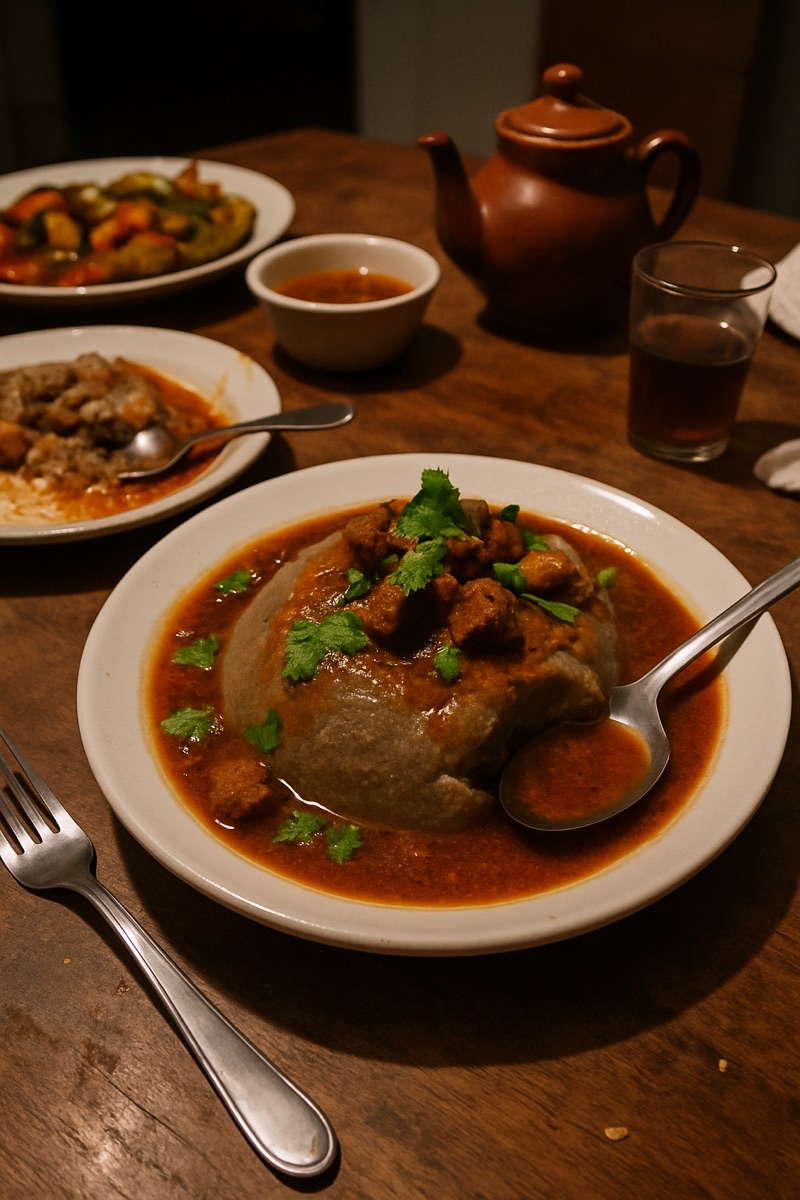
- Bazin — An unleavened dough of barley flour with a little wheat flour, cooked in salted water and beaten with a magraf stick until smooth, then shaped into a dome. It is surrounded by a thick sauce of lamb, onion, tomato paste, turmeric, fenugreek and chilli, with potatoes and hard-boiled eggs, and eaten by hand from a shared dish. It is an Amazigh dish and a Friday lunch staple in western Libya. Variations serve it with camel meat, chicken or broad beans, or in winter with hassa, a soup made with gideed.
- Couscous — Semolina grains steamed in a basket over a red lamb sauce, so the steam of the meat flavours them, and topped with boosla, onions and chickpeas cooked down in the sauce. It is eaten mostly in Tripoli and the west, and is tied to festive and communal meals.
- Imbakbaka — Pasta cooked in a single pot in a spiced tomato sauce with meat. It is one of the most common home dishes, especially in winter; in eastern Libya it is called macarona jariya. Libyans also make their own fresh pasta, rishta or imgata, cooked in tomato sauce, often with gideed.
- Batata mubattana — Slices of potato sandwiched around spiced minced meat, coated in egg and breadcrumbs and fried. It is one of the popular Libyan dishes listed beside bazin and couscous.
- Haraime — A spicy fish stew with tomatoes, its name from the Arabic for "hot". Seafood is part of everyday cooking on the coast, from tuna and sardines to sea bream, grouper and squid.
- Bourdeem — Lamb slow-cooked in an underground pit lined with hot coals, with onions, tomatoes and potatoes, until it falls apart. It is prepared for special occasions such as Eid al-Adha, when shwaya, lamb grilled on skewers or an open grill, is the other favourite way of cooking the meat.
Soups, breakfast and side dishes
- Shorba — Small cubes of lamb browned with tomato paste and spices, then simmered with chickpeas and orzo and finished with dried mint and lemon. It is the Libyan soup of Ramadan, served at iftar, the evening meal that breaks the fast.
- Shakshouka — Eggs poached in a sauce of tomatoes, peppers, onions and spices, eaten all over Libya as a breakfast or light meal. In the traditional Libyan version, dried lamb is the meat base of the sauce.
- Usban — Sheep intestines stuffed with rice, lamb, chopped liver and heart, herbs and spices, boiled for an hour and then browned. It is served beside rice or couscous, often on special occasions.
- Abrak — Vine or cabbage leaves rolled around a filling of rice, meat and herbs. Libyan abrak is spicier than its eastern Arab counterparts, and Libyans keep the name mahshi for stuffed peppers, aubergines, courgettes and tomatoes.
Sweets and tea
Libyan sweets range from ghreyba butter cookies and makroudh, date-filled cookies, to mhalbiya rice pudding and bsisa, a barley preparation. In Ramadan, Libyans drink qamar al-din, made from dried apricot paste, and in summer chilled karkadeh, hibiscus tea.
- Asida — A lump of wheat dough made by stirring flour into boiling water, served with melted butter around it and rub, a thick syrup of dates or carob, or with honey. It is served at religious holidays such as Mawlid and at celebrations for a newborn.
- Libyan tea — A thick tea served in small glasses, often accompanied by peanuts. It is offered to guests with kaek biscuits, and mint tea is also common.
Regional food in Libya
The coast and the interior eat differently. Tripoli and the west are the land of couscous, bazin and seafood, with the clearest Italian influence in pasta and in almond biscuits like abamber. The east has its own names for shared dishes, such as macarona jariya. The south cooks with camel meat, barley, preserved meats and hardy legumes, and in desert areas such as Sebha and Sirte people still bake khobz mallah, bread cooked under hot sand.
Libya shares much of its table with its neighbours: compare its couscous and harissa with the traditional food of Tunisia, and its ful medames, molokhiya and ta'meya with the traditional food of Egypt.
Cook Libyan food at home
Bazin, couscous and shorba have full recipes with ingredients and step-by-step methods on our page about the food of Libya. For couscous and tagines from Morocco to Egypt, see our guide to North African food.
The recipes
- Bazin🇱🇾 Libya · 1 hour and 45 minutes
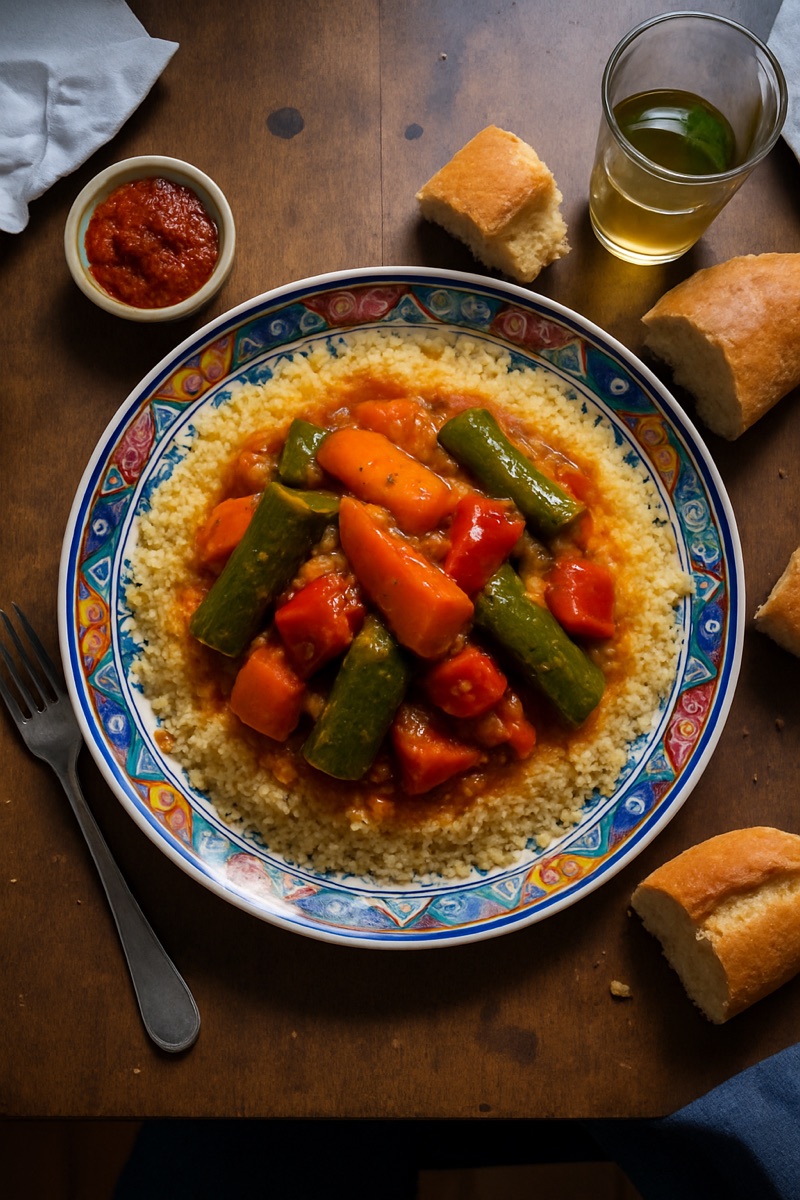 Couscous🇱🇾 Libya · 2 hours
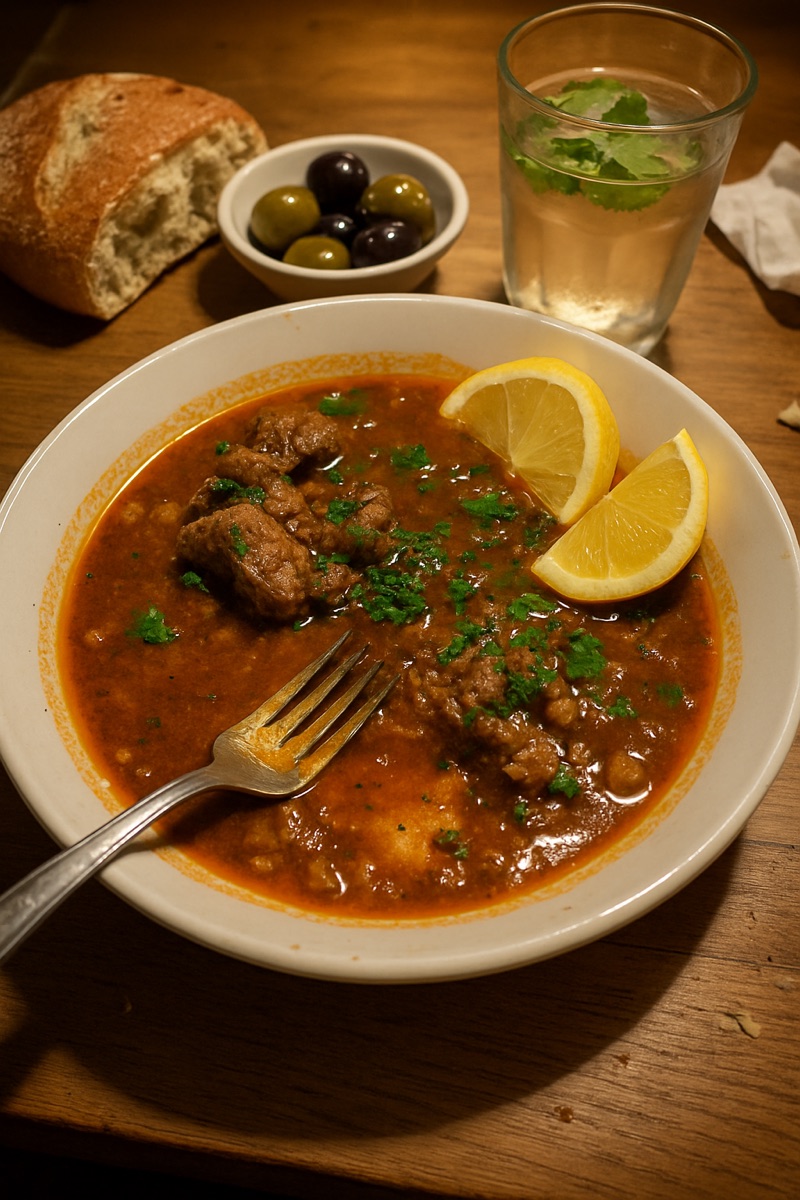 Shorba🇱🇾 Libya · 1 hour and 25 minutes
Questions people ask
What is the most popular food in Libya?
Bazin and couscous are the two dishes most tied to Libya, along with shorba during Ramadan and imbakbaka, a one-pot pasta, at home. Shakshouka is the usual breakfast.
What is the national dish of Libya?
Libya has no official national dish. Bazin, a barley dough dome with lamb sauce, and couscous are the two candidates named by sources.
What do Libyans eat for breakfast?
Shakshouka, eggs poached in tomato and pepper sauce, is the traditional breakfast, often with bread; milk tea and sandwiches of tuna or cheese are also common.
Is Libyan food spicy?
Often, yes. Chilli, harissa and spice blends such as bzaar season many dishes, and pickled chillies called amsyar come on the side.
What do Libyans eat during Ramadan?
Shorba, a lamb soup with orzo and mint, opens the evening meal, alongside ejja, a baked omelette with potatoes, tomatoes and herbs, and qamar al-din, a drink made from dried apricot paste.
Keep reading
- What is the national dish of Libya?
- Traditional food of Algeria: 13 dishes to know
- Traditional food of Egypt: 13 dishes to know
- Traditional food of Morocco: 13 dishes to know
- Traditional food of Sudan: 13 dishes to know
- Traditional food of Tunisia: 13 dishes to know