 COPPER
Traditional food of Algeria: 13 dishes to know
Algerian food is Berber cooking layered with Arab, Andalusi, Ottoman and French influences. It is built on wheat semolina, lamb, chickpeas, vegetables and olive oil, seasoned with coriander, cumin, caraway, cinnamon and dried chilli, and eaten with homemade bread. The most emblematic dishes are couscous, chorba, rechta and chakhchoukha, followed by date and almond pastries with mint tea or coffee.
What Algerian food is built on
Algerian cuisine grew out of Berber (Amazigh) cooking, which gave it semolina and the dishes made from it: couscous, flatbreads and a whole family of hand-made pastas. Arab, Andalusi, Ottoman and French influences came on top. Cereals and vegetables are the core of the diet. Mutton is the most eaten meat, followed by beef and poultry; camel is eaten in the south, and pork is not eaten, in line with Islamic dietary law.
Spices go into almost every dish: dried red chilli, caraway, cumin, cinnamon, turmeric, ginger, paprika, coriander and saffron, plus blends such as ras el hanout and the Algerian hror. Fresh coriander scents the soups, smen (clarified butter) and olive oil carry the sauces, and orange blossom water perfumes the pastries. Bread comes with every meal and is thought to carry God's blessing, baraka, so it is never wasted.
Couscous, pastas and tajines
- Couscous — Durum-wheat semolina rolled into small grains and steamed above a stew, then moistened with the broth. Every region has its own: with chicken, mutton, camel or fish, under a red, yellow or white broth, or dry as masfouf with broad beans, raisins or dates. It is the dish everyone calls the national dish, and its know-how joined UNESCO's intangible heritage list in 2020.
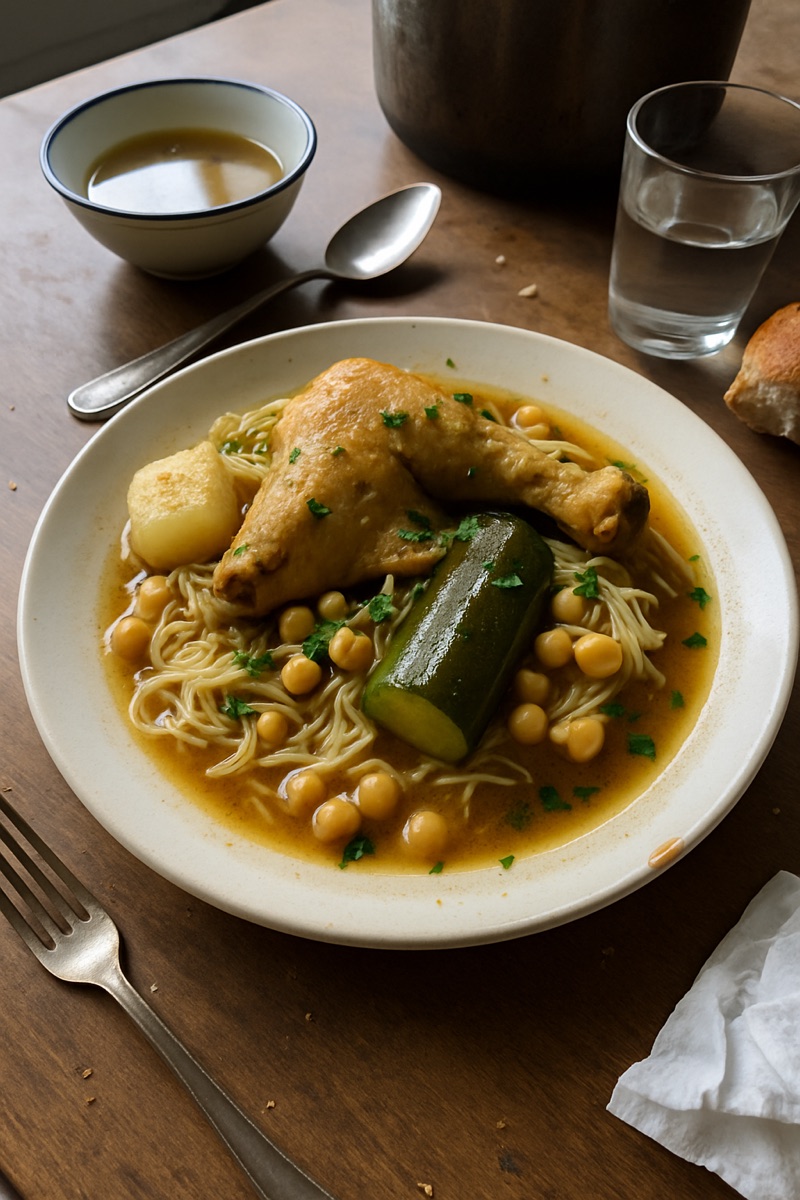
- Rechta — Thread-fine fresh semolina noodles, steamed rather than boiled, served under a pale cinnamon-scented sauce with chicken or meat, turnips, chickpeas and courgettes. It is the pride of Algiers, cooked for Mawlid, Ashura and, in some families, the birth of a child. As with other traditional Algerian pastas, hard-boiled eggs go alongside.
- Chakhchoukha — Thin semolina flatbread torn into small pieces and soaked in a spiced tomato stew of lamb and chickpeas. It is a Chaoui specialty from the Aurès, and its name comes from a Chaouia word for tearing into pieces. It is served for Mawlid, Ashura and Yennayer, the Amazigh New Year.
- Chtitha djaj — Chicken cooked with chickpeas in a red, spicy sauce. Chtitha is the name for stews in red sauce, part of the wide family Algerians call tajines: dishes simmered in sauce, rather than a particular pot.
- Tajine zitoun — Chicken and green olives in a white sauce sharpened with lemon, one of the best-known Algerian tajines.
- Tajine lahlou — A sweet-savoury tajine of lamb with prunes, dried apricots or other dried fruit, often served at celebrations. Sweet-savoury cooking is a mark of the old northern cities that took in Andalusi refugees, such as Algiers, Blida, Constantine and Tlemcen.
Soups
- Chorba frik — Chorba, inherited from the Ottoman period, is often called Algeria's national soup, and every version is scented with coriander. Chorba frik, from the Aurès, Constantine and the Sétif high plateaus, adds frik, cracked green wheat, to a tomato broth of lamb and chickpeas. It is cooked every day during Ramadan and traditionally shared with the poor.
- Harira — A soup of Andalusi origin and, next to chorba, the most popular soup in the Oran region. With chorba, djari and tchicha it is one of the four great Algerian soups, served as a starter and most popular during Ramadan.
Street food, breads and pastries
Mint tea, made with gunpowder green tea, is drunk in the afternoon and with pastries, and Algerians are heavy coffee drinkers, from Turkish-style coffee to noss-noss, half coffee and half milk. Hamoud Boualem, founded in 1878, still makes the country's best-known sodas.
- Karantika — Chickpea flour, oil and water whisked into a batter, glazed with beaten egg and baked until it sets like a firm flan. Vendors sell it in squares or stuffed into bread, seasoned with harissa and cumin. It is a specialty of Oran, where it came with the Spanish garrison; the name comes from the Spanish calentita, "hot".
- Mhadjeb — A thin, crepe-like semolina flatbread folded around a filling of onion, tomato, peppers and spices. It comes from southern Algeria, around Biskra and Touggourt, and is one of the essential street foods across the country. The name means "veiled".
- Bourek — Thin pastry rolled into cigars or folded around minced meat, tuna, potato or cheese, then fried, a legacy of the Ottoman period. Annaba's bourek annabi is a bigger version stuffed with mashed potato, minced beef, cheese and egg.
- Kesra — A thin flat semolina bread from the Constantine region, baked on a clay or metal plate called a tajine. It goes with dishes in sauce, and at breakfast with butter and jam.
- Makroud — Semolina dough wrapped around date paste, cut into diamonds, fried and soaked in honey. Each city has its version: baked in the Constantine region, made with eggs in Tlemcen, filled with almonds in Algiers, spiced in Oran. It is a classic of Eid al-Fitr.
Regional Algeria
Every city claims its own dishes. Algiers is known for rechta and chorba beida, a mild white chorba with chicken and vermicelli. Constantine and the Aurès make chakhchoukha, kesra, djari and tlitli, small hand-rolled pasta in red or white sauce. Oran gave the country karantika and loves harira. Annaba has its bourek annabi and sweet-savoury dishes, and Tlemcen its marqa bel assel, meat with honeyed raisins. In the Sahara, the Tuareg bake taguella bread under hot sand and embers, and camel meat appears on the table.
Cook Algerian food at home
Couscous is the national dish of Algeria, shared with the rest of the Maghreb. Copper has full recipes for rechta, chorba frik and makroud, with ingredients and step-by-step methods, on our page about the food of Algeria, and more dishes from the region are in our guide to North African food.
Couscous, makroud and mint tea cross every border in the Maghreb: compare with the traditional food of Morocco and the traditional food of Tunisia.
The recipes
- Rechta🇩🇿 Algeria · 13 hours and 30 minutes
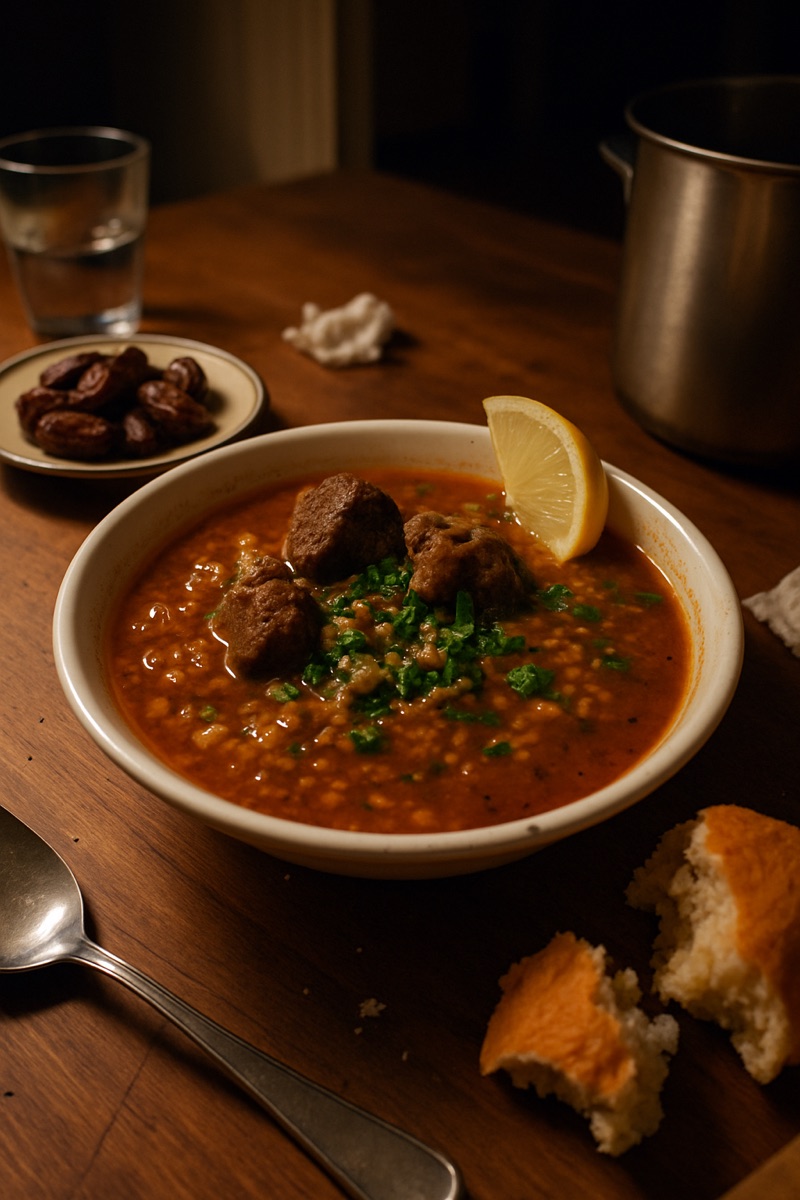 Chorba frik🇩🇿 Algeria · 13 hours and 35 minutes
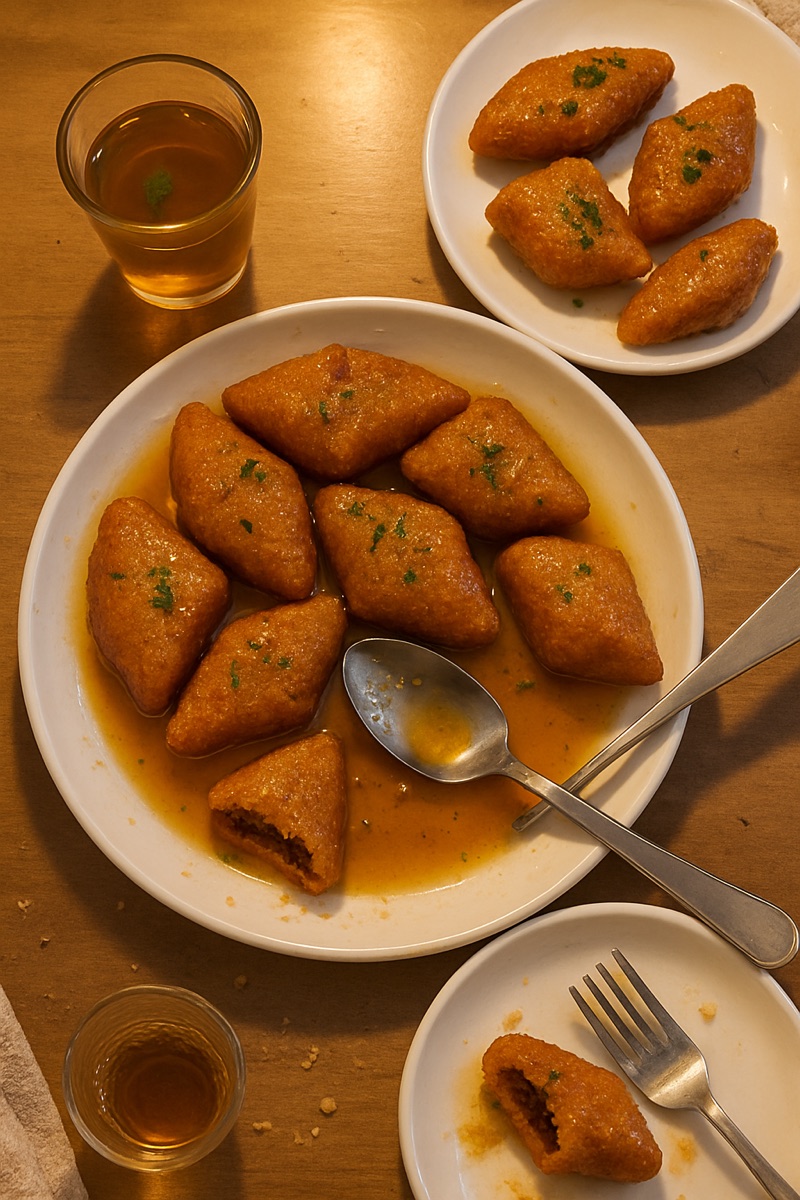 Makroud🇩🇿 Algeria · 2 hours and 45 minutes
Questions people ask
What is the most popular food in Algeria?
Couscous. It is cooked in every region with its own meat, vegetables and broth, and is generally regarded as the national dish. Chorba, the coriander-scented soup, is often called the national soup.
What do Algerians eat for breakfast?
Usually coffee, often with milk, with bread and butter or croissants, or with msemen, baghrir and other sweets topped with honey or jam. Kesra flatbread with butter and jam is another breakfast staple.
Is Algerian food spicy?
It is well spiced rather than fiery. Cumin, caraway, cinnamon and paprika are everyday spices, dried red chilli goes into many red sauces, and harissa is served as a condiment. White-sauce dishes such as rechta are mild.
What do Algerians eat during Ramadan?
Chorba is cooked every day of the month and traditionally shared with the poor. Harira, djari and tchicha are the other Ramadan soups, and maâkouda, small potato fritters, are almost always on the table.
What do Algerians drink?
Mint tea and coffee are the everyday hot drinks. At weddings in the north, cherbet, a syrup of water, sugar and orange flower water, is served, and local sodas such as those of Hamoud Boualem are drunk daily.
Keep reading
- What is the national dish of Algeria?
- Traditional food of Egypt: 13 dishes to know
- Traditional food of Libya: 12 dishes to know
- Traditional food of Morocco: 13 dishes to know
- Traditional food of Sudan: 13 dishes to know
- Traditional food of Tunisia: 13 dishes to know