 COPPER
Traditional food of Tunisia: 13 dishes to know
Tunisian food blends Berber, Arab, Mediterranean and Ottoman cooking with a strong Italian accent. It is built on durum wheat, olive oil, tomato, seafood, eggs and lamb, and it is spicier than its North African neighbours thanks to harissa. The most emblematic dishes are couscous (kosksi), brik, lablabi and ojja, while pasta is the everyday main course.
What Tunisian food is built on
Tunisian cuisine developed from Berber cooking, ancient Carthage and Rome, the Arab conquest and the Ottoman Empire, with a strong Italian, especially Sicilian, influence. Like the rest of the Mediterranean it relies on olive oil, tomatoes, seafood and meat, but it is noticeably spicier than the other North African kitchens. Tomato paste, tuna, eggs, olives, capers and pasta turn up everywhere, and pork is not eaten, in line with Islamic dietary law.
The heat comes from harissa, a paste of red chillies pounded with garlic, caraway, coriander and olive oil. It goes into most sauces and stews, and UNESCO added it to its intangible heritage list in 2022. Tabil, a blend of garlic, cayenne, caraway and coriander, seasons meat. Bread is eaten at all three meals: the white khobz talian, homemade semolina bread, or tabouna, baked in a clay oven. Pasta is the main course Tunisians eat most often, but couscous remains the dish for ceremonies.
Couscous, stews and egg dishes
- Couscous (kosksi) — Fine-grained semolina steamed in the top of a two-level pot, the kiskas, over lamb (kosksi bil ghalmi) or chicken (kosksi bil djaj) with vegetables and spices. On the coast it is made with fish such as grouper or sea bass, a specialty of Sfax, Gabès, Djerba and the Kerkennah islands. It is served in one large bowl at every kind of gathering, from weddings to funerals.
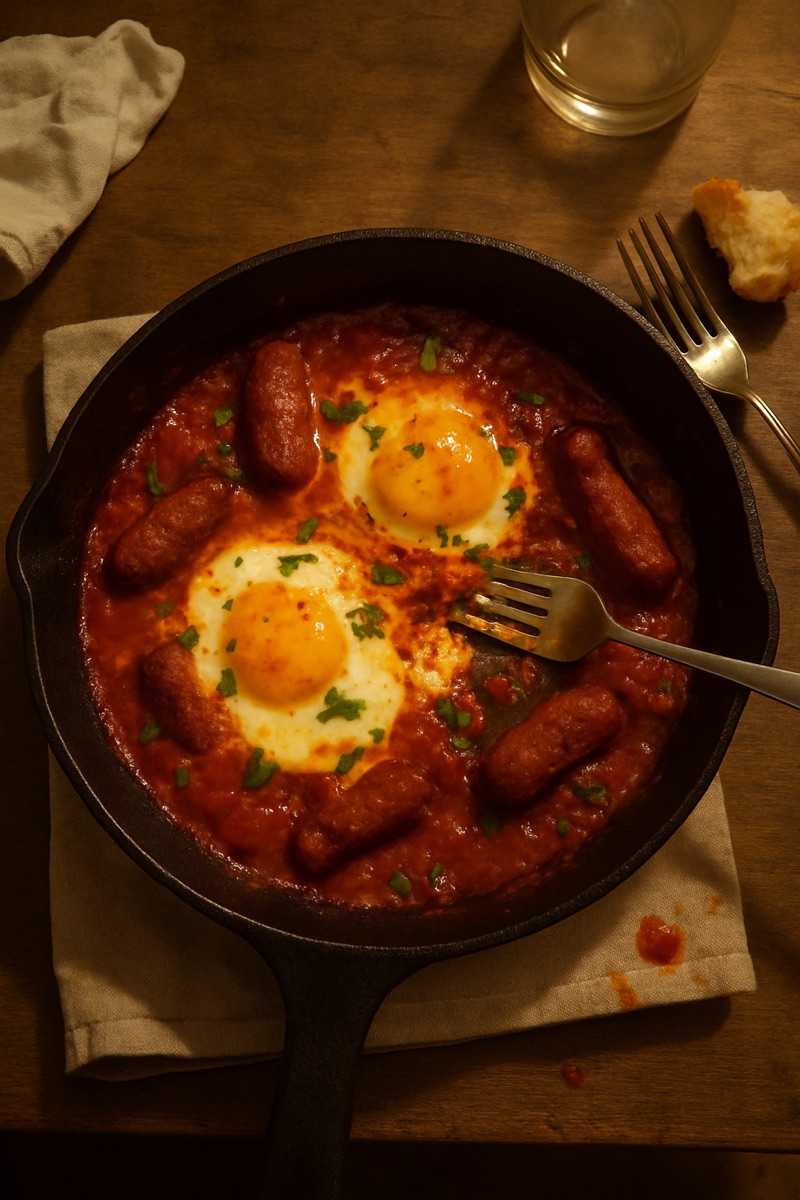
- Ojja — Tomatoes cooked in oil with garlic, ground caraway and harissa, with peppers added to the sauce and eggs cooked in it at the end. It is made with merguez, meatballs, prawns or brains. Unlike chakchouka, it has no onion.
- Chakchouka — Tomato and onion fried in olive oil with garlic and spices, usually paprika, coriander and caraway, plus a main vegetable such as peppers or courgettes, potatoes and soft-cooked eggs. On Djerba it is made with dried meat preserved in oil.
- Tunisian tajine — Not the Moroccan stew but a thick omelette baked in the oven, close to an Italian frittata: eggs, grated cheese, meat cooked in sauce and vegetables. The malsouka version is wrapped in brik pastry sheets. It is eaten hot or cold.
- Mloukhia — Dried and finely ground jute mallow leaves, mixed with olive oil and simmered for hours into a dark green sauce with beef or young camel, onion, garlic, coriander, caraway and bay leaves. It is eaten with fresh bread and is the traditional dish of the Islamic New Year.
Soups and salads
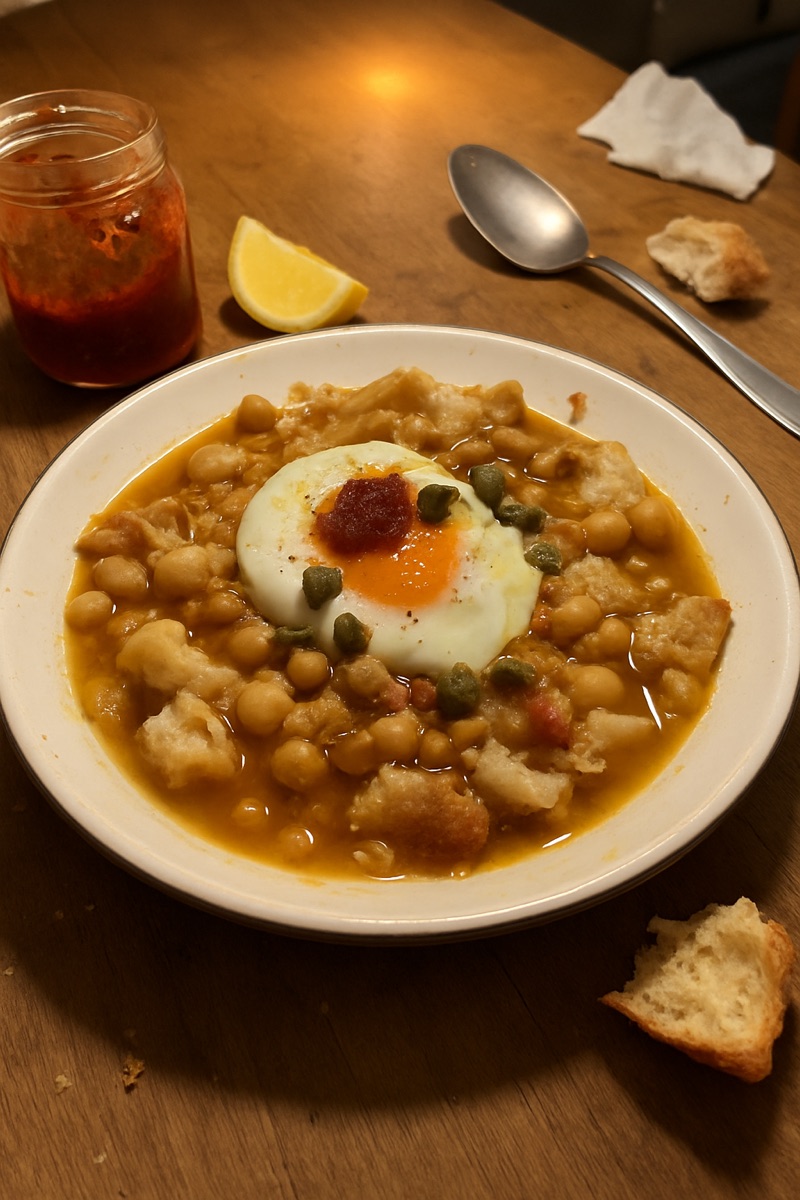
- Lablabi — The most popular soup in Tunisia: chickpeas in a garlicky broth poured over pieces of bread, finished with olive oil, harissa, cumin and a little lemon juice. It is sold on the street, even very late at night, all over the country.
- Chorba — The most common soup, eaten above all in winter and during Ramadan. It is made with meat, chicken or fish and usually with tiny pasta called birds' tongues, flavoured with parsley and celery and finished with lemon juice.
- Mechouia salad — Peppers, tomatoes and onions, sometimes aubergine, grilled, peeled and chopped, then seasoned with garlic, coriander, caraway, olive oil, lemon and harissa. It is topped with tuna and hard-boiled eggs and is a summer starter.
Street food and sweets
The most common drink is mint tea, sometimes served with pine nuts or almonds; black tea is flavoured with geranium leaves, and the traditional coffee is Turkish coffee with a few drops of orange blossom water. In summer, lemonade made from whole lemons is everywhere.
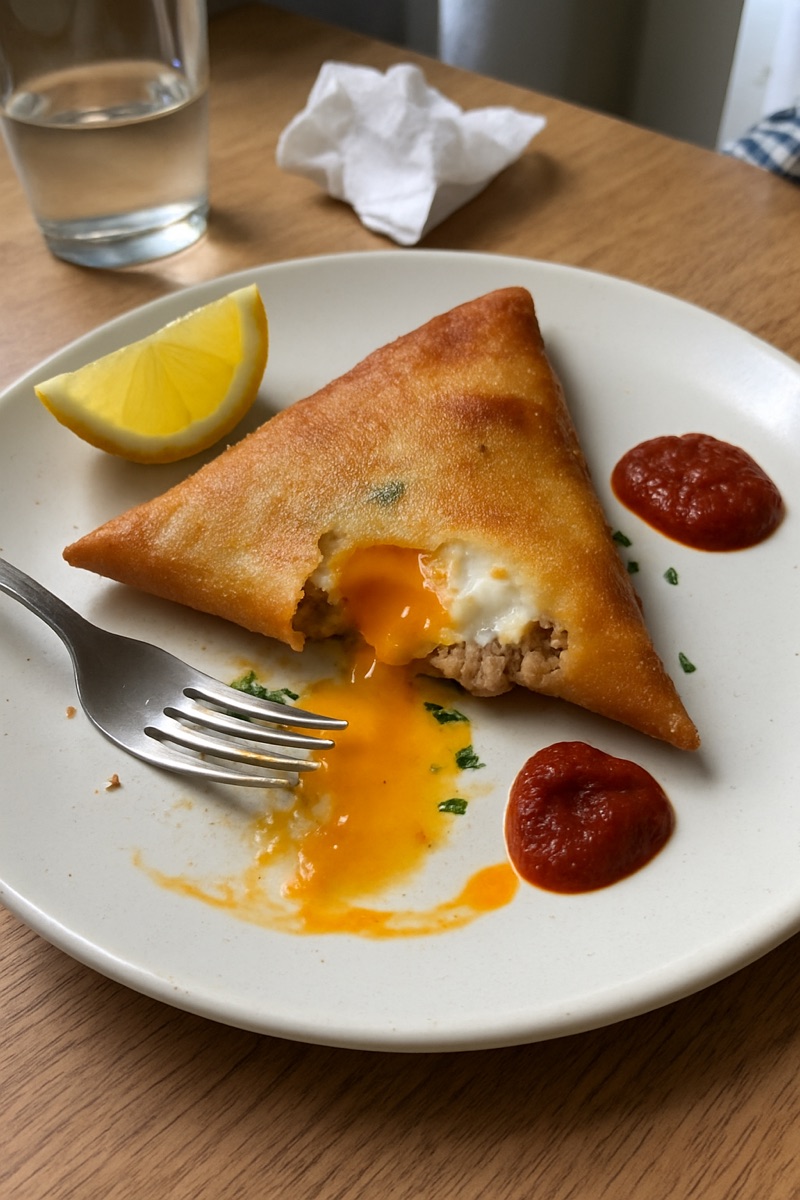
- Brik — A sheet of very thin malsouka pastry folded around a whole egg with tuna, onion, parsley and harissa, then deep-fried for two or three minutes a side so the yolk stays soft. Versions with minced meat, chicken, anchovies or cheese are common too.
- Fricassé — A small roll of fried bread dough, split and spread with harissa, then filled with tuna in oil, capers, boiled potato and olives. It is sometimes made at home but mostly sold in small fry shops.
- Bambalouni — A fried sweet doughnut dusted with sugar. It is sold in fry shops and eaten for breakfast or as an afternoon snack.
- Makroud — Semolina and olive oil dough filled with date paste or sometimes almonds, fried and soaked in syrup; white makroud are baked instead. Kairouan is the city famous for them.
- Assidat zgougou — A cream of ground Aleppo pine seeds, cooked with flour, milk and sugar, covered with white custard and decorated with nuts. Tunisians exchange bowls of it with neighbours and family for Mawlid. It was born during the famine of 1864 to 1867, when north-western Tunisians learned to turn the seeds into flour.
Regional Tunisia
Tunisian food changes from north to south and from the coast to the mountains. The old families of Tunis use little harissa and prefer milder food. Cap Bon, where harissa was born, eats tuna, anchovies, sardines and mackerel. Sfax is known for marka, a fish soup with vermicelli or couscous eaten with barley bread, and for its pastries. Gabès seasons with hrous, pickled onions and dried chilli, instead of harissa. Djerba steams its couscous and its rice, rouz djerbi, together with the meat and vegetables, while Sousse and Monastir stuff squid. Inland, near the mountains, quail, rabbit and hare are favoured.
Cook Tunisian food at home
Couscous is the national dish of Tunisia, with brik often named alongside it. Copper has full recipes for brik, lablabi and ojja, with ingredients and step-by-step methods, on our page about the food of Tunisia, and the neighbouring kitchens are in our guide to North African food.
Couscous, makroud and mint tea are shared across the Maghreb: compare with the traditional food of Algeria and the traditional food of Morocco.
The recipes
 Lablabi
 Ojja
OjjaQuestions people ask
What is the most popular food in Tunisia?
Couscous is the national and ceremonial dish, while pasta is what Tunisians eat most often day to day. Brik and lablabi are the most popular street foods.
What do Tunisians eat for breakfast?
Bambalouni and ftaïr, fried doughnuts from the fry shops, are eaten at breakfast and as an afternoon snack. During Ramadan, assida, a thick semolina porridge with butter and honey or sugar, is eaten at the pre-dawn meal.
Is Tunisian food spicy?
Yes, it is spicier than the other North African cuisines. Harissa goes into most sauces and stews, and lablabi, ojja and mechouia salad are all finished with it. The old families of Tunis are an exception and cook milder.
What do Tunisians eat during Ramadan?
Soups are central, chorba above all. Assida is eaten before dawn, and bouza, a sorghum cream with milk, sugar and rose or geranium water, is made mostly during the holy month.
What do Tunisians drink?
Mint tea, often with pine nuts, and Turkish coffee scented with orange blossom. Lemonade and fruit juices are common in summer, and Boga is the local soda.
Keep reading
- What is the national dish of Tunisia?
- Traditional food of Algeria: 13 dishes to know
- Traditional food of Egypt: 13 dishes to know
- Traditional food of Libya: 12 dishes to know
- Traditional food of Morocco: 13 dishes to know
- Traditional food of Sudan: 13 dishes to know