 COPPER
Traditional food of Morocco: 13 dishes to know
Moroccan food blends Berber, Arab, Andalusi and Mediterranean cooking. It is built on wheat, lamb, chicken and vegetables, slow-cooked with saffron, cumin, ginger, cinnamon and preserved lemon, and eaten by hand with bread. The most emblematic dishes are couscous, tagine, pastilla and harira, all followed by sweet mint tea.
What Moroccan food is built on
Moroccan cuisine is a mix of Berber, Arab, Andalusi, Mediterranean and African traditions, with little French or Spanish influence. Wheat is the staple grain, eaten as bread and couscous; until the mid-20th century barley also mattered, especially in the south. Lamb is the most eaten meat, followed by beef, goat and chicken, and the 3,000 km coastline brings sardines, of which Morocco is the world's largest exporter.
The flavour comes from spices and preserves. Cinnamon, cumin, turmeric, ginger, paprika, coriander and saffron are the everyday spices, and up to 27 of them go into the blend ras el hanout. Preserved lemon, olives, smen (aged butter), argan oil and dried fruit finish many dishes. A typical lunch opens with hot and cold salads, continues with a tagine, and ends with seasonal fruit; Moroccans traditionally eat with their hands, using bread.
Couscous, tagines and festive dishes
- Couscous — Semolina rolled by hand into small grains and steamed above a stew of meat and vegetables in a couscoussier. It is the Moroccan dish best known abroad and is traditionally served on Fridays after the midday prayer, often from one large clay platter. Couscous of the Maghreb joined UNESCO's intangible heritage list in 2020.
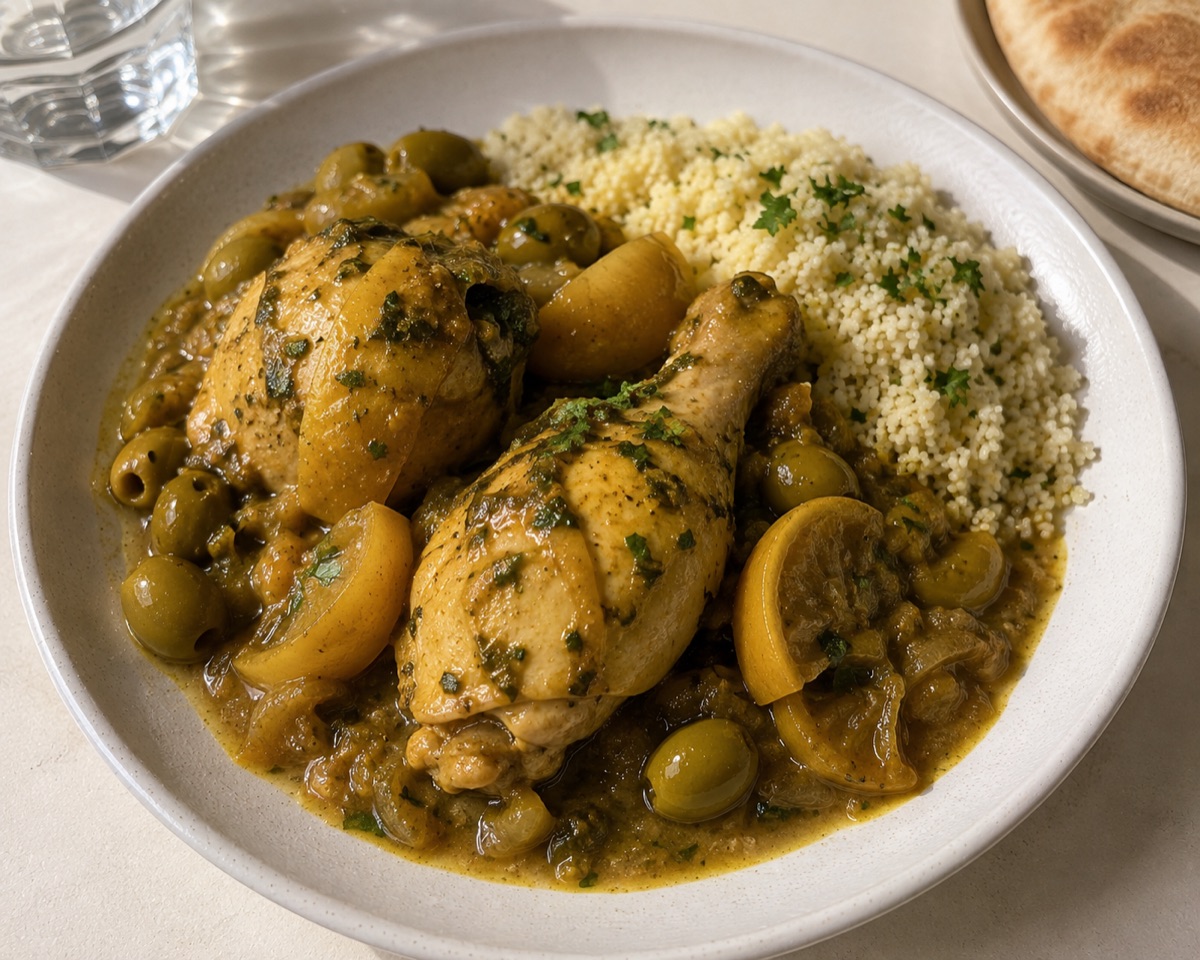
- Tagine — A stew slow-braised in a clay pot with a cone-shaped lid, which sends the steam back down onto the meat. Lamb with vegetables is the most common version, and chicken with preserved lemon and olives is a classic. It is eaten with bread, which is used to scoop up the sauce.
- Tanjia — Lamb shank sealed in a tall urn-shaped clay jar with preserved lemon, whole cumin, garlic, saffron and a little olive oil, then cooked for hours in embers. It is a Marrakesh specialty, traditionally left overnight in the ashes of a hearth or a hammam.
- Pastilla — A pie of very thin warqa pastry filled with slow-cooked shredded poultry, eggs and a layer of toasted almonds with sugar and cinnamon, then dusted with sugar and cinnamon. It was traditionally made with young pigeon, now more often chicken, and opens special meals. A spicy seafood version is often served at weddings.
- Rfissa — Shredded msemen or day-old bread soaked in a broth of chicken, lentils and fenugreek, spiced with ras el hanout. It is served at celebrations and traditionally given to a woman who has just given birth.
- Méchoui — A whole lamb or sheep spiced with ras el hanout and roasted on a spit beside a bed of embers, basted with butter until the skin turns crisp and amber. In Morocco and Algeria the word means specifically a lamb cooked whole on the spit.
Soups and salads
- Harira — A thick soup of tomato, lentils, chickpeas and a little lamb, spiced with ginger, cinnamon and turmeric and thickened with flour at the end. It is the soup that breaks the fast during Ramadan, eaten with dates, and a winter dinner the rest of the year.
- Bissara — A purée of dried split fava beans cooked with garlic, then topped with olive oil, paprika and cumin. It is eaten in the colder months, sold in shallow bowls in town squares and alleyways, with bread for dipping.
- Zaalouk — Charred aubergine mashed into tomatoes cooked with garlic, cumin and paprika until jammy. It is one of the cooked salads that open a meal, alongside taktouka, a mix of tomatoes and smoked green peppers from Taza and Fes.
Breads, pastries and mint tea
Bread, khobz, is baked daily in every town and comes with every meal. The most popular drink is mint tea, atay: gunpowder green tea brewed with spearmint and sugar, poured from high above the glass to raise bubbles, and offered to guests as a sign of hospitality, usually at least three glasses.
- Msemen — Square, flaky pancakes folded in layers and cooked on a griddle. They are eaten at breakfast with honey and mint tea, sometimes stuffed with khlea (preserved meat) or onion and tomato, and are sold in the dairy shops called mhlaba.
- Sfenj — A light, spongy ring of fried dough eaten plain, with sugar or with honey. Sfenj makers sell them early in the morning for breakfast or in the late afternoon with mint tea.
- Chebakia — Strips of dough spiced with anise, cinnamon and saffron, folded into a rose shape, fried, coated in honey and orange blossom water and covered in sesame. It is made in large batches at the start of Ramadan and eaten with harira.
- Kaab el ghzal — "Gazelle ankles": pastries stuffed with almond paste and topped with sugar, one of the most common Moroccan desserts. At the end of an ordinary meal, though, seasonal fruit is more usual than a cooked dessert.
Regional Morocco
Many ingredients carry a place name: saffron from Taliouine, mint and olives from Meknes, oranges and lemons from Fes. Marrakesh is the home of tanjia and of Djemaa el Fna square, the best-known example of Morocco's long street food tradition. Fes gave the country jowhara, a dessert of fried warqa, cream and toasted almonds, and ma'quda potato fritters. The north, around Tétouan, absorbed Andalusi and Algerian influences, as the history of pastilla shows, and since the 1980s its snack restaurants have served Spanish-style bocadillos. Along the coast, seafood goes into tagines, pastilla and briouat pastries.
Cook Moroccan food at home
Couscous is the dish most often called the national dish of Morocco, with tagine close behind. Copper has full recipes for chicken tagine with preserved lemon and olives, harira and zaalouk, with ingredients and step-by-step methods, on our page about the food of Morocco, alongside other North African recipes.
Couscous, msemen, sfenj and mint tea are shared across the Maghreb. Compare with the traditional food of Algeria and the traditional food of Tunisia.
The recipes
- Chicken tagine with preserved lemon and olives🇲🇦 Morocco · 2 hours and 30 minutes
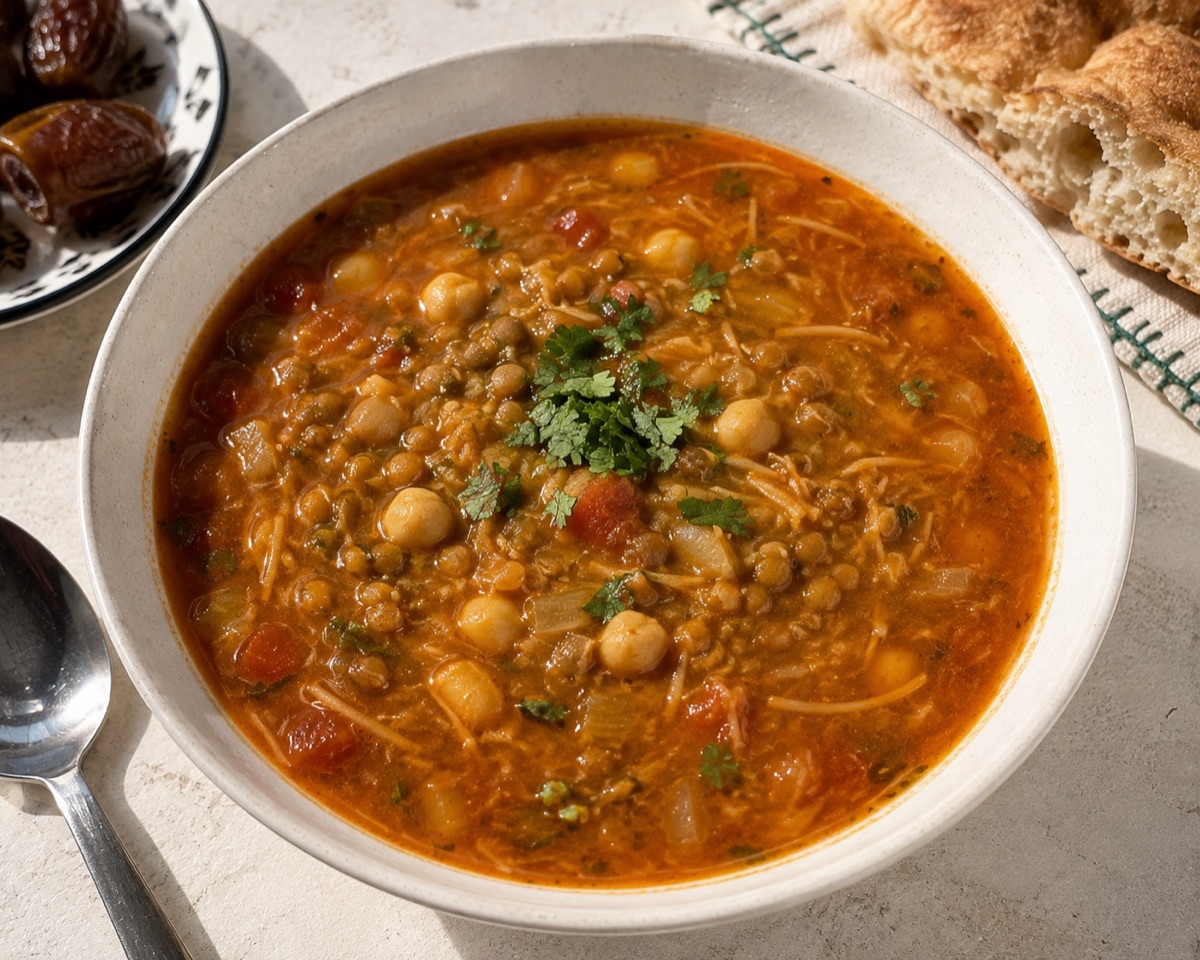 Harira🇲🇦 Morocco · 1 hour and 25 minutes
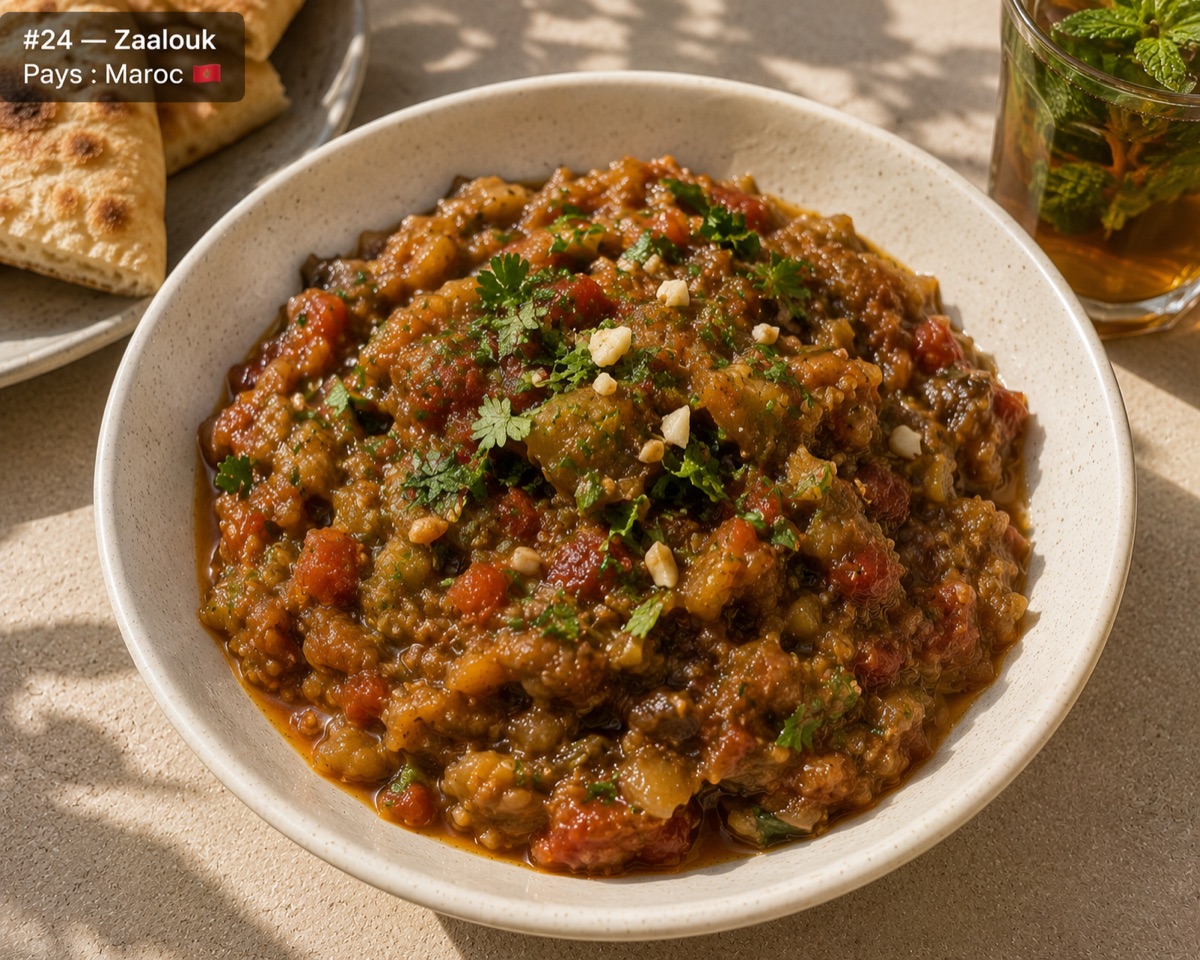 Zaalouk🇲🇦 Morocco · 40 minutes
Questions people ask
What is the most popular food in Morocco?
Couscous and tagine are the best known. Couscous is traditionally the Friday family meal, while tagines of lamb or chicken are everyday lunch dishes.
What do Moroccans eat for breakfast?
Msemen pancakes with honey, or sfenj doughnuts, with mint tea or coffee. Fresh bread comes with every meal, and in the colder months bowls of bissara, a fava bean purée, are sold in town squares.
Is Moroccan food spicy?
It is heavily spiced and aromatic. The everyday spices are cinnamon, cumin, turmeric, ginger, paprika and saffron; ground red pepper and cayenne are used too, so the heat depends on the dish and the cook.
What is the national drink of Morocco?
Mint tea, called atay, is the most popular drink: gunpowder green tea with spearmint and sugar, poured from a height and shared with guests.
What do Moroccans eat during Ramadan?
Harira is the soup that breaks the fast, served with dates and chebakia, the honey-coated sesame pastries made in large batches at the start of the month.
Keep reading
- What is the national dish of Morocco?
- Traditional food of Algeria: 13 dishes to know
- Traditional food of Egypt: 13 dishes to know
- Traditional food of Libya: 12 dishes to know
- Traditional food of Sudan: 13 dishes to know
- Traditional food of Tunisia: 13 dishes to know