 COPPER
What is the national dish of Morocco?
Morocco has no officially declared national dish, but couscous is the one most often named: small granules of hand-rolled semolina steamed above a stew of meat and vegetables, traditionally eaten on Fridays after the midday prayer. Tagine, a stew slow-cooked in a cone-lidded clay pot, is the other dish usually cited. Couscous joined UNESCO's intangible heritage list in 2020.
What is Moroccan couscous?
Couscous is not a grain but a preparation. Semolina, the hardest part of durum wheat, is sprinkled with water and rolled by hand into small pellets, dusted with dry flour so they stay separate, then sieved. The finished granules are about 2 mm across.
They are cooked in a couscoussier: a tall pot where the meat and vegetables simmer as a stew, with a steamer on top where the couscous cooks in the rising steam and takes on the flavour of the stew. Properly cooked couscous is light and separate, never gummy. In Morocco it is often served on a large communal clay platter called a gsaa. At a formal meal it comes after the salads and the tagine, topped with meat and vegetables, and is traditionally eaten by hand.
The Friday couscous and its variants
In Morocco couscous is traditionally served on Fridays, after the midday prayer. Two preparations stand out:
- Couscous with seven vegetables: a broth of beef, lamb or chicken with carrots, turnips, pumpkin, zucchini, cabbage and chickpeas piled over the grain.
- Couscous tfaya: steamed semolina and meat topped with a sweet and savoury garnish of caramelised onions, raisins, cinnamon and toasted almonds.
Where tagine fits in
Tagine is named after its pot: a shallow round clay base with a tall cone- or dome-shaped lid. The lid catches the steam and sends the condensation back down, so meat, poultry or fish braise with very little water alongside vegetables or fruit. Classic versions include tajine zitoun, with olives, tajine mtewem and the sweet tajine lham-lahlou. Marrakesh has its own clay vessel, the tangia, which gave its name to the city's slow-cooked meat dish. The cone-lidded pot is said to have originated in Tafraout, in southern Morocco.
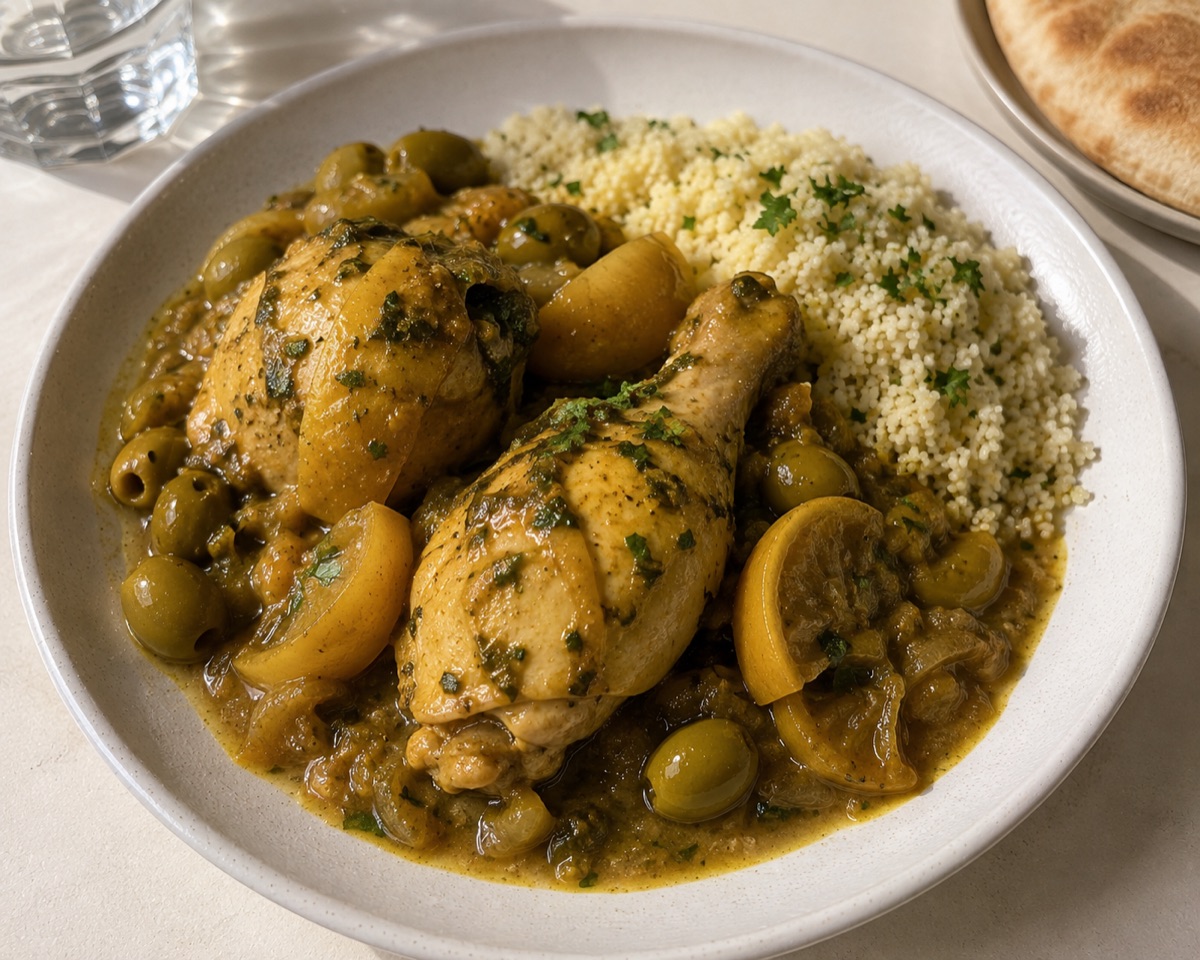
A typical Moroccan lunch begins with a series of hot and cold salads, followed by a tagine. Our chicken tagine with preserved lemon and olives shows the method: chicken legs rubbed with saffron, ginger, turmeric and garlic and left for at least an hour, laid on a bed of chopped onions and simmered covered for about an hour. Strips of preserved lemon peel and green olives go in only at the end, uncovered, for 10 to 15 minutes, until the onions melt into a thick sauce that is mopped up with bread.
Where couscous comes from
Couscous is a Berber (Amazigh) dish. In Tamazight it is called seksu, and the word couscous is probably of Berber origin, from a root meaning "well formed, well rolled, rounded". Food writer Charles Perry places its origin among the Berbers of Algeria and Morocco, between the end of the 11th-century Zirid dynasty and the rise of the 13th-century Almohad Caliphate. Couscoussiers dating back to the 12th century have been found in the ruins of Igiliz, in Morocco's Sous valley.
It is a staple across the Maghreb, not only in Morocco: Algeria and Tunisia also name couscous among their national dishes. In December 2020 Algeria, Mauritania, Morocco and Tunisia jointly inscribed the knowledge, know-how and practices of couscous on UNESCO's Representative List of the Intangible Cultural Heritage of Humanity. UNESCO describes it as a dish tied to solidarity, sharing meals and togetherness.
Other dishes to know from Morocco
Harira is the soup of Ramadan: lamb, tomato, lentils and chickpeas spiced with ginger, cinnamon and turmeric, simmered until the lentils are soft, about 45 minutes, then thickened at the end with flour whisked into cold water until it turns silky. It is served with lemon wedges. Harira is made across the Maghreb, but the Moroccan version is the best known, and it is the dense tomato, lentil and chickpea base, seasoned with ginger, cinnamon and fresh coriander and thickened with flour, that sets it apart from the Algerian, Tunisian and Libyan soups of the same name. It is eaten mostly during Ramadan but cooked all year.
Zaalouk is one of the cooked salads that open a meal: aubergines charred whole over a flame for about 15 minutes, then mashed into tomatoes cooked with garlic, cumin and paprika until no water is left and the oil shows again at the edges. It is finished with fresh coriander and lemon juice and eaten warm or cold, scooped up with bread.
Moroccan cooking belongs to the wider North African kitchen. You will find all three dishes, with ingredients and step-by-step methods, on our page about the food of Morocco.
The recipes
- Chicken tagine with preserved lemon and olives🇲🇦 Morocco · 2 hours and 30 minutes
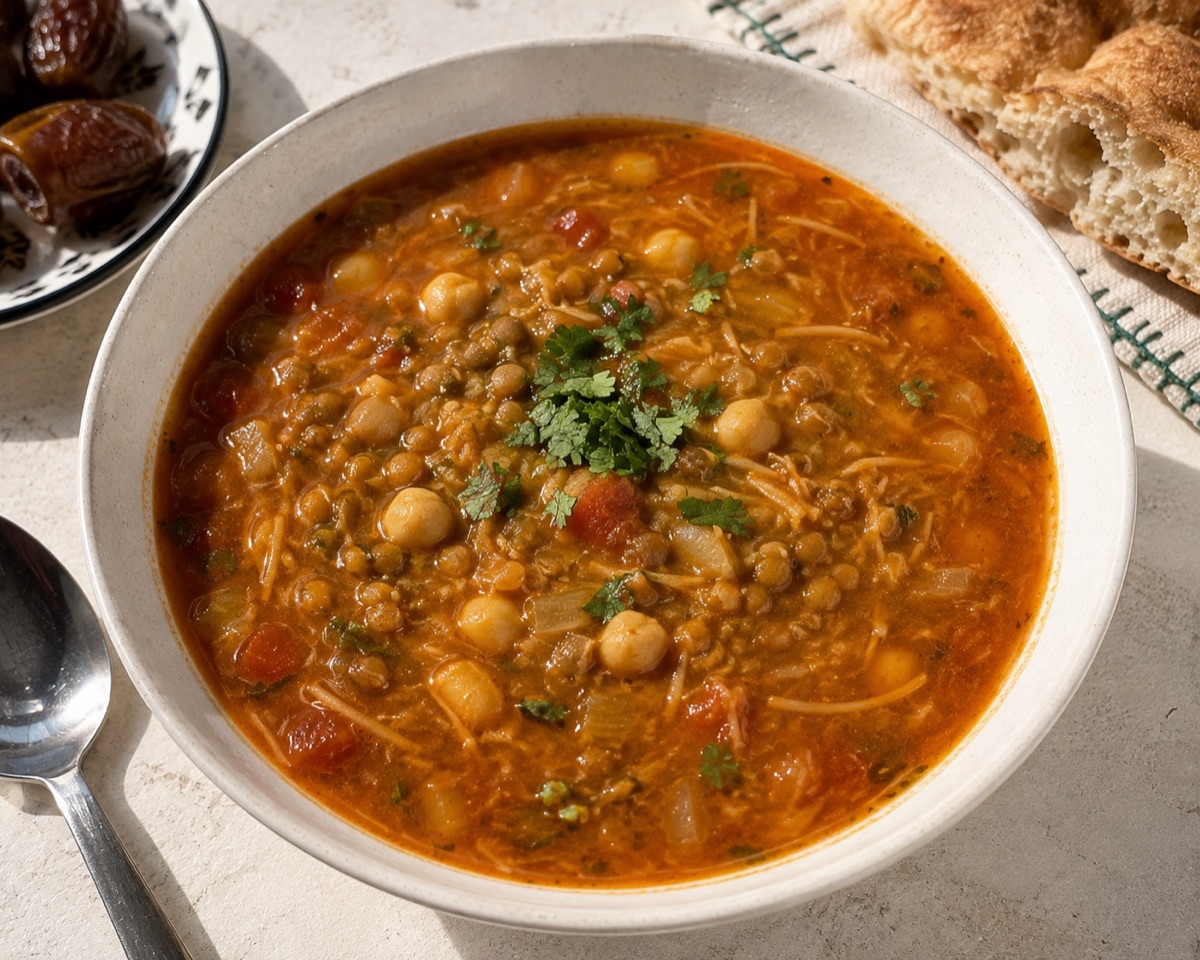 Harira🇲🇦 Morocco · 1 hour and 25 minutes
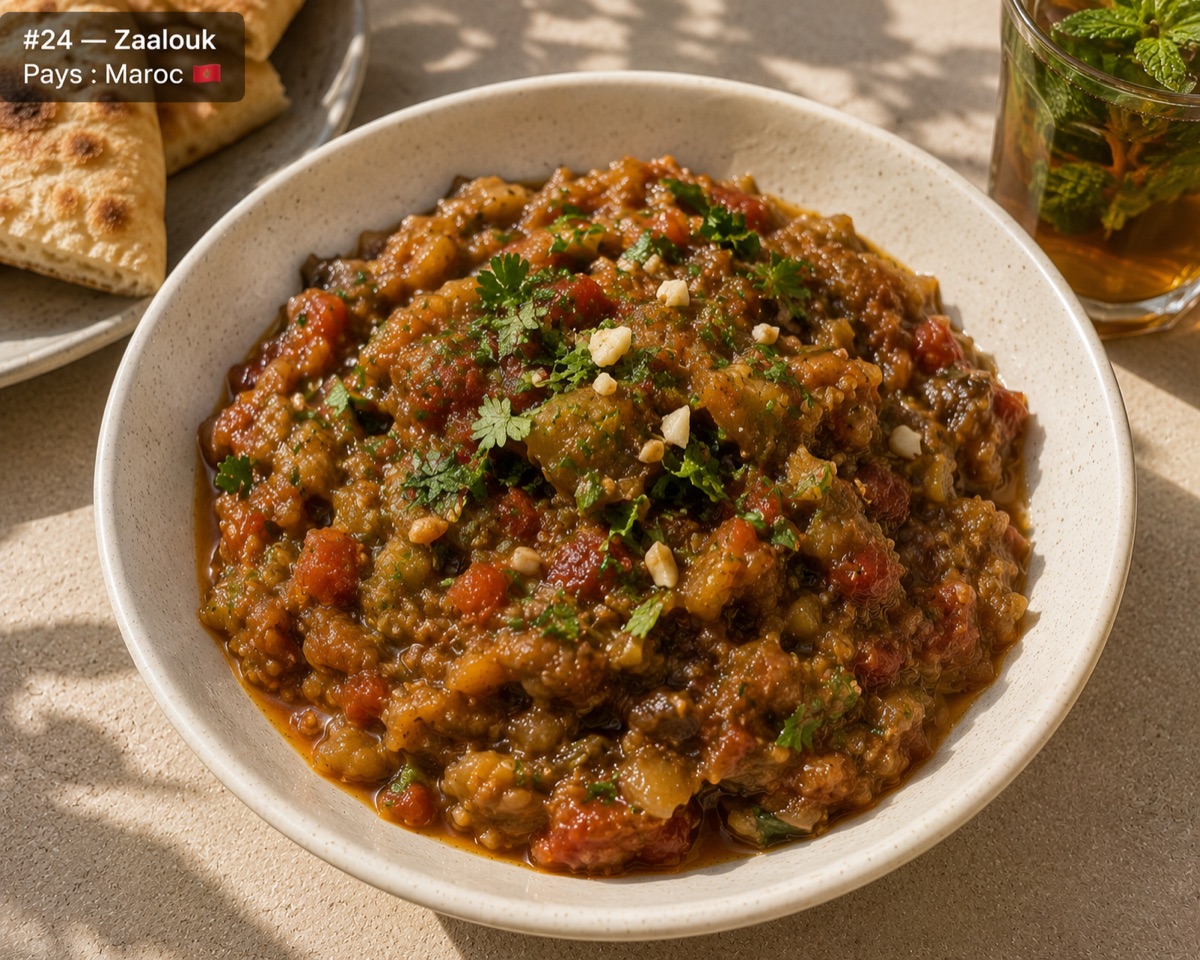 Zaalouk🇲🇦 Morocco · 40 minutes
Questions people ask
Is couscous from Morocco or Algeria?
Both. Couscous is generally traced to the Berbers of present-day Algeria and Morocco, and in 2020 Algeria, Mauritania, Morocco and Tunisia jointly registered it with UNESCO as shared intangible heritage.
Why do Moroccans eat couscous on Friday?
Couscous is traditionally served on Fridays after the midday prayer and often shared from one large clay platter called a gsaa.
What is the difference between couscous and tagine?
Couscous is hand-rolled semolina steamed above a stew; tagine is the stew itself, slow-braised in a clay pot with a cone-shaped lid. Both are named as Morocco's national dish.
Is couscous a type of pasta?
No. Couscous is semolina rolled by hand into granules, while pasta is made from ground wheat dough that is molded or extruded.
What is tagine served with?
Bread. Moroccans traditionally eat tagine with their hands, using bread to scoop up the meat and sauce.
Keep reading
- Traditional food of Morocco: 13 dishes to know
- What is the national dish of Algeria?
- What is the national dish of Egypt?
- What is the national dish of Libya?
- What is the national dish of Sudan?
- What is the national dish of Tunisia?