 COPPER
What is the national dish of Egypt?
Egypt has no national dish set by law, but koshari is the one most often named: a street bowl of rice, brown lentils, vermicelli and macaroni, topped with chickpeas, spiced tomato sauce, garlic vinegar and crisp fried onions. UNESCO added it to its intangible cultural heritage list in 2025. Ful medames, slow-cooked fava beans, is the other dish Egyptians call national.
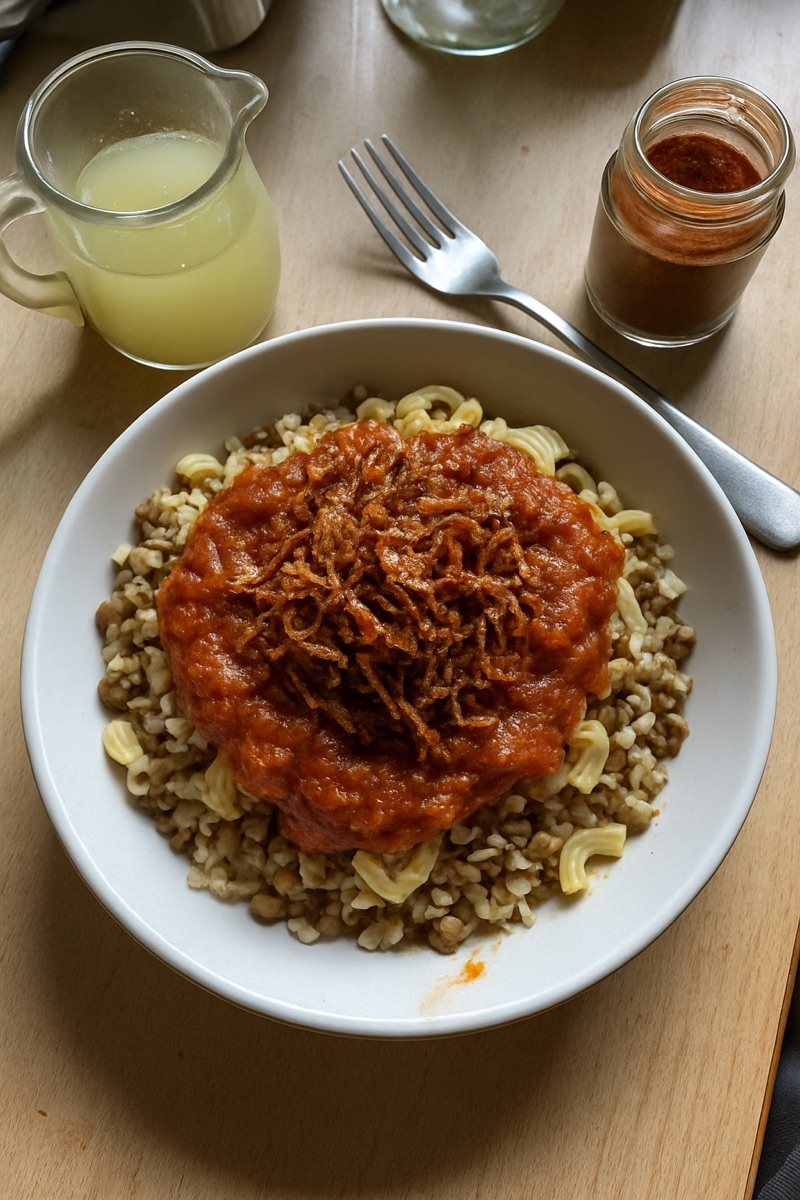
What is in koshari?
Koshari is built in layers, not mixed in the pot. Each part is cooked separately and stacked in the bowl just before serving:
- Rice and brown lentils, cooked together with vermicelli toasted until nut brown.
- Elbow macaroni, boiled until just done.
- Chickpeas, warmed and scattered over the pasta.
- Tomato sauce with garlic, a little vinegar and cumin, simmered until thick.
- Daqqa, garlic fried for 30 seconds, then boiled for a minute with white vinegar and cumin.
- Fried onions, sliced very thin and fried until deep brown and brittle.
How koshari is made
Everything starts with the onions. Three large onions are sliced thin, salted, dried and fried in about 500 ml of oil for 15 to 20 minutes. That onion oil is kept and used again for the vermicelli, the tomato sauce and the daqqa, which is how one flavour runs through the whole bowl.
The lentils simmer for 20 minutes, then go in with the toasted vermicelli and the rice for a 15-minute cook and a 10-minute rest. The bowl is assembled at the last moment: rice and lentils, macaroni, chickpeas, hot tomato sauce, a drizzle of daqqa and a fistful of onions. The diner stirs it, not the cook. Our koshari recipe gives every quantity.
Because it contains no animal products, koshari is vegan as long as the frying is done in vegetable oil.
It has long been called the food of the poor: cheap, filling and popular with workers, and easy to serve in large quantities. It is eaten at home, at roadside stalls and in restaurants all over Egypt. Since 2020 there is even an instant version, ready in 5 to 10 minutes with hot water.
Where koshari comes from
The earliest known English-language account comes from the explorer Richard Burton, who in 1853 described koshary as the breakfast of the people of Suez: lentils, rice, butter, onions and pickled lemons. His version had no pasta and no tomato sauce.
Koshari was first sold from street carts and only later moved into restaurants. Today some restaurants serve nothing else. Alexandria has its own version with yellow lentils, rice coloured with curry and cumin, eggs boiled and then fried in butter, and lightly pickled tomatoes instead of tomato sauce, with French fries on the side. Outside Egypt, koshari has spread to Eastern Arabia and Yemen, and koshari restaurants have opened in Japan.
In December 2025 koshari became the first Egyptian dish inscribed on UNESCO's list of intangible cultural heritage, recognised for being eaten by people from every background across the country.
Why ful medames is also called the national dish
Ful medames is widely described as a national dish too, and it is a staple food in Egypt. It is a stew of small brown fava beans, known locally as ful medames or 'brown beans', simmered for hours until they collapse, then crushed coarsely with their skins and dressed with olive oil, lemon, cumin and garlic.
Egyptian cooks distinguish several beans: ful medames are the small round brown ones, ful rumi are large European broad beans, and ful baladi sit in between. The long cook is the tradition. In 1860 the orientalist Edward William Lane described beans cooked in a pear-shaped earthenware jar buried up to its neck in the hot ashes of an oven or bath. In medieval Cairo, huge pots of beans were left overnight in the embers of a public bath near Bab Zuweila to feed the city at breakfast. Today the beans still cook overnight in a narrow-necked idra pot, or in about 45 minutes in a pressure cooker, as in our ful medames recipe.
Ful travelled from Egypt across the Arab world and East Africa, including neighbouring Sudan.
Other dishes to know from Egypt
The third dish to know is molokhia: finely minced jute mallow leaves held just under a boil in chicken broth, finished with a ta'leya of garlic fried in ghee with ground coriander. The ta'leya is poured into the pot while it is still sizzling and should hiss loudly. A hard boil would split the leaves from the broth, so the heat stays low. It is served over rice, with the chicken pulled into large pieces on the side. Molokhia, like ful, appears in medieval Egyptian cookbooks and has been eaten in the country for centuries.
Egyptian cooking shares a lot with its neighbours along the Mediterranean coast; see our guide to North African food. You will find all three dishes, with ingredients and step-by-step methods, on our page about the food of Egypt.
The recipes
- Koshari🇪🇬 Egypt · 1 hour and 15 minutes
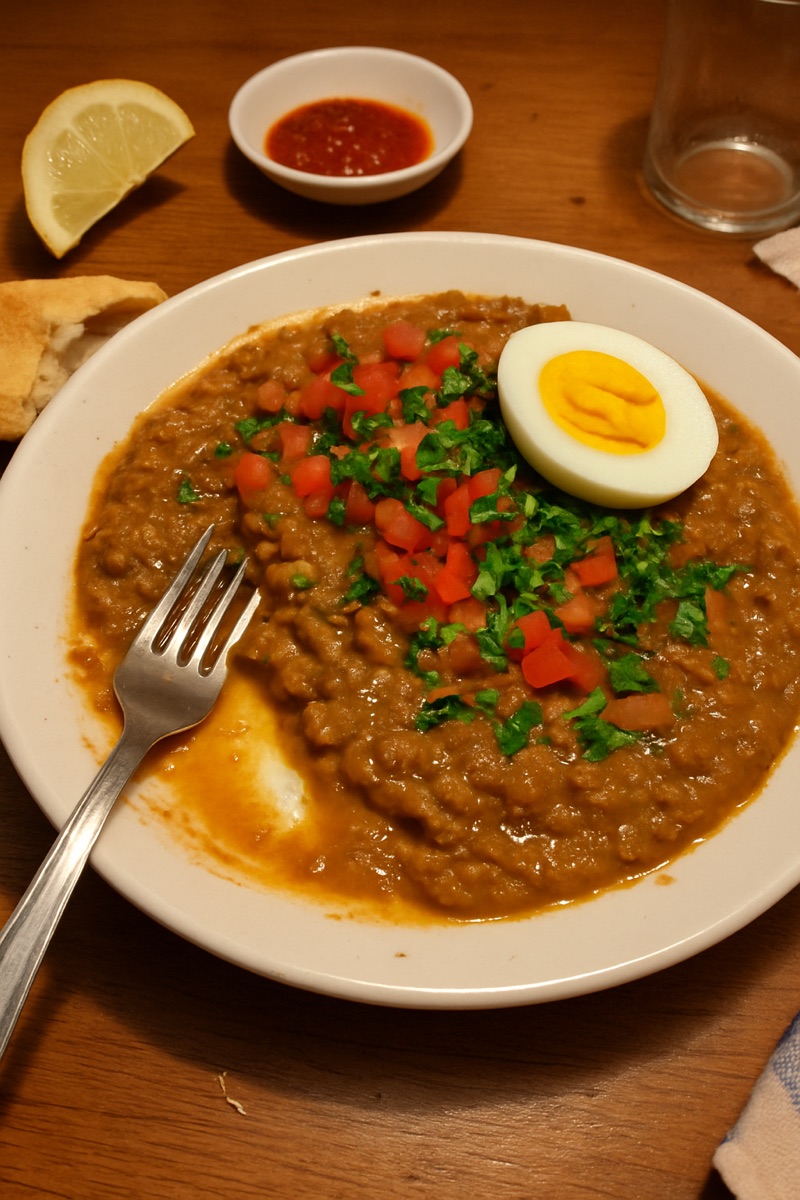 Ful medames🇪🇬 Egypt · 17 hours and 10 minutes
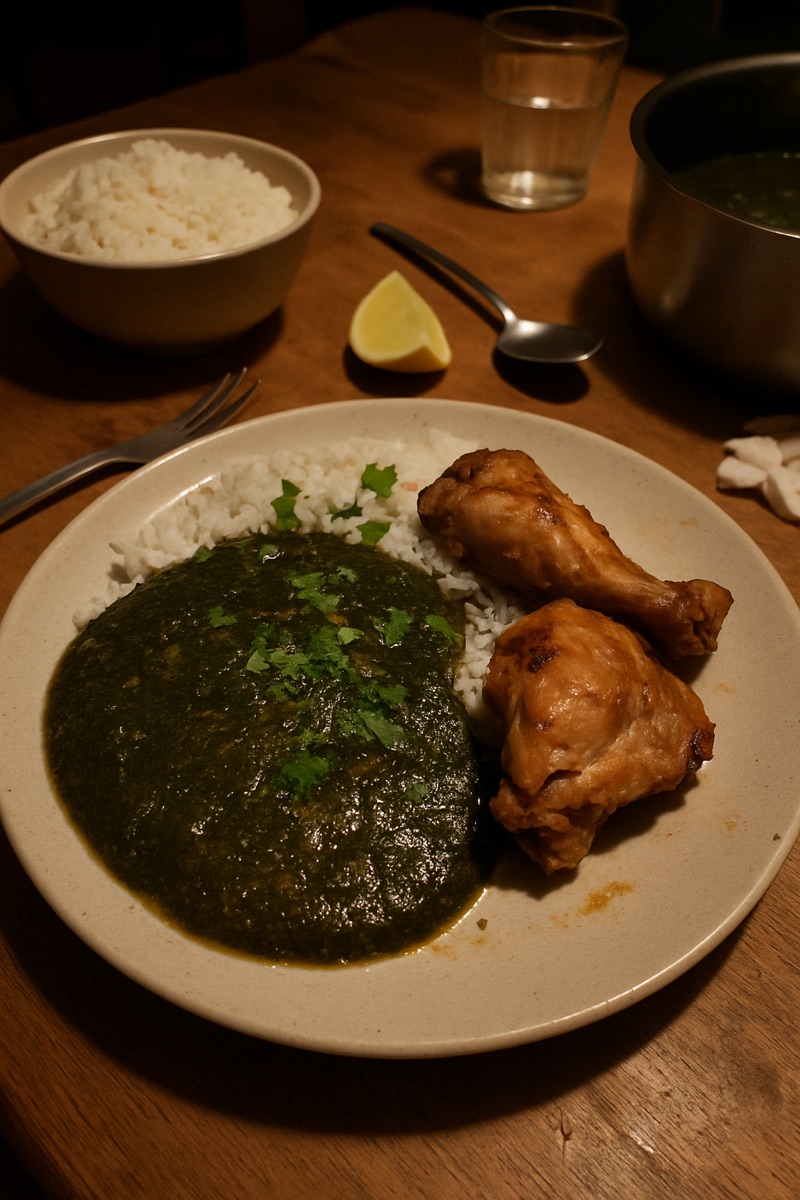 Molokhia🇪🇬 Egypt · 1 hour and 25 minutes
Questions people ask
Is koshari or ful medames the national dish of Egypt?
Neither has legal status. Koshari is the one most often called Egypt's national dish and is on UNESCO's heritage list since 2025; ful medames, a staple food in Egypt, is also widely described as a national dish.
Is koshari vegan?
Traditional koshari contains no animal products, so it is vegan as long as the onions and sauces are fried in vegetable oil rather than butter or ghee.
What is daqqa in koshari?
Daqqa is the garlic vinegar poured over koshari: crushed garlic fried briefly in oil, then boiled with white vinegar and cumin. It gives the dish its sharp edge.
How do you pronounce koshari?
In Egyptian Arabic it is said KOSH-a-ree, with the stress on the first syllable. It is also spelled koshary or kushari.
What is ful medames eaten with?
Ful medames is scooped up with warm baladi bread and usually topped with olive oil, tahini, tomato and parsley, as in our ful medames recipe.
Keep reading
- Traditional food of Egypt: 13 dishes to know
- What is the national dish of Algeria?
- What is the national dish of Libya?
- What is the national dish of Morocco?
- What is the national dish of Sudan?
- What is the national dish of Tunisia?