 COPPER
What is the national dish of Sudan?
Sudan has no official national dish, and no single dish is named by every source. Three foods share the claim: ful medames, slow-cooked fava beans finished with sesame oil and white cheese; kisra, a thin fermented sorghum bread; and asida, a fermented sorghum dough set into a dome and served inside a ring of meat stew called mullah.
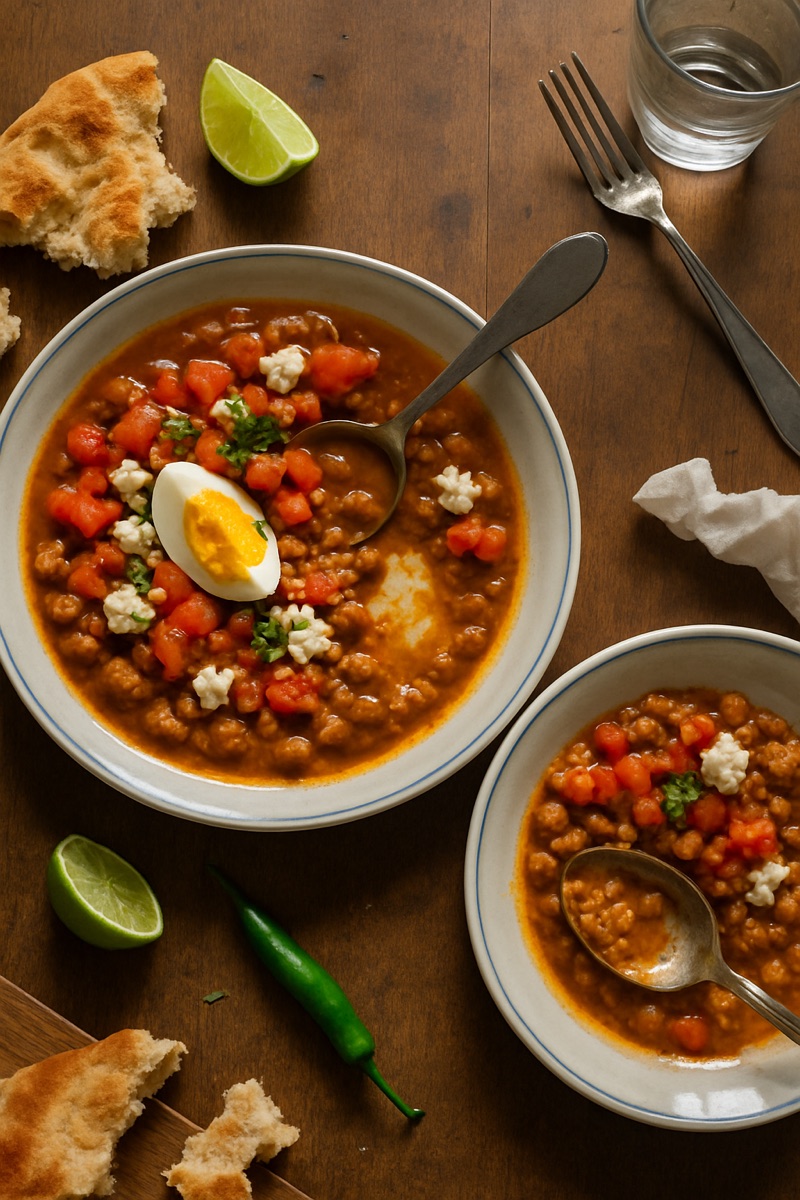
Why Sudan has no single national dish
No law or government declaration names a Sudanese national dish, and the usual reference lists of national dishes leave Sudan out. What the sources do agree on is the structure of a Sudanese meal: a starch made from sorghum or wheat, eaten with a stew called mullah, and, at breakfast, a bowl of beans.
That gives three honest candidates. Ful medames is the dish city dwellers eat most often. Kisra is the traditional bread that goes with almost every stew. Asida is the porridge-dough that turns a mullah into a full meal, especially during Ramadan.
Ful medames, the everyday bowl
Ful medames is stewed fava beans. It came to Sudan from Egypt, where it is also called a national dish, and Arabic Wikipedia notes that in Sudanese cities it dominates both breakfast and the evening meal.
The Sudanese version is easy to recognise. Dried beans are soaked at least 12 hours, simmered 1 hour 30 to 2 hours until one crushes between two fingers, then roughly mashed with cumin and salt. The bowl is topped with crumbled white cheese (jibna), tomato, red onion and arugula, and finished with sesame oil rather than olive oil. It is eaten by scooping with torn bread. The full method is in our Sudanese ful medames recipe.
- Jibna: a soft white cheese, crumbled over the top.
- Sesame oil: about 3 tablespoons per bowl, the Sudanese signature.
- Lemon: squeezed over just before eating.
- Bread: torn flatbread instead of a fork.
Kisra, the bread behind every stew
Kisra is a thin fermented bread made from sorghum (durra) or wheat. A sorghum batter is left overnight to sour, then spread paper-thin on a hot griddle called a douka, where it cooks in about half a minute. Making it is traditionally women's work, usually done early in the morning.
It is a bread on a national scale: as of 1995, the then-undivided Sudan was estimated to eat 20,000 to 30,000 short tons of sorghum flour a year as kisra. In 2025 CNN listed it among the world's 50 best breads. The word also covers a second form, kisra aseeda, a porridge that is close to asida.
How asida is made
Asida is the dish that shows the Sudanese taste for fermentation most clearly. Sorghum flour is mixed with an equal weight of water, salt and a spoonful of yogurt, then left 12 to 24 hours until it smells sharply sour. The slurry is poured all at once into boiling water and beaten with a wooden stick, the mufraka, for 8 to 10 minutes until it is thick enough to hold the stick upright.
The hot dough is packed into an oiled bowl, left 20 minutes to set to a jelly firmness, then turned out as a dome in the middle of a wide platter. Mullah ahmar, a red stew of meat and tomato, is ladled around it like a moat, and diners cut into the edge of the dome and drag each piece through the sauce. Asida is especially popular during Ramadan. See our asida recipe for every step.
Mullah, the stew that completes the meal
Whichever starch is on the table, the mullah gives the meal its character. Most mullahs are built on meat, vegetables or legumes, and many are thickened with okra. These are the names you will meet most often:
- Mullah ahmar: red stew of minced meat and tomato, the usual partner of asida.
- Waika: crushed dried okra, stirred into many mullahs to give a sticky, thick sauce.
- Mullah sharmout: dried meat cooked with onions and crushed dried okra.
- Kawal: a fermented food used in place of meat in rural Darfur and Kordofan, and as a powdered seasoning in towns.
Other dishes to know from Sudan
Gurasa is the wheat counterpart of kisra: a thick, spongy pancake of wholemeal batter that rises for 20 to 30 minutes, is cooked on both sides in a pan or on a saj, and is torn by hand to scoop up mullah or ful.
Sudan's food has much in common with its neighbours. Ful medames links it to Egypt, covered in our article on the national dish of Egypt, while kisra is a close relative of the injera described in the national dish of Ethiopia.
You will find all three dishes, with ingredients and step-by-step methods, on our page about the food of Sudan, and the wider picture in our guide to North African food.
The recipes
- Ful medames🇸🇩 Sudan · 13 hours and 55 minutes
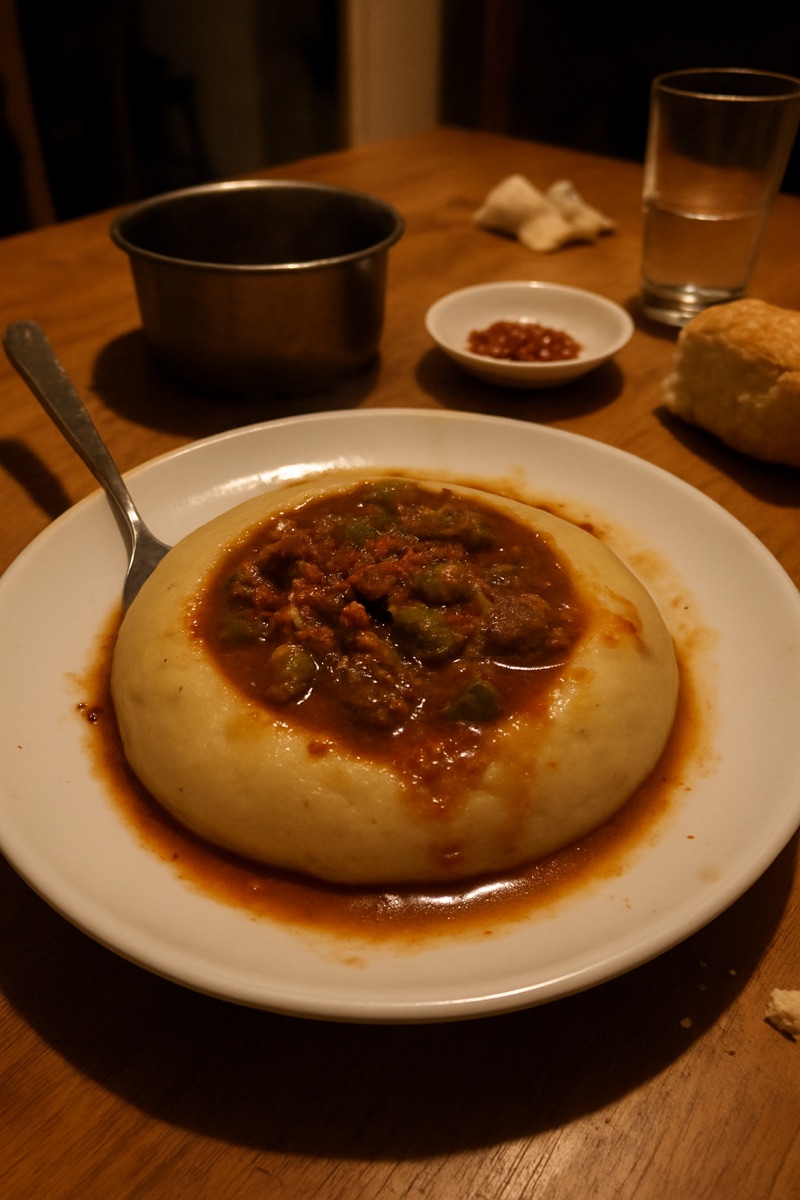 Asida🇸🇩 Sudan · 18 hours and 30 minutes
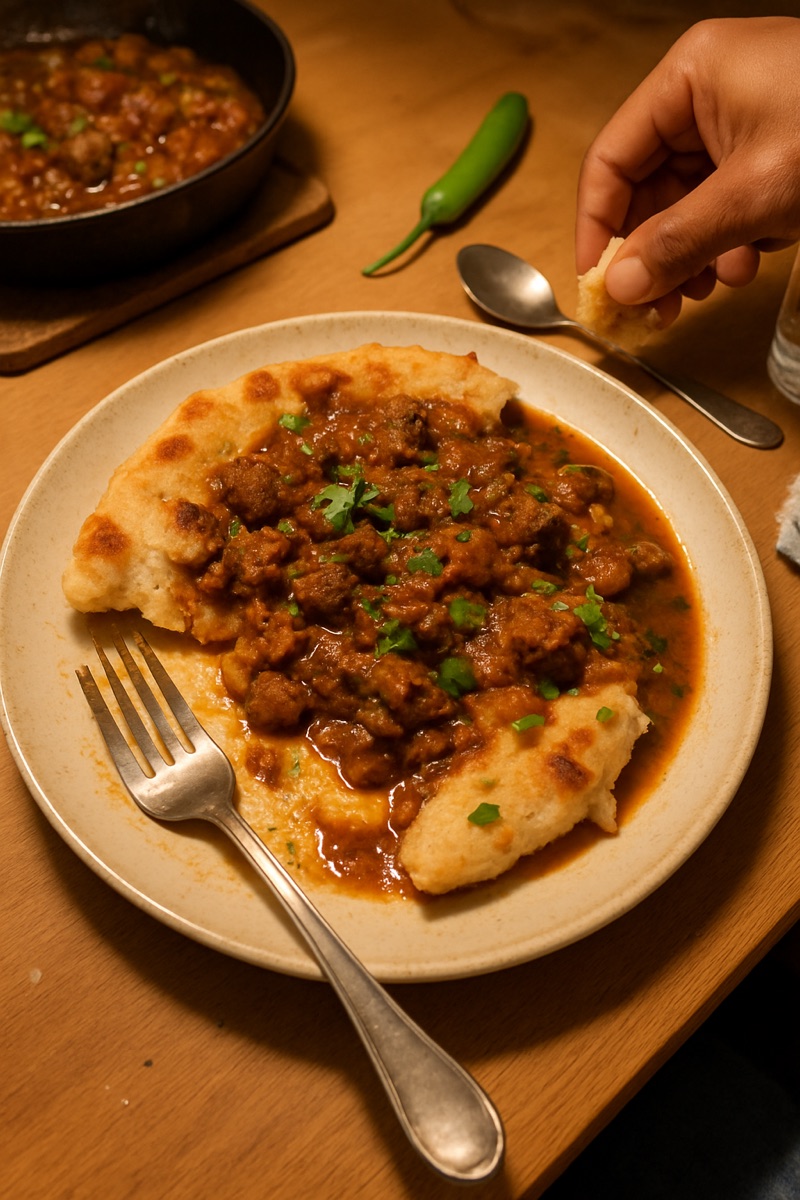 Gurasa🇸🇩 Sudan · 1 hour
Questions people ask
Does Sudan have an official national dish?
No. Sudan has never officially named a national dish. Ful medames, kisra and asida with mullah are the dishes most often put forward.
What do Sudanese people eat for breakfast?
Ful medames is the classic breakfast in Sudanese cities: stewed fava beans topped with white cheese, tomato, onion and sesame oil, eaten with bread.
What is the difference between kisra and injera?
Both are fermented flatbreads. Kisra is usually made from sorghum or wheat and is thinner and smaller, while Ethiopian and Eritrean injera is usually made from teff.
What is mullah in Sudanese food?
Mullah is the general name for Sudanese stews eaten with kisra or asida. Mullah ahmar, a red stew of meat and tomato, is one of the most common.
Is Sudanese ful the same as Egyptian ful?
It is the same dish of stewed fava beans, but the Sudanese version is finished with sesame oil and crumbled white cheese instead of olive oil.
Keep reading
- Traditional food of Sudan: 13 dishes to know
- What is the national dish of Algeria?
- What is the national dish of Egypt?
- What is the national dish of Libya?
- What is the national dish of Morocco?
- What is the national dish of Tunisia?