 COPPER
Traditional food of Sudan: 13 dishes to know
Sudanese food is built on a starch of sorghum or wheat, kisra, gurasa or asida, eaten with a stew called mullah, often thickened with dried okra, and on fava beans at breakfast. Peanuts, sesame oil and fermentation give it its taste. The most emblematic dishes are ful medames, kisra, asida with mullah and tamia.
What Sudanese food is built on
A Sudanese meal is a starch plus a stew. The starch is made from sorghum (*durra*), millet or wheat: thin kisra sheets, thicker gurasa, or the porridge-dough asida. The stew, called *mullah*, is built on meat, vegetables or pulses, and many are thickened with *waika*, crushed dried okra. Lamb and beef are the most common meats, in line with halal rules. Peanuts run through the cooking, as a sauce, a salad dressing and a flavour base.
Sudanese cuisine carries the marks of its neighbours and its history: Nubian, Arab, Egyptian, Turkish and Levantine influences meet in dishes such as ful medames and molokhia, in the kebabs, kofta, shawarma and baklava brought by Turkish influence, and in oriental sweets such as basbousa. Meals are communal, shared from one platter with family, neighbours and guests as part of Sudanese hospitality.
Breads and porridges
- Kisra — A thin fermented bread of sorghum or wheat. The batter is left overnight to sour, then spread paper-thin on a hot griddle and cooked on one side in about half a minute. It is close to Ethiopian injera but thinner and smaller, and goes with almost every stew. Two sorghum varieties, *feterita* and *tabat*, are commonly milled for it. Making it is traditionally women's work, often done early in the morning, and in 2025 CNN listed it among the world's 50 best breads. As of 1995, Sudan ate an estimated 20,000 to 30,000 short tons of sorghum flour a year as kisra.
- Gurasa — A thick, spongy wheat pancake, poured into a pan and cooked until set, then torn by hand to scoop up stew or ful. It is eaten with ghee, with dates, or with a beef stew of tomato, green pepper, cardamom and cinnamon, a dish called *gurasa be dama*.
- Asida — A dough of fermented sorghum beaten in boiling water with a wooden stick, set in a bowl and turned out as a smooth dome. A stew is poured around it like a moat, and diners cut into the edge. It is especially popular during Ramadan.
Mullah and other stews
- Mullah ahmar — A red stew of minced meat and tomato, the most common partner of asida. Its name simply means red stew.
- Mullah waika — A stew thickened with *waika*, dried okra crushed to a powder, which gives it a sticky texture. With dried meat and onion it becomes *mullah sharmout*; with soured milk it becomes *mullah rob*. It is one of the most widely eaten dishes in the country.
- Molokhia — A thick green soup of boiled jute mallow leaves, shared with Egypt. The leaves give it a slippery texture, and it is eaten with bread or kisra.
- Kamounia — A stew of beef and liver flavoured with cumin, from which it takes its name. It is shared with Egypt and the Maghreb and is sometimes served with rice.
Breakfast, salads and street food
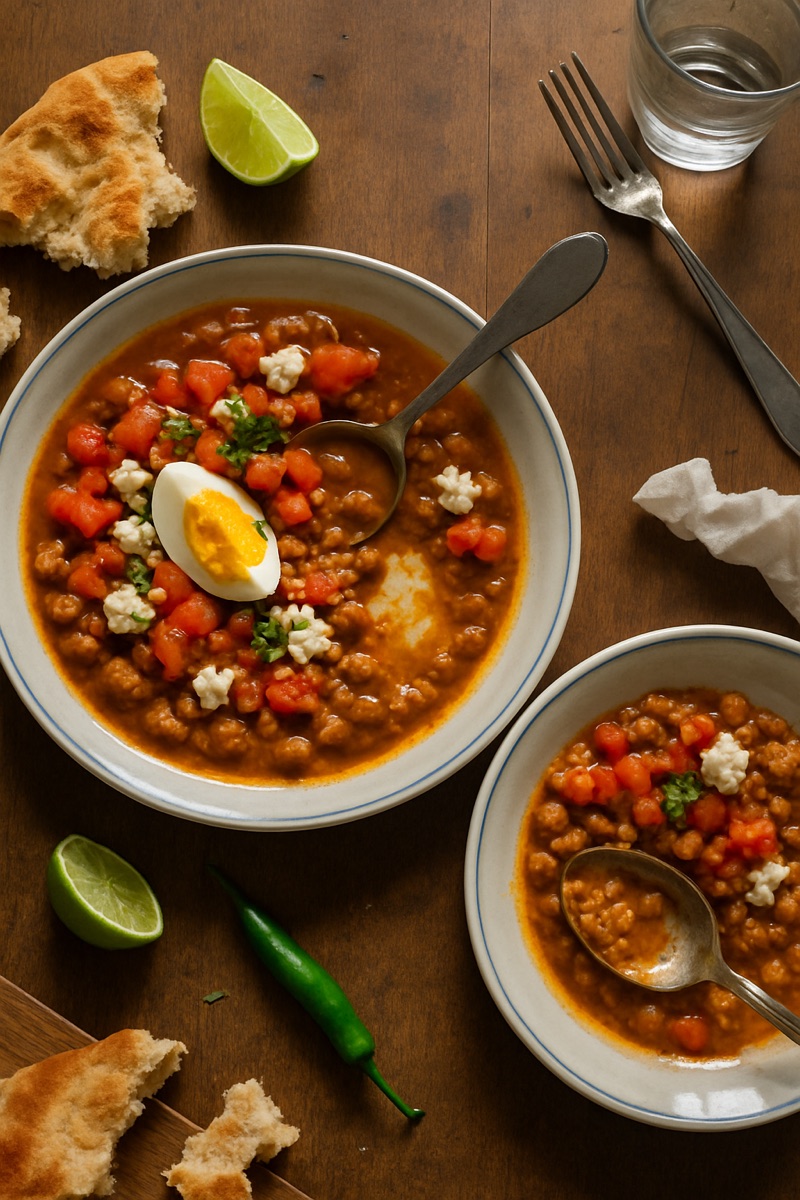
- Ful medames — Fava beans soaked, simmered for hours and roughly mashed, then topped with crumbled white cheese (*jibna*), tomato, onion and arugula and finished with sesame oil rather than olive oil. In Sudanese cities it is the standard breakfast and often the evening meal too, eaten with torn bread.
- Tamia — Sudanese falafel, made with chickpeas rather than the fava beans used in Egypt, fried in balls and eaten with ful, salad and bread.
- Salata aswad — Grilled aubergine mashed with peanut butter, chillies and spices. It looks like baba ghanoush, but peanut butter replaces tahini, a typically Sudanese touch. A plainer peanut salad, *salatat dakwa*, is also common.
Sweets and drinks
- Basbousa — A sweet semolina cake soaked in syrup, one of the Egyptian and Levantine sweets that Sudanese call oriental sweets. It is one of the sweets of the Sudanese table.
- Karkadeh — A tea made from hibiscus flowers, usually served cold and made at home on hot days. It is one of the most popular drinks in the country.
- Jabana coffee — Strong coffee brewed in a clay pot called a *jabana*, with beans ground with spices such as cinnamon and ginger and served sweet. It is sold in the street by the "tea ladies" and comes with its own serving ceremony.
Regional Sudan
In the cities, such as Khartoum, ful medames dominates breakfast and dinner, and wheat bread (*aish baladi*) is common. In Darfur and Kordofan, in the west, *kawal*, fermented leaves dried into balls, is used in stews in place of meat and eaten with sorghum porridge; in towns it is used as a seasoning, like black pepper. During Ramadan, asida is a favourite, and *hulu-mur*, whose name means sweet-bitter, is the traditional drink for breaking the fast; neighbourhood women prepare it together weeks before the holy month. Alcohol was banned in 1983 (non-Muslims have been allowed to drink since 2019), so drinks centre on water, tea, coffee and karkadeh.
Cook Sudanese food at home
Sudan has no official national dish; ful medames, kisra and asida are the three most often named, as explained in our article on the national dish of Sudan. Copper has full recipes for ful medames, asida and gurasa, with ingredients and step-by-step methods, on our page about the food of Sudan, alongside other North African recipes.
Ful and molokhia link Sudan to the north, kisra and asida to the south. Compare with the traditional food of Egypt and the traditional food of South Sudan.
The recipes
- Ful medames🇸🇩 Sudan · 13 hours and 55 minutes
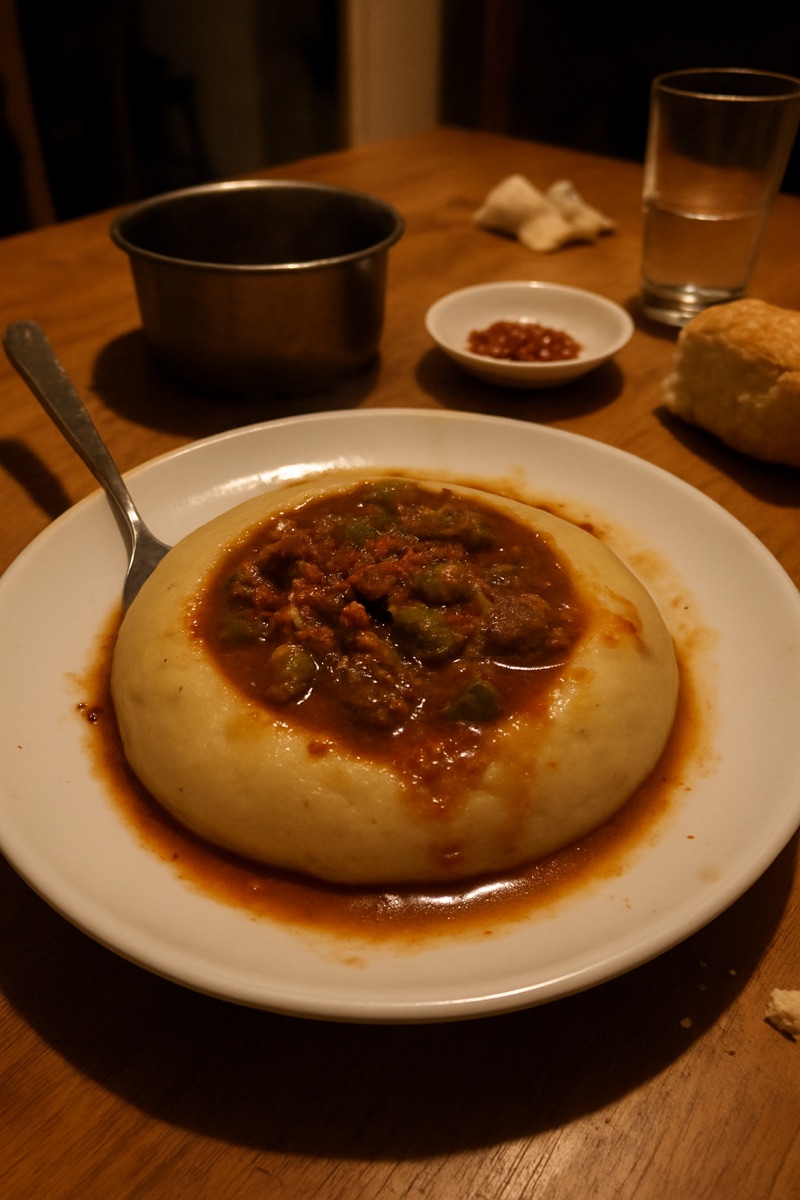 Asida🇸🇩 Sudan · 18 hours and 30 minutes
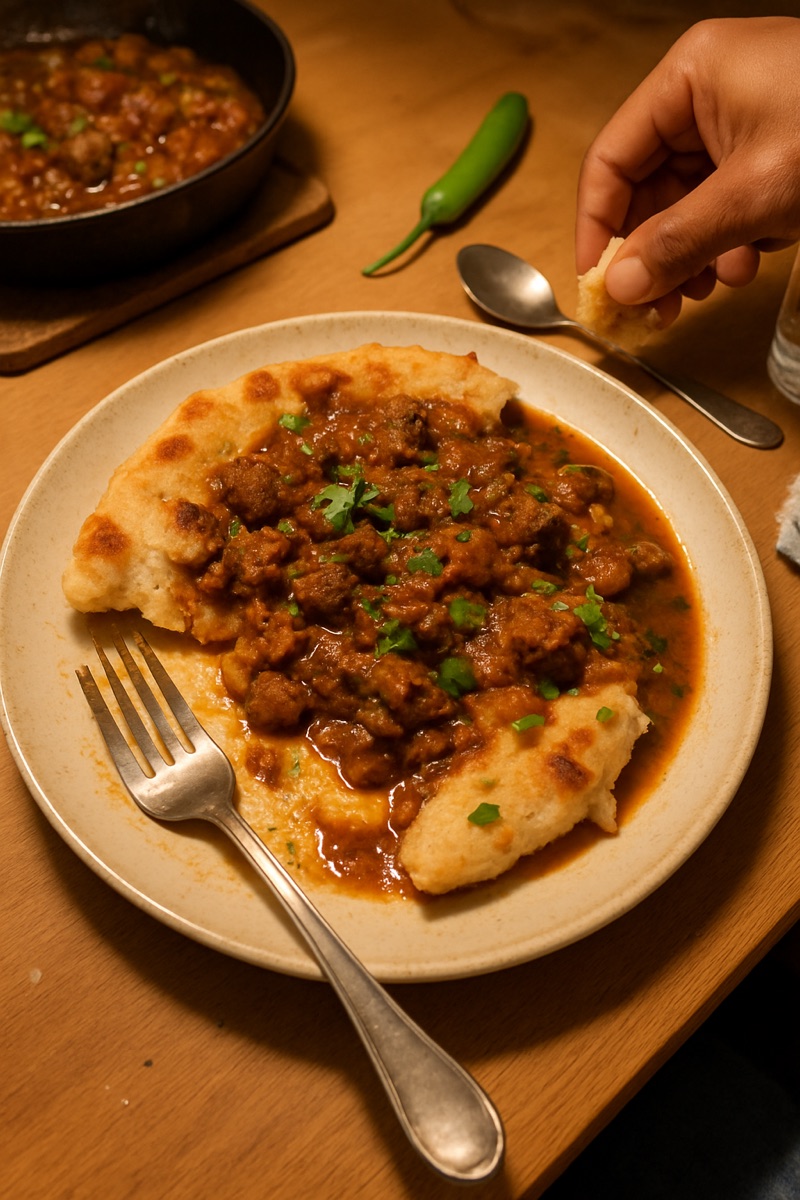 Gurasa🇸🇩 Sudan · 1 hour
Questions people ask
What is the most popular food in Sudan?
Ful medames, stewed fava beans, is the most eaten dish in Sudanese cities. Across the country, kisra and asida eaten with a mullah stew are the core of the traditional meal.
What do Sudanese people eat for breakfast?
Ful medames topped with white cheese, tomato, onion and sesame oil, eaten with bread, often with tamia on the side and tea.
Is Sudanese food spicy?
It is mostly mild. Stews are flavoured with onion, garlic, cumin and spice mixes, and chilli is added in salads such as salata aswad or at the table.
What is mullah in Sudanese food?
Mullah is the general name for Sudanese stews eaten with kisra or asida. Mullah ahmar is a red meat and tomato stew; mullah waika is thickened with dried okra.
What is the national drink of Sudan?
There is no official one. Karkadeh, hibiscus tea, and jabana coffee are the most popular everyday drinks, and hulu-mur is the traditional Ramadan drink.
Keep reading
- What is the national dish of Sudan?
- Traditional food of Algeria: 13 dishes to know
- Traditional food of Egypt: 13 dishes to know
- Traditional food of Libya: 12 dishes to know
- Traditional food of Morocco: 13 dishes to know
- Traditional food of Tunisia: 13 dishes to know