 COPPER
Traditional food of South Sudan: 12 dishes to know
South Sudanese food is built on grains, sorghum, millet and maize, turned into flatbreads and stiff porridges and eaten with a stew. Peanuts are the key ingredient, used as a sauce, a thickener and a dressing, and meat comes in small portions. The most emblematic dishes are kisra, the sorghum flatbread, asida, wala-wala and the green stew molokhia.
What South Sudanese food is built on
South Sudanese cooking rests on grains. Sorghum, millet and maize are pounded or ground into flour and cooked into flatbreads and porridges, which supply most of the day's energy. Around them come yams, potatoes, beans, lentils, okra and fruit, and the key ingredient of all: the peanut, used as the base of sauces, as a thickener and even as a salad dressing.
Meat, mostly goat, beef, mutton and chicken, is eaten regularly but in small amounts, as part of a sauce that tops the grain. It is boiled, grilled or dried. Near the rivers and lakes, fish takes its place. Arab cooking has left dishes such as ful and tamia, and Ethiopian food is widely eaten.
Breads and porridges
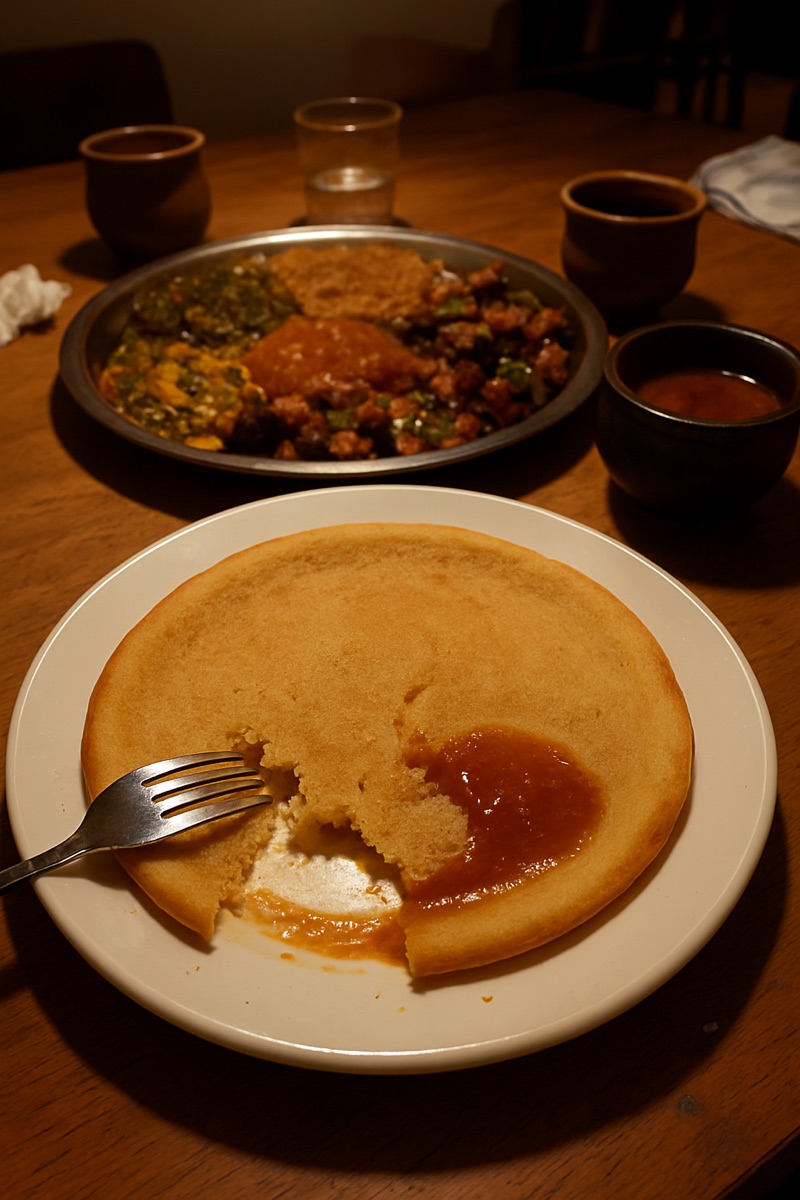
- Kisra — A paper-thin flatbread of fermented sorghum batter, swept across a hot griddle and cooked on one side only. It is the dish most often named as South Sudan's national dish, and it is shared with Sudan. Making it is traditionally women's work, done early in the morning: sorghum is soaked, ground up to three times on a saddle quern and left to ferment overnight. The sheets are folded into quarters and torn to scoop up stews. In 2025 CNN listed kisra among the world's 50 best breads.
- Asida — The porridge form of the same sorghum: a fermented batter stirred hard into boiling water until thick, set in an oiled bowl and turned out as a dome. A stew is poured around it, and you eat by cutting into the edge. It is savoury, never sweetened, and the word *kisra aseeda* is also used for it.
- Wala-wala — Balls of thick, plain millet porridge that make up the starch of a meal in much of the country. Like asida, it has little flavour of its own and is meant to carry a stew or a peanut sauce.
Stews and sauces
- Molokhia — Jute mallow leaves chopped fine and simmered in a lamb broth until the stew turns slippery and green, finished with crushed garlic and dill. It must stay at a bare tremble, or the leaves separate from the broth. It is one of the stews most often eaten with kisra, and frozen minced leaves are what most South Sudanese kitchens abroad use.
- Combo — Spinach stewed with peanut butter and tomato, sometimes with meat. It is the clearest example of the peanut's role in South Sudanese cooking, turning a pot of greens into a filling sauce for porridge.
- Goat stew — Chunks of goat simmered in a thin broth with onion, salt and a little chilli. It is one of the most common dishes in South Sudanese eateries, mild and plain, and is served with a grain staple. Goat meat soup is a close relative.
- Kajaik — A stew made from dried fish, a way of using the river catch long after it has been preserved. It is part of the same family of stews as the dried-meat sauces of Sudan.
Fish, street food and salads
- Perch — Freshwater perch, served either deep-fried in pieces with a chilli relish or chilli powder on the side, or smoked whole for hours and then dried in the sun. Fried fish is, with goat stew, one of the two dishes found almost everywhere.
- Ful medames — Fava beans stewed until soft and mashed, a dish from the Arab north that is eaten across South Sudan, often at breakfast, with bread.
- Tamia — Deep-fried balls of ground chickpeas, the Sudanese and South Sudanese name for falafel, sold as a snack.
- Tomato salad with peanut dressing — Tomato with onion and chilli, at its best dressed with peanut butter and lime. A yoghurt version, *salaat zabadi*, mixes carrot, cucumber and tomato with local yoghurt.
- Mandazi — A fried, slightly sweet pastry from the East African coast, eaten with tea at breakfast or as a snack. Sweet treats also include *ful sudani*, a peanut sweet, and *baseema*, a cake of yoghurt, sesame oil and sugar.
Regional and cultural influences
South Sudan's food sits between two worlds. From the north and its long shared history with Sudan come kisra, asida, ful, tamia and molokhia. From the south and east come cassava and mandazi, and Ethiopian food is common. In Equatoria, in the south, soups include *kawari*, made from cattle or sheep hooves with vegetables. In towns, cassava fritters and bread are sold alongside sorghum dishes, while most people get the bulk of their daily energy from millet porridge. The everyday drinks are coffee, which South Sudan grows and exports, and *karkade*, a hibiscus tea. The country's only brewery, Southern Sudan Beverages Limited, maker of White Bull Lager, went bankrupt in 2016. Hospitality runs deep: an often-quoted account of the Azande describes a meal so large that two men carried it, with the host explaining that what the guests left would feed his family, and what they left, his servants.
Cook South Sudanese food at home
Kisra is the dish most often given as the national dish of South Sudan, though it has no official status. Copper has full recipes for kisra, asida and molokhia, with ingredients and step-by-step methods, on our page about the food of South Sudan, alongside other East African recipes.
Kisra, asida and ful are shared with the north, and mandazi with the south. Compare with the traditional food of Sudan and the traditional food of Kenya.
The recipes
- Kisra🇸🇸 South Sudan · 18 hours and 20 minutes
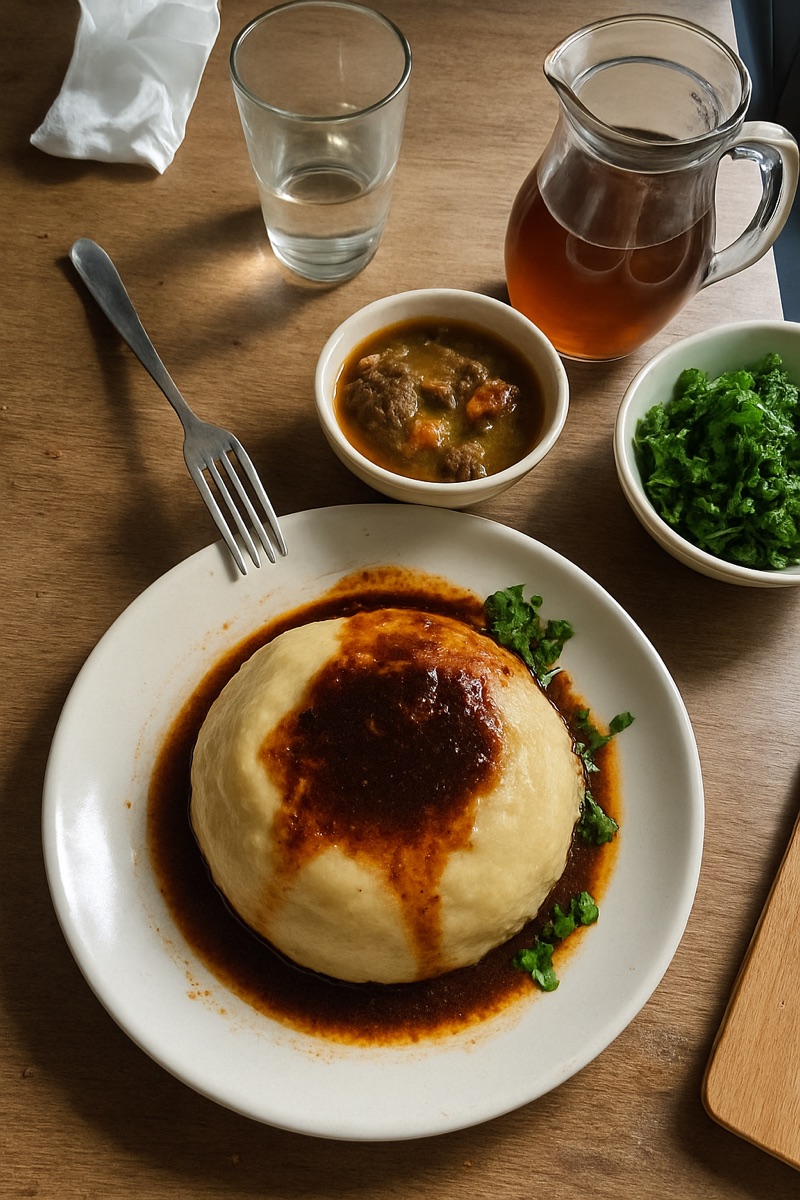 Asida🇸🇸 South Sudan · 12 hours and 40 minutes
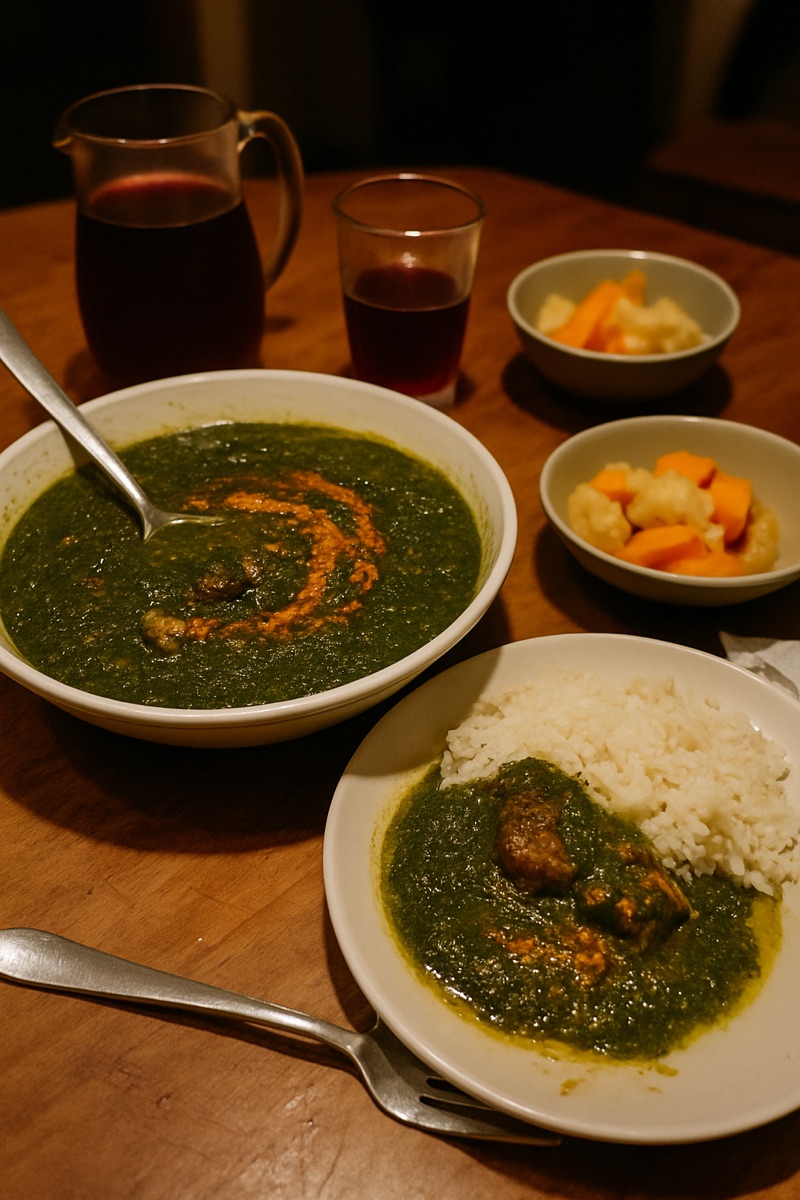 Molokhia🇸🇸 South Sudan · 1 hour and 40 minutes
Questions people ask
What is the most popular food in South Sudan?
Grain staples eaten with a stew: kisra, a thin sorghum flatbread, asida, a sorghum porridge, and wala-wala, millet porridge balls. Kisra is the dish most often named as the national dish.
What do South Sudanese people eat for breakfast?
Common breakfasts include ful medames (stewed fava beans) with bread, and mandazi with tea or coffee.
Is South Sudanese food spicy?
It is mostly mild. Stews use onion, peanut and a touch of chilli, and fried fish comes with chilli on the side to add heat.
Why are peanuts so important in South Sudanese food?
Peanuts provide protein in a diet where meat comes in small portions. They are used as a sauce base, as a thickener for stews such as combo, and as a dressing for tomato salad.
What is the difference between South Sudanese and Sudanese food?
They share kisra, asida, ful and molokhia. South Sudan relies more on millet porridge such as wala-wala and on river fish, and has East African dishes such as mandazi.
Keep reading
- What is the national dish of South Sudan?
- Traditional food of Burundi: 11 dishes to know
- Traditional food of Comoros: 13 dishes to know
- Traditional food of Djibouti: 13 dishes to know
- Traditional food of Eritrea: 13 dishes to know
- Traditional food of Ethiopia: 13 dishes to know