 COPPER
Traditional food of Eritrea: 13 dishes to know
Eritrean food is built on injera, a sour teff flatbread, and tsebhi, stews of beef, chicken, lamb or legumes seasoned with berbere, a chili and fenugreek spice blend. It is close to Ethiopian cooking, but uses more seafood, tomato and Italian-style pasta. The most emblematic dishes are zigni, tsebhi derho, shiro and, in the lowlands, ga'at.
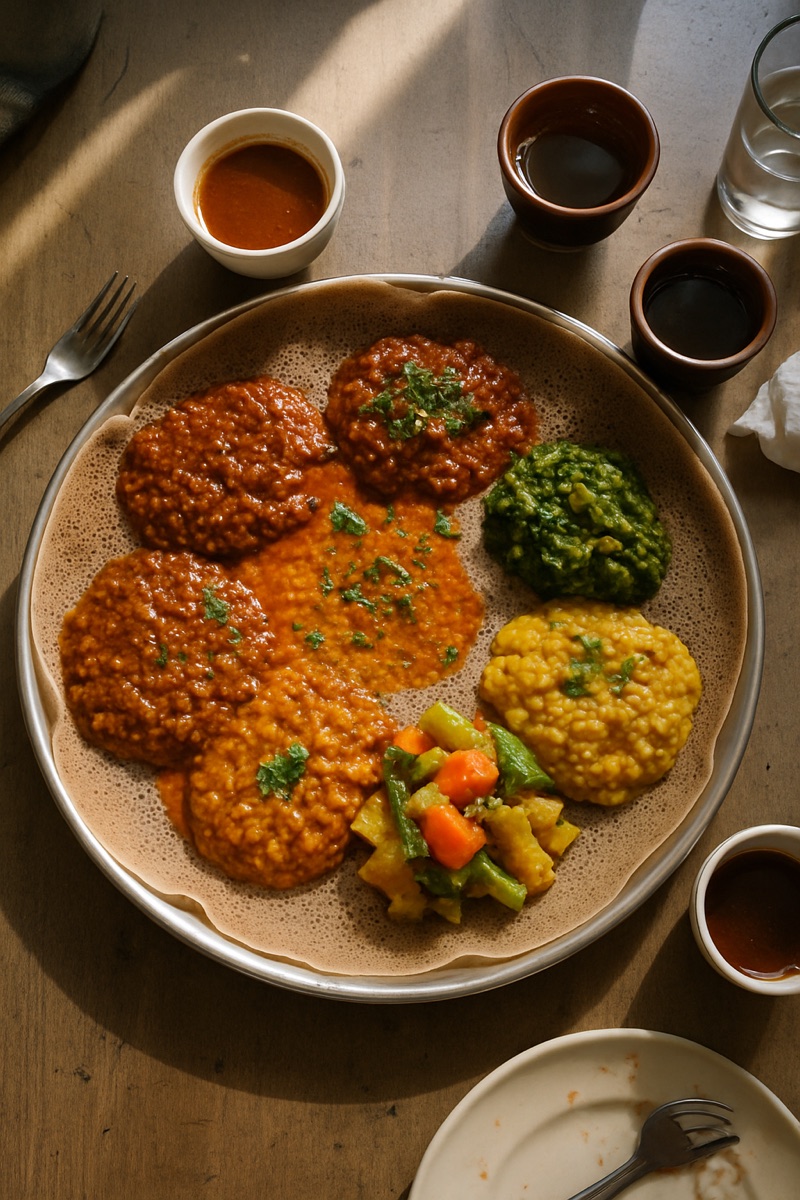
What Eritrean food is built on
The core of an Eritrean meal is *tsebhi*, a stew, served on *injera*, a large fermented flatbread. Stews are made from beef, chicken, lamb, goat, mutton or vegetables, and almost all of them are seasoned with *berbere*, a red blend of chili, fenugreek and other spices. Most Eritreans, with the exception of the Saho people, like their food spicy and hot.
Eritrean and Ethiopian cuisines share many dishes, because the two lands were unified for centuries. The differences are real, though: Eritrea, with its Red Sea coast, eats more seafood; its cooks use less spiced butter, which makes stews lighter, and more tomato; and the Italian colonial period added pasta, curry powder and cumin. Meals are eaten from a shared tray, with diners tearing off pieces of injera from the edge in front of them.
Injera and the meat stews
- Injera — A thin, spongy flatbread of fermented batter, made with teff, wheat or sorghum. A starter called *ersho* gets the fermentation going, and the batter is cooked on one side only, so the top stays full of holes. It serves as plate, bread and cutlery: several sheets are laid on a tray and the stews are spooned on top.
- Zigni — A spicy red stew of beef, lamb or mutton, cooked with finely chopped onions, berbere, tomato and spiced butter. The onions are cooked dry, with no fat, before anything else goes in, and the meat simmers for hours. It is the dish most often called Eritrea's national dish; in Tigrinya it is also called *kaih tsebhi*, and across the border in Ethiopia the Amharic name is *kai wat*.
- Tsebhi derho — Chicken stew, also called *dorho*, made with berbere and a whole chicken. It starts like zigni, with onions cooked dry for half an hour, and is finished with spiced butter and a hard-boiled egg for each guest.
- Qulwa — Also called *tibsi*: meat sautéed with onions and berbere and served with a sauce. It is quicker than the slow-cooked stews and is eaten with injera.
Lentils, chickpeas and vegetables
- Shiro — A stew of powdered chickpeas or broad bean meal cooked with onions, garlic and, depending on the region, ginger, tomato and chilli. It is served on injera and is vegan unless made with spiced butter or meat. It is a favourite during Lent, Ramadan and other fasting seasons. Mixed into shredded injera and eaten with a spoon, it becomes *shiro fit-fit*.
- Alicha — A stew of potatoes, green beans, carrots and green peppers coloured with turmeric. It is made without berbere, which makes it the mild dish on a tray of red stews.
- Hilbet — A vegan cream made from powdered fenugreek, lentils and fava beans. It is typically served with *silsi*, tomatoes cooked with berbere, and eaten with injera.
- Birsen — Lentils cooked with onions, tomatoes and spices, with or without berbere. It is one of the everyday legume dishes served alongside meat stews or on its own.
Breakfast dishes
- Ga'at — A stiff porridge of barley or wheat flour and water, stirred continuously, also called *akelet*. A ladle makes a hollow in the middle, which is filled with berbere and melted butter, and milk or yoghurt is poured around it. Each bite is dipped first in the butter, then in the milk. In the lowlands it is the main dish.
- Kitcha fit-fit — *Kitcha*, an unleavened flatbread, cut into pieces and tossed in clarified butter and berbere. The heat is adjusted with more or less berbere, and it is served for breakfast with yoghurt or sour milk. Ordinary *fit-fit*, also called *fir-fir*, uses torn injera and leftover stew instead.
- Ful — Fava beans sautéed and mashed, topped with onion, tomato, chilli, cumin, yoghurt and olive oil. It is eaten with pieces of bread used to scoop up the beans.
Italian legacy and the coffee ceremony
- Pasta al sugo e berbere — Spaghetti with a tomato sauce spiced with berbere, the best-known of the Italian-Eritrean dishes. Lasagna, *cotoletta*, pasta *al forno* and *frittata* are also part of this kitchen, and panettone is served with tea or during the coffee ceremony.
- Coffee ceremony — Coffee is offered when visiting friends, during festivities and as a daily habit, and the ceremony is one of the most important parts of Eritrean culture. If coffee is declined, tea (*shahee*) is usually served instead. In Asmara, Italian-style espresso and cappuccino are served in almost every bar.
Highlands, lowlands and drinks
Dishes vary by region. In the central highlands, injera is the basis of the diet and the shared tray of stews is the standard meal. In the lowlands, ga'at is the main dish. The Red Sea coast brings fish into the cooking, which is one of the clearest differences from Ethiopian cuisine.
Christian Eritreans drink *suwa*, a home-brewed beer of roasted corn, barley and other grains flavoured with *gesho* leaves, and *mies*, a honey wine, both made for celebrations. Muslim Eritreans abstain from alcohol. Eritrean-style sambuca, *areki*, is drunk at festivities, and the largest brewery, Asmara Brewery, was founded in 1939 as Melotti.
Cook Eritrean food at home
Zigni with injera is the dish most often named as the national dish of Eritrea. Copper has full recipes for zigni, tsebhi derho and injera, with ingredients and step-by-step methods, on our page about the food of Eritrea, alongside other East African recipes.
Across the southern border, the Afar and Somali kitchens take over from the injera tray. Compare with the traditional food of Djibouti.
The recipes
- Injera🇪🇷 Eritrea · 4 days and 2 hours
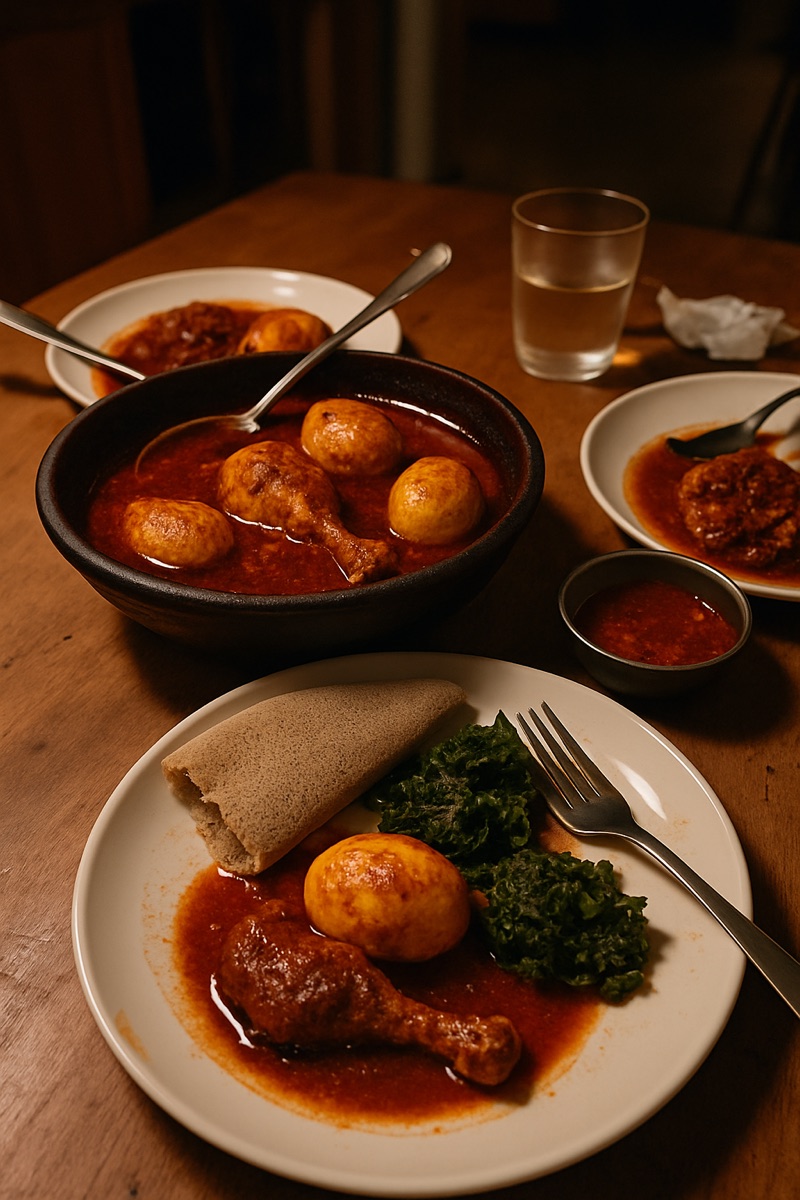 Tsebhi derho🇪🇷 Eritrea · 2 hours and 30 minutes
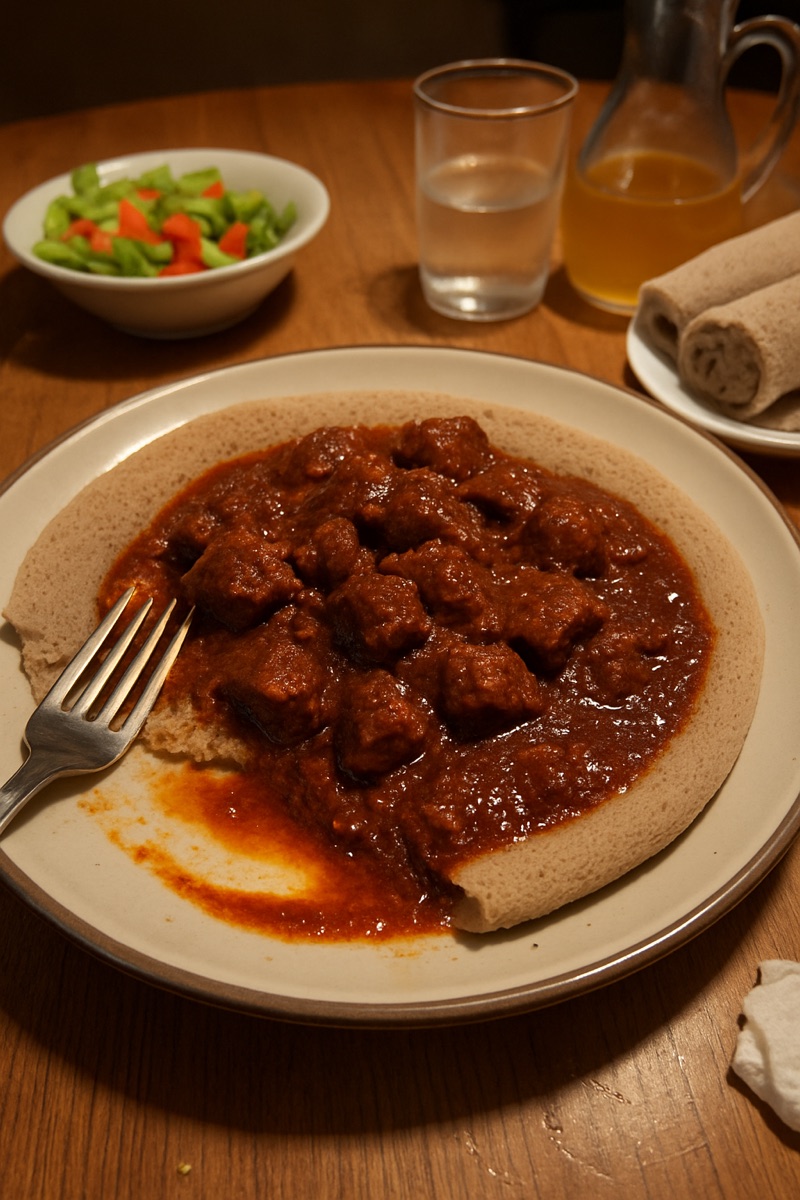 Zigni🇪🇷 Eritrea · 3 hours and 40 minutes
Questions people ask
What is the most popular food in Eritrea?
Injera with a spicy stew is the everyday meal. Zigni, a beef stew with berbere, is the dish most often called the national dish, followed by tsebhi derho, the chicken version, and shiro.
What do Eritreans eat for breakfast?
Common breakfasts are kitcha fit-fit or fit-fit with yoghurt, ful (mashed fava beans) with bread, and ga'at, a stiff porridge with butter and berbere, followed by coffee or tea.
Is Eritrean food spicy?
Yes. Berbere, a chili and fenugreek blend, goes into almost every dish, and most Eritreans like their food hot. Alicha, a vegetable stew made without berbere, is the mild option.
What is the difference between Eritrean and Ethiopian food?
They share most dishes, including injera, zigni and shiro. Eritrean cooking uses more seafood, more tomato and less spiced butter, and has more Italian influence, such as pasta with berbere sauce.
Is Eritrean food vegetarian-friendly?
Yes. Shiro, alicha, hilbet and birsen are made without meat and are eaten during fasting seasons such as Lent.
Keep reading
- What is the national dish of Eritrea?
- Traditional food of Burundi: 11 dishes to know
- Traditional food of Comoros: 13 dishes to know
- Traditional food of Djibouti: 13 dishes to know
- Traditional food of Ethiopia: 13 dishes to know
- Traditional food of Kenya: 13 dishes to know