 COPPER
What is the national dish of Eritrea?
Eritrea has no officially declared national dish, but zigni is the one most often cited. It is a spicy red stew of beef (or lamb, goat or chicken) slow-cooked with finely chopped red onions, tomato, the chili and fenugreek spice blend berbere and tesmi spiced butter, then served on injera, the sour, spongy teff flatbread that doubles as plate and cutlery.
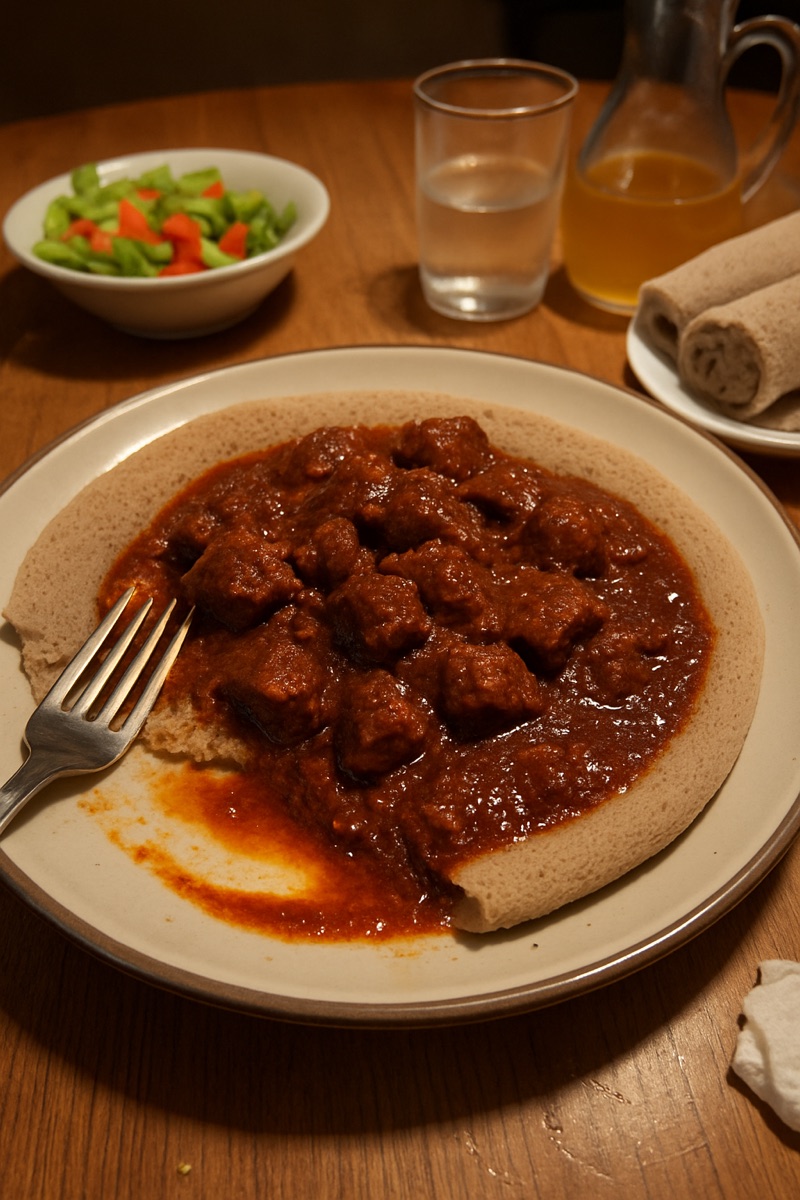
Is zigni officially Eritrea's national dish?
No law or government decree names a national dish in Eritrea. Zigni is the dish that reference works put forward: Wikipedia's article on zigni describes it as "considered to be the national dish of Eritrea", and its list of national dishes gives "zigini with injera" for the country. Food writers make the same point, calling zigni the main traditional dish of Eritrean cuisine.
In Tigrinya the dish is called zigni or kaih tsebhi. Across the border in Ethiopia, the Amharic name is kai wat. It belongs to a family of meat and vegetable stews called tsebhi, which are served with injera.
What is in zigni?
Zigni is built on a short list of ingredients, cooked for a long time:
- Meat: beef chuck in 2 cm cubes is the classic; lamb, goat and chicken are also used.
- Red onions: chopped very fine and cooked dry, with no fat, for about 30 minutes.
- Berbere: the red spice blend of Eritrea and Ethiopia, based on chili and fenugreek.
- Tesmi: clarified butter seasoned with herbs and spices, close to ghee.
- Tomatoes: fresh and as paste, a trace of the Italian colonial period.
- Garlic and ginger: added once the onion and berbere paste has formed.
How zigni is made
The defining step comes first: the onions go into a heavy pot alone, over low heat, with no oil or butter, and cook for around 30 minutes until they collapse and darken. A splash of water stops them from catching. Only then do 3 tablespoons of berbere go in, followed 5 minutes later by tesmi, which turns red as it melts into the paste.
Garlic, ginger, tomato paste and grated tomatoes follow. The beef is turned straight into this sauce without being seared, then covered with water and left on the lowest heat for 2 to 2.5 hours, until it gives under a spoon and the red fat separates on top. Traditional versions can take five to six hours, which is why zigni is sometimes kept for special occasions. Our zigni recipe gives every quantity.
It is a dish of time rather than effort: once the sauce is built, the pot mostly looks after itself, and zigni is eaten at lunch or dinner. Compared with Ethiopian cooks, Eritreans tend to use less seasoned butter, which makes their stews a little lighter.
Injera: why zigni is never eaten alone
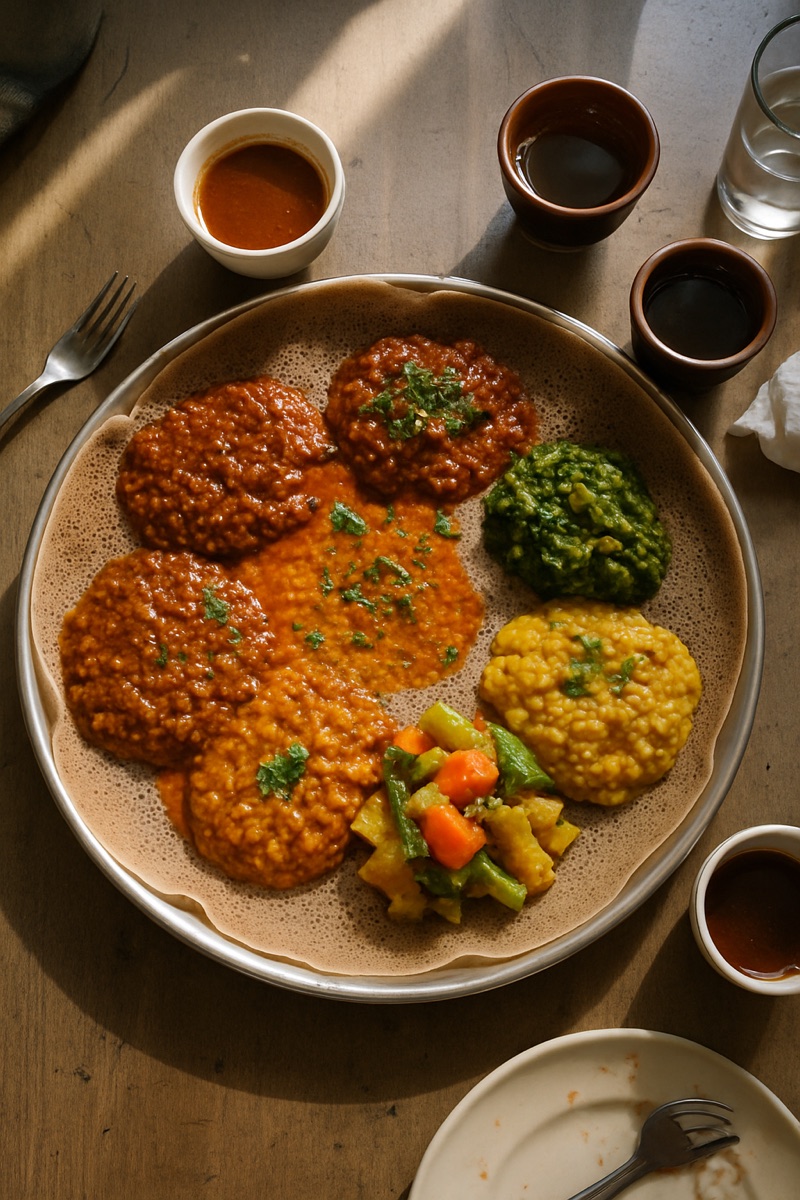
Zigni is always served on injera, a large, thin flatbread made from fermented teff batter. A starter called ersho is made three days ahead; the batter then ferments 24 to 72 hours until it smells sharply sour. It is cooked on one side only on a clay plate called a mitad, under a lid, so the top stays porous and full of holes. Teff is the classic grain, but Eritrean cooks also make injera with wheat or sorghum.
At the table, several sheets of injera are laid on a large shared tray and the stews are spooned on top. Each person tears off pieces from the edge in front of them and uses them to pick up the stew, always with the right hand. A meal begins and ends with hand washing, and is often followed by the coffee ceremony, one of the most important rituals in Eritrean culture.
Other dishes to know from Eritrea
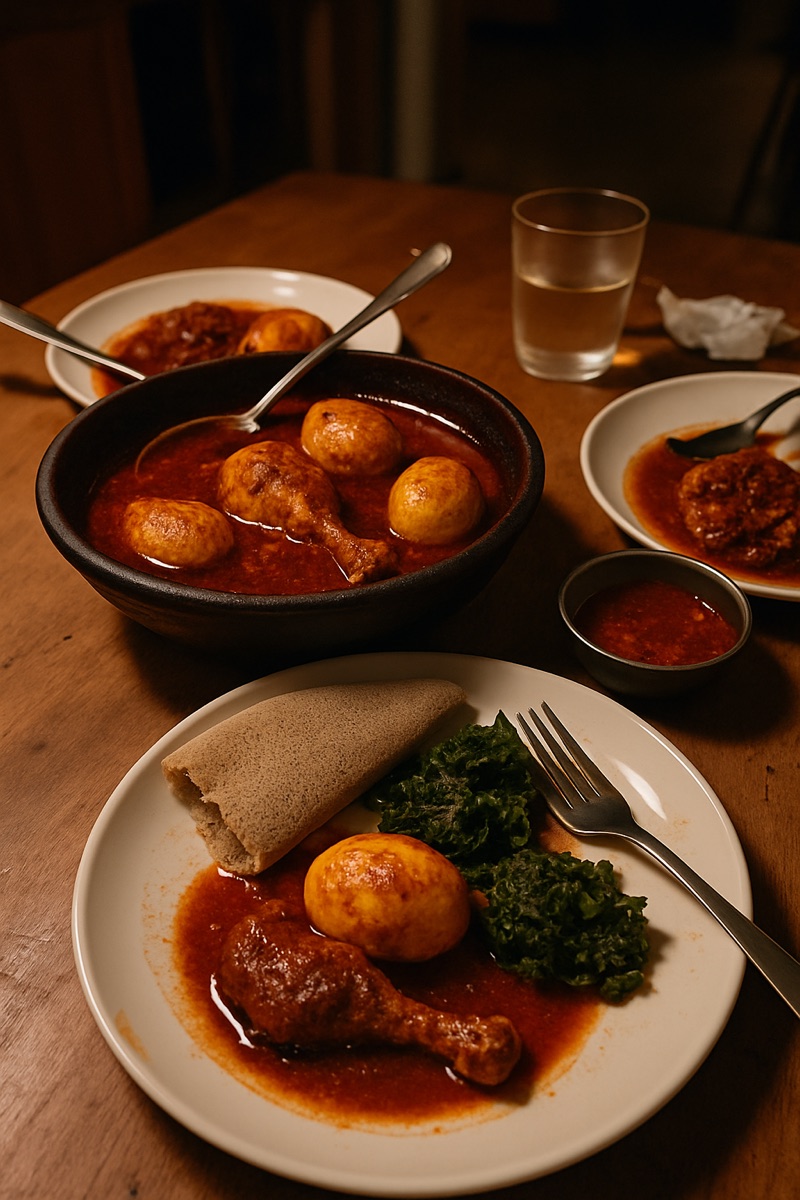
Tsebhi derho is the chicken member of the same family. It starts exactly like zigni, with onions cooked dry for 30 to 40 minutes, but the chicken is first rubbed with lemon and salt, and a hard-boiled egg per guest is pricked and slipped into the sauce for the last 10 minutes.
Other everyday dishes include shiro, a stew of ground chickpea flour with onions and tomatoes, and alicha, a vegetable stew made without berbere. Leftover injera is not wasted: torn into pieces and tossed with leftover stew, or with onions, berbere, tomatoes, chili and butter, it becomes fit-fit, also called fir-fir.
Eritrean and Ethiopian cooking share most of their dishes; compare zigni with Ethiopia's chicken stew in the national dish of Ethiopia, and the injera-like kisra of Sudan.
All three Eritrean dishes, with ingredients and methods, are on our page about the food of Eritrea, and the wider region is covered in our guide to East African food.
The recipes
- Zigni🇪🇷 Eritrea · 3 hours and 40 minutes
 Injera🇪🇷 Eritrea · 4 days and 2 hours
 Tsebhi derho🇪🇷 Eritrea · 2 hours and 30 minutes
Questions people ask
Is zigni Eritrean or Ethiopian?
Both countries cook it. Eritreans call it zigni or kaih tsebhi in Tigrinya, and Ethiopians call it kai wat in Amharic. It is most often cited as the national dish of Eritrea.
What is served with zigni?
Zigni is served on injera, the fermented teff flatbread, which is torn by hand to scoop up the stew.
How spicy is zigni?
It is usually hot. The heat comes from berbere, a chili and fenugreek spice blend that gives the stew its red colour.
How long does zigni take to cook?
A home version simmers 2 to 2.5 hours after the onions and sauce are made. Traditional recipes can take five to six hours.
Does Eritrea have an official national dish?
No law or decree names one. Zigni with injera is the dish most commonly cited as Eritrea's national dish.
Keep reading
- Traditional food of Eritrea: 13 dishes to know
- What is the national dish of Burundi?
- What is the national dish of Comoros?
- What is the national dish of Djibouti?
- What is the national dish of Ethiopia?
- What is the national dish of Kenya?