 COPPER
What is the national dish of Djibouti?
The national dish of Djibouti is skoudehkaris, a one-pot dish of lamb or goat and rice: the meat is stewed with tomato, cardamom, cinnamon and cumin, then basmati rice is added and finishes cooking in that broth. It has no official status, but it is the dish most Djiboutians and food references name. It is the Djiboutian form of the Somali *bariis iskukaris*.
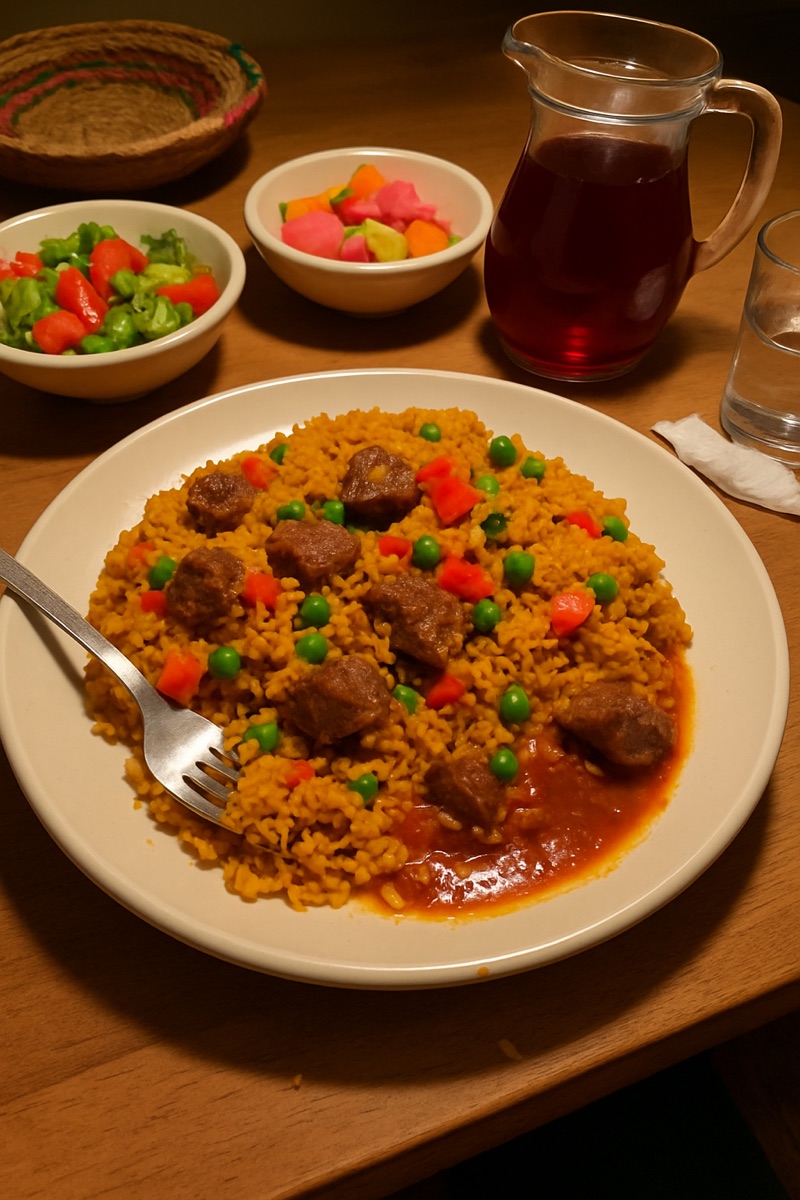
What is skoudehkaris?
The name comes from the Somali *isku-dheh karis*, which means "cooked mixed together". That is the whole principle: the rice does not cook separately but inside the meat stew, absorbing its tomato and spice broth. It is often compared to an Indian biryani, but biryani is layered, while skoudehkaris is a single mixed pot.
Lamb is the usual meat; goat, beef, chicken and camel are also used. It is served with a tomato and onion salad or plain yoghurt, and in Somali and Djiboutian homes a banana is often eaten alongside the rice.
The flavour comes from the spices. Somali and Djiboutian rice dishes are seasoned with *xawaash*, a word that simply means "spices" in Somali: a blend of cumin, turmeric, coriander, cardamom, black pepper, cloves, cinnamon and sometimes paprika and nutmeg. The name comes from the Arabic *hawa'ij*, and the blend is said to have come from nearby Yemen. Traditionally, the rice may be served from a clay pot called a *baris dhari*.
How skoudehkaris is made
The difficulty is timing, because meat and rice need very different cooking times. In our skoudehkaris recipe the steps go like this:
- Brown lamb shoulder chunks hard, then sweat onion and garlic.
- Add tomatoes, tomato paste, crushed cardamom, a cinnamon stick, cumin and chilli: the cardamom and cinnamon are what set it apart from a plain pilaf.
- Pour in boiling water and simmer 45 to 60 minutes, until the lamb pulls apart.
- Stir in rinsed basmati; the liquid should cover it by 2 cm.
- Cook covered without stirring, 5 minutes on medium then 15 on the lowest heat, and rest 10 minutes before fluffing.
Is skoudehkaris the official national dish?
No law or decree names a national dish in Djibouti. Skoudehkaris holds the title by usage: it is the dish listed for Djibouti in Wikipedia's list of national dishes, and food writers describe it as the dish most people consider the national one.
The same rice dish, under the name bariis iskukaris, is also called a national dish of Somalia, where it is a fixture of weddings and daily meals. See our article on the national dish of Somalia.
Where it fits in Djiboutian food
Djiboutian cooking mixes Somali, Afar, Yemeni and French influences, with Indian touches in the spices. Lunch and dinner are usually built around a stew called *maraq*, served with rice, pasta or bread, often with a banana on the side.
In Djibouti City, steak and fish are widely eaten. Yemeni-style grilled fish, opened in half and cooked in tandoori-style ovens, is a local favourite. Pasta (*baasto*) is served with a heavier stew than an Italian sauce, often with grilled meat and, like rice, a banana on the side. Lentils and rice are the usual sides, covered with hot *berbere* or buttery *niter kibbeh*.
Another dish locals cite is *fah-fah*, also called *soupe djiboutienne*, a spicy boiled beef or goat soup that the French-language references list among the most popular dishes in the country.
Snacks and sweets fill the rest of the day: *sambusa*, the local samosa, filled with spiced goat or fish and eaten at iftar during Ramadan; *bajiyos*, a fritter close to Indian pakora; *garoobey*, an oat porridge soaked in milk and flavoured with cumin; and *xalwo*, a halva of sugar, cornstarch, cardamom, nutmeg and ghee served at Eid and weddings.
Other dishes to know from Djibouti
Maraq is the everyday meat soup, built on *xawaash*, a toasted blend of cumin, coriander, cardamom, pepper, cloves and cinnamon with turmeric. Bone-in goat simmers about 1 hour 30, then potato and carrot go in. Follow our maraq recipe. It is served with rice, canjeero or bread, and a banana on the side to cut the spice.
Lahoh is the breakfast bread: a sorghum batter fermented overnight and cooked on one side only, so the top stays a lace of holes. Djiboutians often eat three pieces with honey, ghee and tea. See our lahoh recipe. The batter ferments 8 to 12 hours, helped by a ladle of the previous batch, the *dhanaan*. At breakfast it may come with liver, goat meat, *suqaar* (diced beef in a little sauce) or dried meat (*oodkac*).
All three recipes are on our page about the food of Djibouti. For the wider Horn of Africa, see our guide to East African food and the national dish of Ethiopia.
The recipes
- Skoudehkaris🇩🇯 Djibouti · 1 hour and 55 minutes
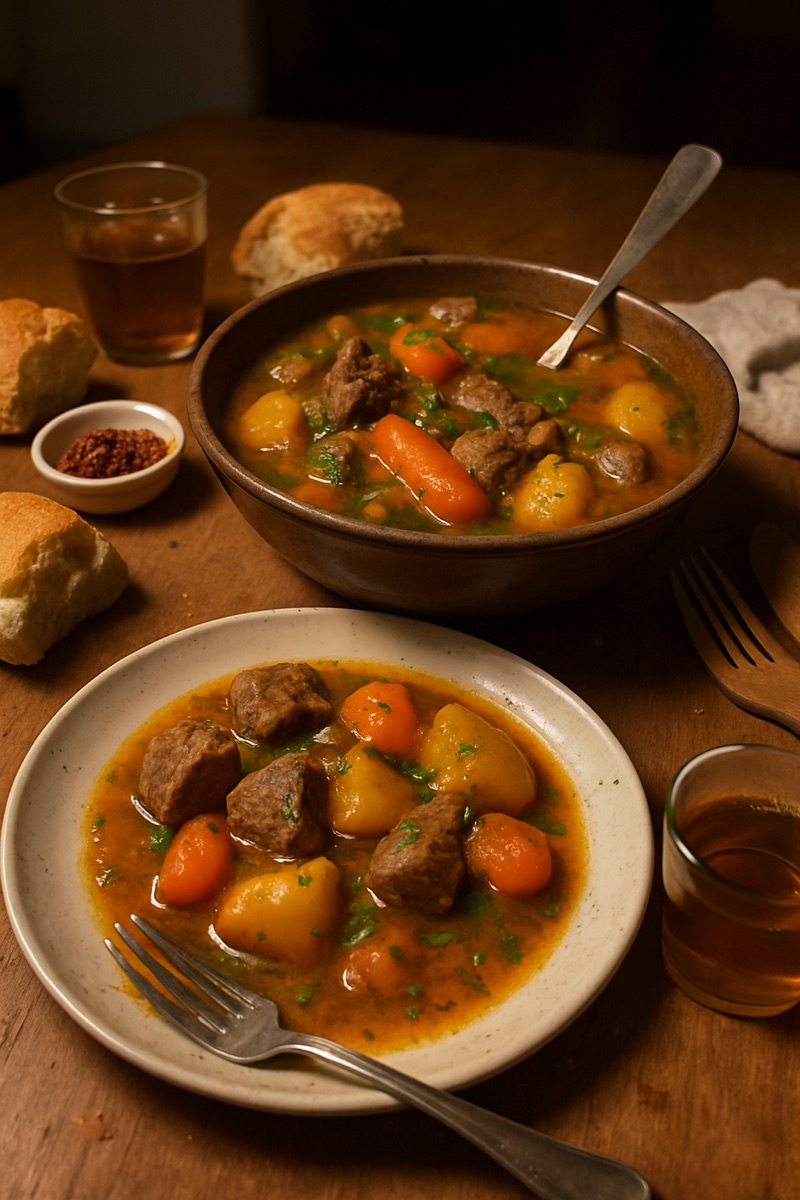 Maraq🇩🇯 Djibouti · 2 hours and 35 minutes
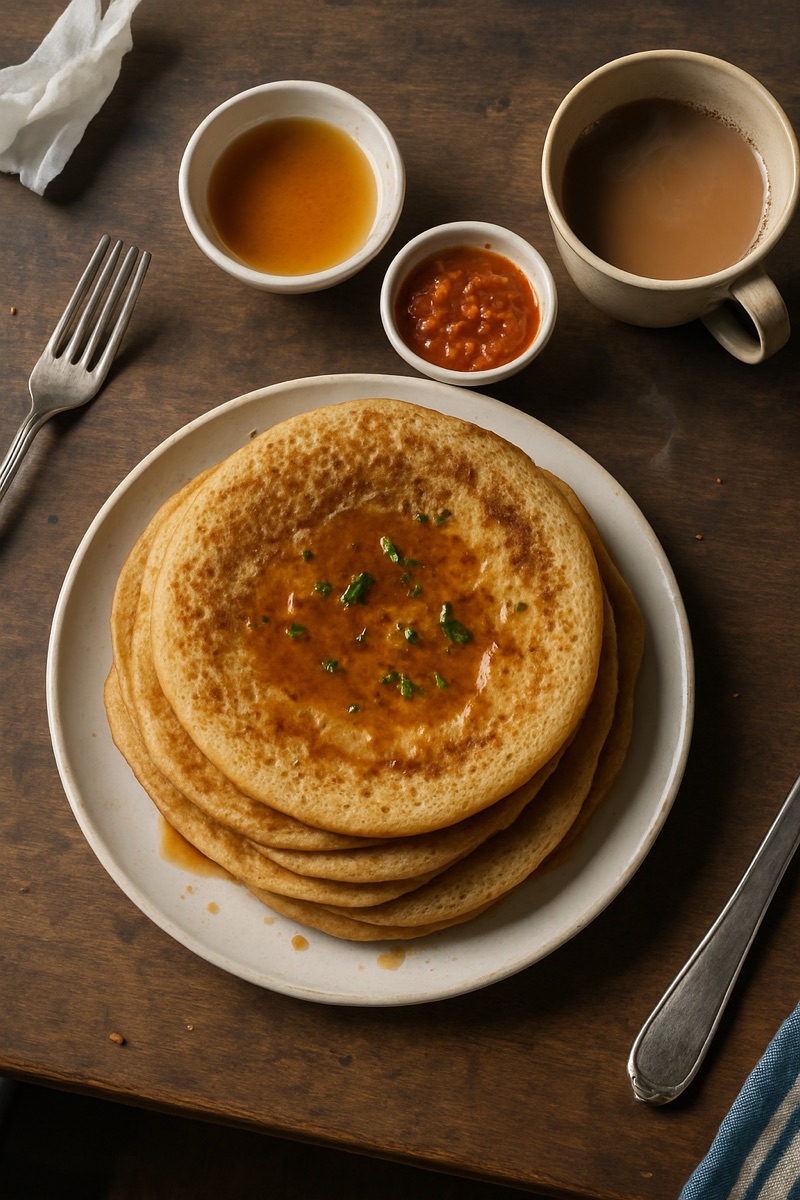 Lahoh🇩🇯 Djibouti · 10 hours and 40 minutes
Questions people ask
Is skoudehkaris from Djibouti or Somalia?
Both. Skoudehkaris is the Djiboutian name for bariis iskukaris, a rice-and-meat dish of Somali cuisine eaten across Djibouti and Somalia.
What does skoudehkaris mean?
It comes from the Somali isku-dheh karis, "cooked mixed together", because the rice cooks in the same pot as the meat.
Is skoudehkaris the same as biryani?
They are close cousins, but biryani layers rice over meat, while in skoudehkaris the rice cooks directly in the meat broth.
What is served with skoudehkaris?
A tomato and onion salad or plain yoghurt, and often a banana eaten alongside the rice.
What do people in Djibouti eat for breakfast?
Lahoh, a spongy fermented flatbread, usually with honey, ghee and tea, sometimes with liver or a stew.
Keep reading
- Traditional food of Djibouti: 13 dishes to know
- What is the national dish of Burundi?
- What is the national dish of Comoros?
- What is the national dish of Eritrea?
- What is the national dish of Ethiopia?
- What is the national dish of Kenya?