 COPPER
Traditional food of Djibouti: 13 dishes to know
Djiboutian food mixes Somali, Afar, Yemeni and French cooking with Indian spices. Meals are built on rice, pasta and flatbread served with spiced meat stews, and on goat, lamb and fish seasoned with spices from saffron to cinnamon. The most emblematic dishes are skoudehkaris, the spicy soup fah-fah, maraq and the breakfast flatbread lahoh.
What Djiboutian food is built on
Djiboutian cuisine is a mixture of Somali, Afar, Yemeni and French cooking, with Indian influences in the spices. Meals are halal, and dishes are seasoned with spices ranging from saffron to cinnamon. Somali and Djiboutian rice dishes use *xawaash*, a blend of cumin, coriander, cardamom, cloves, cinnamon, black pepper and turmeric, while Ethiopian-style sauces such as hot *berbere* and buttery *niter kibbeh* are poured over lentils and rice.
The day starts with tea and flatbread. Lunch (*qado*) and dinner (*casho*) are built around a stew, *maraq*, served with rice, pasta or bread, often with meat and a banana on the side. Fresh seafood and meat are central to the cooking, but French-language sources note that their cost puts them out of reach of the poorest households. Djibouti is a Muslim country, so pork is not eaten and wine and other alcoholic drinks are rare; meals are washed down with tea, juice or water. Dishes are usually accompanied by spicy sauces, sometimes very hot ones.
Rice, stews and soups
- Skoudehkaris — Lamb or goat stewed with tomato, cardamom, cinnamon and cumin, then basmati rice is added and finishes cooking in that broth. The name comes from the Somali *isku-dheh karis*, "cooked mixed together". It is the dish most Djiboutians consider the national one, and it is the local form of Somali bariis iskukaris. It is served with a tomato and onion salad or plain yoghurt, and is often eaten with injera.
- Maraq — The everyday meat stew or soup at the centre of lunch and dinner, made in many styles. Bone-in goat simmers with xawaash, then potato and carrot go in. It comes in many variations, and is served with rice, flatbread or pasta, often with a banana on the side.
- Lentils and rice — The most popular side dishes in Djibouti, typically covered with a sauce: hot *berbere*, the chili and spice blend of the Horn of Africa, or *niter kibbeh*, a spiced clarified butter. They show the Ethiopian side of Djiboutian cooking, next to the Somali rice pot and the Yemeni grill.
- Fah-fah — Also called *soupe djiboutienne*: a spicy soup of goat meat, sometimes beef or lamb, simmered with potatoes, cabbage or kale, leeks, tomatoes, onion, garlic, green chillies and coriander. French-language references list it among the most popular dishes in the country, and it is mostly eaten in the south and in northern Somalia. The meat and vegetables are covered with water and simmered over moderate heat until the meat is tender, with garlic and coriander added as it cooks.
- Baasto — Pasta, served like rice: with a heavier stew than an Italian sauce, often with grilled meat and a banana on the side. In Somalia, pasta is a legacy of the Italian colonial period.
Fish and meat
- Grilled fish — Yemeni-style fish, opened in half and often cooked in tandoori-style ovens, is a local delicacy. Fish and steak are widely eaten in Djibouti City. Like most Djiboutian dishes, the fish is served with spicy sauces, and grilled meat also goes with pasta.
- Suqaar — Diced meat, usually beef, cooked quickly in a little sauce with xawaash and peppers. It is a side dish at breakfast with lahoh, and also goes with rice or flatbread at other meals. Liver and *oodkac*, small dried pieces of meat, are served the same way.
Breakfast and tea
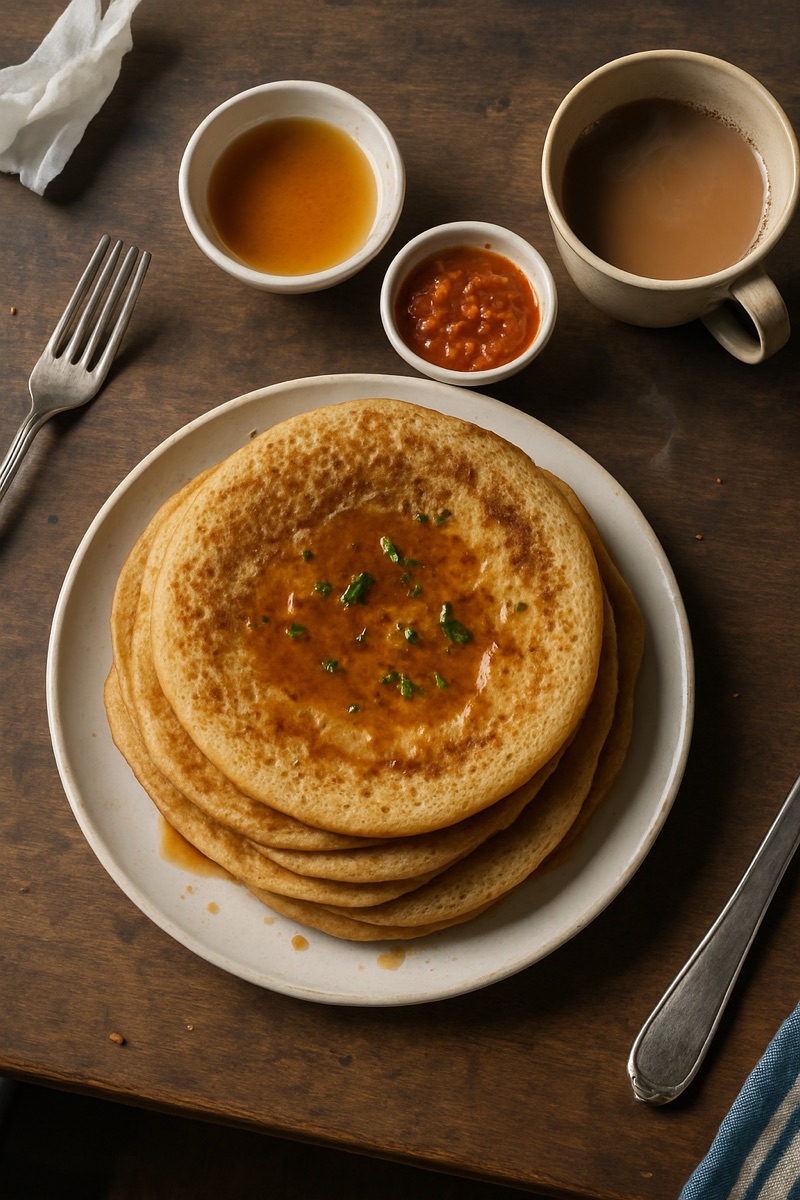
- Lahoh — A sorghum flatbread fermented overnight and cooked on one side only, so the top stays a lace of holes. It is similar to Ethiopian injera, but smaller and thinner. Three pieces are often eaten with honey, ghee and a cup of tea, or with a stew or soup. The batter ferments 8 to 12 hours, helped by a ladle of the previous batch.
- Garoobey — A porridge made by soaking oats in milk, flavoured with cumin seeds, ground cumin or other spices. Both English and French references describe it as one of the staple dishes of Djibouti.
- Shaah — Tea, the usual start to the day; coffee is called *buna*. Afternoon tea comes with fried snacks, and fruit such as mango, guava and banana is eaten as a snack throughout the day.
Snacks and sweets
- Sambusa — The Somali version of the triangular samosa, eaten throughout Djibouti at *afur*, the meal that breaks the fast in Ramadan. The local version is spiced with hot green chilli and usually filled with ground goat meat or fish.
- Bajiyo — A fritter, the Somali version of the Indian pakora. Bajiyos are a regular fixture at the table and in street shops, especially at the end of the Ramadan fast, and are one of the four essential elements of the Djiboutian afternoon tea.
- Xalwo — Djiboutian halva, also written *xalawo* and pronounced "halwo", made from sugar, cornstarch, cardamom, nutmeg and ghee, sometimes with peanuts. It is served at Eid celebrations and wedding receptions.
Cook Djiboutian food at home
Skoudehkaris is the dish most often named as the national dish of Djibouti. Other dishes locals mention include *yetakelt wet*, a spicy mixed vegetable stew, *fatira*, an omelette made with bread and meat, and banana fritters. Copper has full recipes for skoudehkaris, maraq and lahoh, with ingredients and step-by-step methods, on our page about the food of Djibouti, alongside other East African recipes.
Djibouti shares its rice pot, its flatbread and its sambusa with Somalia, and lahoh with Yemen across the Bab-el-Mandeb strait. Compare with the traditional food of Somalia and the traditional food of Yemen.
The recipes
- Lahoh🇩🇯 Djibouti · 10 hours and 40 minutes
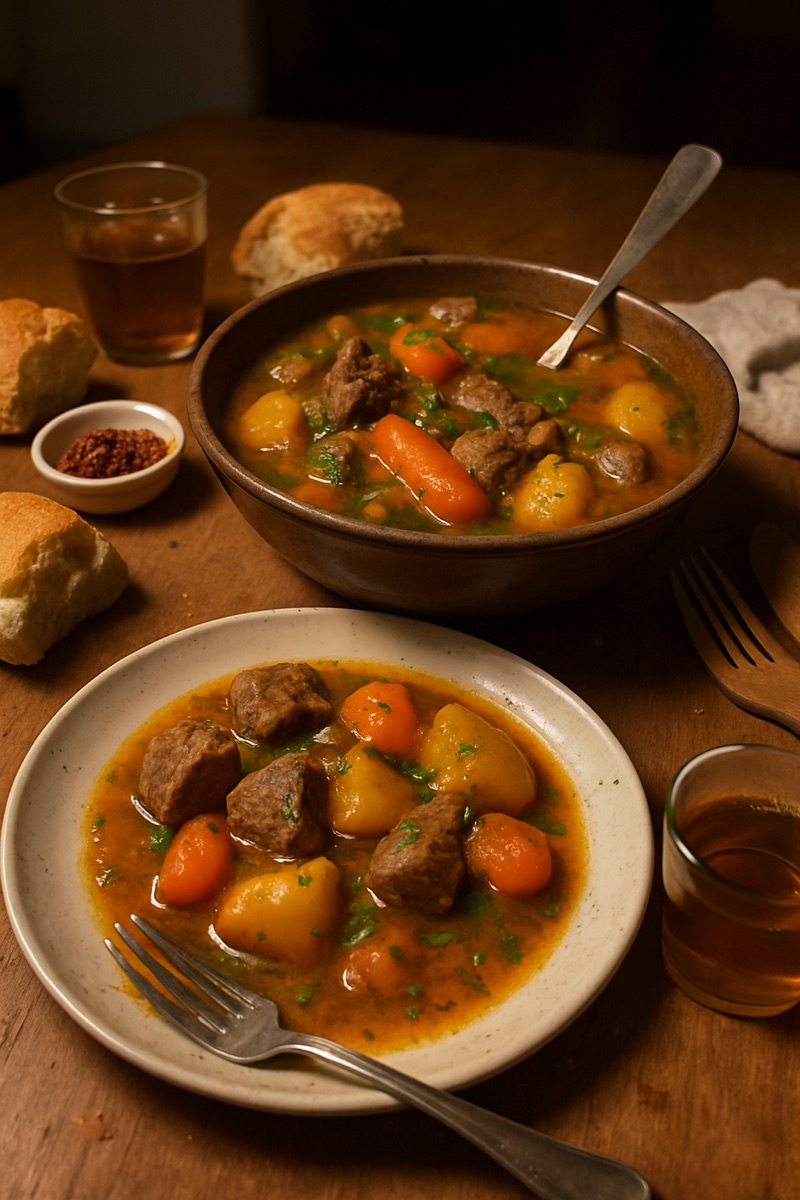 Maraq🇩🇯 Djibouti · 2 hours and 35 minutes
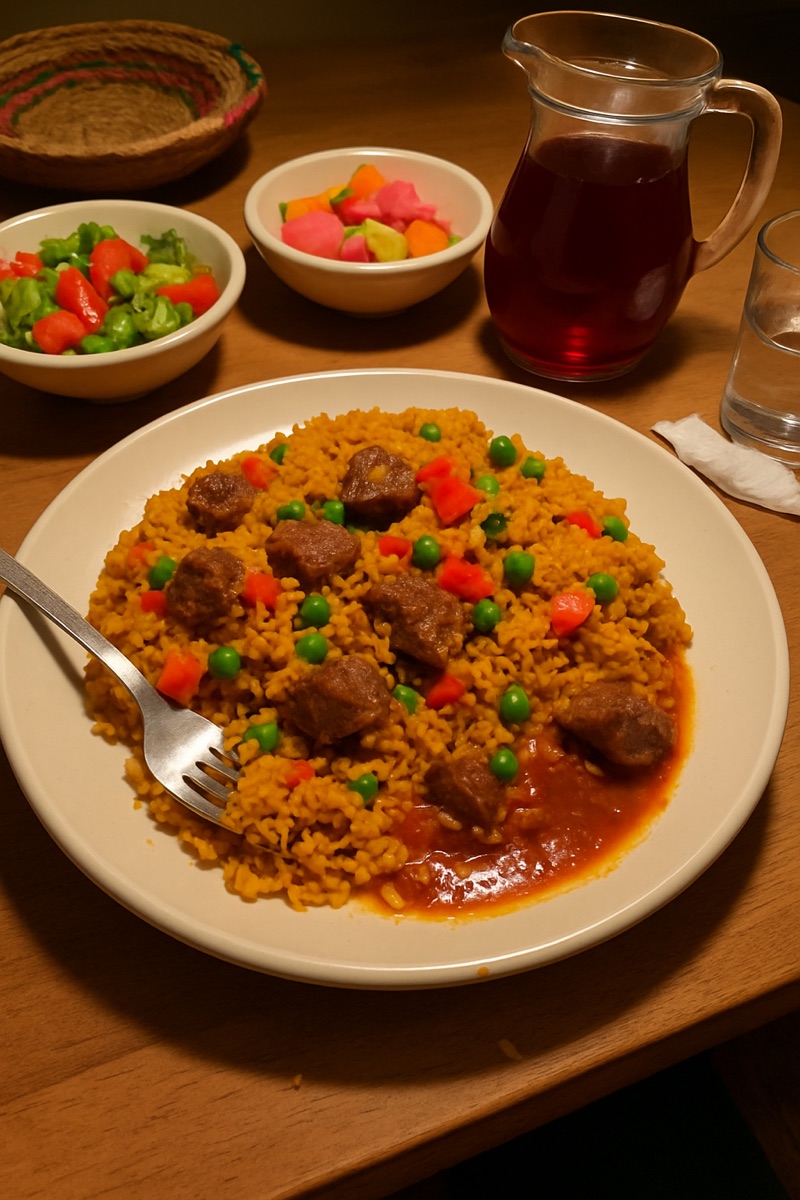 Skoudehkaris🇩🇯 Djibouti · 1 hour and 55 minutes
Questions people ask
What is the most popular food in Djibouti?
Skoudehkaris, lamb and rice cooked in one pot, is the dish most people consider the national dish. Fah-fah, a spicy goat soup, is also listed among the most popular dishes.
What do people in Djibouti eat for breakfast?
Breakfast is usually lahoh, a thin fermented flatbread, eaten with honey, ghee and tea, sometimes with liver, goat meat, suqaar or dried meat. Garoobey, an oat porridge, is another staple.
Is Djiboutian food spicy?
Often, yes. Fah-fah and sambusa use hot green chilli, and lentils and rice are covered with berbere. Rice and stews are seasoned with aromatic xawaash rather than only heat.
What is the difference between skoudehkaris and bariis iskukaris?
They are the same principle: rice cooked inside a spiced meat stew. Skoudehkaris is the Djiboutian name and form; bariis iskukaris is the Somali one.
What do Djiboutians eat during Ramadan?
The fast is broken at afur with sambusa, filled with spiced goat or fish, and bajiyos, fritters close to Indian pakora.
Keep reading
- What is the national dish of Djibouti?
- Traditional food of Burundi: 11 dishes to know
- Traditional food of Comoros: 13 dishes to know
- Traditional food of Eritrea: 13 dishes to know
- Traditional food of Ethiopia: 13 dishes to know
- Traditional food of Kenya: 13 dishes to know