 COPPER
Traditional food of Somalia: 12 dishes to know
Somali food is built on rice, flatbreads, beans and halal goat, lamb, beef and camel, seasoned with xawaash, a blend of cumin, cardamom, cloves and cinnamon. The day runs from fermented pancakes at breakfast to a rice or pasta lunch served with a banana and beans at night. The most emblematic dishes are bariis iskukaris, canjeero, suqaar and sambuus.
What Somali food is built on
Somali cooking was shaped by three things: centuries of maritime trade, a nomadic herding culture and the Italian colonial period. Trade brought the spices, herding brought camel milk and meat, still a traditional meal for pastoralists, and Italy left pasta. The vast majority of Somalis are Muslim, so pork is forbidden and all meat, whether beef, goat, lamb, camel or fish, is prepared halal. Mutton is the most eaten meat; fish was long eaten mainly by coastal communities.
The flavour comes from *xawaash*, a word that simply means "spices" in Somali, from the Arabic *hawa'ij*: a toasted blend of cumin, coriander, cardamom, cloves, cinnamon, black pepper and turmeric. Meals follow a fixed pattern of three: *quraac* (breakfast), *qado* (lunch, the main meal) and *casho* (dinner, served as late as 9 pm). Diets differ between town and country, with more fruit and vegetables in urban meals and corn and sorghum as staples in the riverine south.
Breakfast: flatbreads, liver and tea
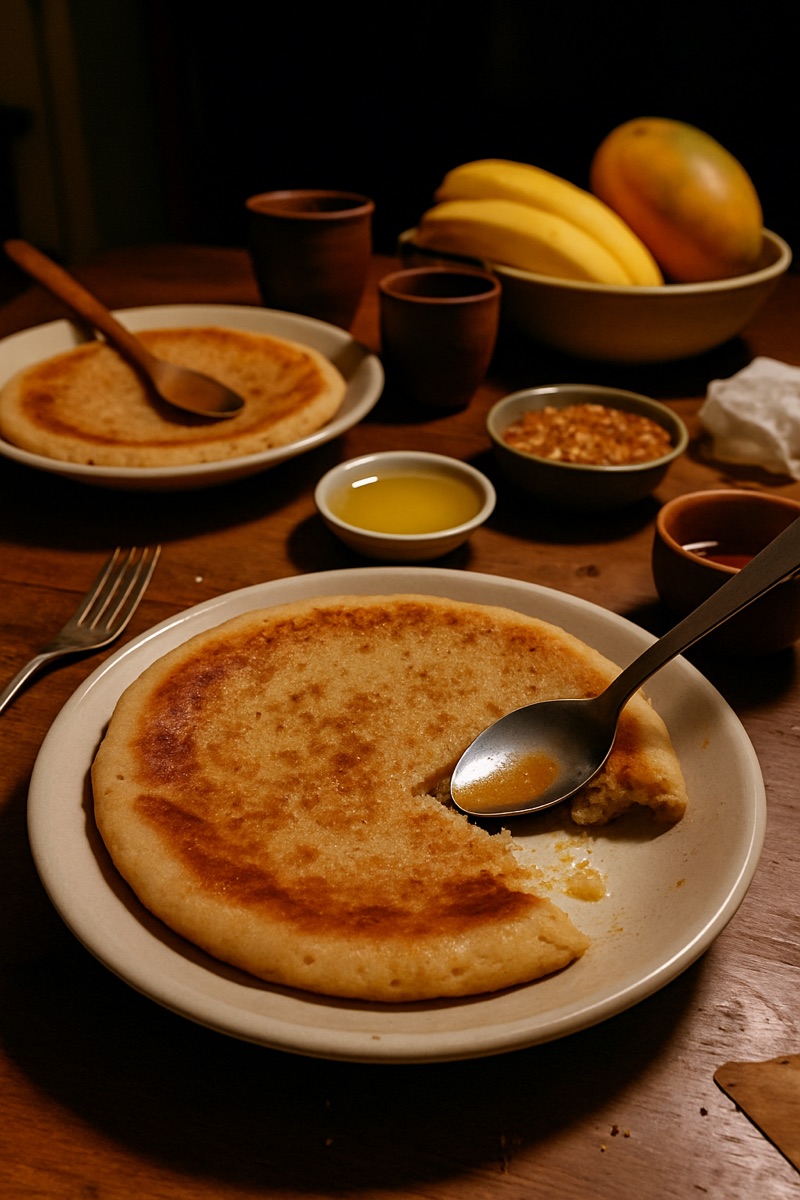
- Canjeero — A thin, slightly sour pancake of fermented sorghum, corn and wheat batter, spread in a spiral and cooked on one side only, so the top stays spongy and full of holes. It is called *canjeero* in southern Somalia and *laxoox* elsewhere, and it is smaller, thinner and sweeter than Ethiopian injera. It is eaten with honey and ghee or sesame oil, broken up with ghee and sugar, or with a stew.
- Malawax — A plate-sized sweet pancake, close to a crepe, made from a batter of flour, milk, eggs and sugar, flavoured with cardamom and sometimes cinnamon. It is cooked in a lightly greased pan until golden on both sides and served with honey or sugar and tea. It is a staple of home cooking across the country.
- Suqaar — Finely chopped meat cooked quickly with xawaash and peppers. Beef, goat, lamb, camel or chicken can be used; with chicken it is called *suqaar digaag*. At breakfast it comes on a bed of sauce next to canjeero, alongside liver, goat meat or *oodkac*, small pieces of dried meat boiled in ghee.
- Ful — Fava beans cooked slowly until soft, then sautéed with onion, garlic and tomato and seasoned with cumin. It is a breakfast dish shared with Sudan, Ethiopia and the rest of the Horn of Africa, eaten by hand with bread.
- Shaah — Somali tea, brewed from black tea leaves and often spiced with ginger, cardamom and cinnamon, but never black pepper. Milk is added after brewing, which makes it *shaah cadeeys*. It is the standard drink with breakfast.
Lunch: rice, pasta and cornmeal
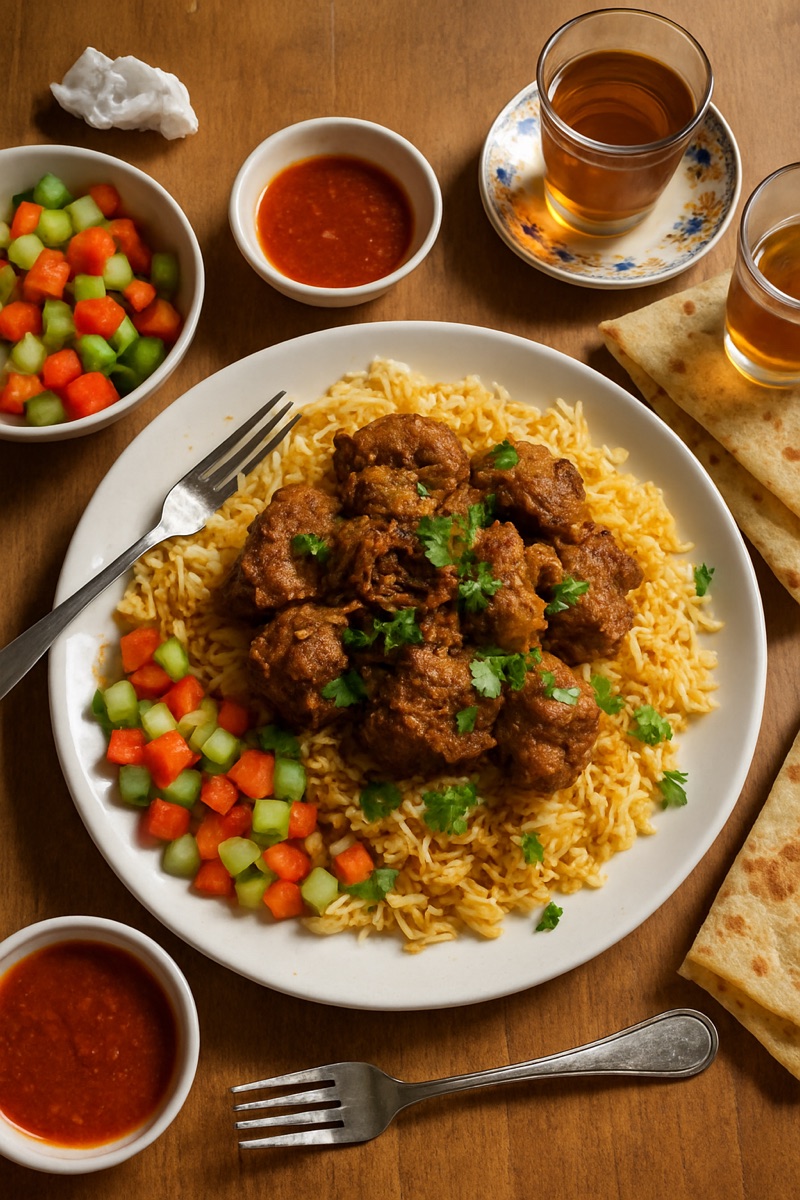
- Bariis iskukaris — The name means "cooked mixed together": basmati rice finishes cooking in the pot where goat, lamb, beef or chicken has simmered with tomato and xawaash, so the grains absorb the broth. It is the dish most often cited as Somalia's national dish, eaten almost daily and at weddings. Like most Somali rice, it is served with a banana on the side.
- Baasto — Pasta, usually spaghetti, introduced during the Italian colonial period and now a lunch staple in the northwest and south. It is served with a stew heavier than an Italian sauce, often with a banana. In restaurants you can order *federation*: rice and spaghetti side by side on one oval plate, topped with stewed meat and vegetables.
- Soor — A stiff cornmeal eaten in southern Somalia alongside stews or soup. It can also be mashed with fresh milk, butter and sugar. The related *asida* is served with a hole in the middle filled with *maraq* (stew) or olive oil.
Dinner, snacks and sweets
- Cambuulo — Adzuki beans cooked until very soft, then mixed with butter and sugar. Left on low heat, the beans can take up to five hours to cook. It is one of the most common dinner dishes, and a 1988 survey by the newspaper *Xiddigta Oktoober* found that Mogadishu residents preferred it for their main meal.
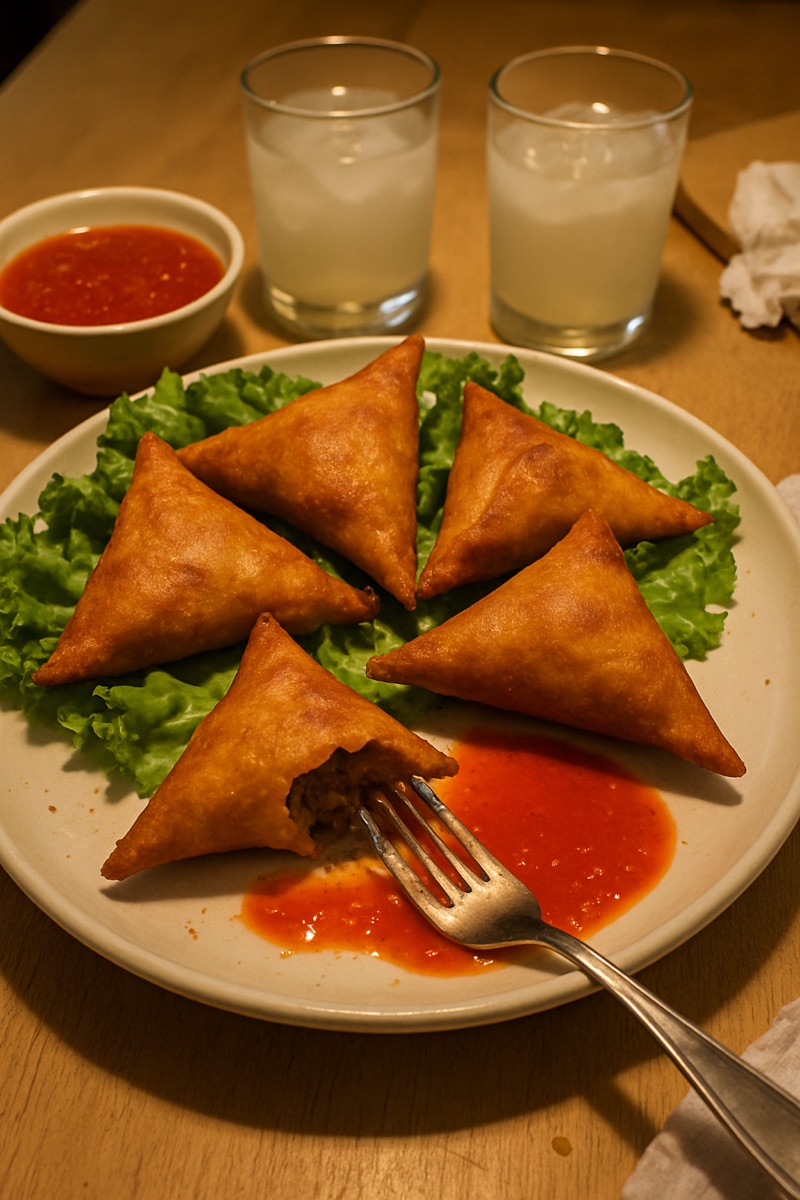
- Sambuus — The Somali version of the samosa: triangles of paper-thin pastry filled with dry spiced beef, onion, green chilli and coriander, then deep-fried. They are the classic food of *afur*, the meal that breaks the fast during Ramadan, and are often served with *bur*, Somali fried dough. They also appear at weddings and family gatherings.
- Xalwo — A Somali halva made from sugar, cornstarch, cardamom, nutmeg and ghee, sometimes with peanuts for texture. It is a Benadiri confection served at Eid celebrations and wedding receptions.
- Gashaato — A sweet from Benadir, also called *kashaato* or *qumbe*, made from shredded coconut, sugar and oil. The sugar is boiled with a little water, cardamom goes in, then the coconut, and the mixture sets into pieces.
Regional Somalia
In the south, breakfast flatbread is called canjeero, stiff cornmeal (*soor*) is common, and *muufo*, a puffy, thick maize bread baked in a clay oven called a *tinaar*, is eaten with stews and soup. Southern sweets include *ruz bil laban*, a rice pudding, and *lows iyo sisin*, peanuts and sesame seeds set in caramel. In Mogadishu, steak (*busteeki*) and fish (*kalluun*) are widely eaten, and Vimto (*fiimto*) and lassi (*laas*) are common at lunch. Benadir, the coast around the capital, is known for xalwo and gashaato. In the northwest, mango, guava and apple drinks are preferred, and in the west, kebab is a popular snack.
After a meal, Somali households traditionally burn frankincense (*luubaan*) or prepared incense (*uunsi*) on charcoal in a soapstone burner called a *dabqaad*, which keeps the house fragrant for hours.
Cook Somali food at home
Bariis iskukaris is the dish most often named as the national dish of Somalia. Copper has full recipes for bariis iskukaris, canjeero and sambuus, with ingredients and step-by-step methods, on our page about the food of Somalia, alongside other East African recipes.
Somali food crosses borders: the same rice pot is the national dish of Djibouti, and malawax is eaten in Kenya. Compare with the traditional food of Djibouti and the traditional food of Kenya.
The recipes
- Bariis iskukaris🇸🇴 Somalia · 2 hours and 30 minutes
 Canjeero🇸🇴 Somalia · 3 hours and 30 minutes
 Sambusa🇸🇴 Somalia · 1 hour and 45 minutes
Questions people ask
What is the most popular food in Somalia?
Rice is the centre of lunch, the main meal, and bariis iskukaris, rice cooked in the same pot as spiced meat, is the dish most often named as Somalia's national dish. Canjeero, the fermented breakfast pancake, is eaten daily.
What do Somalis eat for breakfast?
Breakfast is usually canjeero (laxoox) or malawax with honey, ghee or sesame oil, sometimes with liver, suqaar or dried meat, and a cup of spiced tea. Ful, mashed fava beans, is also common.
Is Somali food spicy?
Somali food is aromatic more than hot. Xawaash brings cumin, cardamom, cinnamon and cloves; the heat comes from green chilli, as in sambuus, and from *basbaas*, a green hot sauce served with dishes like suqaar.
What is federation in Somali food?
Federation is a restaurant plate with equal portions of rice and spaghetti side by side, topped with stewed meat and vegetables and served with salad and an optional banana.
What is xawaash?
Xawaash is the Somali spice blend, usually cumin, coriander, cardamom, cloves, cinnamon, black pepper and turmeric. The word means "spices" and comes from the Arabic hawa'ij.
Keep reading
- What is the national dish of Somalia?
- Traditional food of Burundi: 11 dishes to know
- Traditional food of Comoros: 13 dishes to know
- Traditional food of Djibouti: 13 dishes to know
- Traditional food of Eritrea: 13 dishes to know
- Traditional food of Ethiopia: 13 dishes to know