 COPPER
Traditional food of Ethiopia: 13 dishes to know
Ethiopian food is built on injera, a sour, spongy flatbread of fermented teff, topped with wat, thick stews started with onions cooked down and spiced with berbere chilli blend and niter kibbeh spiced butter. Fasting rules make many dishes vegan. The most emblematic dishes are doro wat, misir wat, shiro and tibs, all eaten on injera.
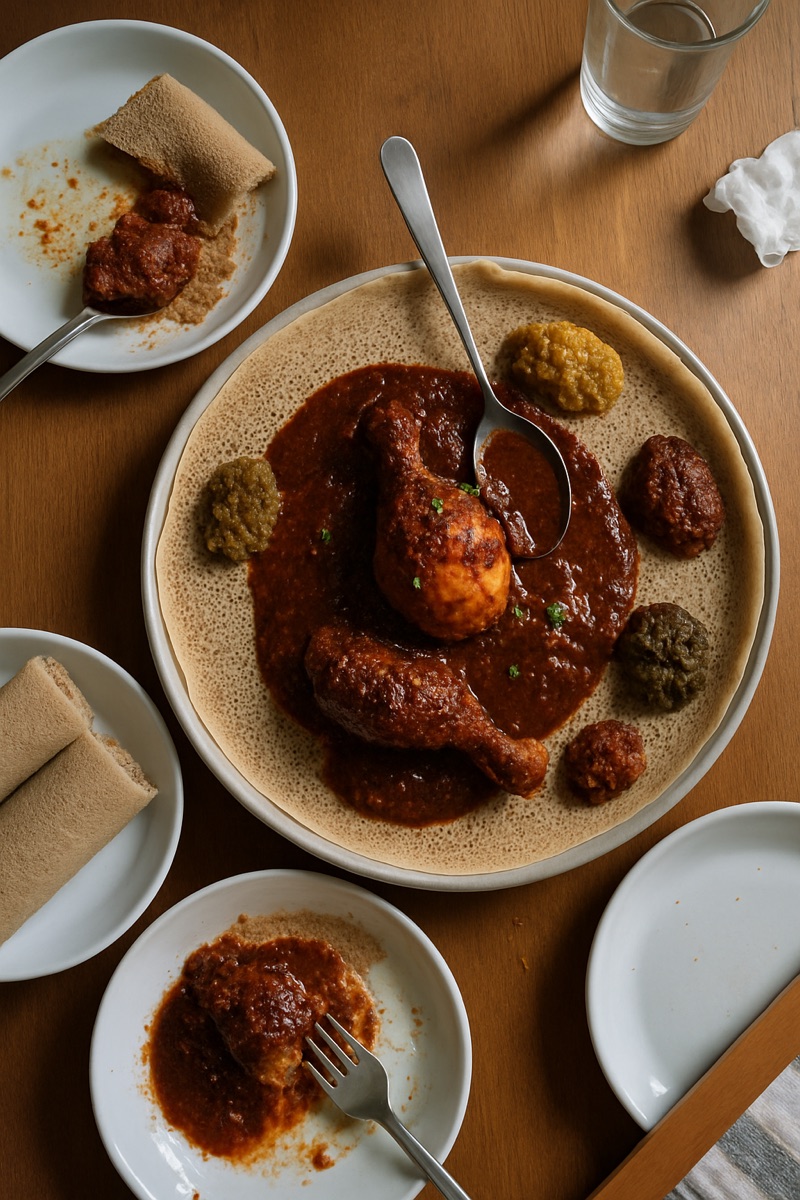
What Ethiopian food is built on
Almost every Ethiopian meal starts with injera, a large sour flatbread made from teff, a tiny grain native to Ethiopia. It is spread on a shared tray and covered with stews and side dishes, and everyone eats with the right hand, tearing off pieces of injera to pick up each bite. The stews are called wat. They begin with a large amount of chopped red onion cooked down in a pot, then niter kibbeh, butter infused with spices, and berbere, a blend of powdered chilli with spices such as cardamom, fenugreek, coriander, cloves, ginger and cumin. A hotter powder, mitmita, seasons raw and lightly cooked meat.
Religion shapes the menu. The Ethiopian Orthodox Tewahedo Church prescribes fasting on all Wednesdays and Fridays and through the whole of Lent, with no animal products at all, not even butter or eggs. That is why Ethiopian cooking has so many vegan stews of lentils, split peas, chickpeas and vegetables, cooked with oil instead of butter. Orthodox Christians, Muslims and Ethiopian Jews all avoid pork. After the meal, coffee is served.
Injera and the great stews
- Injera — A sour, slightly spongy flatbread about 50 cm across, made from teff flour and water left to ferment. It is the plate, the bread and the cutlery at once, and is kept in a woven basket called a mesob. Teff is graded white, red or mixed, and pure white teff injera is a mark of wealth; families on tighter budgets blend in barley in the highlands or sorghum in the lowlands.
- Doro wat — Chicken stewed in a thick, dark red sauce of onions cooked dry until they collapse, then niter kibbeh and berbere, with whole hard-boiled eggs added at the end. It can take around ten hours to make properly, so it is kept for feast days and gatherings, and it is one of the most popular dishes for breaking a religious fast.
- Misir wat — Red lentils simmered with berbere over onions until they become a thick, spicy purée. It is the best known of the fasting stews; on fasting days the niter kibbeh is replaced with vegetable oil, so the dish is fully vegan.
- Shiro — A smooth stew of powdered chickpeas or broad beans with onion, garlic and, depending on the cook, ginger, tomato and chilli. It is eaten at lunch or dinner on injera, and a heavily spiced version, tegabino shiro, is brought to the table bubbling in a small clay pot. Shiro is vegan, which makes it a staple of Lent, Ramadan and other fasting seasons.
- Beyaynetu — A platter of injera covered with small portions of several different stews and salads; the Amharic name means "various" or "assorted". The vegetable version, yetsom beyaynetu, is the fasting-day meal, while beyaynetu besiga includes meat.
Meat dishes
- Tibs — Cubes of beef, mutton or goat sautéed with onion and spices, from mild to hot, often served still sizzling. An 18th-century visitor described tibs as meat served to show particular respect to a guest, and it is still cooked to mark special events and holidays.
- Kitfo — Minced raw beef dressed with mitmita chilli powder and niter kibbeh, or cooked lightly rare as kitfo leb leb. It comes from the Gurage people and is served with ayibe, a mild crumbly cheese, and cooked greens called gomen. It is a classic dish for holidays such as Meskel on 27 September.
- Kocho — A dense, sour bread-like food made from the pulp of the enset plant, also called false banana, which is fermented for weeks to months before it is cooked. In the south and among the Gurage it is eaten in place of or alongside injera, and it is the traditional partner of kitfo.
Breakfast dishes
- Fit-fit (fir-fir) — Shredded injera tossed with niter kibbeh, berbere and onions, often with leftover wat from the day before. It is one of the most common Ethiopian breakfasts and is eaten with the hand from a piece of injera or with a spoon from a bowl.
- Chechebsa — Kita, an unleavened flatbread, torn into pieces and coated with berbere and niter kibbeh. It is widely known by its Oromo name, chechebsa, is sometimes served with plain yogurt and, unlike most Ethiopian food, is eaten with a spoon.
- Genfo — A stiff porridge of barley or wheat flour stirred continuously with a wooden spoon. It is served as a large mound with a well in the middle filled with niter kibbeh and berbere, and each bite of porridge is dipped into the spiced butter.
Coffee and drinks
- Coffee ceremony (buna) — Coffee drinking probably began in Ethiopia, and coffee is still served after meals and to visitors. In the ceremony, green beans are roasted in a pan in front of guests, ground in a wooden mortar and boiled in a clay pot called a jebena, then poured in three rounds into small cups, usually with sugar but in some areas with salt or butter. Popcorn or roasted barley is often served alongside.
- Tej — A honey wine similar to mead, brewed from honey, water and gesho, a shrub used like hops, with an alcohol content of about 7 to 11%. For centuries it was reserved for the king and his court; it is now made at home or served in tej houses and is considered Ethiopia's national drink, poured from a flask-shaped berele at weddings and festivals.
Regional Ethiopia
The injera-and-wat table of the Amhara and Tigray highlands is what most people know as Ethiopian food. The Oromo, the country's largest group, add dishes such as chechebsa, genfo (marqa) and chuko, roasted barley flour mixed with butter and spices. The Gurage are known for kitfo, ayibe cheese and gomen, and in the south, among the Sidama and their neighbours, enset is central, eaten as kocho or as borasaame, enset with butter. Pasta, a legacy of the brief Italian occupation, is common everywhere, especially in towns. Fish is rare away from the country's many lakes.
Cook Ethiopian food at home
Doro wat is widely regarded as the national dish of Ethiopia, and our article on it covers the dish and its injera in depth. Copper has full recipes for doro wat, misir wat and tibs, with ingredients and step-by-step methods, on our page about the food of Ethiopia, alongside other East African recipes.
To the south, the food changes completely: compare with the maize, greens and grilled meat of the traditional food of Kenya.
The recipes
- Doro wat🇪🇹 Ethiopia · 2 hours and 30 minutes
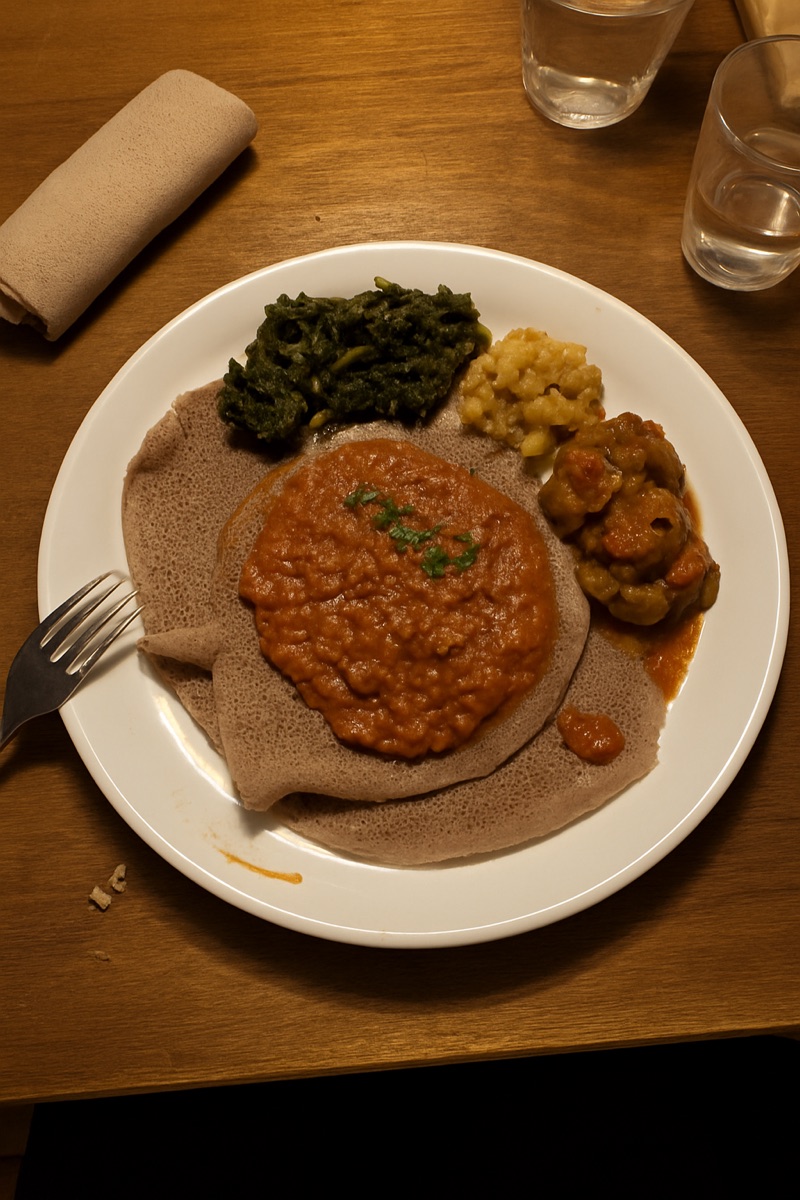 Misir wat🇪🇹 Ethiopia · 1 hour and 30 minutes
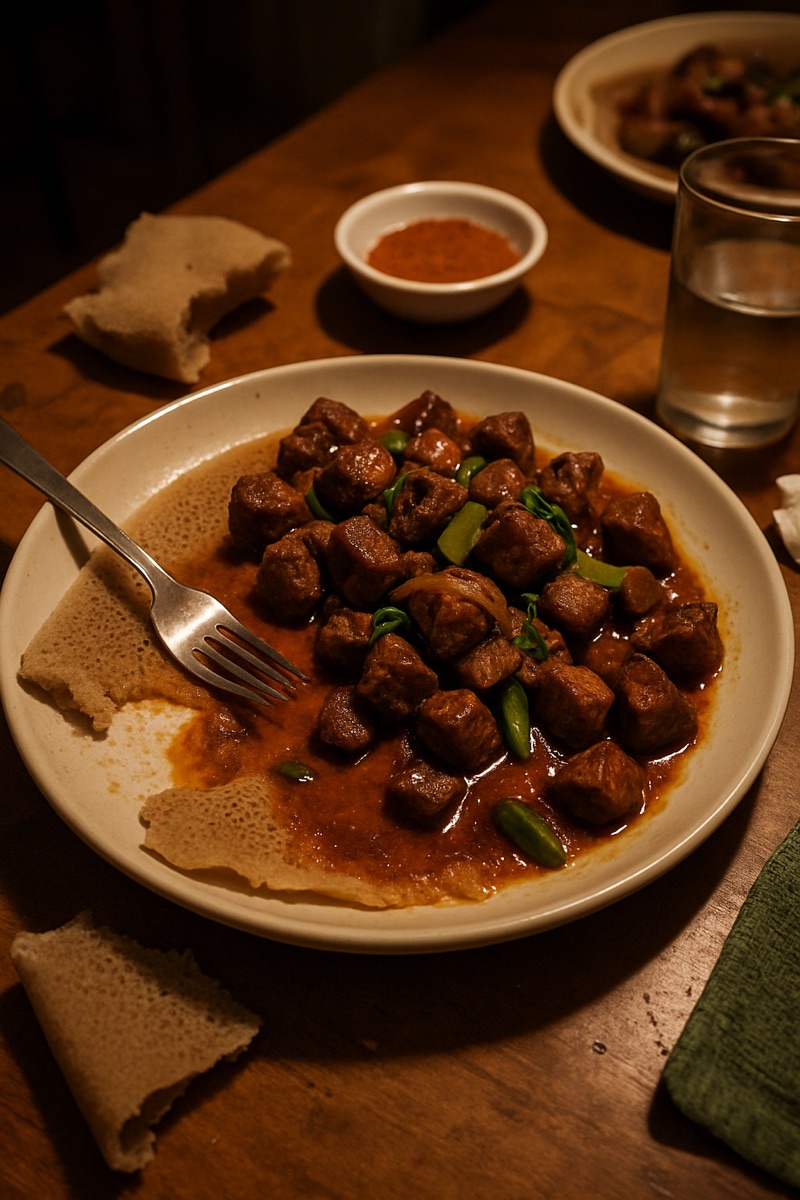 Tibs🇪🇹 Ethiopia · 25 minutes
Questions people ask
What is the most popular food in Ethiopia?
Injera with wat is the everyday base of Ethiopian food. Doro wat, chicken stewed with berbere and spiced butter, is the dish most often called the national dish, while shiro and misir wat are the most common everyday stews.
What do Ethiopians eat for breakfast?
Common breakfasts are fit-fit (fir-fir), shredded injera with spiced butter and berbere; chechebsa, torn flatbread with the same seasoning; genfo porridge with spiced butter; and ful, a fava bean stew served with bread rolls.
Is Ethiopian food spicy?
Often, yes. Berbere, a chilli-based spice blend, seasons most wats, and mitmita, a hotter chilli powder, goes on kitfo. Milder alicha wats use turmeric instead, and ayibe cheese is served to soften the heat.
Why is so much Ethiopian food vegan?
The Ethiopian Orthodox Church prescribes fasting on Wednesdays and Fridays and throughout Lent, when no meat, dairy or eggs may be eaten. Dishes such as misir wat, shiro and yetsom beyaynetu were developed for those days.
What is injera made of?
Injera is traditionally made from teff flour and water, fermented before it is cooked into a large thin flatbread. Barley, sorghum, maize or rice flour are sometimes blended in, depending on the region and price.
Keep reading
- What is the national dish of Ethiopia?
- Traditional food of Burundi: 11 dishes to know
- Traditional food of Comoros: 13 dishes to know
- Traditional food of Djibouti: 13 dishes to know
- Traditional food of Eritrea: 13 dishes to know
- Traditional food of Kenya: 13 dishes to know