 COPPER
Traditional food of Burundi: 11 dishes to know
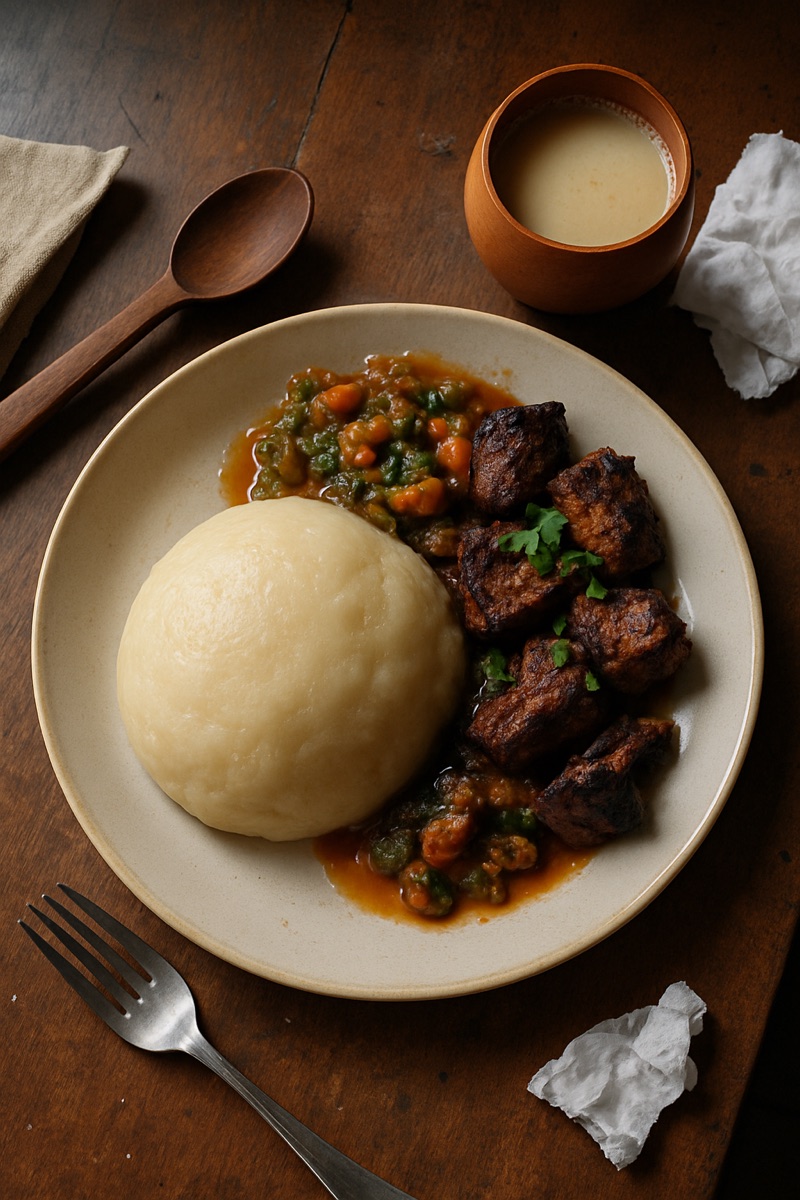
Burundian food is built on beans, eaten at least once a day, with plantains, sweet potatoes, cassava and maize. Food is boiled, stewed or roasted over a wood fire, and meat is rare, while Lake Tanganyika supplies fish. The most emblematic dishes are ubugari with ibiharage (beans in palm oil), isombe and the small lake fish ndagala.
What Burundian food is built on
Burundi is a country of hills and farms: agriculture covers about 80% of its land, growing coffee and tea for export, and maize, beans and cassava to eat. Beans are the base of Burundian cooking and come with most meals; stewed beans are traditionally eaten at least once a day. Around them come plantains and green bananas, sweet potatoes, cassava, peas, maize and wheat, with sorghum and finger millet also grown.
Meat plays a small part. Livestock is a secondary activity, chicken and goat are eaten only occasionally, and French Wikipedia notes that the cow is considered sacred and is not eaten. Protein comes from beans and, near the shore, from the fish of Lake Tanganyika. Food is usually homemade, served in homemade vessels that are also used for drinking, carrying water and storing grain. Most of it is boiled, stewed or roasted over a wood fire, and many dishes are soups or sauces seasoned with onion, palm oil and chilli, which arrived through trade and is now a standard seasoning. Burundi Travel traces the cuisine to its indigenous peoples, with later contributions from Arab traders and European colonisers.
Beans, ubugari and other staples
- Ubugari — A dense dough of cassava flour, maize flour or both, beaten into boiling water until it pulls away from the pot. Burundi Travel calls it the heart of Burundian cuisine. Maize ubugari comes out white, a neutral base for strongly flavoured sauces, and a good one is judged by how well it absorbs them. It is not eaten alone: diners pinch off a piece, press a dent in it with the thumb and use it to scoop beans, isombe or meat sauce.
- Ibiharage — Red kidney beans stewed or fried with palm oil and onion, often with chilli. Burundi Travel lists it among the dishes not to miss, and it is the everyday partner of ubugari, rice or plantains.
- Beans with bananas — Beans stewed together with green bananas, so the starch and the protein cook in one pot. Bean soups of this kind are among the most common Burundian dishes.
- Isombe — Cassava leaves pounded to a pulp and boiled uncovered for at least 45 minutes so that their hydrocyanic acid evaporates, then stewed with eggplant, palm oil, peanut butter and often smoked fish until thick and dark green. It is shared with Rwanda, eastern Congo and western Uganda, and eaten with rice, ubugari or plantains.
- Renga renga — A stew of potato leaves and peanuts. It is one of the leaf-and-peanut sauces that, like isombe, turn garden greens into a full meal with a starch.
- Ndizi — Sliced plantain fried in palm oil, eaten as a snack or as a side with stews and grilled meat. Green bananas are also boiled to go with sauces.
Fish from Lake Tanganyika and grilled meat
- Ndagala — Small silver fish from Lake Tanganyika, 6 to 8 cm long, caught all year round and an important part of the diet along the shore. The name covers *Stolothrissa tanganicae*; a larger relative, 10 to 12 cm long, is called *lumpu* in Burundi. They are floured and fried whole, bones and all. Rwandans call a related lake fish *isambaza*, and our recipe uses that name.
- Mukeke — A Lake Tanganyika fish prized for its delicate, dense flesh, often grilled, steamed over an open fire, or cooked in a tomato and onion sauce. Overfishing has made it an endangered species. Lake Tanganyika, the second largest freshwater lake by volume and the second deepest in the world, holds more than 1,500 fish species, and sangala, a predator fish, tilapia and catfish are also eaten.
- Brochettes — Skewers of barbecued meat, often goat. Near the lake, fish is prepared in the same ways as meat, grilled or stewed.
Traditional drinks
- Urwagwa — Banana beer, also spelled *urwarwa*: bananas are ripened for four to six days in a pit lined with smouldering banana leaves, peeled, then kneaded to release their juice. The juice is filtered, diluted, mixed with ground roasted sorghum and left to ferment for 24 hours. Two kinds of banana go in: a third of the harsh *igikashi* and two thirds of the milder *igisahira*. It is made at home and drunk during celebrations.
- Impeke — A beer brewed from sorghum, often drunk through straws. Red sorghum is one of the grains grown on Burundi's hills.
Hills and lakeshore
In the hills of the interior, where most Burundians live, meals are built on beans, ubugari, sweet potatoes, cassava and bananas grown on the family plot. Along Lake Tanganyika, around Bujumbura, fish replaces meat: ndagala, mukeke, tilapia and catfish. In Bujumbura itself, restaurants serve brochettes, lake fish and regional dishes, including Congolese food. Across the country, snacks are bananas, pineapples, sugar cane and peanuts.
Cook Burundian food at home
Burundi has no official national dish; beans with ubugari are the most defensible answer, as explained in our article on the national dish of Burundi. Burundi Travel describes slow cooking in a covered pot and grilling as the traditional techniques, so a heavy lidded pot is the main tool you need. Copper has full recipes for ubugari, isombe and sambaza, with ingredients and step-by-step methods, on our page about the food of Burundi, alongside other East African recipes.
Burundi shares isombe, ubugari and lake fish with its neighbours. Compare with the traditional food of Rwanda and the traditional food of the DR Congo.
The recipes
- Ubugari🇧🇮 Burundi · 30 minutes
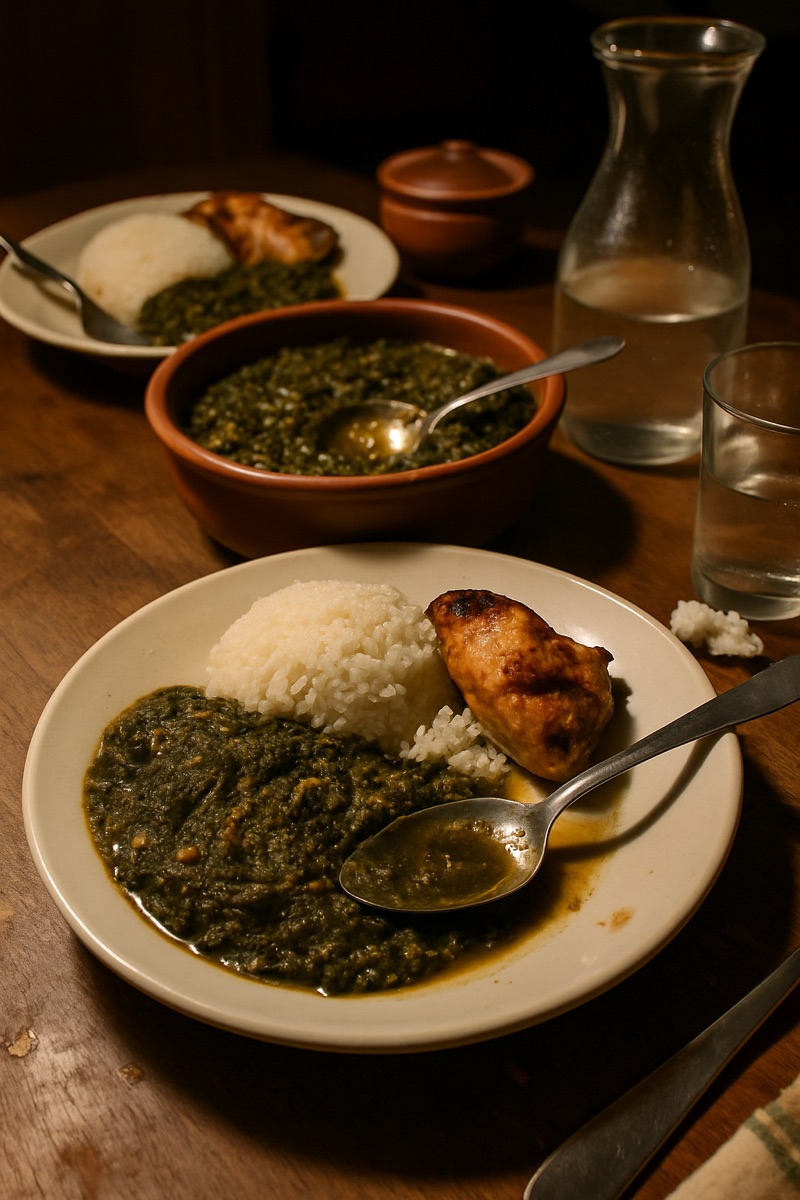 Isombe🇧🇮 Burundi · 2 hours and 20 minutes
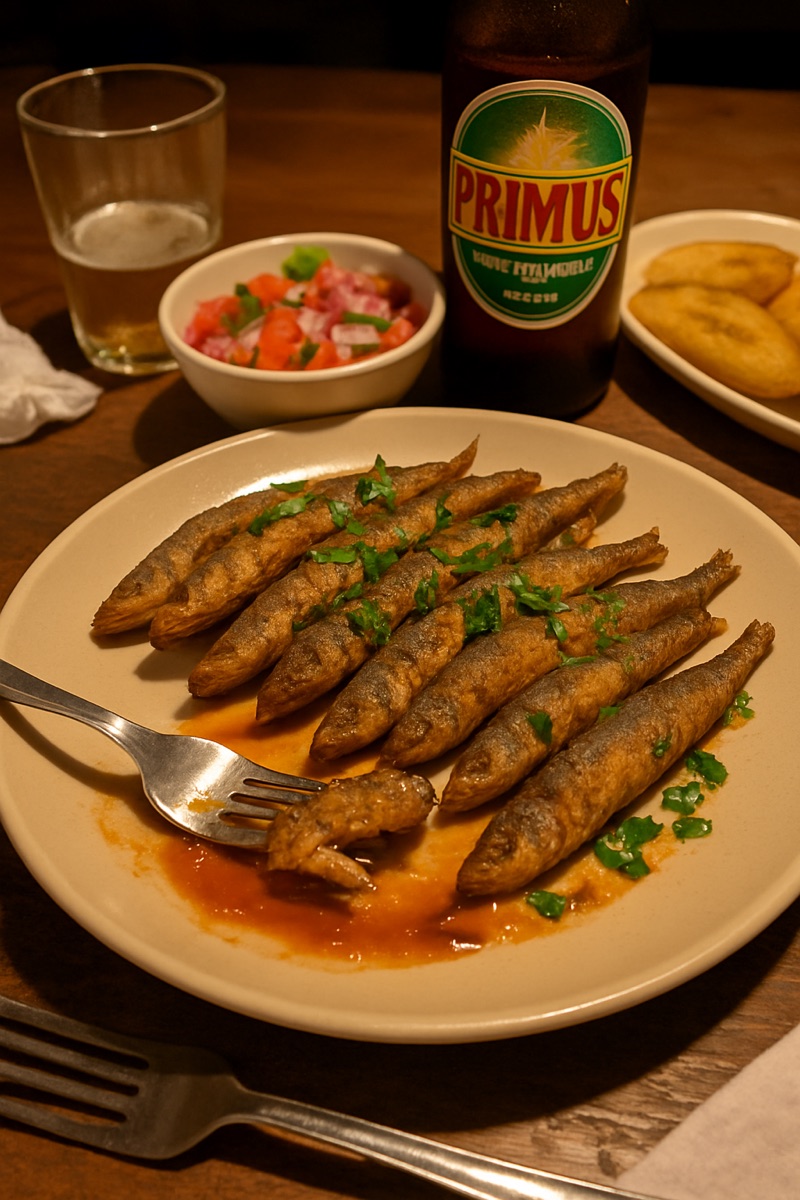 Sambaza🇧🇮 Burundi · 35 minutes
Questions people ask
What is the most popular food in Burundi?
Beans, eaten at least once a day, usually with ubugari, a stiff dough of cassava or maize flour. Ibiharage, beans fried with palm oil and onion, is the classic dish.
Do Burundians eat beef?
Rarely. The cow is considered a sacred animal in Burundi and is traditionally not eaten. Goat, chicken and fish are more common, and meat in general is eaten only occasionally.
What fish is eaten in Burundi?
Fish from Lake Tanganyika: ndagala, small fish fried or dried whole, mukeke, prized for its flesh, and tilapia.
Is Burundian food spicy?
It is mostly mild, built on beans, palm oil and onion. Chilli, which arrived through trade, is used as a seasoning.
What do people drink in Burundi?
Traditional drinks are urwagwa, a banana beer drunk at celebrations, and impeke, a sorghum beer often drunk through straws. Tea and coffee are grown in the country.
Keep reading
- What is the national dish of Burundi?
- Traditional food of Comoros: 13 dishes to know
- Traditional food of Djibouti: 13 dishes to know
- Traditional food of Eritrea: 13 dishes to know
- Traditional food of Ethiopia: 13 dishes to know
- Traditional food of Kenya: 13 dishes to know