 COPPER
Traditional food of Rwanda: 12 dishes to know
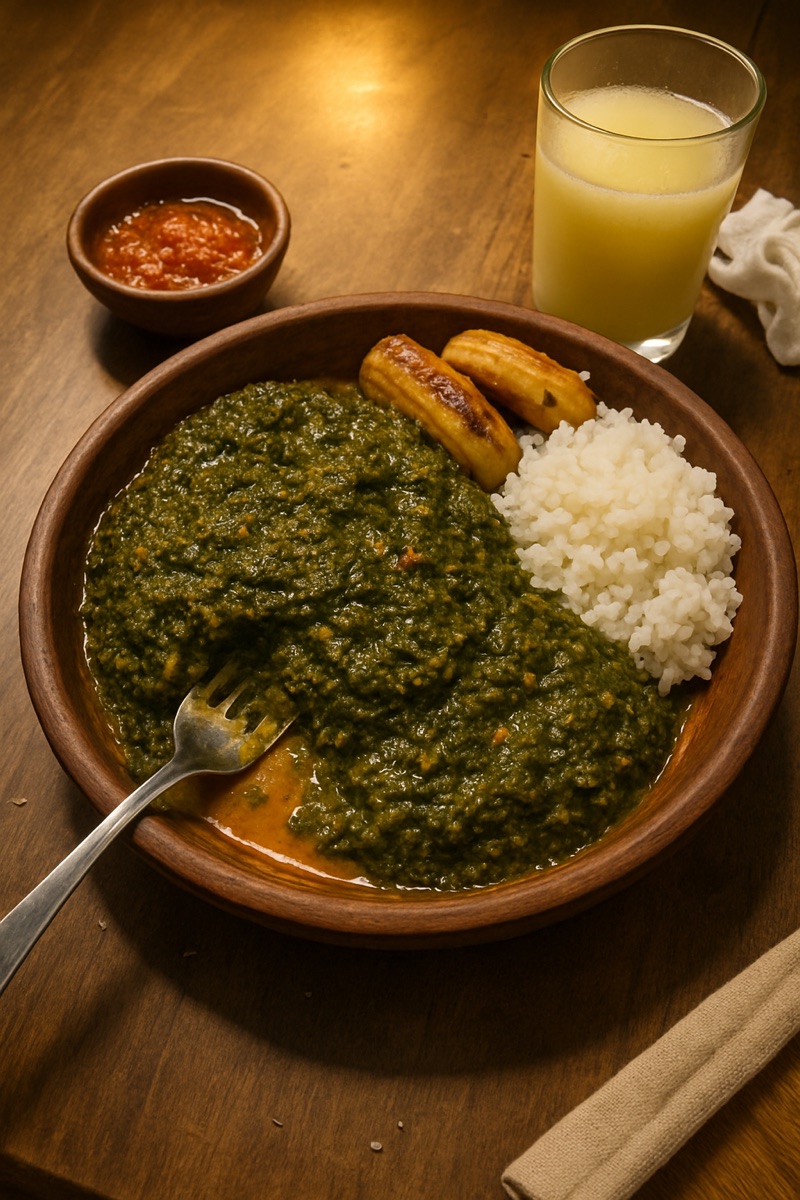
Rwandan food is built on what small farms grow: beans, plantains, sweet potatoes, cassava and maize, cooked into stews and stiff doughs, with meat or fish when available. It relies more on vegetables and sauces than its East African neighbours. The most emblematic dishes are isombe, ubugali, ibihaza and grilled brochettes, with lake fish such as sambaza.
What Rwandan food is built on
Most Rwandans live from farming, and the staples come straight from the family plot: beans, bananas and plantains, sweet potatoes, cassava, maize, rice and potatoes. Many farmers do not sell their crops because markets are hard to reach, so rural households eat mostly what they grow. Rwandan cooking differs from the rest of East African cuisine by its greater share of plant-based dishes and sauces. Meat such as beef, goat and chicken, and tilapia from the lakes, is eaten but not every day. Long little known outside Rwandan communities abroad, the cuisine drew attention in 2025, when the book *Uruhimbi, Rwanda Gastronomy and Culinary Art* was recognised at the Gourmand Awards.
History shaped the plate. Farming communities ate mainly plant foods, while pastoralists drank large amounts of milk. Potatoes and maize arrived from South America through colonial introductions and are now grown in Gitarama and Butare; chapati and samosas came from India through the Swahili coast trade, and mandazi from Tanzania. Lunch is generally the main meal of the day: a staple such as rice, beans, potatoes, cassava or plantains, with vegetables, and meat, fish or eggs depending on what is available.
Everyday staples and stews
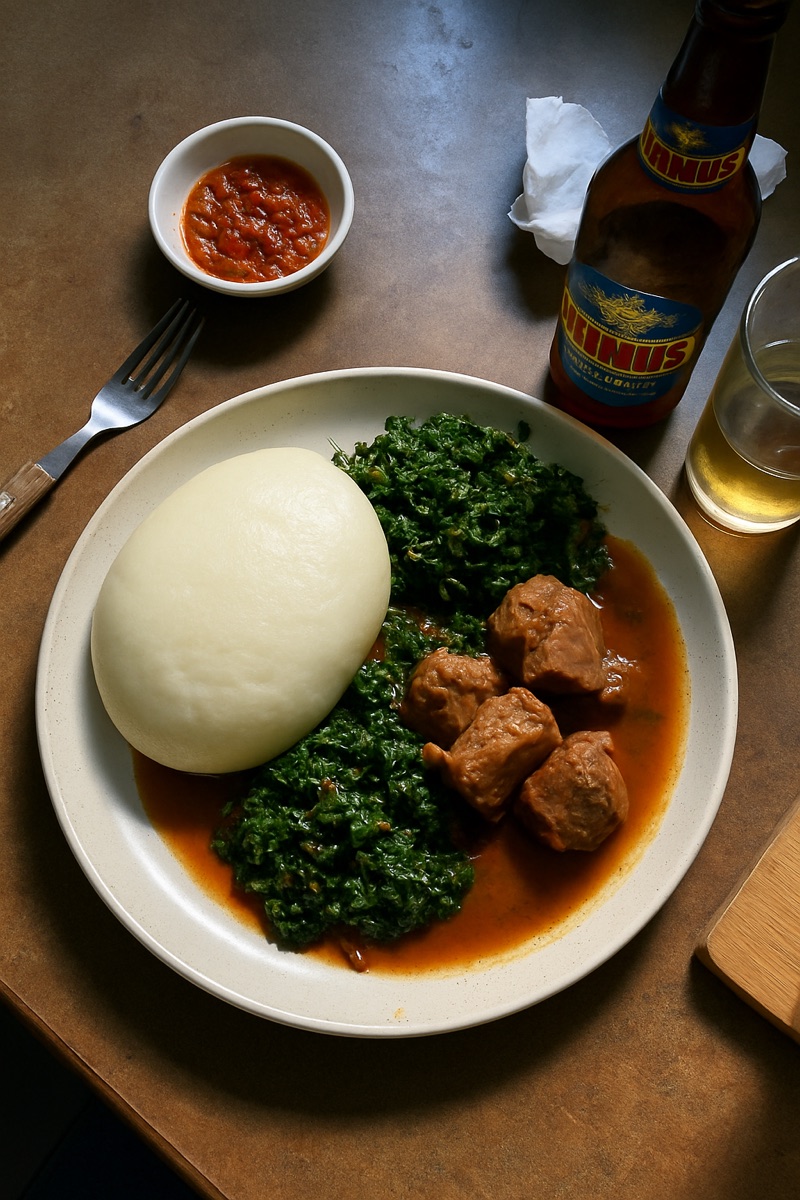
- Isombe — Cassava leaves pounded in a mortar, then boiled uncovered for at least an hour with palm oil, because raw cassava leaves contain compounds that only long, open cooking removes. Eggplant, onion, garlic and tomato follow, and peanut paste goes in at the end. It is eaten at lunch with ubugali, rice and beans, or bread, and is shared with Burundi and the DR Congo.
- Ubugali — Rwanda's version of ugali, a firm dough of cassava flour, often mixed with maize flour, worked against the pot with a wooden stick until smooth and elastic. It is turned out as a mound, and pieces are pinched off by hand to scoop up isombe, beans or meat sauce.
- Ibihaza — Pumpkin cut into pieces and boiled together with beans. It is one of the three dishes, with isombe and ugali, usually listed as Rwanda's national dishes, and a common lunch. Two other traditional pastes are made the same way, by stirring flour into boiling water: *ikinyiga*, from peanuts, and *umustima w'uburo*, from millet.
- Matoke — Green plantains, called *igitoki* in Kinyarwanda, peeled and boiled or steamed, often wrapped in their own leaves in a pot lined with banana stalks, then often mashed. The cooking bananas used are the East African Highland banana, a staple across the Great Lakes region, and matoke is served with beans, stews or grilled meat.
Grilled meat and lake fish
- Brochettes — Skewers of grilled meat, usually goat or beef, sometimes fish. They appear on almost every restaurant menu in the country and are served with rice or chips, making them the standard meal out in Kigali and other towns.
- Tilapia — A freshwater fish from Lake Kivu, also farmed locally, fried or grilled whole. Lake communities eat it most, and in towns it comes with chips or ugali and vegetables.
- Sambaza — Tiny sardines from Lake Kivu (*Limnothrissa miodon*), about 6 cm long, fried and eaten whole, bones and all. Women sell them fresh on the lakeshore, and unsold fish are dried and used as a seasoning. In Rwanda they are an evening snack, eaten when people get together.
- Akabenz — Pork cut into chunks and fried dry in its own fat until the edges crisp, then tossed with onion, peppers and chilli and served with a raw tomato-onion kachumbari. It is bar food, eaten in the evening when people meet to drink and talk.
Breakfast, snacks and drinks
- Mandazi — A slightly sweet fried dough, usually triangular or round, that came to Rwanda from the Swahili coast through Tanzania. In towns it is eaten at breakfast with tea, alongside chapati, and as a snack at any time.
- Igikoma — A thin porridge of sorghum or maize flour, drunk rather than eaten with a spoon. It is a usual morning food, alongside roasted sweet potatoes, cassava or plantains.
- Ikivuguto — Thick fermented milk, still drunk in many households. Milk was long regarded as Rwanda's national drink, prized above all by the herding communities.
- Urwagwa — Banana beer, made from ripe bananas kneaded until their juice runs, diluted with water, mixed with ground roasted sorghum and left to ferment. It is widely drunk in rural areas and shared at ceremonies; at social gatherings, beer is traditionally drunk mostly by men. Other traditional drinks are *ikigage*, a sorghum beer, and *ubuki*, made from fermented honey, at about 12% alcohol. In bars, the commercial beers are Primus, Mützig and Amstel.
Town and country
Rwanda's food changes more between town and village than between regions. In rural areas, people eat traditional staples: beans, sweet potatoes, cassava, plantains and greens, with meat only a few days a month. In Kigali and other towns, diets include more meat, eggs, milk, tea and coffee, fried foods and soft drinks, and restaurants serve grilled meat with chips, fish and rice with stews, as well as Japanese, Indian, French and Italian food. Near Lake Kivu, fish such as tilapia and sambaza is an everyday food rather than a treat.
Cook Rwandan food at home
Rwanda has no official national dish; isombe, ubugali and ibihaza are the three usually named, as explained in our article on the national dish of Rwanda. Copper has full recipes for isombe, ubugali and akabenz, with ingredients and step-by-step methods, on our page about the food of Rwanda, alongside other East African recipes.
Isombe, ubugali and lake fish cross the borders. Compare with the traditional food of Burundi and the traditional food of the DR Congo.
The recipes
 Ugali
Ugali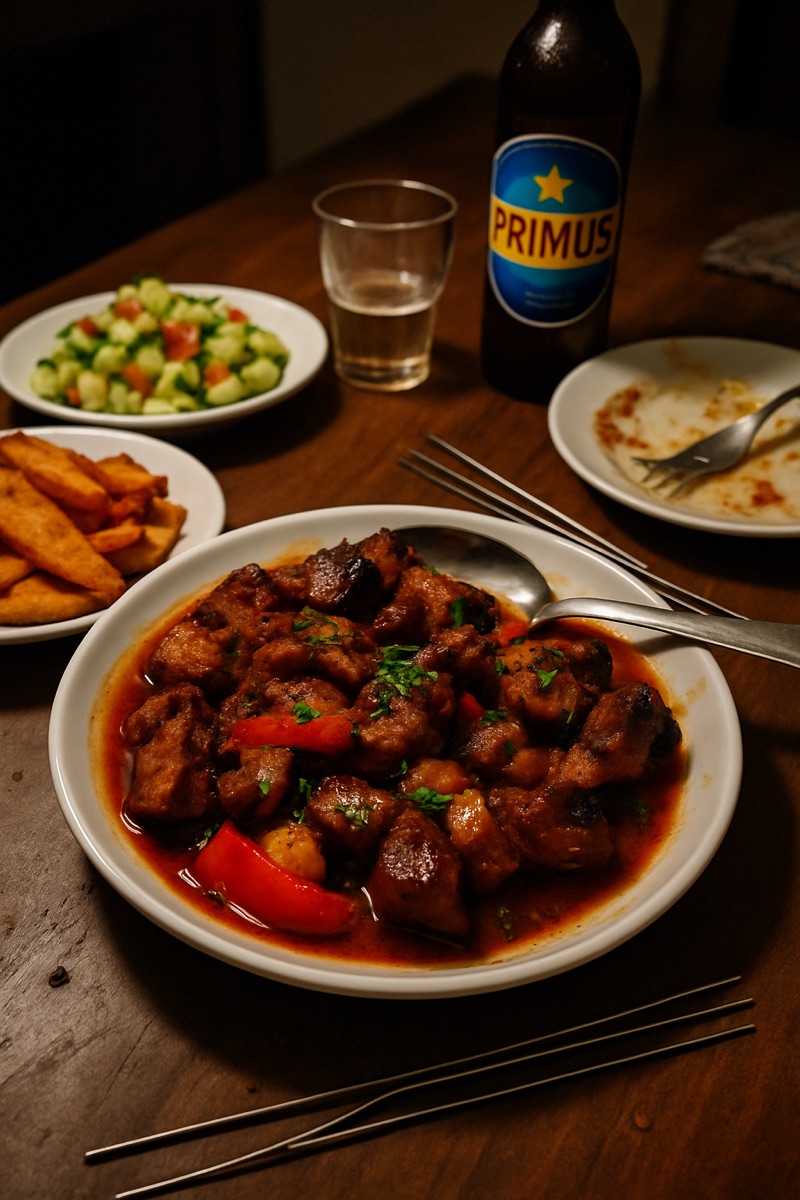 Akabenz
Questions people ask
What is the most popular food in Rwanda?
Beans, plantains, sweet potatoes and cassava are eaten most. Among dishes, isombe (cassava leaves), ubugali and ibihaza (pumpkin with beans) are the most often named, and brochettes are the favourite meal out.
What do Rwandans eat for breakfast?
Simple foods: roasted sweet potatoes, cassava or plantains, or igikoma porridge of maize, sorghum or cassava, with tea or coffee, often sweetened. In towns, mandazi and chapati are common.
Is Rwandan food spicy?
Most Rwandan dishes are mild, seasoned with onion, tomato and peanut. Chilli appears in some dishes, such as akabenz, which is tossed with fresh chillies.
What is the national drink of Rwanda?
Milk was historically regarded as the national drink, and ikivuguto, a thick fermented milk, is still widely drunk. Urwagwa, a banana beer, is the traditional alcoholic drink.
Do Rwandans eat a lot of meat?
Not usually. Many Rwandans eat meat only a few days a month. Brochettes and akabenz are popular when eating out, and lake communities eat fish such as tilapia and sambaza.
Keep reading
- What is the national dish of Rwanda?
- Traditional food of Burundi: 11 dishes to know
- Traditional food of Comoros: 13 dishes to know
- Traditional food of Djibouti: 13 dishes to know
- Traditional food of Eritrea: 13 dishes to know
- Traditional food of Ethiopia: 13 dishes to know