 COPPER
What is the national dish of Rwanda?
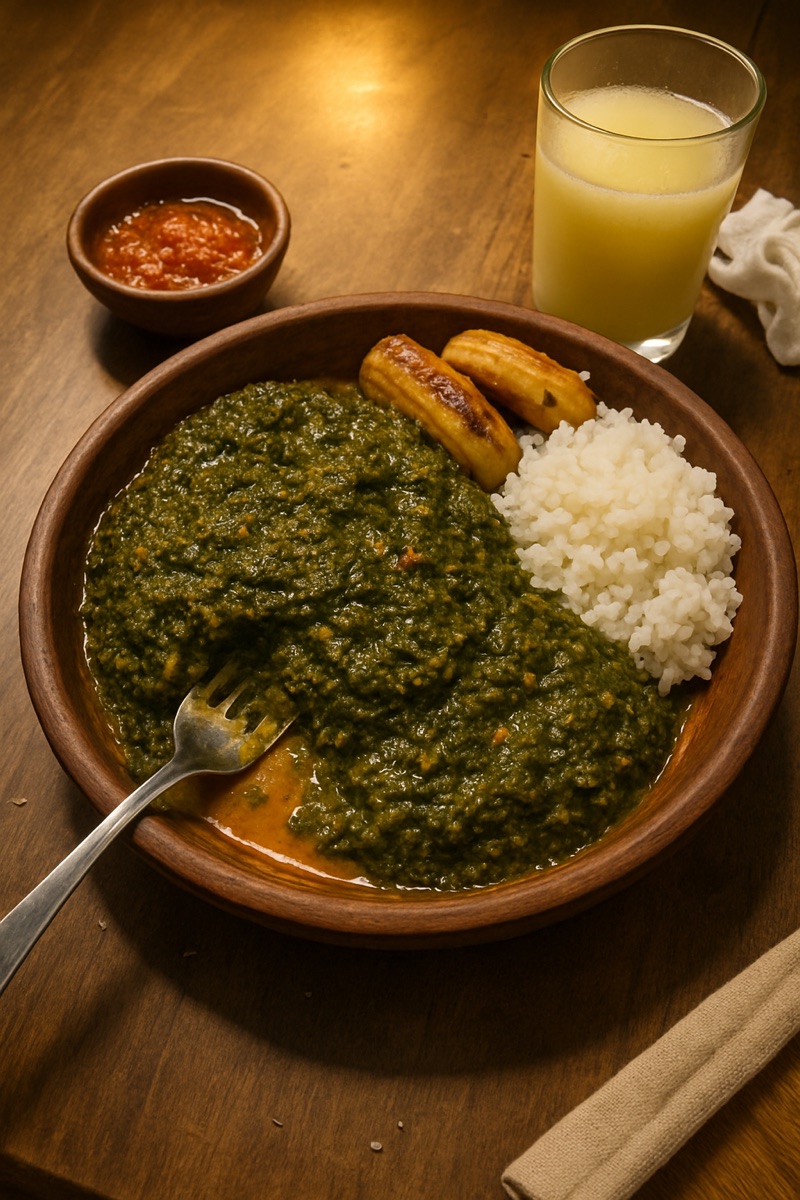
Rwanda has no official national dish. Three dishes are usually named together: isombe, cassava leaves pounded and boiled for over an hour with palm oil, then finished with peanut paste; ubugali (ugali), a stiff dough of cassava and maize flour eaten by hand; and ibihaza, pumpkin cooked with beans. None of the three has been officially designated.
Why Rwanda has several candidates
No law or government declaration names a Rwandan national dish. Wikipedia's list of national dishes gives three for Rwanda together: isombe, ibihaza and ugali. They have one thing in common: all three are plant-based, which fits a cuisine described as relying more on vegetables and sauces than its East African neighbours.
All three are lunch dishes, and lunch is generally the main meal of the day in Rwanda. A typical plate pairs a staple such as ugali, rice, beans, potatoes, cassava or plantains with vegetables, and meat, fish or eggs depending on what is available. Besides the three candidates, common lunch dishes include:
- Matoke: green plantains, boiled or steamed and sometimes mashed.
- Brochettes: grilled skewers, usually goat or beef.
- Tilapia: freshwater fish, fried or grilled whole.
- Pilau: spiced rice, sometimes cooked with meat.
What is isombe?
Isombe is a stew of cassava leaves. The leaves are stripped from their stems, washed and pounded in a mortar into a soft, fine mass; frozen pre-pounded leaves from African grocers can replace this step. They are boiled uncovered with water and palm oil for at least one hour, and this is not a matter of taste: raw cassava leaves contain cyanogenic compounds that only long, open cooking removes.
Eggplant, onion and garlic follow for 20 minutes, then tomatoes until most of the liquid has evaporated. Peanut butter thinned with a little hot water goes in last. The result is a thick stew, eaten with ugali, rice and beans, or bread. Our isombe recipe gives the quantities.
- Cassava leaves: the base, pounded fine.
- Palm oil: added from the start of the long boil.
- Peanut paste: stirred in at the end to thicken and enrich.
- Eggplant, onion, garlic and tomato: the vegetables that round it out.
Ubugali: Rwanda's version of ugali
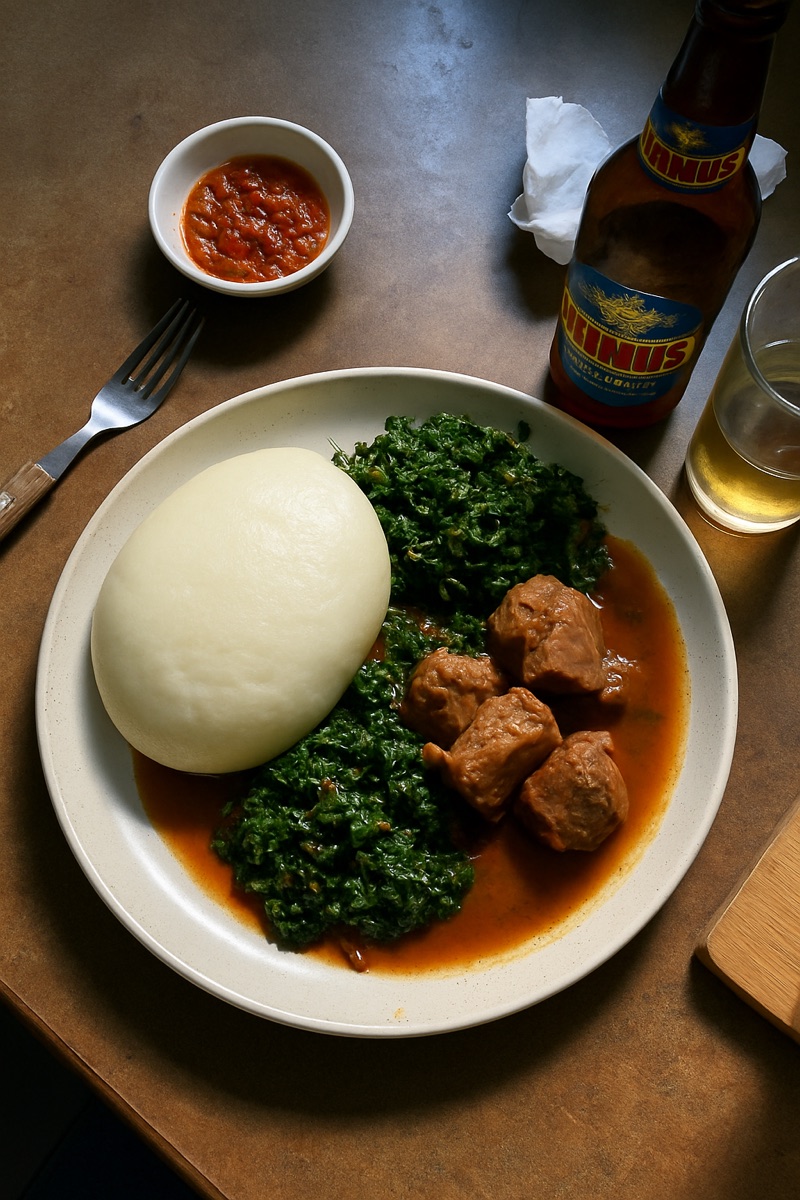
Ugali, called ubugali in Kinyarwanda, is the firm dough found across East Africa. The Rwandan version leans on cassava flour, with maize flour added. The flours are rained into boiling water and worked with a wooden stick, the umwuko, then pressed and folded against the side of the pot for about 10 minutes until smooth and elastic. A final 5 minutes covered on low heat removes any raw flour taste.
It is packed into a wet bowl, turned out as a mound and eaten by pinching off pieces to scoop up isombe or beans. Maize itself came to Rwanda from South America through colonial introductions. See our ubugali recipe.
Ibihaza and where these dishes come from
Ibihaza is pumpkin cooked with beans. Dishes like this reflect how Rwanda eats: most people in rural Rwanda rely on farming, and many farmers do not sell their crops because markets can be hard to reach. Rural households still lean on these traditional staples, while city diets include more meat, eggs, milk and fried food.
Isombe is believed to have originated in what is now the Democratic Republic of the Congo, and it is also eaten in Burundi, so Rwanda shares it with both neighbours. Historically, diets differed between groups: farming communities ate mostly plant foods, while pastoralists consumed comparatively large amounts of milk and dairy. Milk was long regarded as the national drink, and ikivuguto, a thick fermented milk, is still drunk in many households.
Other dishes to know from Rwanda
The evening, social side of Rwandan food looks different. Akabenz is fried pork, cut into chunks, fried dry in its own fat for 20 to 25 minutes until the edges crisp, then tossed with onions, peppers and chili and served with a raw tomato-onion kachumbari. Sambaza, tiny lake fish fried and eaten whole, belongs to the same moment.
Mornings are simpler: roasted sweet potatoes, cassava or plantains, or a porridge of maize, sorghum or cassava, with tea or coffee that is often sweetened. In towns, mandazi, a slightly sweet fried dough, and chapati are common. Traditional drinks include urwagwa, a banana beer, and ikigage, a beer made from dry sorghum.
Isombe crosses borders: for the neighbouring countries that share it, see the national dish of Burundi and the national dish of Congo DRC.
All three Rwandan dishes are on our page about the food of Rwanda, and the region is covered in our guide to East African food.
The recipes
 Ugali
Ugali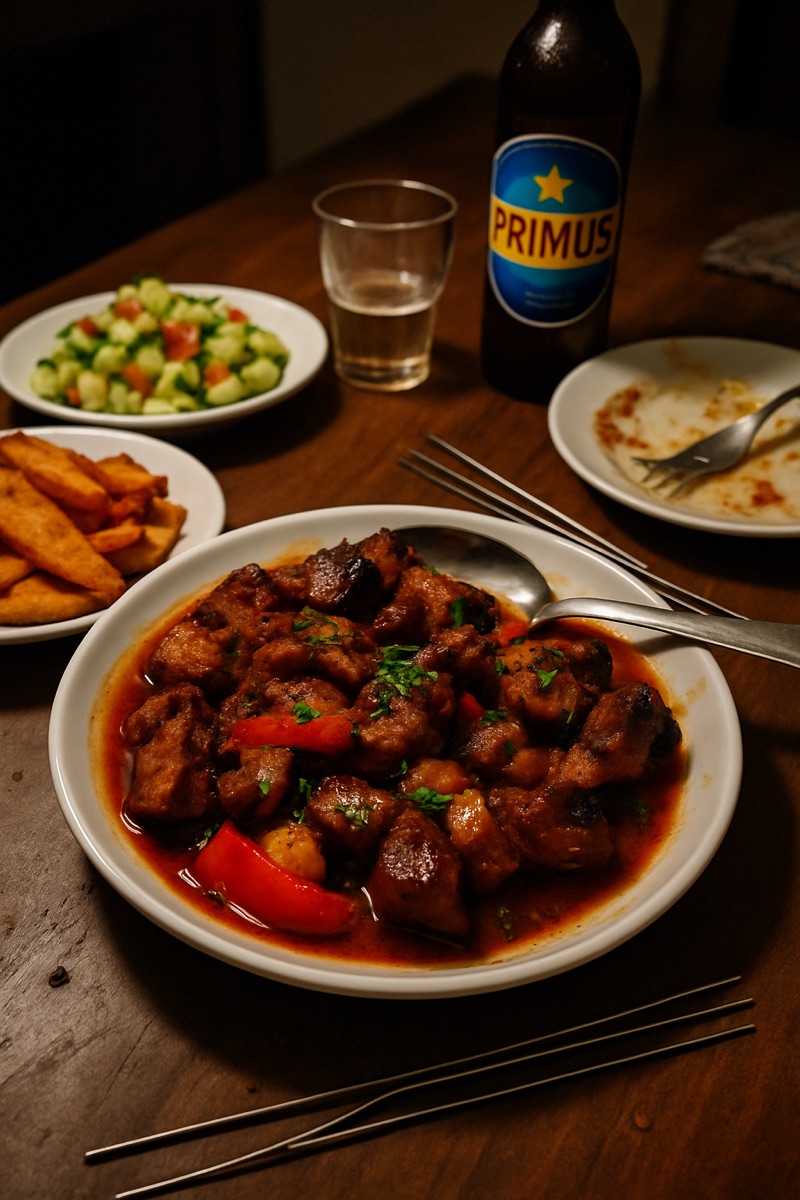 Akabenz
Questions people ask
Does Rwanda have an official national dish?
No. Rwanda has not officially named one. Isombe, ugali and ibihaza are the dishes usually listed together as its national dishes.
What is isombe made of?
Isombe is made of pounded cassava leaves boiled with palm oil, eggplant, onion, garlic and tomato, and finished with peanut butter.
Is isombe from Rwanda or Congo?
Isombe is a classic of Rwandan cooking, but it is believed to have originated in the Democratic Republic of the Congo and is also eaten in Burundi.
What is eaten with isombe?
Isombe is usually eaten with ugali, with rice and beans, or with bread.
What is ugali called in Rwanda?
In Rwanda ugali is called ubugali. It is usually made with cassava flour, often mixed with maize flour.
Keep reading
- Traditional food of Rwanda: 12 dishes to know
- What is the national dish of Burundi?
- What is the national dish of Comoros?
- What is the national dish of Djibouti?
- What is the national dish of Eritrea?
- What is the national dish of Ethiopia?