 COPPER
What is the national dish of Burundi?
Burundi has no official national dish. The best answer is beans with ubugari: beans (ibiharage, cooked with palm oil and onion) are the base of Burundian cooking and come with most meals, and ubugari, a stiff cassava or maize dough, is eaten with them. Some lists name boko boko, a wheat and meat porridge from Zanzibar, but Burundian sources do not.
Why there is no single answer
No law or decree names a national dish in Burundi, and the sources do not agree on one. Burundian food is built on a few staples eaten every day. Three answers come up:
- Beans. Both English and French Wikipedia describe beans as the staple of Burundian cooking, served with most dishes. The tourism site Burundi Travel names ibiharage, beans mixed with palm oil and onions, among the dishes not to miss.
- Ubugari. The same site calls this stiff dough the heart of Burundian cuisine and a pillar of the country's food identity.
- Boko boko. The English Wikipedia list of national dishes gives this one, citing a single food website. Boko boko is the Zanzibari name for harees, a porridge of wheat and meat also eaten across Tanzania and Kenya.
What is ubugari?
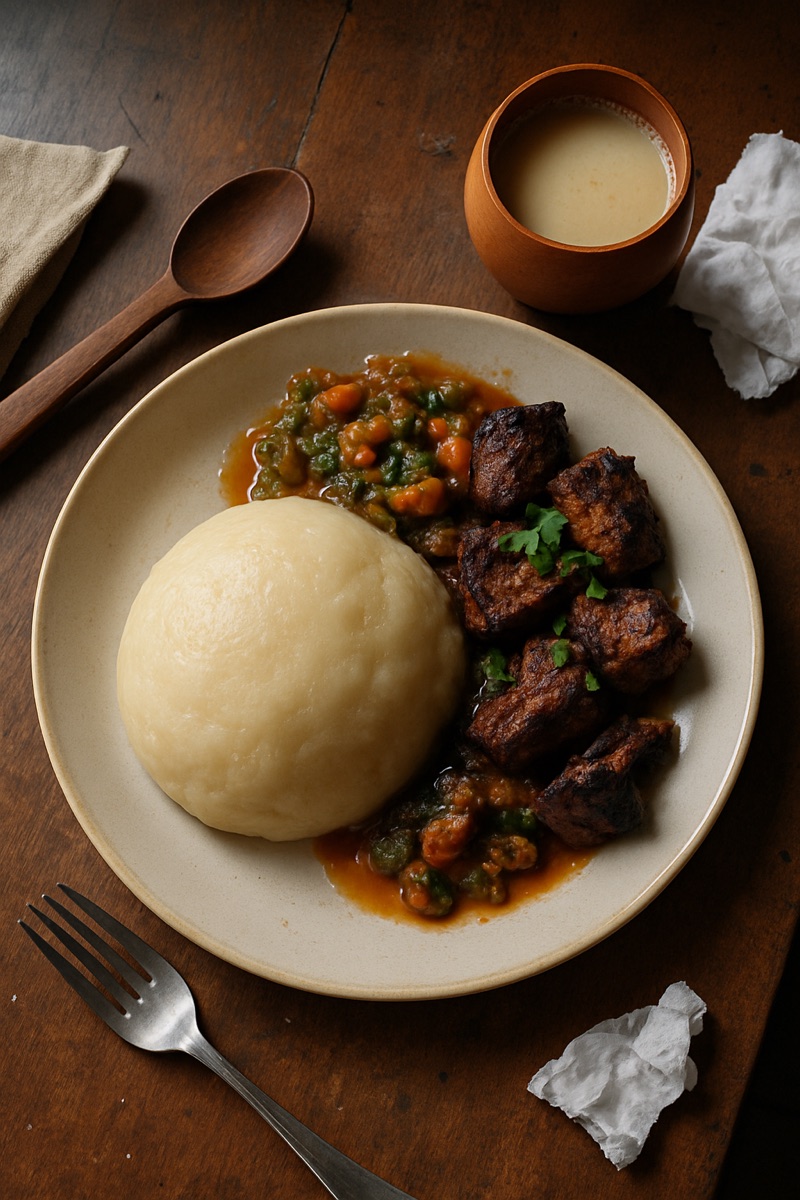
Ubugari (ubugali) is a dense, smooth dough made from cassava flour, maize flour or both. Cassava gives it stretch and maize gives it body. Maize ubugari comes out white, a neutral base for strongly flavoured sauces. The secret of a good one, Burundi Travel says, is how well it absorbs the sauce. It is close to the ugali of East Africa and the boule of Chad.
Burundi Travel describes it as a symbol of conviviality and abundance, the dish that makes a meal complete. It is not eaten on its own. Diners pinch off a piece, press a dent in it with the thumb and use it to scoop beans, cassava-leaf stew or meat sauce.
How ubugari is made
Our ubugari recipe uses 250 g of maize flour and 150 g of cassava flour for 1 litre of water. That mix is the everyday Burundian version, but either flour alone also works. What matters is the beating:
- Rain the flour into rolling boiling water in handfuls, beating hard with a flat wooden stirrer.
- Keep adding flour until the mass is almost too stiff to stir. Many households add no salt, because the sauce carries it.
- Cover and steam 5 minutes, then beat again, pressing the paste against the pot.
- Repeat the steam-and-beat twice more, about 20 minutes in all, until the dough pulls cleanly away.
- Turn it out onto a wet plate and serve at once: ubugari hardens as it cools and is not reheated.
Beans, the base of the Burundian table
Agriculture covers about 80% of Burundi's land, and beans grow alongside coffee, tea, maize and cassava. Most Burundian dishes are soups, and beans run through them: as bean soup, fried as ibiharage with palm oil and onion, or cooked with bananas.
Meat plays a small part. French Wikipedia notes that livestock farming is a secondary activity and that the cow is considered a sacred animal, so it is not eaten; goat and sheep dishes do exist. Protein mostly comes from beans and from the fish of Lake Tanganyika.
Burundi Travel sums up the method: local, fresh ingredients cooked slowly in a covered pot or grilled. Green bananas are boiled or fried to go with stews and meat, and cassava is eaten both as leaves and as roots. Chili arrived through trade and is now a standard seasoning, as is red palm oil, which gives bean and leaf sauces their colour.
Other dishes to know from Burundi
Two more dishes complete an everyday Burundian meal:
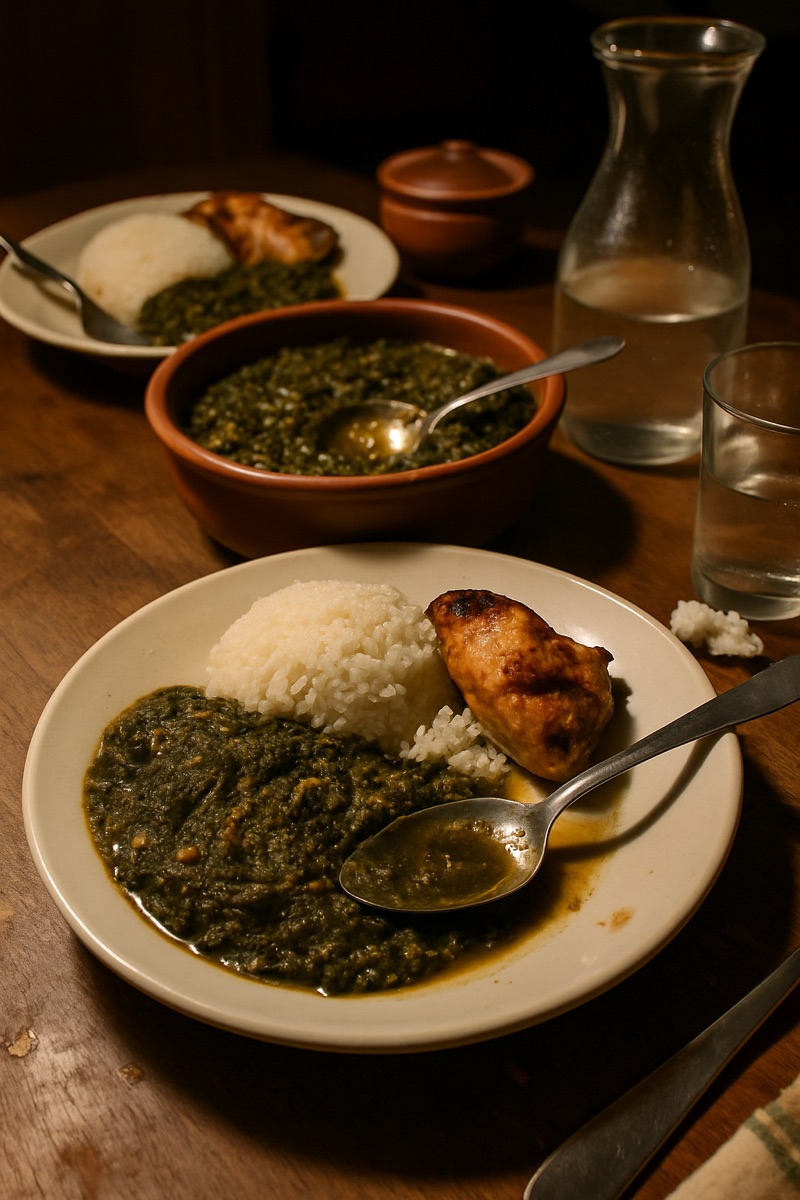
- Isombe: cassava leaves pounded to a pulp and boiled uncovered for at least 45 minutes, so their hydrocyanic acid evaporates, then stewed with eggplant, palm oil, peanut butter and smoked fish for another 30 to 45 minutes, until thick and dark green. It is eaten with rice, ubugari or plantains, and shared with Rwanda, eastern Congo and western Uganda. See our isombe recipe.
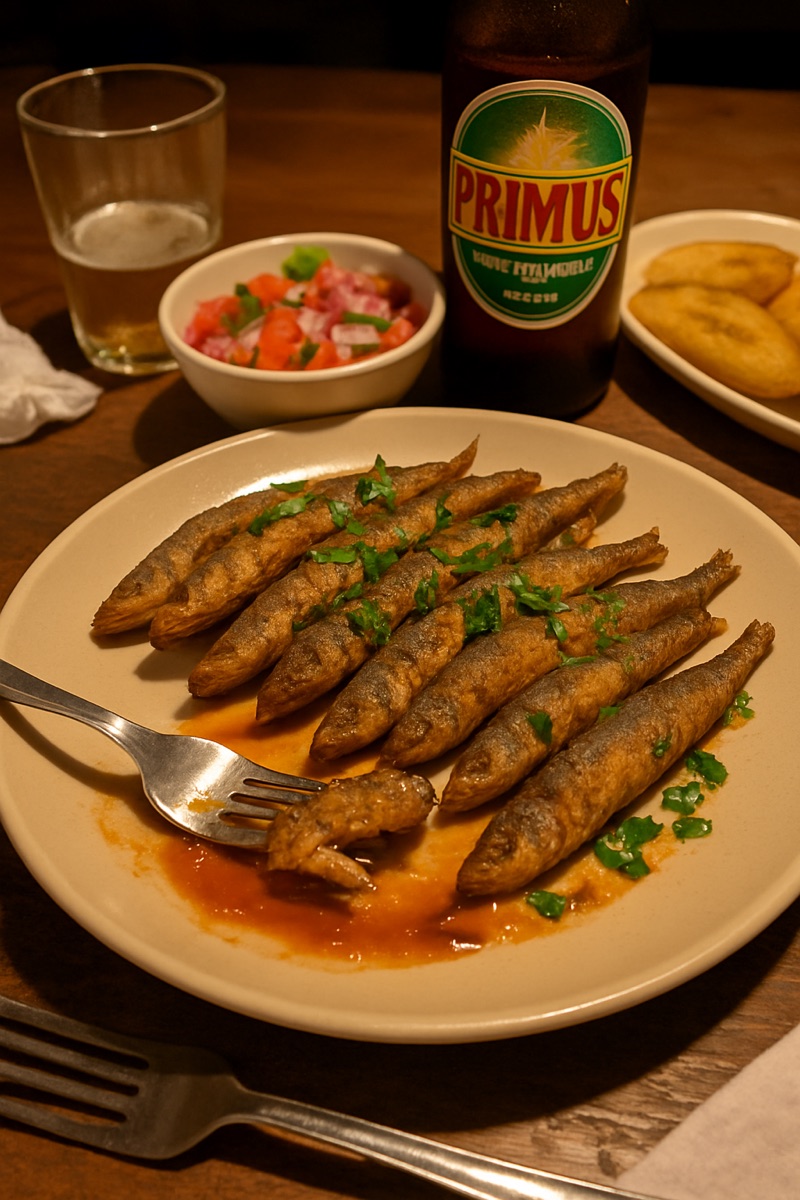
- Ndagala: tiny fish from Lake Tanganyika, 6 to 8 cm long, floured and deep-fried whole, bones and all, in small handfuls so they crackle. They are not gutted or beheaded: at that size the bones are fine enough to eat. They come to the table with lemon wedges and fried plantain or ubugari. Rwandans call a related Lake Tanganyika fish isambaza. See our sambaza recipe.
- Mukeke: a Lake Tanganyika fish prized for its delicate flesh, usually grilled or cooked in sauce.
Find more Burundian recipes
You will find all three Copper recipes, with ingredients and step-by-step methods, on our page about the food of Burundi. For the neighbouring kitchens of Rwanda, Tanzania and Uganda, see our guide to East African food.
The recipes
- Ubugari🇧🇮 Burundi · 30 minutes
 Isombe🇧🇮 Burundi · 2 hours and 20 minutes
 Sambaza🇧🇮 Burundi · 35 minutes
Questions people ask
Does Burundi have an official national dish?
No. No dish has official status. Beans with ubugari are the most defensible answer, since beans are the staple of Burundian cooking.
Is boko boko the national dish of Burundi?
It appears on Wikipedia's list of national dishes with a single web source. Boko boko is the Zanzibari name for harees, a wheat and meat porridge eaten in Tanzania and Kenya, and Burundian sources do not present it as national.
What is ubugari made of?
Cassava flour, maize flour or a mix of both, beaten into boiling water until it forms a stiff dough.
Do Burundians eat beef?
Rarely. French Wikipedia notes that the cow is considered sacred in Burundi and is not eaten; goat and fish are more common.
Is ubugari the same as ugali?
Yes, it is the same kind of stiff dough of maize or cassava flour. English Wikipedia lists it as ugali among Burundi's typical dishes; ubugari is the name used in Burundi.
Keep reading
- Traditional food of Burundi: 11 dishes to know
- What is the national dish of Comoros?
- What is the national dish of Djibouti?
- What is the national dish of Eritrea?
- What is the national dish of Ethiopia?
- What is the national dish of Kenya?