 COPPER
What is the national dish of Chad?
Chad has no official national dish, but boule is the one most often named. Called esh or asida in Chadian Arabic, it is a stiff dough of millet or sorghum flour beaten into boiling water, turned out as a dome and eaten by hand with a shared sauce such as daraba. French Wikipedia calls it the most popular dish in Chad, eaten every day.
What is boule?
Boule, French for "ball", is a cereal dough close to a very firm polenta. Millet and sorghum are the classic grains; maize and cassava are also used. It has no flavour of its own to speak of: its job is to carry the sauce.
Boule has a name in each of Chad's main languages. French Wikipedia lists, among others:
- Esh or asida in Chadian Arabic.
- Gou in Zaghawa and tibi in Tedaga.
- Biri in Kanembu.
- Mour in Sara and mourou in Ngambay.
- Binan in Laka.
Why boule is Chad's answer
No law or decree in Chad names a national dish. Boule earns the title by sheer presence: French Wikipedia calls it the most popular dish in the country, eaten every day, and the English Wikipedia list of national dishes gives boule for Chad.
A June 2026 article from the education charity Right for Education describes it the same way, as the national dish that unites Chad's many communities, ethnic groups and climate zones. Its point is practical: millet and sorghum are widely grown in Chad and cope well with drought, so boule stays a reliable source of energy when harvests are uncertain. Shared from a single plate, it is also a daily lesson in eating together.
Chadian cooking has its roots in the ancient civilisations of the Lake Chad basin, and its grains are still millet, sorghum, rice and fonio. Millet also makes merisä, a local beer, and in the Sahel meals come with green or red tea.
How boule is made
Boule needs only flour, water and a pinch of salt, but it takes arm work. In our boule recipe, 500 g of millet or sorghum flour goes into 1 litre of boiling water a handful at a time, with hard beating after each addition so no lumps form.
When the dough is thick and elastic and pulls away from the sides, the pot is covered for 5 minutes, then beaten once more. The hot dough is pressed into a bowl rinsed with water and turned out onto a plate as a smooth dome. Salt is optional, a pinch at most. Boule goes to the table at once, still hot, and takes its place in the middle with the sauce beside it.
How boule is eaten
The main meal in Chad is usually eaten in the evening, from a large communal plate set on a mat on the ground, with men and women often eating in separate areas. The dome of boule sits in the middle, on a tray called a gouffa, with the sauce beside it. Everyone tears off a piece with the right hand and dips it.
The sauce changes with the region and the day. Common ones include:
- Daraba: okra, sweet potato, tomato and greens, thickened with peanut paste.
- Tagalié: a sauce of dried meat, also eaten in Sudan.
- Charmout: another dried-meat sauce.
- Mouloukhiye: a slippery green-leaf sauce.
- Black sesame sauce with chicken, mutton or beef, cooked until the oil rises to the top.
North and south: one dough, two kitchens
Northern Chad is home to nomadic Arab and Toubou herders, who rely on dairy and meat. The south has more fish, fresh produce and spices, and drinks millet beer, bili-bili, which is also brewed in northern Cameroon. Boule is the common ground between the two.
Boule also shares the table with kissar, a thin sourdough crêpe of millet or rice, eaten with sauces such as tagalié. French Wikipedia notes it is more common in towns than in the countryside.
Other dishes to know from Chad
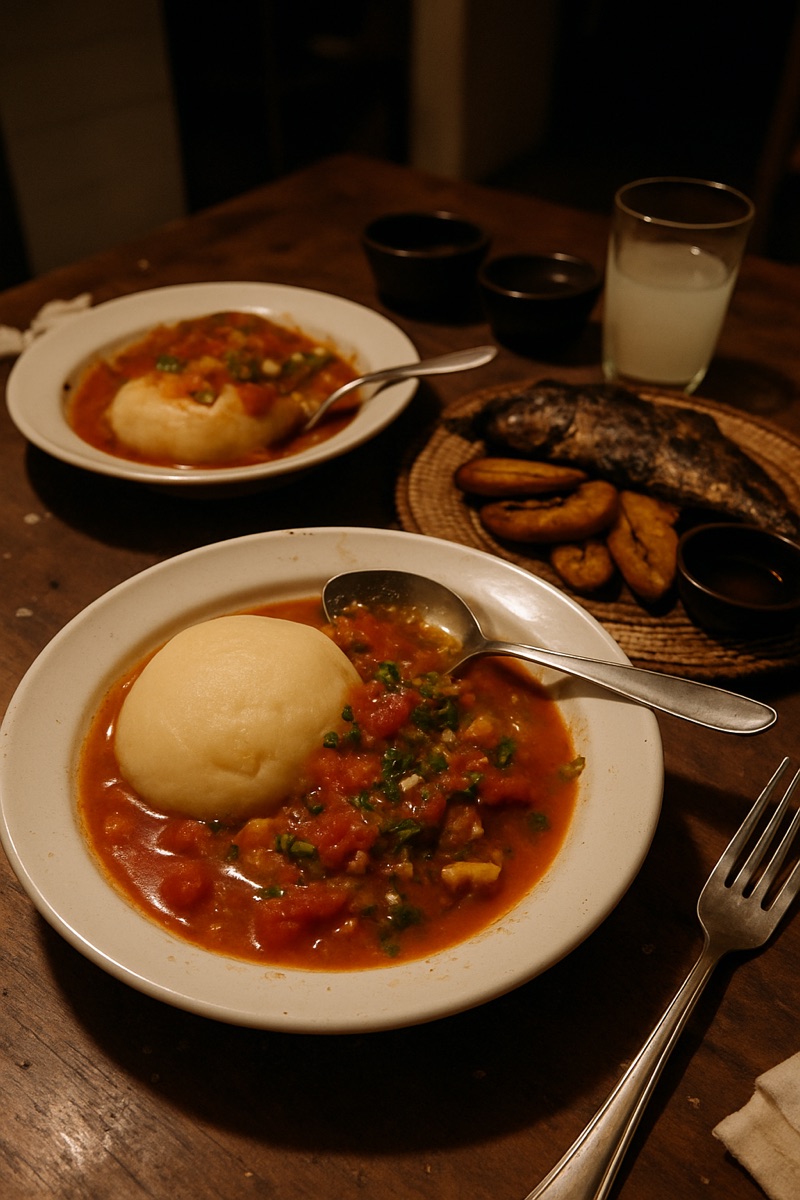
Daraba is the classic partner for boule: 500 g of okra cooked with sweet potato and greens until the sauce turns slightly slimy, then thickened with 150 g of peanut butter thinned in hot broth.
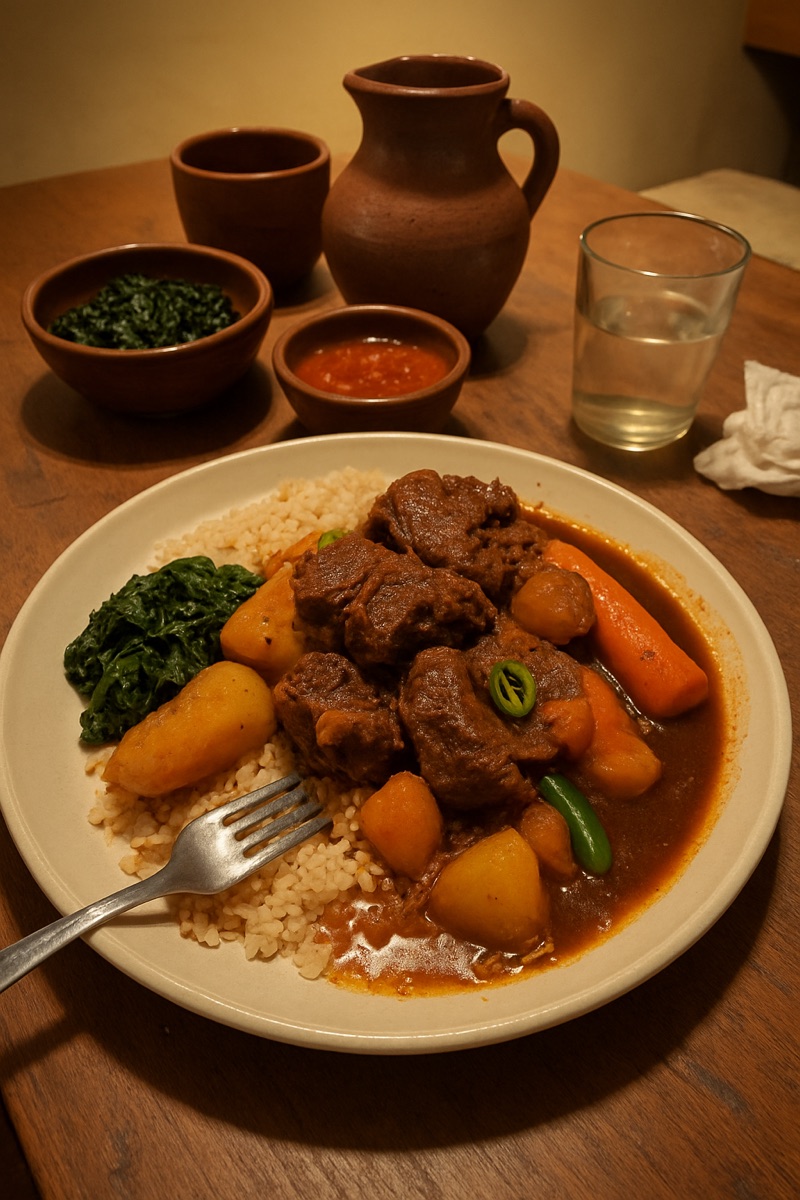
Doulouf, also called kourakoura, is beef shank stewed on the bone in a tomato and onion sauce for at least two hours, until the meat comes away from the bone. It is served with boule or rice.
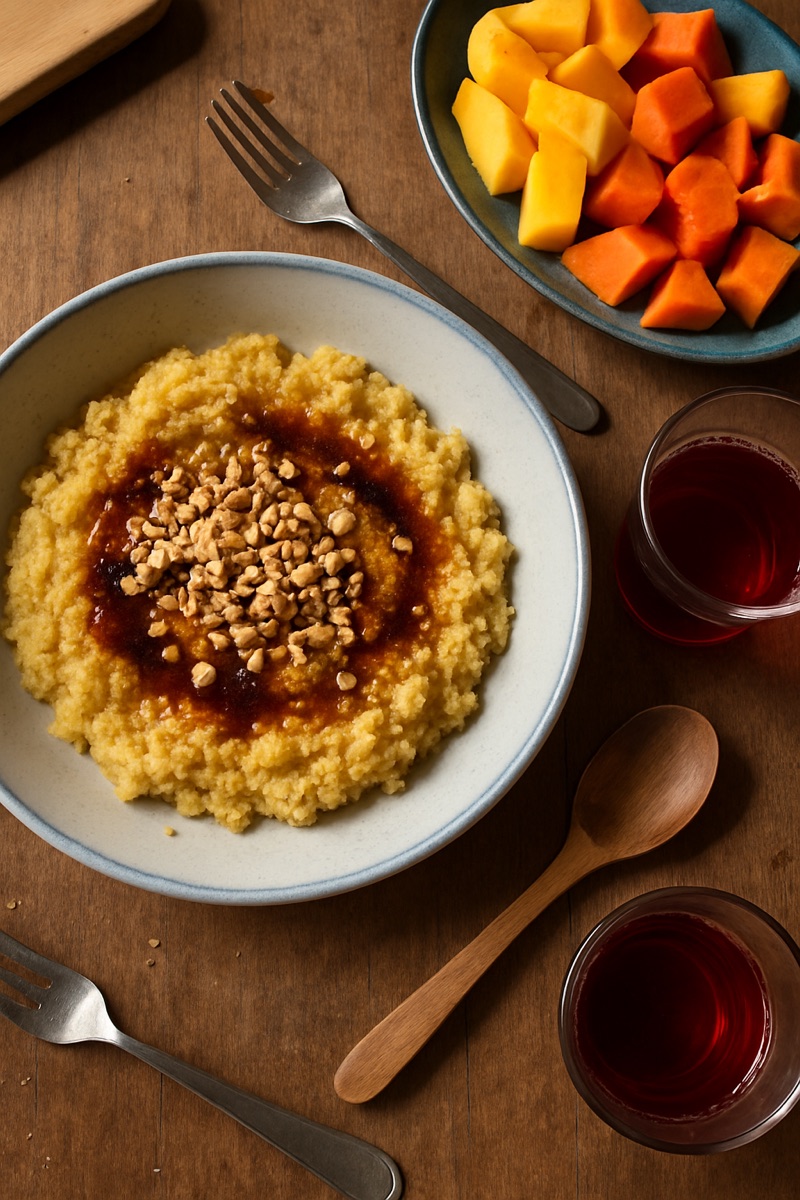
The same grains also make the morning meal. La bouillie, called madidé in Chadian Arabic, is a porridge with several versions: hulled millet with white peanut paste, curdled milk and wheat flour; whole millet flour; or white millet with milk and sugar.
You will find all three dishes, with ingredients and step-by-step methods, on our page about the food of Chad. For the wider region, see our guide to Central African food.
The recipes
 Daraba
 Doulouf
Questions people ask
Does Chad have an official national dish?
No. No law names one, but boule, a stiff millet or sorghum dough, is the dish most often cited and is eaten daily across the country.
Is Chadian boule the same as ugali or asida?
It belongs to the same family of stiff cereal doughs. In Chadian Arabic it is even called asida or esh; East African ugali is usually made from maize.
What is boule served with?
Always with a sauce: daraba (okra and peanut), tagalié or charmout (dried meat), green-leaf sauces or a meat stew such as doulouf.
What grain is boule made from?
Mostly millet or sorghum. Maize and cassava versions also exist.
What do people drink in Chad?
Tea is the most common drink. Karkanji, a red hibiscus tea with ginger and cloves, is very common, and millet beer is drunk by non-Muslims in the south.
Keep reading
- Traditional food of Chad: 12 dishes to know
- What is the national dish of Cameroon?
- What is the national dish of the Central African Republic?
- What is the national dish of the DR Congo?
- What is the national dish of the Republic of the Congo?
- What is the national dish of Equatorial Guinea?