 COPPER
What is the national dish of the Central African Republic?
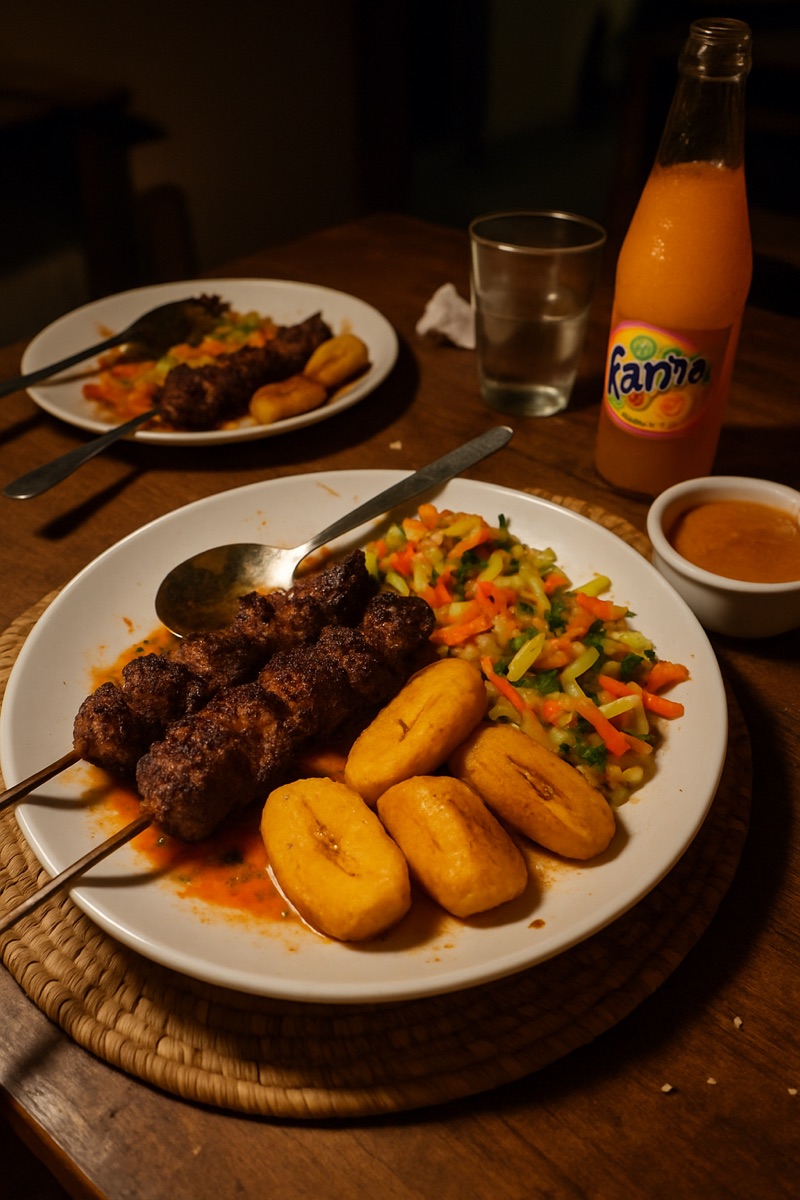
The Central African Republic has no official national dish. Lists of national dishes simply name cassava, and on the plate that means gozo, a smooth ball of fermented cassava flour worked in boiling water, eaten with ngoundja, a thick sauce of pounded cassava leaves, peanut paste and palm oil. French Wikipedia says about 95% of Central Africans eat ngoundja.
Why the answer is cassava
Unlike its neighbours, the Central African Republic has no single stew that is cited as national. Wikipedia's list of national dishes gives one word for the country: cassava. That is less vague than it sounds. Cassava is the staple of almost every household, eaten as gozo or as chikwangue, and its leaves make the sauce served with it.
French Wikipedia describes cassava eaten in two main ways: as a kneaded ball, gozo, with a sauce, or as a porridge cooked with peanuts, called sawalé in Sango. In Bangui the daily diet adds rice, squash, pumpkin and plantain served with a sauce, plus grilled meat. Okra, called gombo, and peanuts turn up in many dishes.
So the honest answer is a pair rather than one dish: gozo and ngoundja, the cassava ball and the cassava-leaf sauce.
What is gozo and how is it made?
Gozo is the Central African name for a cassava paste close to fufu. The cassava is soaked for 3 to 4 days, sun-dried and milled. That fermentation cannot be done in a home kitchen, so our gozo recipe starts from ready-made cassava flour.
500 ml of water is brought to the boil with a pinch of salt. Three tablespoons of flour are slaked in cold water and whisked in for 2 minutes, then the remaining 400 g of flour is rained in while stirring constantly with a wooden spoon.
The dough is then worked for 8 to 10 minutes, pressed against the side of the pot, until it is smooth, elastic and pulls away cleanly. It is rolled into fist-sized balls with wet hands and eaten by tearing off pieces with the fingers.
Ngoundja: the cassava-leaf sauce
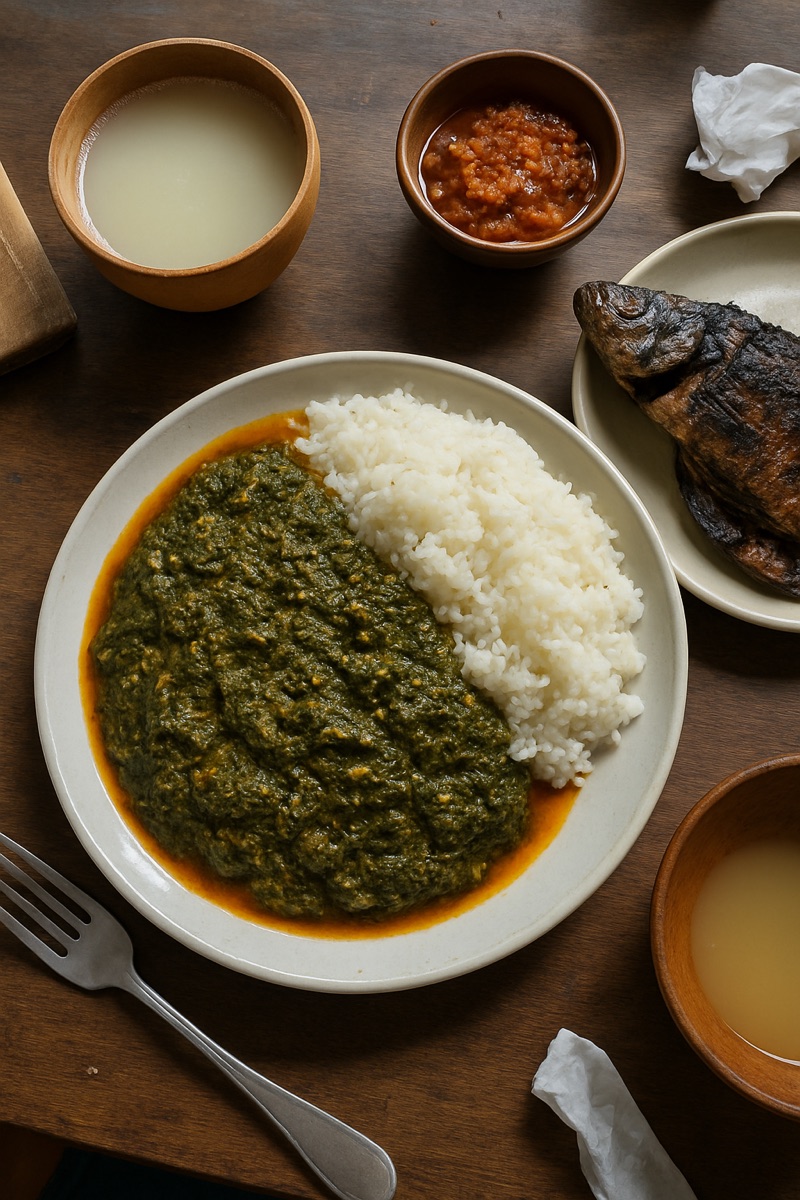
Ngoundja is the local name for the cassava leaf, and the dish is a thick sauce of those leaves with peanut paste and palm oil, eaten with gozo. Elsewhere in Central Africa the same preparation is called saka saka or pondu.
Our saka saka recipe pounds 500 g of leaves in a mortar to a fine paste. Chopped leaves stay fibrous and bitter. The paste boils uncovered for 45 minutes, then cooks with onion, garlic and chilli for 20 minutes. 250 g of flaked smoked fish and 100 ml of palm oil follow for 30 minutes, and 3 tablespoons of ground peanuts for a final 15, until the palm oil separates on the surface.
Among the Yakoma people the leaves are only lightly pounded and cooked with half-crushed peanuts, a version known as kpoto ngoundja.
Other dishes to know from the Central African Republic
The cassava pair is the base, but a few other dishes are worth knowing. Meat can be scarce, so protein also comes from fish, peanuts and insects such as grasshoppers, crickets and termites.
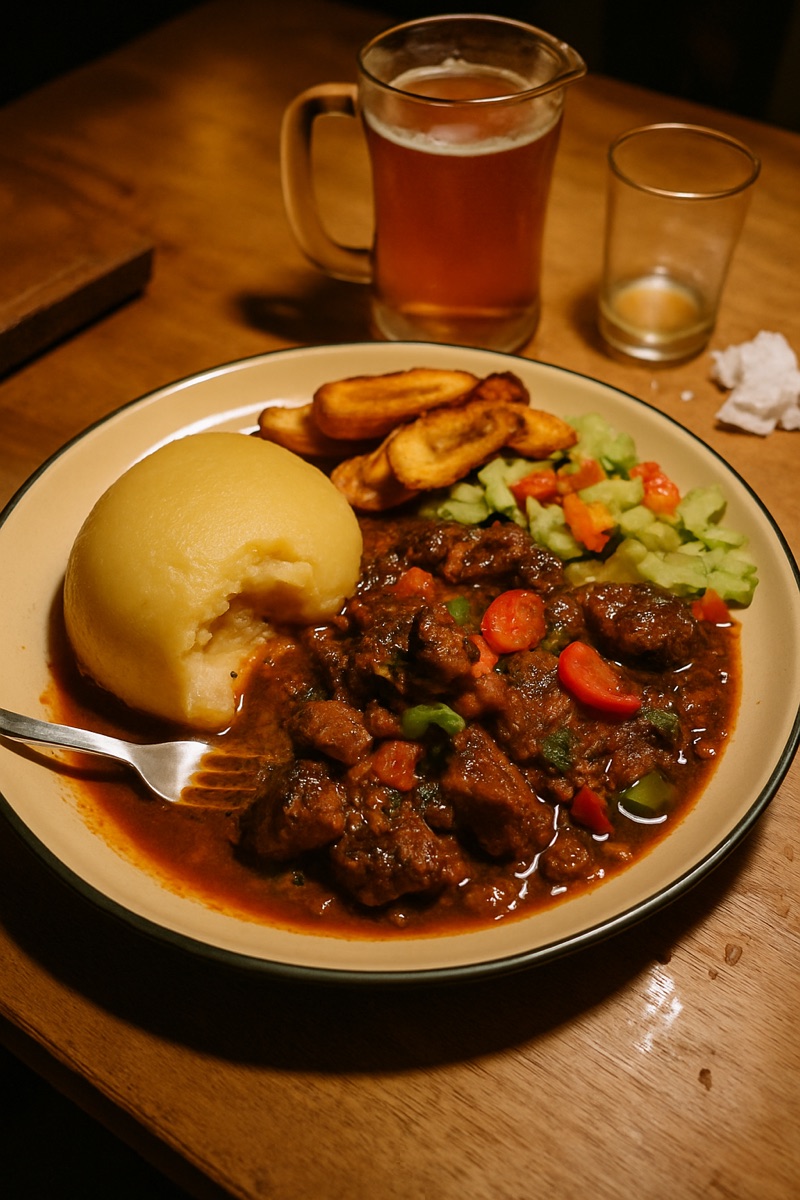
- Kanda ti nyma: beef meatballs bound with ground pumpkin seeds instead of breadcrumbs, simmered in a tomato and groundnut sauce thickened with okra.
- Koko: the leaves of Gnetum africanum, a wild forest vine from the Lobaye region, cut very fine and cooked with peanut sauce, smoked fish or meat.
- Yabanda: koko leaves cooked quickly with peanut sauce and often smoked fish, an everyday dish so fast to make that French Wikipedia compares it to fast food.
- Makongo: caterpillars gathered from July to September in the Lobaye forest, cooked with koko or cassava leaves, or dried to keep.
- Maboké: fish, usually Nile perch (capitaine), cooked in leaves, a Bangui favourite.
Neighbours and related dishes
Kanda deserves a word on method. In our recipe 200 g of hulled pumpkin seeds are ground to a powder and kneaded with 500 g of ground beef, chilled for 30 minutes and shaped into 4 cm balls. They simmer 25 minutes in the sauce without stirring so they hold together, then 150 g of sliced okra goes in for the last 10 minutes. The recipe site 196 flavors distinguishes kanda ti nyma, made with okra and peanuts, from traditional kanda based on pumpkin seeds; our version combines both. It is served with gozo or plain rice.
The cassava ball with a leaf sauce is shared with the whole region. To the north, Chad's national dish is also a starch ball, la boule; see our article on the national dish of Chad. To the south, the same pounded cassava leaves become pondu in the Republic of the Congo.
You will find all three recipes, with ingredients and step-by-step methods, on our page about the food of the Central African Republic, and the neighbouring kitchens in our guide to Central African food.
The recipes
- Gozo🇨🇫 Central African Republic · 25 minutes
 Saka saka🇨🇫 Central African Republic · 2 hours and 10 minutes
 Kanda ti nyma🇨🇫 Central African Republic · 1 hour and 45 minutes
Questions people ask
Does the Central African Republic have an official national dish?
No. Wikipedia's list of national dishes names only cassava; in practice that means gozo eaten with ngoundja, a cassava-leaf sauce.
What is gozo made of?
Gozo is made from cassava that has been soaked for several days, sun-dried and milled into flour, then worked into boiling water until smooth and elastic.
What is ngoundja?
Ngoundja is the local name for the cassava leaf and for of the thick sauce made from pounded cassava leaves, peanut paste and palm oil. It is the same family as saka saka and pondu.
What is kanda ti nyma?
It is a Central African dish of beef meatballs bound with ground pumpkin seeds, cooked in a tomato and peanut sauce with okra and served with gozo or rice.
What do people eat with gozo?
Gozo is eaten with sauces: cassava leaves (ngoundja), koko leaves, groundnut sauce, meat or fish stews.
Keep reading
- Traditional food of the Central African Republic: 12 dishes to know
- What is the national dish of Cameroon?
- What is the national dish of Chad?
- What is the national dish of the DR Congo?
- What is the national dish of the Republic of the Congo?
- What is the national dish of Equatorial Guinea?