 COPPER
What is the national dish of Equatorial Guinea?
Equatorial Guinea has no official national dish, but pepesup is the one most often named. Its name comes from the English "pepper soup": a hot, thin broth of fish, green plantain, tomato and onion, heated with whole African chilies and finished with parsley and lime. Spanish Wikipedia calls it the country's most popular dish, eaten by every ethnic group.
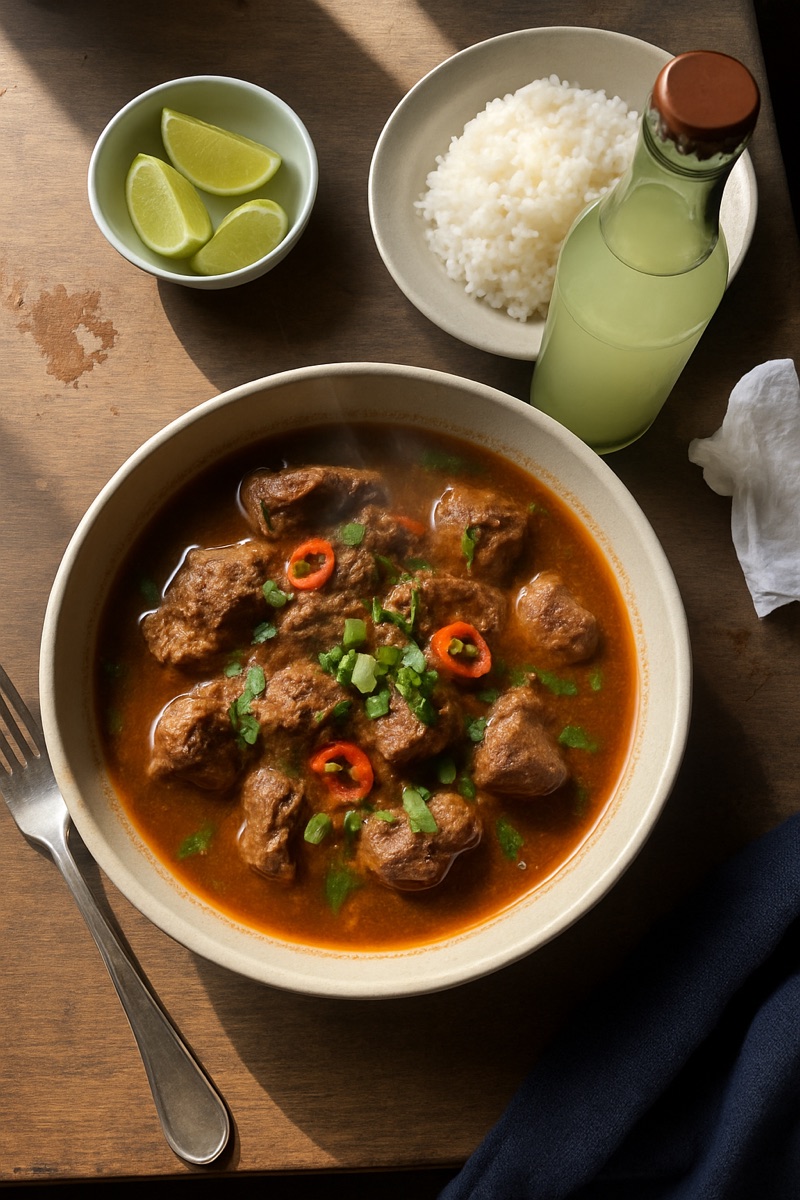
What is pepesup?
Pepesup is the Equatoguinean version of the pepper soup cooked across West Africa. The word is simply "pepper soup" said the local way, in a country where Spanish is the main official language. Elsewhere the soup is often made with goat, chicken or tripe. In Equatorial Guinea, where fishing is a way of life for much of the population, it is usually made with fish.
The broth stays light and watery, never creamy. What defines it is heat: African chilies such as piri-piri, plus garlic, onion, tomato or green pepper, parsley and lime. Pieces of green plantain cook in the pot and give it some body. A less common version uses bushmeat instead of fish.
How pepesup is made
The method is quick once the fish is ready, and the fish itself cooks for only 10 minutes. The plantain is not a side dish here: it belongs in the pot. In our pepesup recipe it goes like this:
- Rub 800 g of white fish steaks with lime juice and salt.
- Boil 1.5 litres of water with onion, garlic and chopped tomatoes.
- Add 2 green plantains in thick rounds and cook them 10 minutes: they thicken the broth.
- Drop in 2 whole hot chilies and leave them intact.
- Slide in the fish and simmer only 10 minutes, without stirring hard.
- Off the heat, add chopped parsley and the rest of the lime, then crush the chilies to the heat you want.
Where and when people eat it
Pepesup is a bar and cantina dish as much as a home dish. Spanish Wikipedia notes that it is mostly eaten on weekend mornings, that it is recommended for hangovers, and that the cantinas serving it are easy to spot thanks to a sign reading "Hay pepesup" ("pepesup available").
Pepper soup has the same reputation as a restorative across the region. In Nigeria and neighbouring countries, some people believe chicken pepper soup has medicinal qualities: it is served to the sick, and new mothers eat it too.
Why some lists say succotash
If you search for Equatorial Guinea's national dish, you may see succotash. That answer comes from the English Wikipedia list of national dishes, where it appears with no source. Succotash is a North American dish of sweet corn and lima beans, named from a Narragansett word, and it does not appear in either Wikipedia article on Equatoguinean cuisine.
Both of those articles, in English and in Spanish, name pepesup as the country's signature dish. That is why we treat it as the answer, while making clear that no law or decree gives any dish official status.
The flavours of Equatoguinean cooking
Pepesup sits inside a wider cuisine built by the Fang, Bubi, Ndowé and Annobonese peoples, with Spanish, Cameroonian and Nigerian influences. Recipes change from one community to the next, but the ingredients are largely the same everywhere. Soups and stews dominate, and cassava and yam are the base of the diet.
A few ingredients give the country's sauces their character:
- Chilies, simply called picante, used whole, chopped or ground.
- Modica, locally called "chocolate": not cocoa at all, but roasted African mango seeds pressed into a hard block and grated into stews.
- Crafís, small river crayfish dried and ground into a powder that gives stews a seafood taste.
- Palm kernels, the base of bambucha, a thick cassava-leaf stew of Fang origin.
- Maggi stock cubes, a common seasoning in many dishes.
Other dishes to know from Equatorial Guinea
Meals are usually served with rice or with boiled or fried cassava, malanga or plantain. Peanut sauce is the most typical sauce in the country, and chicken in peanut sauce, called sup-oguon by the Fang, is eaten everywhere. Ground roasted peanuts simmer with chicken, tomato and red palm oil until an orange oil rises to the top: see our chicken in peanut sauce recipe.
Fufu, boiled cassava and plantain mashed and kneaded until stretchy, goes with most soups. In our fufu recipe the roots boil for about 20 minutes, then the mash is kneaded for 5.
Ndolé, called bitalif in Malabo, is a stew of bitter leaves and egusi seeds shared with Cameroon. The colonial past also left Spanish dishes: tortilla de patatas is a common café breakfast, and paella turns up in Malabo and Bata.
You will find all three dishes, with ingredients and step-by-step methods, on our page about the food of Equatorial Guinea. For the neighbouring kitchens of Cameroon, Gabon and São Tomé, see our guide to Central African food.
The recipes
- Pepper soup🇬🇶 Equatorial Guinea · 35 minutes
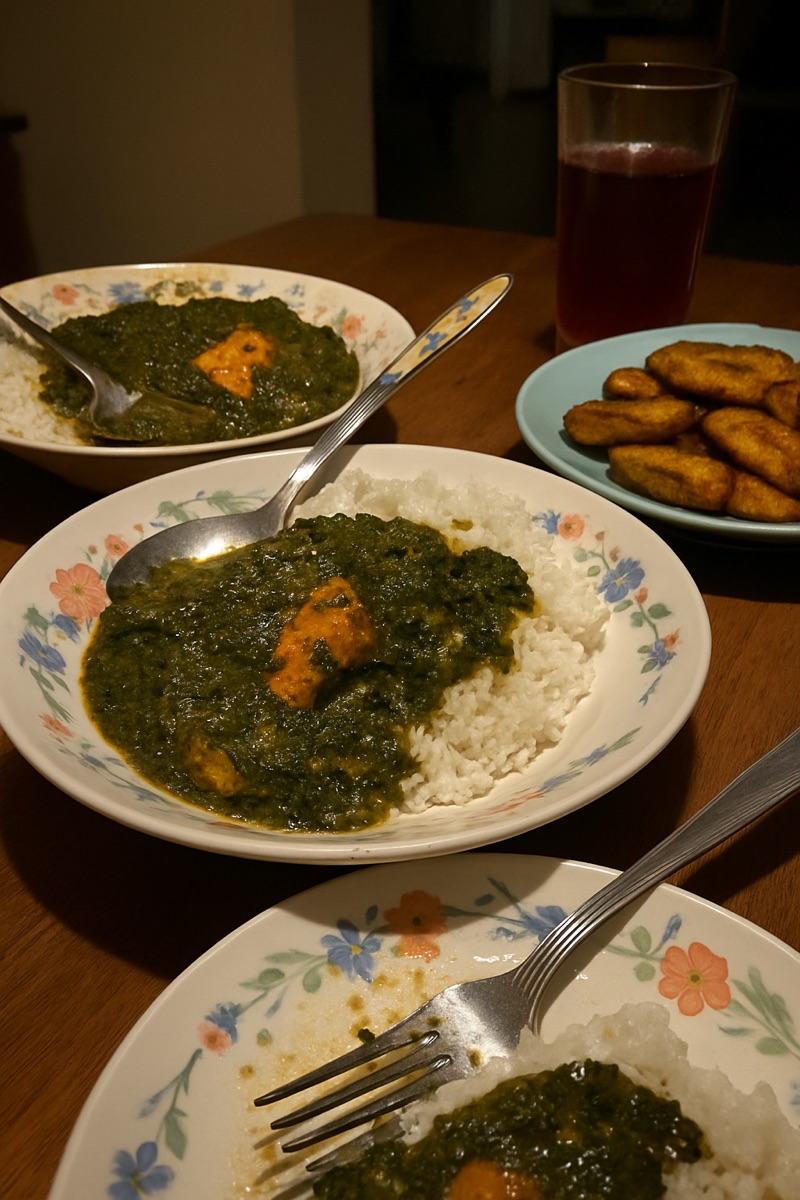 Okono🇬🇶 Equatorial Guinea · 1 hour and 20 minutes
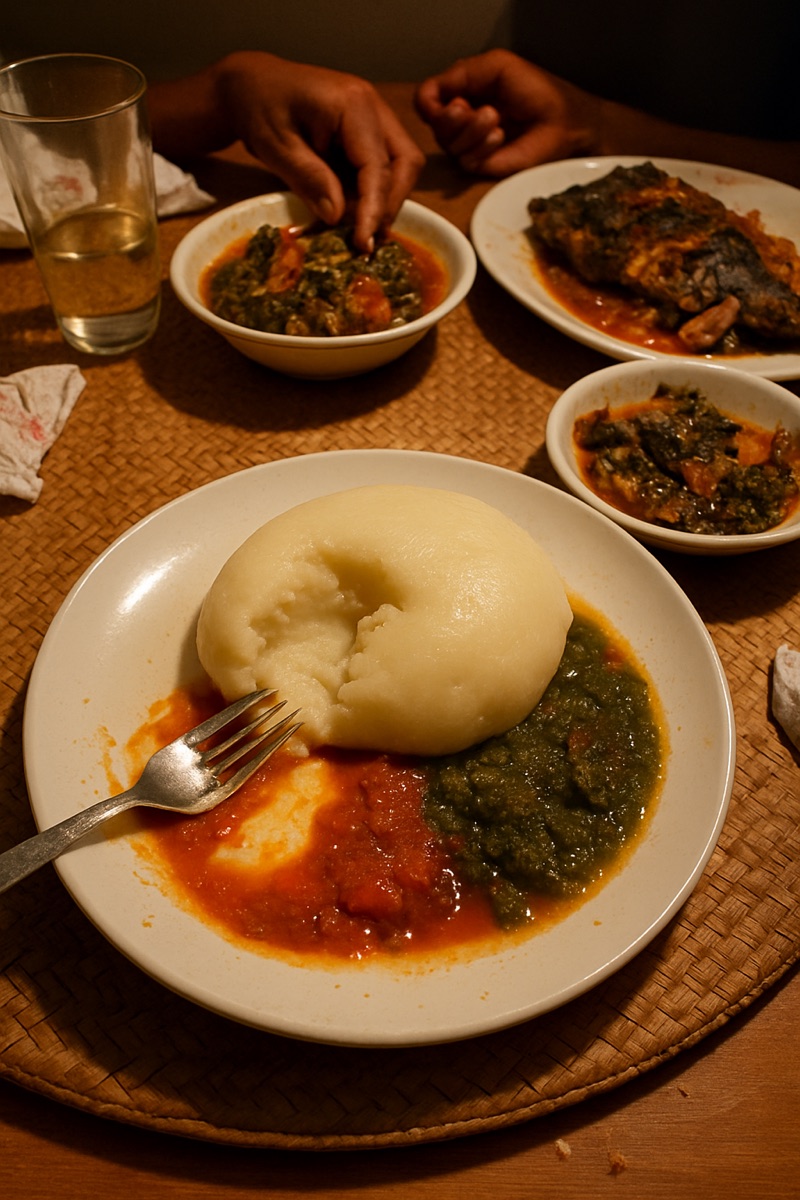 Fufu🇬🇶 Equatorial Guinea · 35 minutes
Questions people ask
Does Equatorial Guinea have an official national dish?
No. No law or decree names one, but pepesup, a spicy fish and plantain soup, is the dish most often cited as the country's signature.
Is pepesup the same as Nigerian pepper soup?
It is the same family of West African pepper soups. Nigerian versions often use goat or chicken, while in Equatorial Guinea pepesup is usually made with fish and green plantain.
Is succotash the national dish of Equatorial Guinea?
Some lists say so, but without a source. Succotash is a North American corn and lima bean dish; Equatoguinean cuisine articles name pepesup instead.
What is eaten with pepesup?
The plantain is already in the pot, so it is often eaten on its own, very hot. Other main dishes come with rice, cassava, malanga or plantain.
What is the most popular sauce in Equatorial Guinea?
Peanut sauce. Fish, goat or chicken are stewed in it, and chicken in peanut sauce is one of the most common dishes in the country.
Keep reading
- Traditional food of Equatorial Guinea: 12 dishes to know
- What is the national dish of Cameroon?
- What is the national dish of the Central African Republic?
- What is the national dish of Chad?
- What is the national dish of the DR Congo?
- What is the national dish of the Republic of the Congo?