 COPPER
What is the national dish of Nigeria?
Nigeria has no official national dish, and no single dish speaks for its many regional cuisines. The one most often named is jollof rice: parboiled long-grain rice cooked in a fried stew of tomato, pepper and onion until it absorbs the stock. Pounded yam with egusi soup, tuwon shinkafa and suya are the other dishes most often cited.
Why Nigeria has several candidates
Nigerian cooking comes from 371 ethnic groups, each with its own methods, ingredients and ceremonies. As CNN Travel puts it, it is not easy to pin down a national favourite for such a vast country with so many distinct regional cuisines.
Lists of national dishes therefore give Nigeria several: tuwon shinkafa, jollof rice, and pounded yam with egusi soup. Tuwon shinkafa is the northern candidate: a thick, soft pudding of sticky local rice, eaten as a swallow with soups such as miyan kuka and miyan taushe. Versions made with maize and sorghum flour are called tuwon masara and tuwon dawa. Jollof is the one most often served at parties and festive gatherings, to the point of a West African saying: "A party without jollof is just a meeting." In Nigeria, according to food historian Ozoz Sokoh, "see jollof" means "see how much fun is being had".
What is in Nigerian jollof rice?
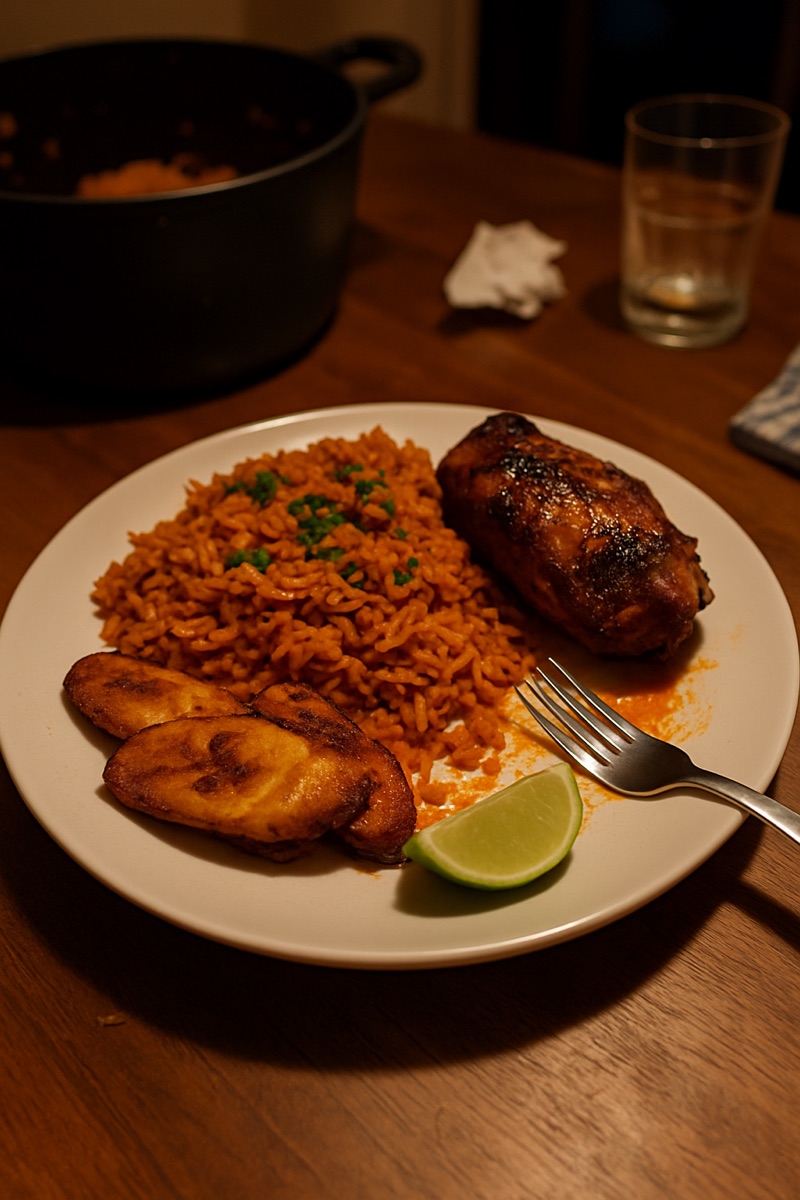
The base is a stew, not raw tomato. In our jollof rice recipe, tomato paste is fried in oil for 5 minutes, then a blend of tomatoes, red bell peppers, scotch bonnets and onion, already boiled down, is fried for another 20 minutes until the oil floats on top. Chicken stock, curry powder and thyme go in next.
The rice matters as much as the stew. Nigerian jollof uses parboiled long-grain rice, which is cooked 5 minutes, rinsed and drained before it goes into the pot so it does not turn sticky. The liquid should sit level with the rice. The pot is then sealed with foil and a lid and left 30 minutes on low heat without stirring, so the bottom catches slightly and gives the smoky taste Nigerians look for.
It is served with fried or grilled chicken and fried plantain. The usual seasonings are:
- scotch bonnet or habanero peppers for heat
- thyme and bay leaves
- curry powder
- stock cubes
- a little white pepper or nutmeg in some kitchens
Where jollof comes from, and the Jollof wars
Jollof is not originally Nigerian. Its name comes from the Wolof people and the Jolof Empire of present-day Senegal, where the original dish was thieboudienne, rice cooked with fish and vegetables. That version is Senegal's national dish.
Ghana, Nigeria, Sierra Leone, Liberia and Cameroon all argue over who makes the best jollof. In the 2010s the rivalry between Nigeria and Ghana became a friendly feud known as the "Jollof wars", fought through cooking competitions and social media. World Jollof Day has been celebrated on 22 August since 2015, and on 3 November 2022 the dish got its own Google Doodle.
The dish as it is cooked today cannot be very old: tomatoes, tomato paste, chili and bell peppers, curry powder and Asian rice varieties point to an origin no earlier than the 19th century. In Senegal, oral history credits Penda Mbaye, a cook in colonial Saint-Louis, with creating it when she ran out of barley and used rice instead. Nigeria has its own variants too, such as coconut jollof, eaten especially by riverine and some Igbo communities.
Pounded yam and egusi soup
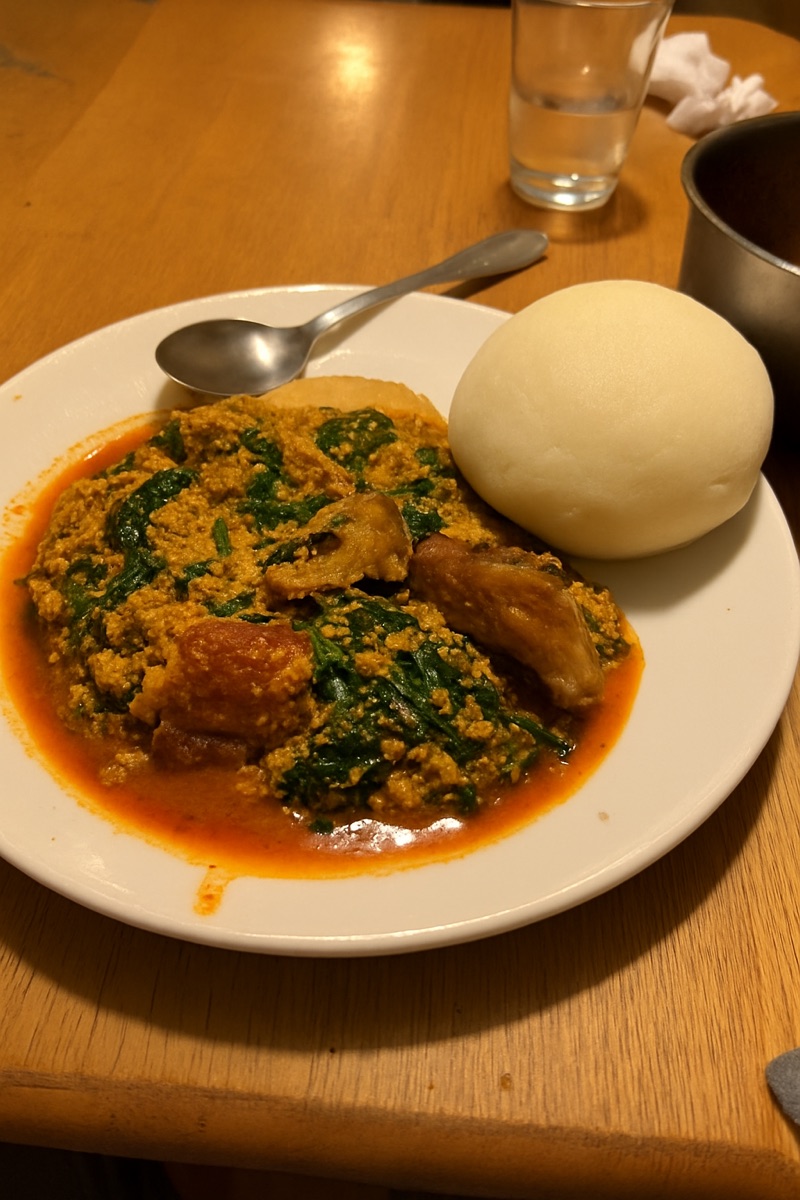
Pounded yam is a "swallow": boiled African white yam pounded in a mortar with a pestle until smooth and heavier than mashed potato. It is called iyán in Yoruba, sakwara in Hausa and utara-ji in Igbo, and it is smooth enough to be eaten with the hands, together with a soup.
Its most famous partner is egusi soup, made from the ground seeds of a melon. The Yoruba name is usually explained as "to grind open". In our egusi soup recipe, 400 g of seeds are ground dry and dropped into the beef stock in lumps, left 10 minutes to set, then broken up and finished with red palm oil, ground crayfish, scotch bonnets, locust bean seasoning and shredded pumpkin leaves. It is also eaten with eba, fufu or amala.
Suya and other dishes to know from Nigeria
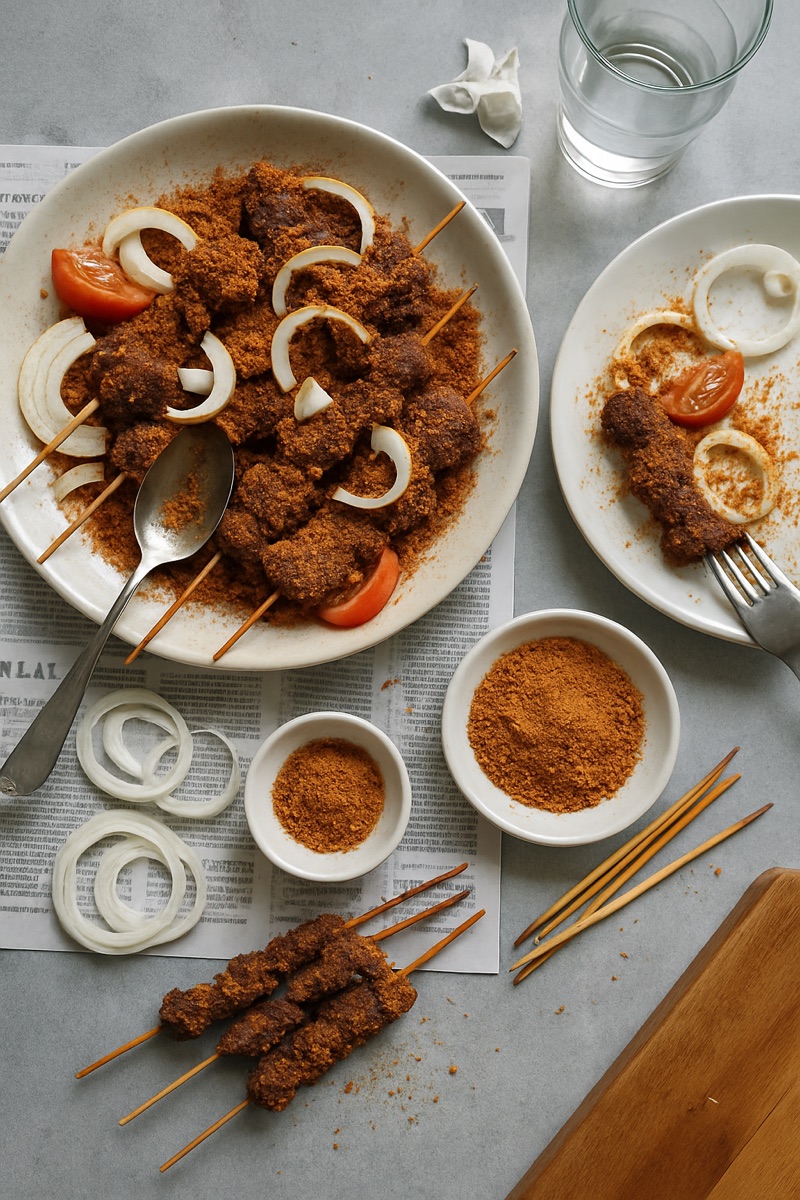
Suya is the Hausa street grill of the north: beef sliced about 3 mm thick, coated in yaji, a dry spice mix built on kuli-kuli peanut cake, ginger and chili, then charred over an open flame for 8 to 10 minutes. It is sold mostly in the evening, cut off the skewer and served with raw onion, tomato and extra yaji. It is now eaten all over the country and claimed as a national dish too.
Nigerian food belongs to the wider West African kitchen. You will find all three dishes, with ingredients and step-by-step methods, on our page about the food of Nigeria.
The recipes
- Jollof rice🇳🇬 Nigeria · 1 hour and 50 minutes
 Egusi soup🇳🇬 Nigeria · 1 hour and 30 minutes
 Suya🇳🇬 Nigeria · 1 hour and 40 minutes
Questions people ask
Is jollof rice from Nigeria or Ghana?
Neither, originally. Jollof is traced to the Wolof people of present-day Senegal; Nigeria and Ghana have since built their own versions and a long-running rivalry over whose is best.
Does Nigeria have an official national dish?
No. Jollof rice is the dish most often named, with pounded yam and egusi soup, tuwon shinkafa and suya also cited.
What is served with jollof rice in Nigeria?
Usually fried or grilled chicken and fried plantain.
What is egusi soup eaten with?
With a swallow such as pounded yam, eba, fufu or amala, eaten with the hands together with the soup.
When is World Jollof Day?
World Jollof Day is celebrated on 22 August. It has been marked since 2015.
Keep reading
- Traditional food of Nigeria: 13 dishes to know
- What is the national dish of Benin?
- What is the national dish of Burkina Faso?
- What is the national dish of Cabo Verde?
- What is the national dish of Côte d'Ivoire?
- What is the national dish of The Gambia?