 COPPER
What is the national dish of Côte d'Ivoire?
Côte d'Ivoire has no dish declared national by law, but the one most often named is attiéké: grated cassava fermented for one or two days, pressed, sieved into grains and steamed, much like couscous. It is eaten with grilled or fried fish, raw onion, tomato and chili. In 2024 UNESCO inscribed the skills of making attiéké on its intangible cultural heritage list.
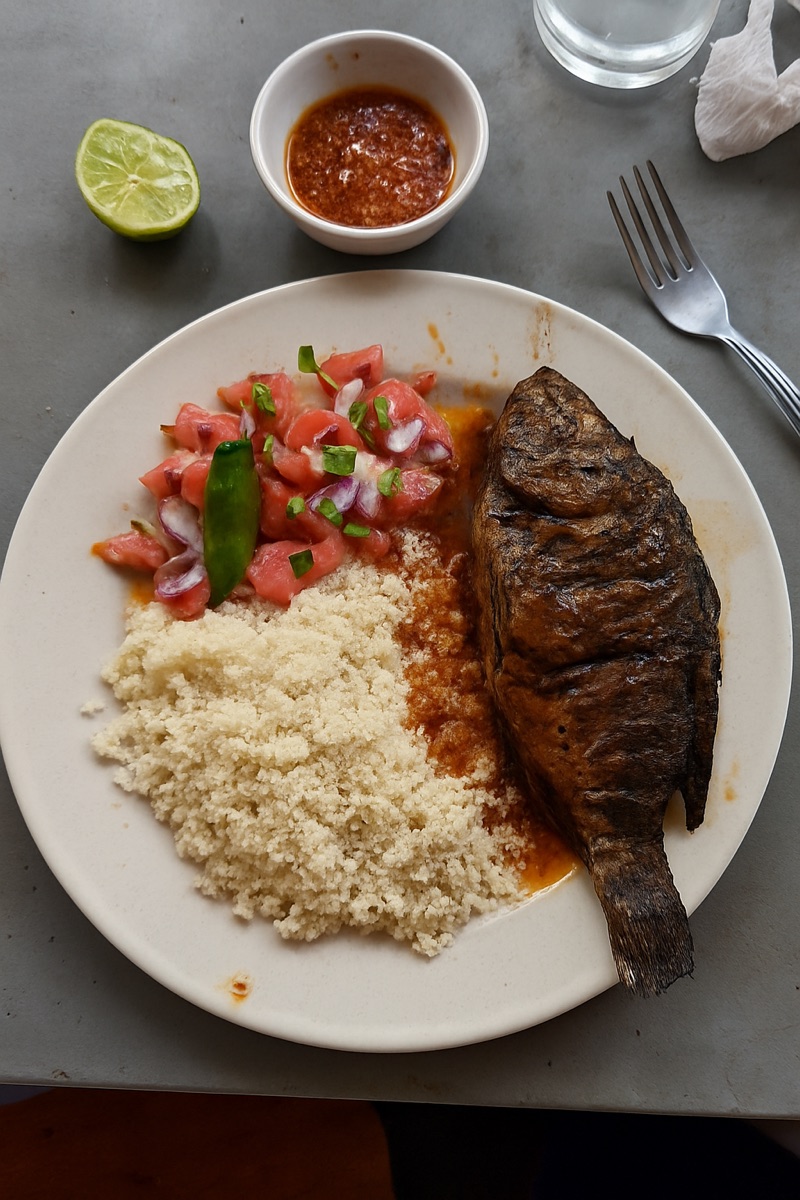
What is attiéké?
Attiéké looks like couscous but is made from cassava, not wheat. It is the specialty of the lagoon peoples of southern Côte d'Ivoire, the Ebrié, Adjoukrou, Alladjan, Abidji, Avikam, Ahizi and Attié. The name comes from the Ebrié word adjèkè; Bambara-speaking traders turned it into atchèkè, and French colonists into attiéké.
It is sold already cooked and is ready to eat; once it dries out, it only needs reheating. Grain sizes vary by region. The large-grained abodjama is the type most widely sold, made for trade rather than by one particular community, while garba uses its own very fine-grained attiéké.
In the south it is not only eaten with fish. It also goes with meat and with sauces such as sauce claire or sauce graine, and it can be eaten with the fingers after being kneaded into small balls. In 2016 BBC Afrique called it "the champagne of Côte d'Ivoire".
How attiéké is made
Making attiéké takes several days and two kinds of work. In the lagoon communities, men grow, harvest, transport and grind the cassava; women prepare, cook, preserve and sell the attiéké. The skills are passed on orally and by watching, within families. The steps are:
- Grate: cassava is peeled and grated into a pulp.
- Ferment: the pulp is mixed with a little previously fermented cassava as a starter and left for one or two days. Fermentation also removes most of the hydrocyanic acid in bitter cassava.
- Press and sieve: the pulp is dewatered, screened into grains and dried.
- Steam: the grains are steamed for a few minutes, cooled, and packed in baskets lined with cassava leaves.
Why attiéké counts as the national dish
No law names a national dish of Côte d'Ivoire, but attiéké has an official recognition few dishes anywhere can match. In December 2024 UNESCO added the skills related to attiéké production in Côte d'Ivoire to the Representative List of the Intangible Cultural Heritage of Humanity, calling it an integral part of the country's cultural identity.
Earlier that year, on 21 May 2024, the African Intellectual Property Organization (OAPI) registered attiéké as a collective mark at the Ivorian government's request. Since then, only cassava couscous produced in Côte d'Ivoire can be sold under the name attiéké. The state had already started, in 2019, the process of protecting "attiéké des Lagunes" as a geographical indication.
Attiéké is also the dish given for the country on Wikipedia's list of national dishes. French Wikipedia gives the title to garba, a cheap street plate of coarse attiéké with fried tuna, raw onion and fresh chili, which is attiéké again in another form.
Attiéké poisson: the classic plate
The plate most Ivorians picture is attiéké with grilled fish. Two whole tilapia are scored to the bone, rubbed with garlic, ginger, onion, chili and lemon, and grilled over charcoal for 10 to 12 minutes a side until the skin blisters.
The attiéké is crumbled, sprinkled with a little water and steamed 5 to 10 minutes until hot and loose. It is never boiled, which would turn it to paste. A raw salad of onion, tomato and chili with lemon goes alongside, and the whole plate is eaten by hand.
It is a fixture of the maquis, the small open-air restaurants found across Côte d'Ivoire, which serve braised chicken and fish with onions, tomatoes and attiéké or kedjenou.
Other dishes to know from Côte d'Ivoire
Kedjenou is chicken cooked in a sealed clay pot, a canari, with onion, tomato, African eggplant, chili and thyme, and no water or oil at all. The lid is never lifted: the cook shakes the pot every 15 minutes instead, and kedjenou means "to shake" in Baoulé. It is served with attiéké, rice or boiled yam.
Alloco is ripe plantain fried in peanut oil. The plantains are chosen when the skin is almost black, so the slices caramelise, and they come with a fiery onion and chili sauce. Alloco is eaten on its own as a street snack or alongside grilled fish or a fried egg.
Beyond these, foutou, plantain and yam pounded until stretchy, is eaten with sauce graine, a palm-nut sauce, and riz gras is the Ivorian take on West African jollof rice.
Attiéké also crosses the border: the Nzema people of western Ghana make it as akyeke, covered in our article on the national dish of Ghana.
All three Copper recipes are on our page about the food of Côte d'Ivoire, and the neighbouring kitchens are in our guide to West African food.
The recipes
- Attieke poisson🇨🇮 Côte d'Ivoire · 2 days and 1 hour
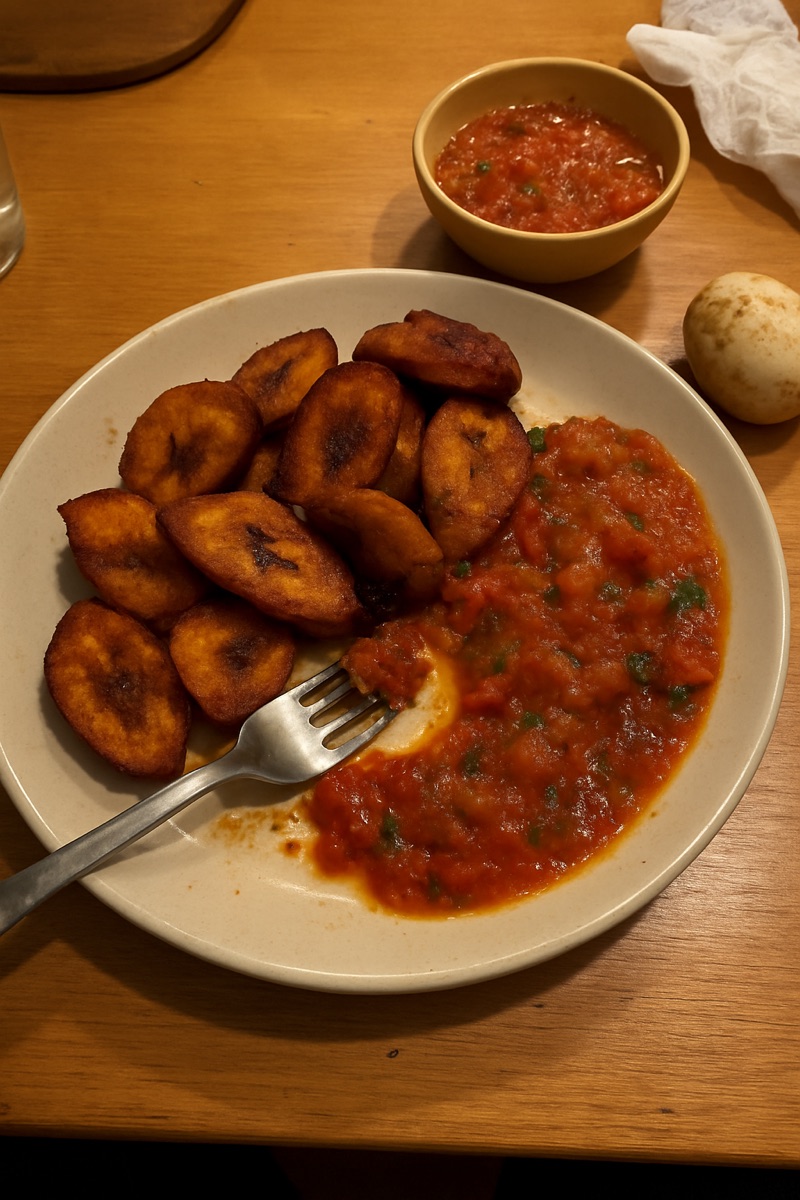 Alloco🇨🇮 Côte d'Ivoire · 30 minutes
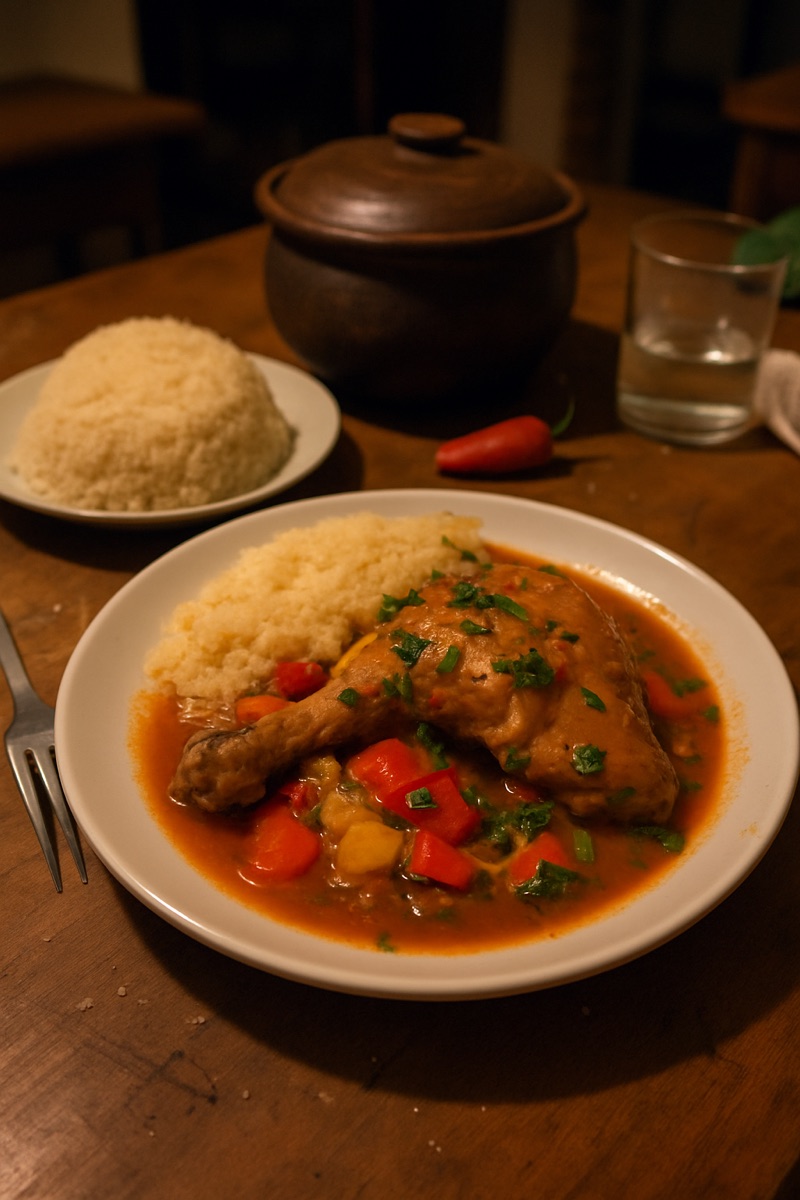 Kedjenou🇨🇮 Côte d'Ivoire · 1 hour and 50 minutes
Questions people ask
Is attiéké from Côte d'Ivoire or Ghana?
Both make it. Attiéké is a specialty of the lagoon peoples of southern Côte d'Ivoire, and the Nzema of western Ghana make it as akyeke. Since 2024 only attiéké produced in Côte d'Ivoire can be sold under that name.
Is attiéké the same as couscous?
It has a similar look and texture and is steamed the same way, but it is made from grated, fermented cassava rather than wheat semolina.
What is served with attiéké?
Usually grilled or fried fish with raw onion, tomato and chili, and sometimes chicken, egg or a sauce.
What is garba?
Garba is a street plate of coarse attiéké with fried tuna, raw onion and fresh chili, hugely popular in Abidjan.
When did UNESCO recognise attiéké?
In December 2024, UNESCO inscribed the skills related to attiéké production in Côte d'Ivoire on its Representative List of the Intangible Cultural Heritage of Humanity.
Keep reading
- Traditional food of Côte d'Ivoire: 12 dishes to know
- What is the national dish of Benin?
- What is the national dish of Burkina Faso?
- What is the national dish of Cabo Verde?
- What is the national dish of The Gambia?
- What is the national dish of Ghana?