 COPPER
Traditional food of Côte d'Ivoire: 12 dishes to know
Ivorian food is West African cooking built on cassava, plantain, yam, rice, palm oil and fish, with sauces served over a starchy base. It is usually hot with chilli. The most emblematic dishes are attiéké with grilled fish, kedjenou, foutou with sauce graine, and alloco, eaten at home, at street stalls and in the open-air restaurants called maquis.
What Ivorian food is built on
Ivorian cuisine gathers dishes from all the country's ethnic groups, and immigration from neighbouring countries has shaped it further; it is very close to the cooking of the rest of West Africa. Tubers and grains are the staples: cassava, plantain, yam, maize and rice. Côte d'Ivoire is one of the world's largest cocoa producers and also produces palm oil, the red oil that is a pillar of its sauces. Grilled fish and grilled chicken are the most popular foods, guinea fowl is known as poulet bicyclette, smoked fish is everywhere, and giant land snails are a local delicacy.
A typical meal pairs a starchy side, called an accompagnement, with a sauce: attiéké, foutou, placali or rice with sauce graine, sauce claire, okra or peanut sauce. Aubergines, okra and chilli are the everyday vegetables, and condiments such as akpi, soumbala, dried shrimp and adjovan, a fermented fish, give the sauces their character. Ivorian food is generally very peppery. There are almost no desserts, because the meals are already filling.
Cassava, plantain and rice
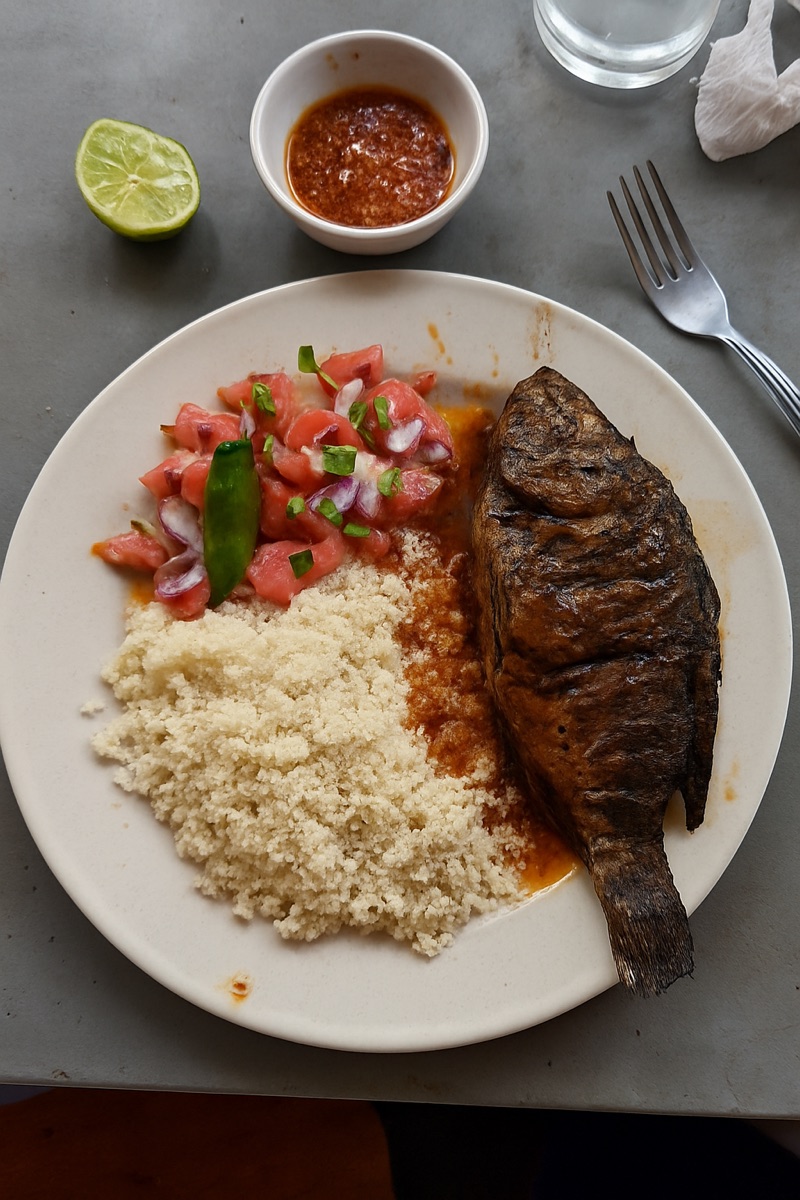
- Attiéké poisson — Attiéké is grated cassava, fermented, pressed, sieved into grains and steamed, much like couscous. It is a specialty of the lagoon peoples of the south and is classically eaten with grilled or fried fish, raw onion, tomato and chilli. UNESCO added the skills of making it to its intangible heritage list in 2024.
- Garba — The cheapest and most popular quick meal in Abidjan: attiéké with chunks of fried tuna, chopped fresh chilli and sometimes tomato and onion, seasoned with a stock cube. It is sold from small street stalls, often run by Hausa men. It is named after Dicoh Garba, the minister who in the 1970s had tuna left over from exports at the port of Abidjan handed to local traders.
- Placali — Fermented cassava paste, thinned, filtered and then cooked slowly while stirred until it turns translucent. It is softer than foutou and is eaten with sauce graine, okra sauce or kplala. Treichville, in Abidjan, holds a placali festival every year.
- Foutou — Plantain or yam boiled, then pounded at length in a wooden mortar into a smooth, stretchy ball, with a little cassava or yam added to bind it. It is eaten with a sauce, most often sauce graine or sauce claire, and pinched off by hand.
- Alloco — Ripe plantain cut into slices or cubes and fried, served with a hot sauce of onion and chilli. It is the classic street snack, eaten alone or with grilled fish or an egg. The name comes from the Baoulé language, and a district of Cocody in Abidjan, lined with grills and alloco sellers, is called the Allocodrome.
- Riz gras — The Ivorian version of the West African jollof rice: rice cooked in a base of onions, garlic, fresh tomatoes and tomato paste with meat and vegetables, which are served on top.
Sauces and stews
- Kedjenou — Chicken or guinea fowl slow-cooked with vegetables in a sealed clay pot, a canari, over a low fire or embers, with little or no added liquid, so the meat cooks in its own juices. The pot is shaken rather than stirred: kedjenou means "shake" in Baoulé. It is served with attiéké, and a version with snails exists too.
- Sauce graine — A red sauce made from the pulp of oil palm fruit, cooked with fish or meat. It comes from the Akan and Kru peoples and is the most eaten dish among the Bété. It goes with foutou, placali or rice.
- Sauce claire — A light sauce based on aubergines, flavoured with akpi, the kernel of a rainforest tree used as a spice across Africa. It is eaten with foutou and rice.
- Kplala — A slippery sauce of jute mallow leaves, the same plant used in North African mloukhia. It is usually served with placali or kabato, a maize paste from the north.
Grills, sweets and drinks
Ivorians drink bissap (hibiscus), gnamankoudji, a ginger juice often mixed with pineapple and lemon, and baobab juice. Bangui is palm wine, and tchapalo, a spiced millet or maize beer, comes from the north. The classic place to eat is the maquis, a small open-air restaurant serving braised chicken and fish with onions, tomatoes, attiéké or kedjenou.
- Choukouya — Mutton or beef grilled over embers and seasoned with kankankan, the spice mix also called suya, before and after grilling. The dish came from Nigeria and is sold by the portion at grills.
- Dêguê — Fermented milk mixed with millet granules, one of the few sweet dishes, brought by the Mandinka peoples of the north and neighbouring countries.
Regional Côte d'Ivoire
The lagoon peoples of the south, around Abidjan, are the home of attiéké, and the Ebrié cook sauce n'tro, a sauce claire with red palm oil. The centre is Baoulé country, where kedjenou and the word alloco come from. The west makes zaho, an agouti dish, and sauces thickened with kaklou, wild mango kernels; cassava foutou is most popular there, while plantain foufou is preferred in Abidjan and the east and yam foufou in the east and north. The north eats kabato and tô, maize pastes, with Senufo bean-leaf sauce and tchapalo.
Cook Ivorian food at home
Attiéké is the dish most often named as the national dish of Côte d'Ivoire. Copper has full recipes for attiéké with grilled fish, kedjenou and alloco, with ingredients and step-by-step methods, on our page about the food of Côte d'Ivoire, and the neighbouring kitchens are in our guide to West African food.
Fried plantain, grilled fish and palm-nut sauces are shared along the coast: compare with the traditional food of Ghana and the traditional food of Burkina Faso.
The recipes
- Attieke poisson🇨🇮 Côte d'Ivoire · 2 days and 1 hour
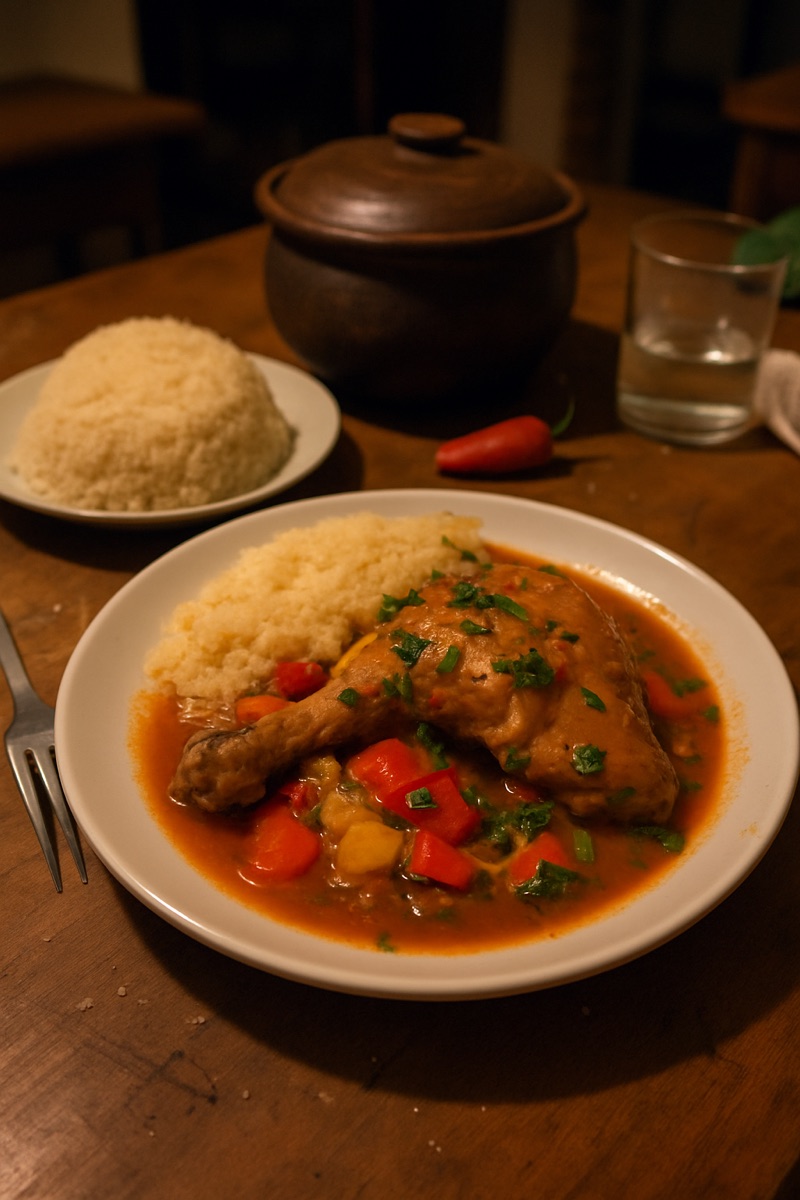 Kedjenou🇨🇮 Côte d'Ivoire · 1 hour and 50 minutes
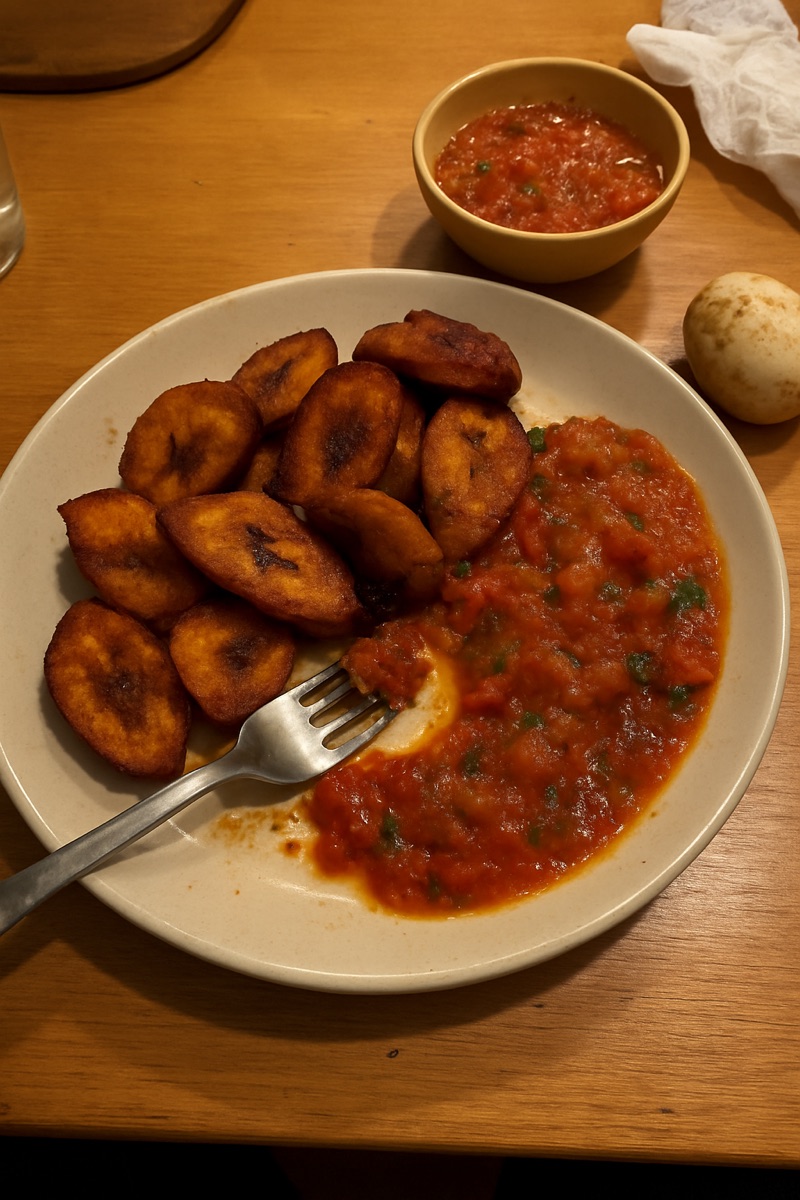 Alloco🇨🇮 Côte d'Ivoire · 30 minutes
Questions people ask
What is the most popular food in Côte d'Ivoire?
Attiéké, fermented cassava couscous, eaten with grilled or fried fish. Its cheapest street form, garba, with fried tuna and chilli, is the everyday meal of young Abidjan, and French Wikipedia even calls garba the national dish.
Is Ivorian food spicy?
Yes, Ivorian cooking is generally very peppery. Fresh chilli goes into most sauces and into the raw salad served with attiéké, and alloco comes with an onion and chilli sauce.
What is a maquis in Côte d'Ivoire?
A small, open-air restaurant typical of Côte d'Ivoire. Maquis serve braised chicken and fish with onions and tomatoes, attiéké or kedjenou, and are the usual place to eat out.
What is the difference between foutou and foufou?
In Côte d'Ivoire, foutou is plantain or yam pounded in a mortar into a stretchy ball, while foufou is not pounded but made by mixing mashed boiled plantain with red palm oil.
Does Ivorian food have desserts?
Very few, because the meals are filling. Most sweets came from neighbouring countries, such as dêguê, fermented milk with millet, and millet porridge, along with fritters such as gnomi and claclo, made from plantain.
Keep reading
- What is the national dish of Côte d'Ivoire?
- Traditional food of Benin: 13 dishes to know
- Traditional food of Burkina Faso: 11 dishes to know
- Traditional food of Cabo Verde: 13 dishes to know
- Traditional food of The Gambia: 13 dishes to know
- Traditional food of Ghana: 13 dishes to know