 COPPER
Traditional food of Benin: 13 dishes to know
Beninese food is built on corn in the south and yam in the north, cooked into firm doughs called pâte and eaten by hand with tomato, peanut, okra or leaf sauces. Fish and chicken are fried in palm or peanut oil, and afitin, a fermented seed condiment, seasons many sauces. The most emblematic dishes are pâte (wɔ̌), amiwo, pounded yam and akara.
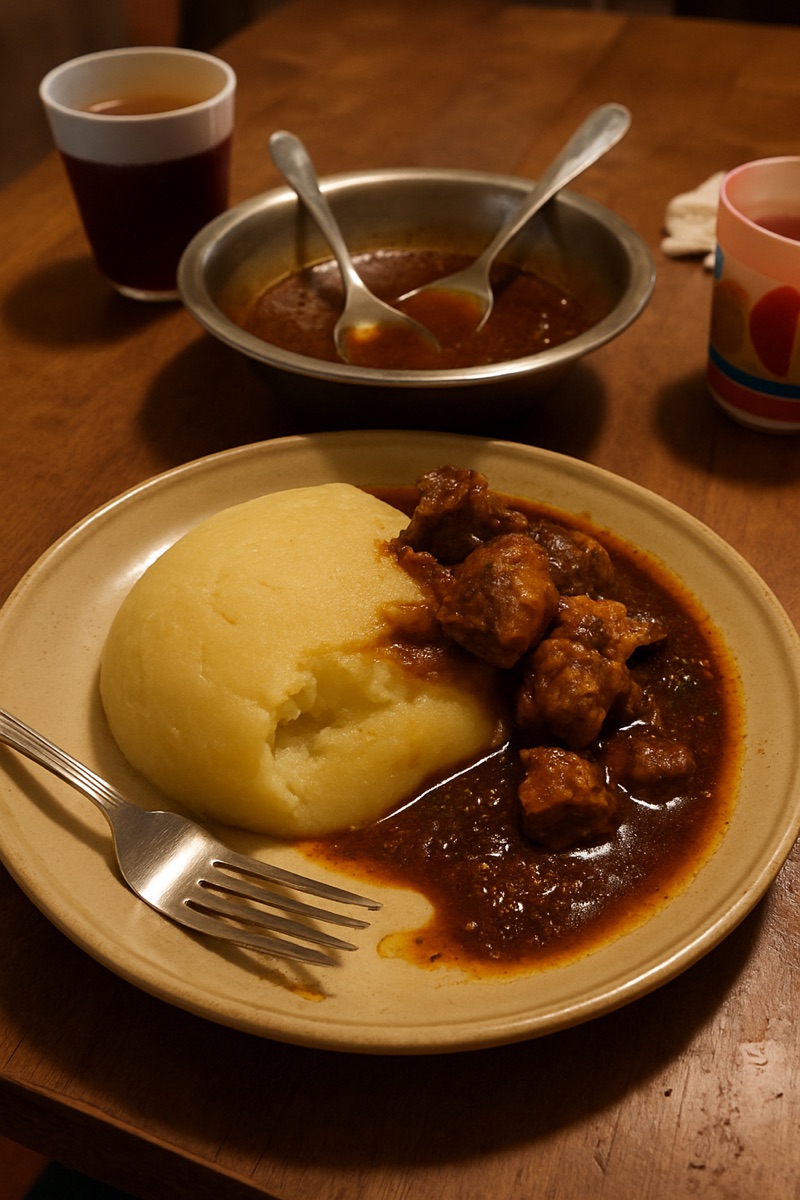
What Beninese food is built on
Benin's kitchen splits along a north–south line. In the south, corn is the main ingredient, ground into flour and cooked into a dough served with peanut- or tomato-based sauces. Fish and chicken are the usual meats, and beef, pork, goat and bush rat are also eaten. In the north, yam is the staple, beef and pork are more common, and cheese goes into many dishes.
Meat is expensive, so meals are generally light on meat and generous with oil. Frying in palm or peanut oil is the most common way to cook meat, and smoked fish is prepared everywhere. Afitin, a condiment of fermented néré seeds called irù in Yoruba, gives sauces a strong smell. Rice, beans, spaghetti, cassava and sweet potato complete the table.
The doughs are never eaten plain. The usual sauces, with their Fon names, are nùsúnnú (tomato with fried meat or fish), azin nùsúnnú (tomato with crushed peanuts), févi (slippery okra), nɛnúwì (slippery adémè leaves) and mɔ̌yò, a mostly uncooked mix of tomato, onion and chilli served with fried fish.
Pâte and the other doughs
- Pâte (wɔ̌) — The base of Beninese cooking: white corn flour and water, stirred hard against the pot until smooth and firm, with no salt and no oil. It is shaped into mounds and eaten by hand, a piece at a time, dipped in sauce. French Wikipedia lists it as the most common of Benin's doughs.
- Amiwo — Red pâte: corn flour cooked with oil, salt and tomato or red palm oil, which gives it its colour. In Fon it is also djèwɔ̌, salted pâte, as opposed to plain wɔ̌. It takes one to two hours to cook, against 30 minutes to an hour for plain pâte. It comes from the south but is eaten all over Benin, especially at celebrations and funerals, usually with chicken or fried fish.
- Pounded yam (agǔ) — Boiled yam pounded in a wooden mortar until it becomes a smooth, elastic paste, igname pilée in French. It is the dough eaten most in the north, where yam is the staple, and comes with peanut or tomato sauce and meat.
- Telibɔ̌ wɔ̌ — A dark brown dough of yam flour, made from yam slices dried in the sun for several days and then milled. It cooks in about five minutes and is lighter to digest than corn pâte. It is eaten in the north and centre with a fish, meat or cheese sauce.
- Akassa — A smooth, slightly sour paste made from white corn that has been soaked, ground and fermented. Called gui in Fon, it is eaten all over Benin with a fish or meat sauce, often mɔ̌yò, and is also thinned into a porridge. It is sold in balls, sometimes wrapped in teak leaves.
Everyday and festive dishes
- Atassi — Rice and beans cooked together, one of the most common main dishes in Benin. In the south it comes with dja, a tomato sauce cooked in oil, and in the north with seasoned chilli; egg, meat or cheese can go on top. Northern Benin calls it watché, and Togo calls it ayimolou.
- Wagasi — A soft cows'-milk cheese with a mild flavour and a red rind, made by the Fulani of northern Benin and sold in quantity in Parakou. The milk is curdled with a plant leaf and pressed into rounds, which are coloured red with another leaf. It is fried or cooked in a sauce in place of meat or fish and eaten with pounded yam or pâte.
- Djongoli — An orange purée of black-eyed peas cooked with palm oil, tomato, spices and corn flour, eaten mostly at big celebrations. It is found only in Benin and Togo. Around Porto-Novo it is called sankpiti or adjankpiti, and it is one of the dishes of Zangbéto ceremonies in the Vodun religion.
Street food and snacks
Snack time starts around 4 pm. Food is sold in markets, from large trays carried on women's heads, and in maquis, small street restaurants where customers choose from simmering pots and cutlery is often not provided. To drink, Beninese buy bissap, an iced hibiscus drink, and adǒyo and tchapalo, fermented corn drinks. Tchoukoutou, a millet or sorghum beer, is brewed in the north, and sodabi, a spirit distilled from palm wine, is served at events and ceremonies.
- Akara — Fritters of skinned black-eyed peas blended with onion and pepper, whipped until light and deep-fried in red palm oil. The dish comes from the Yoruba of Nigeria, Benin and Togo, and is found in most parts of Benin, where its Fon name is ata. It is sold as an afternoon snack with chilli.
- Kuli-kuli — Roasted peanuts ground to a paste, pressed to remove the oil, shaped and fried hard. It is a byproduct of making peanut oil, keeps for a long time and is eaten alone or with garri soaked in water and sugar. Wikipedia's list of national dishes gives it for Benin.
- Aloko — Fried plantain, sold as an afternoon snack with chilli and also served as a side with some dishes. Fried yam slices (tévi) and fried sweet potato (wɛli) are sold the same way.
- Talé talé — Fritters of very ripe bananas pounded with a little salt and sugar, mixed with wheat flour, rolled into balls and fried for 5 to 10 minutes. They are an afternoon snack, more common in the south, eaten plain or with chilli.
- Wassa-wassa — Yam couscous, made from dried yam chips. It is eaten at any time, but mostly for breakfast and as an evening snack, and is sold as fast food in the streets and markets of northern Benin.
North and south Benin
The south eats corn: plain pâte, amiwo, akassa and piron, a dough made from gari (toasted cassava meal), with fish, chicken and peanut or tomato sauces. Djongoli belongs to the Porto-Novo area. The centre is a meeting ground where the main dough is cassava pâte, alongside telibɔ̌ wɔ̌ and pounded yam. The north lives on yam: pounded yam, telibɔ̌ wɔ̌ and wassa-wassa, with beef, Fulani wagasi and tchoukoutou beer. It also eats dambou, the moringa couscous of the Zarma and Dendi.
Cook Beninese food at home
Benin has no official national dish; pâte is the one eaten most, and kuli-kuli is the name found on lists. Read more in our article on the national dish of Benin. Copper has full recipes for pâte, pounded yam and akara, with ingredients and step-by-step methods, on our page about the food of Benin, alongside other West African recipes.
Corn doughs, bean fritters and rice-and-beans cross the borders. Compare with the traditional food of Togo and the traditional food of Nigeria.
The recipes
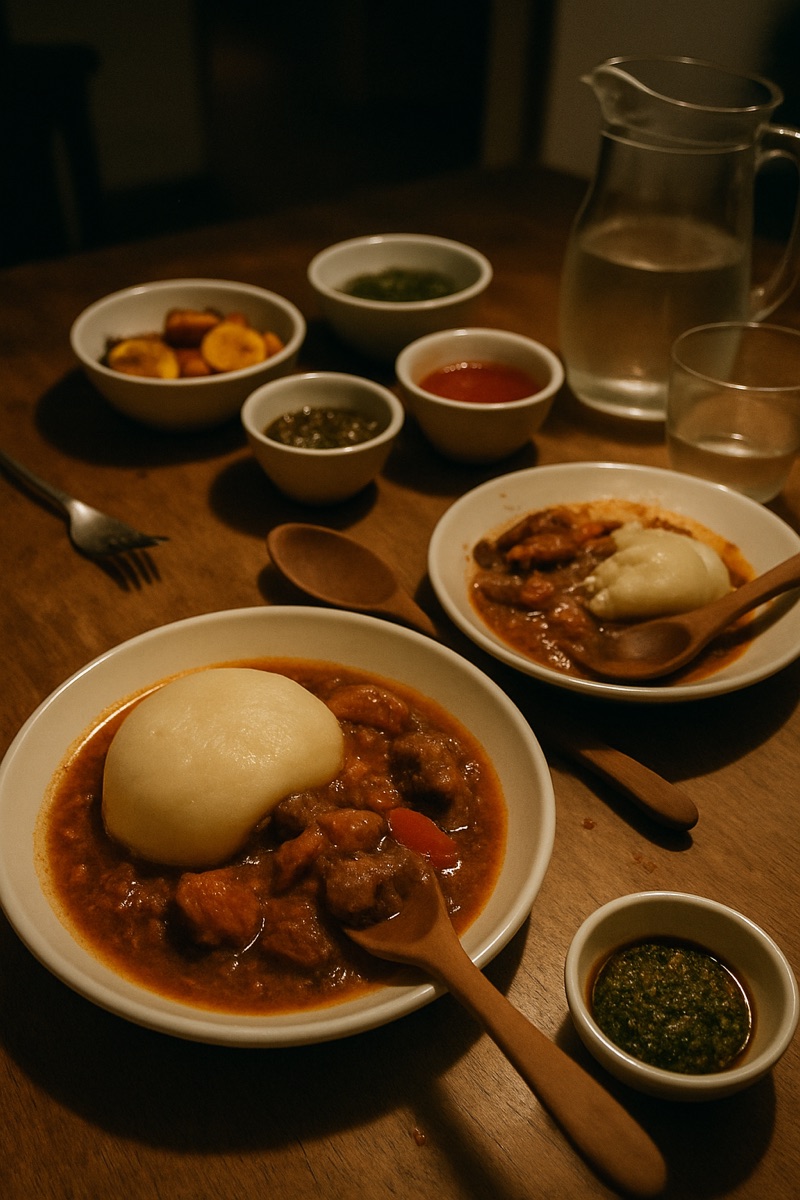 Fufu
Fufu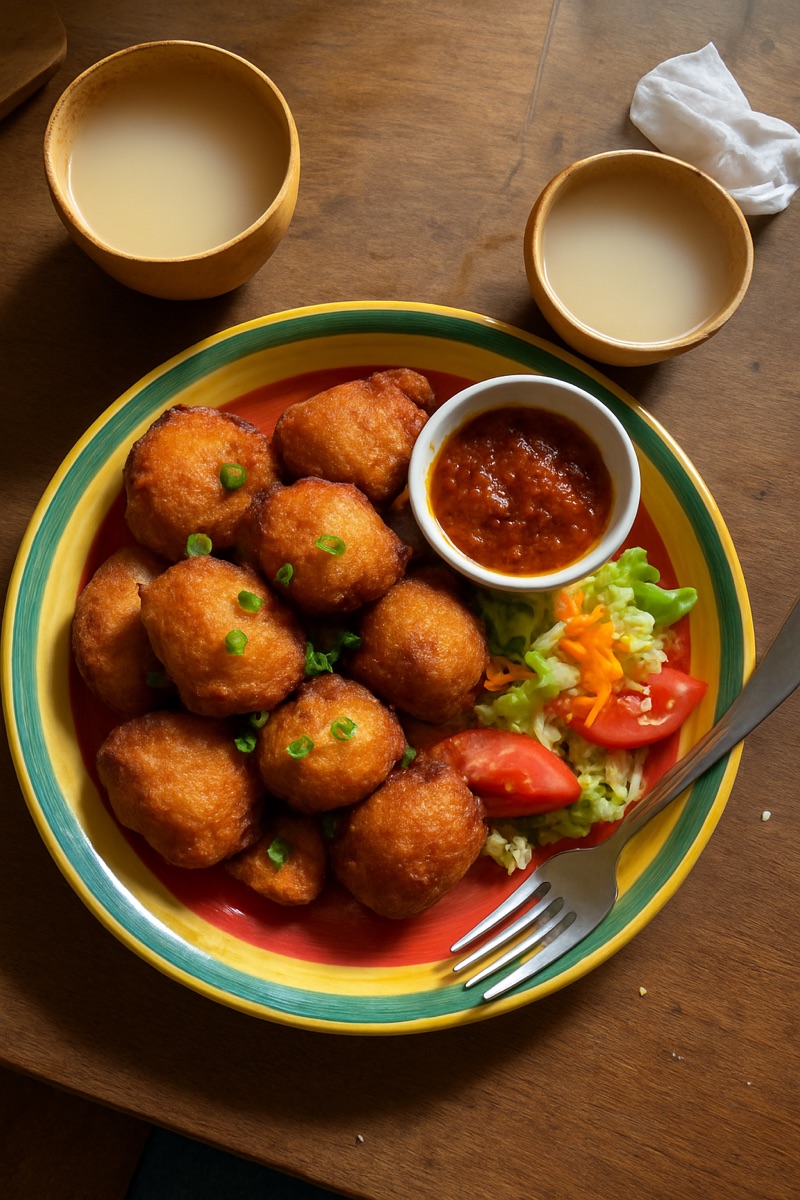 Akara
AkaraQuestions people ask
What is the most popular food in Benin?
Pâte (wɔ̌), a firm corn-flour dough served with sauce, is the dish eaten most in Benin. In the north, pounded yam plays the same role.
What do people in Benin eat for breakfast?
In the north, wassa-wassa, a couscous of dried yam, is eaten mostly in the morning. Akassa can also be thinned into a porridge, and yovo doko, sweet wheat-flour fritters, are eaten with sugar or with porridge.
Is Beninese food spicy?
Often. Sauces are seasoned with chilli to taste, mɔ̌yò is a raw tomato, onion and chilli sauce, and snacks such as akara, aloko and fried yam are sold with chilli.
What is the national dish of Benin?
Benin has no official national dish. Pâte is the dish eaten most, while Wikipedia's list of national dishes names kuli-kuli, a fried peanut snack.
What do people drink in Benin?
Bissap (hibiscus), fermented corn drinks such as adǒyo and tchapalo, tchoukoutou millet or sorghum beer in the north, and sodabi, a palm-wine spirit.
Keep reading
- What is the national dish of Benin?
- Traditional food of Burkina Faso: 11 dishes to know
- Traditional food of Cabo Verde: 13 dishes to know
- Traditional food of Côte d'Ivoire: 12 dishes to know
- Traditional food of The Gambia: 13 dishes to know
- Traditional food of Ghana: 13 dishes to know