 COPPER
Traditional food of Burkina Faso: 11 dishes to know
Burkinabè food is built on millet, sorghum, corn and rice, cooked into tô, a firm paste eaten by hand with okra, baobab-leaf or sorrel sauces seasoned with soumbala and dried fish. Grilled meat is common, especially mutton, goat, beef and chicken. The most emblematic dishes are tô with okra sauce, riz gras, babenda and poulet bicyclette.
What Burkinabè food is built on
Burkina Faso's staples are sorghum, millet, rice, fonio, maize, peanuts, potatoes, beans, yams and okra, and rice, maize and millet are the grains eaten most. Vegetables include tomatoes, onions, eggplant, cabbage, pumpkin, sorrel, amaranth leaves and spinach, and tubers include yam, sweet potato, taro and cassava.
The country is landlocked, so meat is eaten more than fish: mutton, pork, goat and beef, usually braised or fried. In the countryside, a meal is typically tô with a sauce of jute or baobab leaves, dried fish, chilli and soumbala. Soumbala, kolgo in Mooré, is a condiment of fermented néré seeds with a strong smell, and it seasons a large share of Burkinabè sauces.
Cooking changes with the region and with the country's sixty or so ethnic groups, so the list of local dishes is long. Rice is cooked in many forms besides riz gras: as tô, porridge, cakes and crêpes. Porridge is the first food of many babies and stays popular after infancy. Restaurants also serve dishes from the neighbours, such as kédjénou from Côte d'Ivoire and poulet yassa from Senegal.
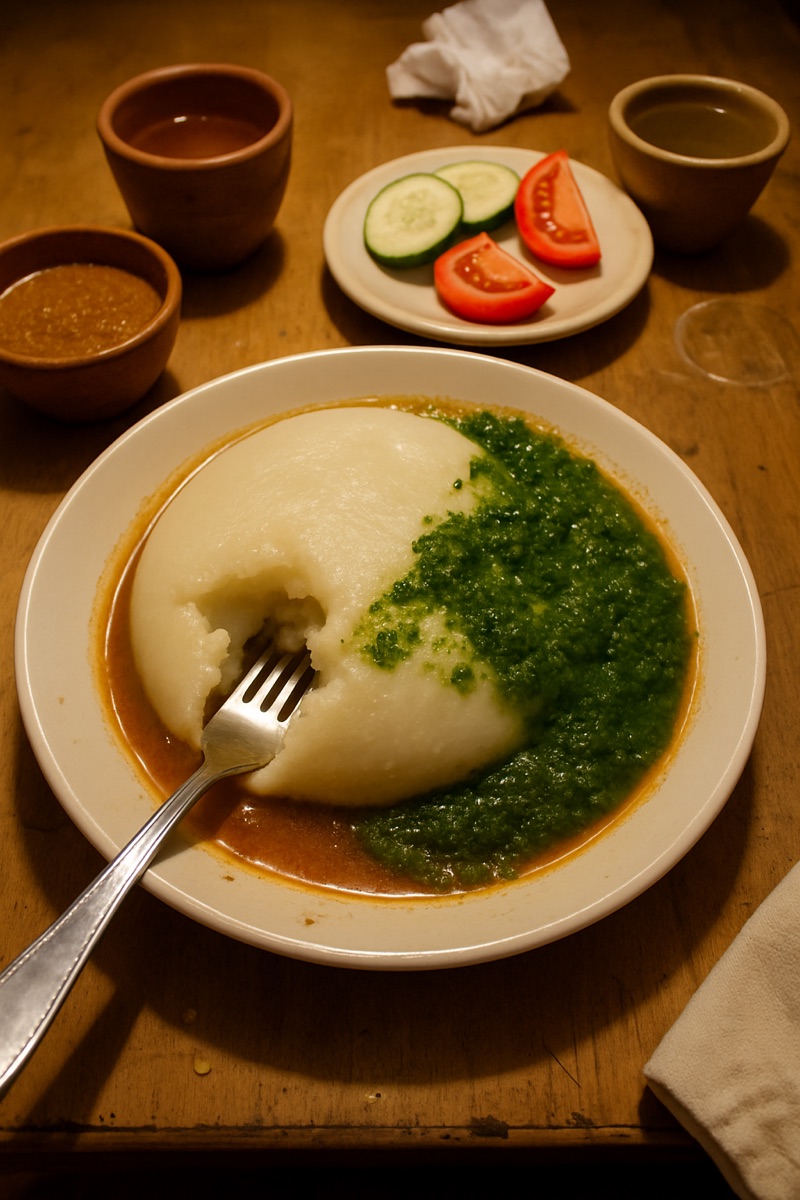
Tô and its sauces
Other common sauces for tô are made with sorrel leaves (sauce oseille), sesame, dried baobab leaves, or tomato, peppers and carrots, sometimes with a piece of mutton or goat.
- Tô — A firm paste of millet, sorghum or corn flour stirred into boiling water and beaten until it pulls away from the pot, then shaped with a spoon or ladle into small elongated cakes. Called saghbo in Mooré, it is eaten by hand with a sauce and is the base food in most households. French Wikipedia calls it the national dish, and the same paste is eaten in Mali, Côte d'Ivoire, Niger, Benin and Togo.
- Sauce gombo — Okra sauce, the classic partner of tô. The okra is dried in the sun in season so it keeps, then soaked, pounded or chopped and cooked with red palm or peanut oil, onion, dried tomato, chilli, smoked fish or dried meat and soumbala. The result is smooth and slightly slimy. The Burkinabè culture site Infos Culture du Faso calls tô of millet with dried-okra sauce the soul of Burkinabè cuisine.
Rice and local dishes
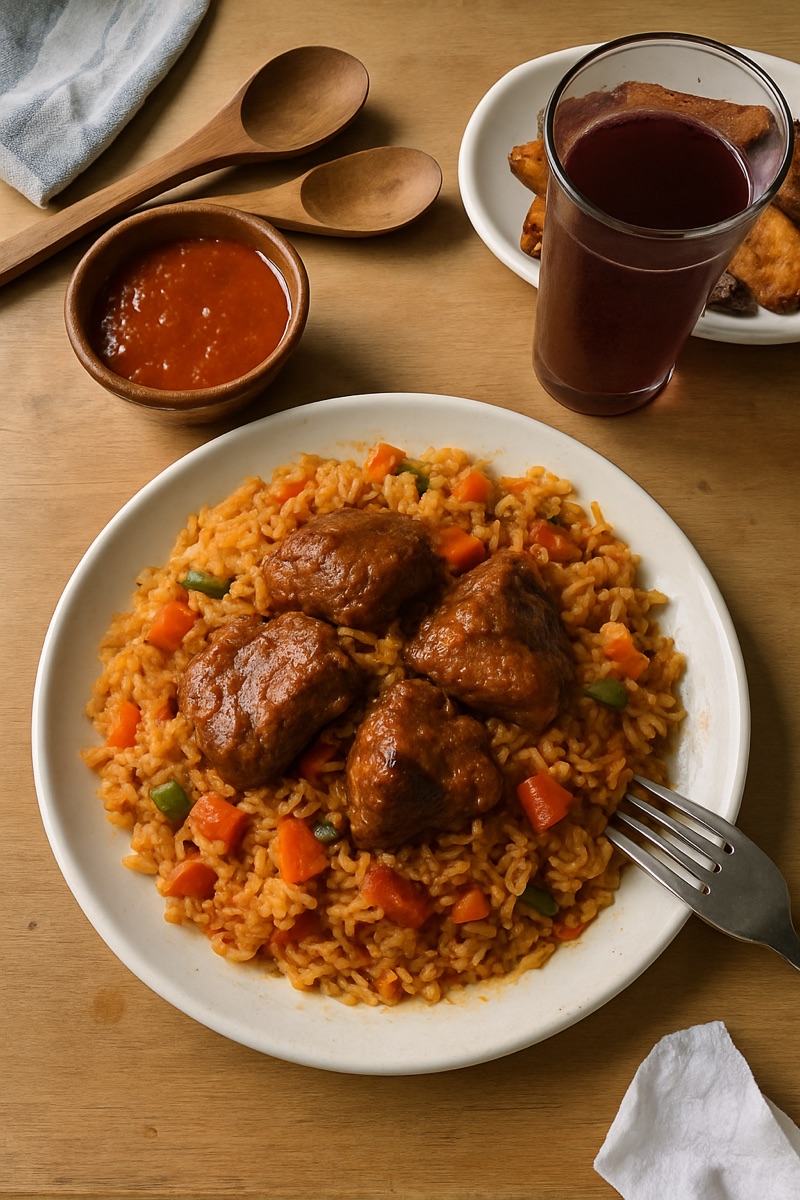
- Riz gras — "Fat rice": rice cooked in a red broth of meat, tomato and vegetables such as cabbage, carrot and eggplant, with the meat and vegetables served on top. It is party food, often served at celebrations in the cities. A version made with soumbala, riz soumbala or moui kolgo in Mooré, probably started in Ouagadougou and is eaten with local chicken at weddings and naming ceremonies.
- Babenda — A Mossi dish of sorrel leaves and amaranth leaves (boulomboulou) cooked with broken rice, crushed peanuts, soumbala, dried fish and chilli. It appeared between 1930 and 1940 as survival food during a food crisis caused by drought, made at first with little more than wild leaves and water. Today it is eaten across the country, by every social class, and sold in restaurants in Ouagadougou.
- Zamnin — The boiled fruits of an acacia (Acacia macrostachya), washed in many changes of water, simmered with potash for about an hour and then steamed. Like babenda, it was born during a famine. Once reserved for funerals in the villages, it is now served at weddings, naming ceremonies and in some restaurants of the capital, sometimes with minced meat.
Grilled meat
- Poulet bicyclette — Grilled free-range chicken from a hardy local breed, named after the bicycles vendors use to carry the birds to market. The meat is firm, and the breed is raised outdoors on what it finds. Braised chicken (poulet braisé) is offered by almost every restaurant and bar in the cities.
- Brochettes — Skewers of grilled meat, usually mutton, goat or beef, sold in the street and in bars. Grilled meat is one of the most common ways to eat meat in Burkina Faso, and grilled fish is served too.
Desserts and drinks
Other common drinks are bissap, a sour drink of roselle hibiscus sweetened with sugar; tédo, baobab fruit juice; yamaccu, made from ginger; tamarind juice; and liane juice from the fruit of Saba senegalensis.
- Dégué — Steamed millet grains mixed with curdled milk or yogurt, served cool; Senegal calls the same dessert thiakry. French Wikipedia traces it to the Bambara. It is eaten at any time of day as a snack and to break the fast during Ramadan.
- Gapal — Millet flour mixed with yogurt, a dish generally made by the communities of the Sahel. In Koudougou, in the centre-west, local dairy processors make and sell it.
- Zoom-koom — A drink of fine millet flour with sugar or honey, often with ginger and sometimes tamarind. Its Mooré name means flour water, and offering it to a guest is a sign of welcome. It is served at weddings and naming ceremonies to those who do not drink alcohol, and to break the fast.
- Dolo — A beer brewed from millet or sorghum, widely drunk and usually served in a calabash. French Wikipedia also gives tchapalo as another name for it.
Cook Burkinabè food at home
Tô is the dish French sources call the national dish, while English lists often name riz gras; we compare the two in our article on the national dish of Burkina Faso. Copper has full recipes for tô and riz gras, with ingredients and step-by-step methods, on our page about the food of Burkina Faso, alongside other West African recipes.
Tô, peanut sauces and dégué are shared with Mali, and the corn doughs continue south. Compare with the traditional food of Mali and the traditional food of Togo.
The recipes
 Riz gras
Questions people ask
What is the most popular food in Burkina Faso?
Tô, a firm paste of millet, sorghum or corn flour eaten by hand with sauce, is the base food in most households. Riz gras is the favourite for parties.
What is the national dish of Burkina Faso?
Tô is the dish most often called the national dish, though it has no official status. English lists sometimes give riz gras instead.
What is soumbala?
A condiment made from the fermented seeds of the néré tree, with a strong smell. It is called kolgo in Mooré and seasons many sauces and riz soumbala.
Is Burkinabè food spicy?
Chilli is a common seasoning in sauces such as okra sauce and babenda, but tô itself is plain and unsalted, so the heat depends on the sauce.
What do people drink in Burkina Faso?
Dolo, a millet or sorghum beer served in a calabash, zoom-koom made from millet and ginger, bissap from hibiscus, tédo from baobab fruit and ginger juice.
Keep reading
- What is the national dish of Burkina Faso?
- Traditional food of Benin: 13 dishes to know
- Traditional food of Cabo Verde: 13 dishes to know
- Traditional food of Côte d'Ivoire: 12 dishes to know
- Traditional food of The Gambia: 13 dishes to know
- Traditional food of Ghana: 13 dishes to know