 COPPER
Traditional food of Cabo Verde: 13 dishes to know
Cape Verdean food is island cooking built on corn and beans, slow-simmered with pork, sausage or fish, plus Atlantic seafood: tuna, mackerel, lobster, conch and barnacles. It mixes West African staples with Portuguese dishes from the colonial era. The most emblematic dishes are cachupa, xerém, caldo de peixe and pastel com diabo dentro, with grogue, the local rum, to drink.
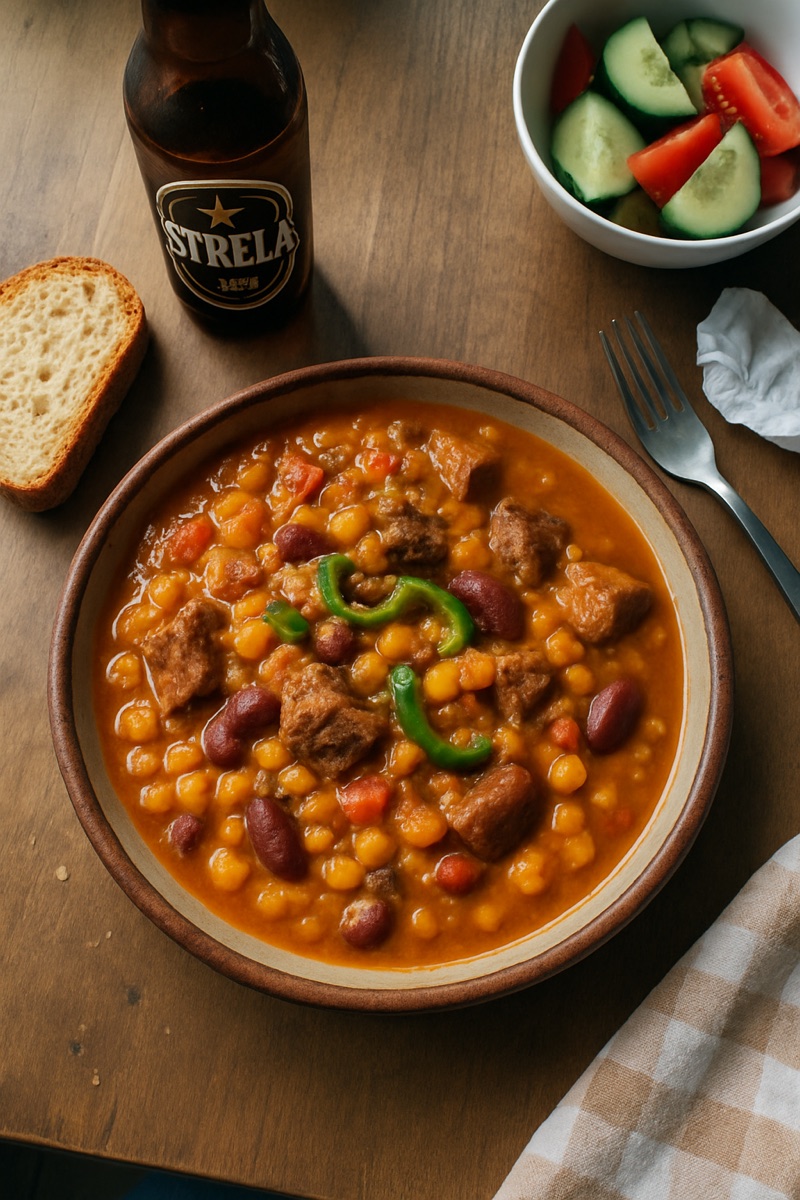
What Cape Verdean food is built on
Corn and beans are the staples of Cabo Verde (Cape Verde). They go whole into cachupa, are ground into flour for xerém and cuscus, and are cooked with cassava, sweet potato, squash, kale and carrots. Rice and fried potatoes are popular too. The islands were a Portuguese colony until 1975, and long periods of drought and famine shaped dishes like cachupa, which stretch a few staples a long way, with meat or fish added when a household can afford them.
Because the archipelago sits in the Atlantic, fish matters as much as corn: tuna, mackerel, sawfish, lobster, octopus, limpets, conch and barnacles. Pork, chicken and goat are the main meats. The Portuguese legacy shows in olives, imported Alentejo wines, feijoada, pudim and the many pastéis, while West Africa shows in the corn, cassava and malagueta chilli.
Corn dishes
- Cachupa — The national dish: whole hominy corn and beans simmered for hours with fish or meat such as pork, sausage, chicken or goat, often with morcela blood sausage, cassava, sweet potato and cabbage. Cachupa rica holds several meats and is kept for Sundays and celebrations, while cachupa pobre is made with fish or vegetables only. Leftovers are fried the next morning as cachupa guisada, with a fried egg and linguiça.
- Xerém — Corn flour cooked with water, bay leaf, butter and salt, served with soup; it can also be cooked with fresh tuna, coconut milk and onion, and is sometimes served as a side dish at weddings. Xerém de festa, made with lard, pork and onion, is the festive version, and on the island of Brava xerém is eaten at the June drum festival.
- Cuscus — Not the North African grain dish but a sweet flour and sugar mixture, usually cornmeal, steamed into a cake in a clay pot called a binde. It is a breakfast food, eaten with butter and coffee, or with molasses and goat cheese.
Fish and seafood
- Caldo de peixe — Also called calderado: fish, usually mackerel, cooked with potato, pumpkin, carrots and other vegetables, served with rice, tomato purée or corn purée.
- Arroz de marisco — Seafood rice: shrimp and other shellfish cooked with onion, garlic, peppers and tomato, then rice and a shellfish broth. It is served with lemon juice and slices of malagueta chilli. Our version is soupy and draws its broth from the shrimp shells themselves.
- Búzio cabra — A dish made from the bubonian conch (Persististrombus latus), a large sea snail. With bafa, it is one of the two seafood dishes that encyclopedia entries on Cape Verdean cuisine single out.
- Bafa — A quick, festive dish of limpets, whelks or octopus (bafa de polvo), eaten as a snack, a starter or a main course, usually with beer, wine or grogue.
- Percebes — Gooseneck barnacles steamed in a large pot and eaten by cracking off the end and peeling back the skin to reach the meat, which is similar in texture to squid. On São Vicente they are also stewed as guisado de percebes.
- Morreia — Moray eel, brined, cut into small pieces and fried until crunchy with garlic, bay leaf and lemon. It is eaten at lunch or dinner, or served as a bafa with drinks.
Pastries and sweets
Grogue is the islands' drink: a strong rum distilled from sugarcane pressed in a trapiche, a traditional mill, on Santo Antão (around Paul) and Santiago (around Cidade Velha). Ponche is grogue sweetened with condensed milk or sugarcane molasses. Strela is the most popular beer, and wine is made on Fogo, at Chã das Caldeiras.
- Pastel com diabo dentro — "Pastry with the devil inside": a fried turnover filled with tuna, garlic and chilli. In the old version the dough is mashed sweet potato mixed with fine cornmeal, giving a darker, rustic crust; the devil is the malagueta pepper. Wheat-dough pastéis filled with fish or meat are now more common.
- Pudim de leite — Milk pudding made with eggs, sugar, vanilla and lemon zest, set like a flan under caramel and served cold. It is one of the most popular desserts in the country.
- Doce de coco — Coconut cooked for a long time with sugar and butter until it sets into sweet chunks, often wrapped in decorative paper. It keeps for weeks.
- Goat cheese with papaya jam — Island goat cheese, quejo di terra in Creole, served with papaya jam. The same cheese is eaten with cuscus and molasses.
Island by island
Every island cooks cachupa its own way, and several have their own dishes. Santo Antão makes grogue and conservas, shrimp or pork stews, as well as a shrimp dish named after "mama Bibi" of Chã das Pedras. São Vicente has a seafood rice, arroz de cabidela de marisco, and its barnacle stew. Fogo is known for grilled chicken with tomatoes, ervilhas assadas (cooked peas) and its wines. Santiago shares the grogue tradition; turtle steak, once popular there, has slowly disappeared since turtle killing was banned in 2002. São Nicolau has a beef stew called modje, and Brava its festive xerém.
Cook Cape Verdean food at home
Cachupa is the national dish of Cabo Verde. Copper has full recipes for cachupa, arroz de marisco and pastel com diabo dentro, with ingredients and step-by-step methods, on our page about the food of Cabo Verde, and the mainland kitchens are in our guide to West African food.
Cachupa and the Portuguese pastries also turn up on the mainland: compare with the traditional food of Guinea-Bissau and the traditional food of Senegal.
The recipes
- Catchupa🇨🇻 Cabo Verde · 16 hours and 30 minutes
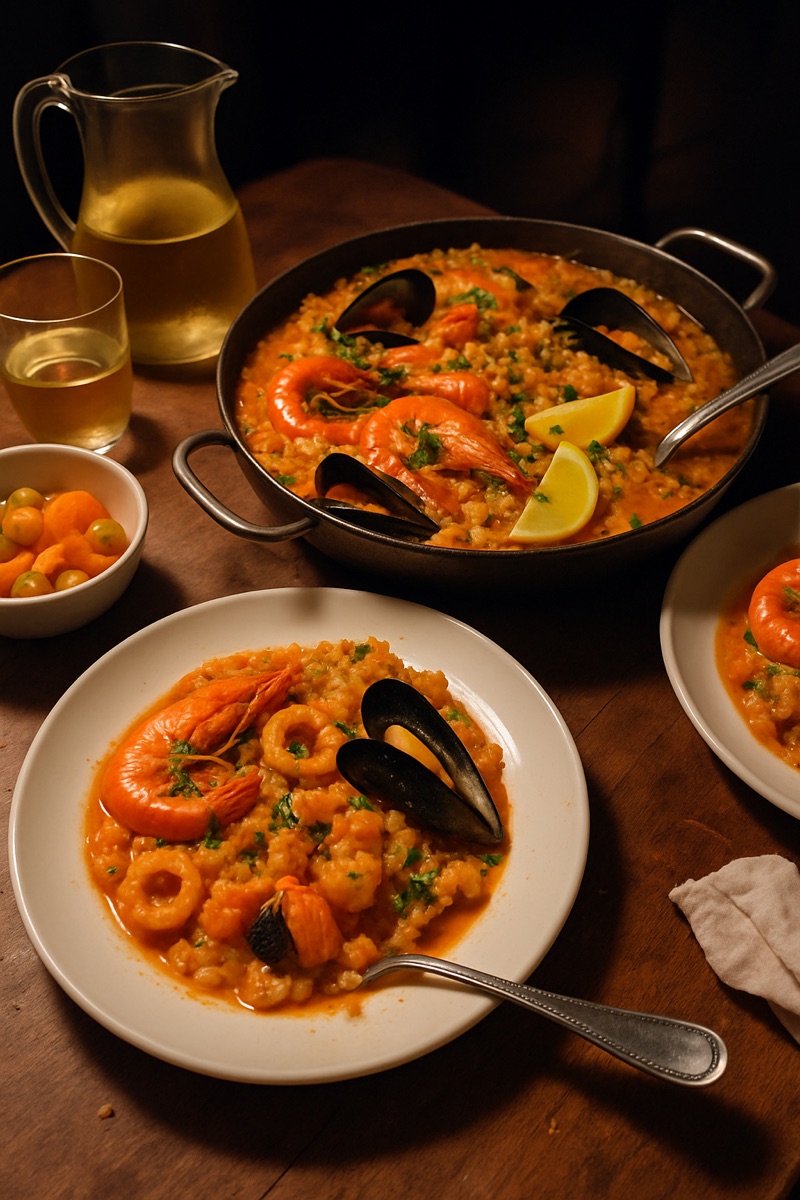 Arroz de marisco🇨🇻 Cabo Verde · 1 hour and 15 minutes
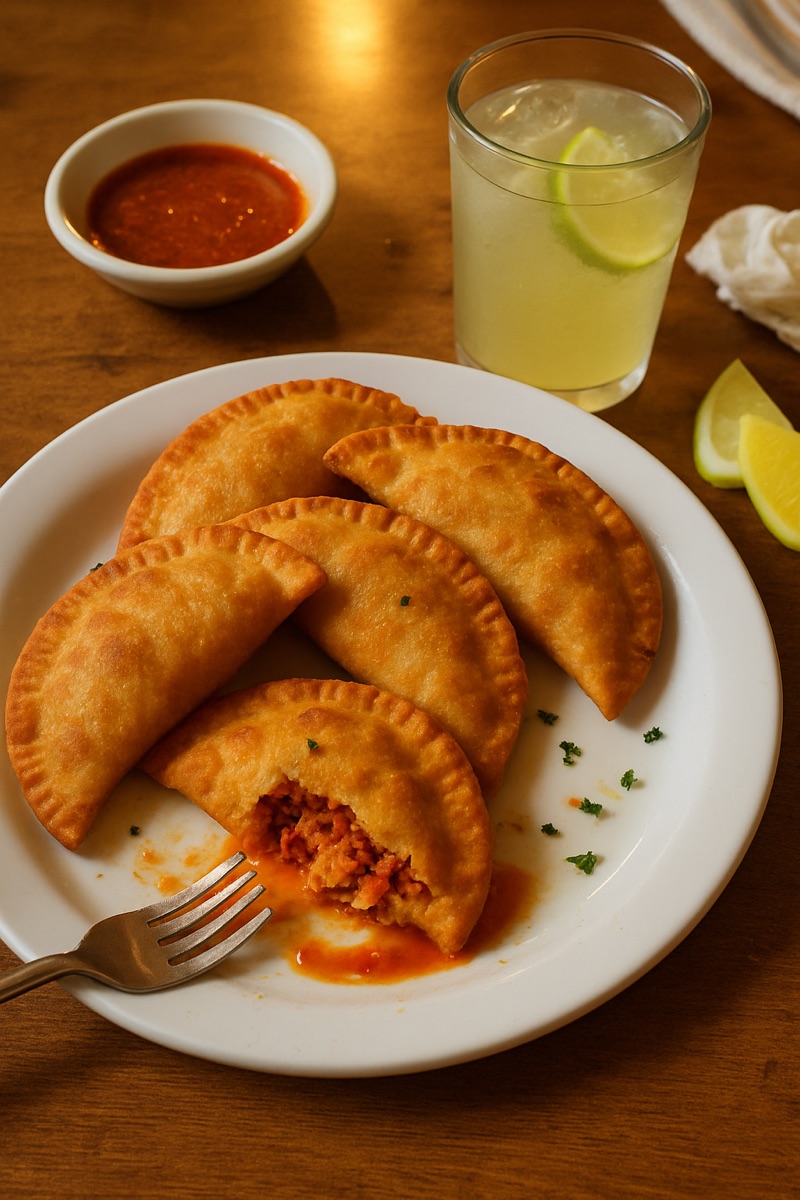 Pastel com diabo dentro🇨🇻 Cabo Verde · 1 hour and 40 minutes
Questions people ask
What is the most popular food in Cabo Verde?
Cachupa, the slow-cooked stew of hominy corn, beans and meat or fish, is the national dish and is eaten on every island. Fish dishes such as caldo de peixe and the pastéis are the other everyday favourites.
What do people in Cape Verde eat for breakfast?
Cachupa guisada, yesterday's cachupa fried with an egg and sausage or fish, is the classic breakfast. Cuscus, a sweet steamed corn cake eaten with butter and coffee, is the other one.
Is Cape Verdean food spicy?
Chilli is added rather than built in: malagueta comes in slices with seafood rice and inside the pastel com diabo dentro, and some people add piri-piri sauce to their cachupa.
What is the difference between cachupa rica and cachupa pobre?
Cachupa rica contains several meats and is kept for Sundays and celebrations; cachupa pobre is the everyday version, made with fish or with only corn, beans and vegetables.
What do people drink in Cabo Verde?
Grogue, a strong sugarcane rum from Santo Antão and Santiago, and ponche, its sweetened version. Strela beer and the wines of Fogo are the other local drinks.
Keep reading
- What is the national dish of Cabo Verde?
- Traditional food of Benin: 13 dishes to know
- Traditional food of Burkina Faso: 11 dishes to know
- Traditional food of Côte d'Ivoire: 12 dishes to know
- Traditional food of The Gambia: 13 dishes to know
- Traditional food of Ghana: 13 dishes to know