 COPPER
Traditional food of Guinea-Bissau: 12 dishes to know
Bissau-Guinean food is rice with a caldo, a stew of peanut, palm oil or okra cooked with fish, chicken or goat, seasoned with chilli and Guinea pepper. It mixes West African cooking with Portuguese touches from the colonial era. The most emblematic dishes are caldo de mancarra, caldo de tchebem, sigá and cafriela de frango, with cashew juice to drink.
What Bissau-Guinean food is built on
Rice is the staple, above all on the coast and in rural areas, while millet is more common inland. Most traditional meals are rice served with a soup or stew, a caldo, made with fish, meat, vegetables or a peanut sauce. Fish usually goes with the traditional sauces, and seafood, shrimp and shellfish play a large part along the Atlantic coast and the river networks.
The other ingredients are cassava, sweet potato, yams, plantain, beans, black-eyed peas, onion and tomato. Palm oil and peanuts, called mancarra, are the two great sauce bases; the Portuguese pushed peanuts and cashews as cash crops, and cashews are still grown for export. Chillies and the seeds of Aframomum melegueta, Guinea pepper, give the heat. Milk, curds and whey are eaten too, and three meals a day is the norm.
The caldos: stews over rice
- Caldo de mancarra — Peanut stew, the best-known dish of the country: peanuts crushed to a paste with tomato, thinned and sieved, then simmered with chicken, goat, beef or fish until creamy. Okra, cassava and piripiri chilli are optional additions. It is served with white rice or rice cakes and is the local form of the West African maafe.
- Caldo de tchebem — Also spelled caldo de chebeu: a fish stew made with palm fruit extract, okra and vegetables, served with rice.
- Caldo de citi — A stew built on palm oil, which Portuguese-language references list among the traditional dishes and pair with malagueta chilli. It can be cooked with smoked catfish.
- Sigá — A sauce of palm oil and okra with meat or fish, eaten over white rice.
- Djambo — Sweet potato leaves stewed with peanuts and beef or chicken.
- Caldo branco — The "white" caldo: a fish stew served with rice.
Rice and chicken dishes
Other everyday dishes include arroz de cabra, rice with goat meat; canja, a chicken and rice soup with aromatics; futi; and moni, a sweet corn flour porridge.
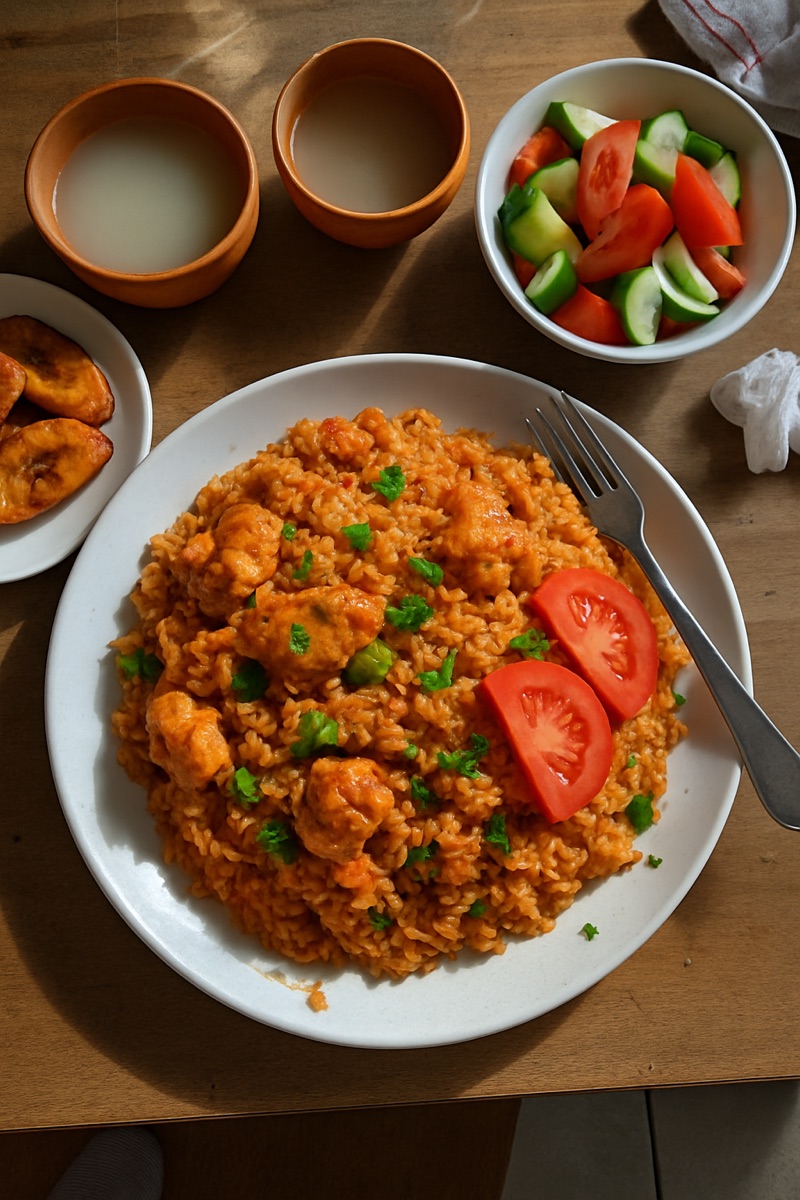
- Jollof rice — Rice steamed in a tomato stew fried until the oil separates. Guinea-Bissau shares it with the rest of West Africa, and also knows riz gras, "fat rice", the variant of French-speaking West Africa made with short-grain rice.
- Arroz com iogurte — Also called badadji: rice with plain yoghurt, often served with palm oil.
- Cafriela de frango — Chicken marinated with lemon, garlic and spices, then grilled or stewed.
Pastries, sweets and drinks
The cashew fruit, not only the nut, is used: sumo de caju is its juice, and canjira, or vinho de caju, is the fermented, alcoholic version. Palm wine is drunk at gatherings, sumo di cabaceira is baobab juice, sumo di ondjo is made from hibiscus flowers, and warga is sweet green tea. Baobab and hibiscus are also frozen into sorvete di cabaceira and sorvete di ondjo, and thiakry, millet couscous with fermented milk or yoghurt, is eaten as a dessert.
- Pastel — A savoury fried pastry filled with tuna, listed among the pastries with rissóis, small fried pastries filled with shrimp.
- Fidjós — Fried fritters made with banana. Donetes, small fried dough pastries, are their doughnut-like cousins.
- Canhã — A sweet made from ground peanuts, part of a family of sweets that also includes doce de amendoim (peanut) and doce de papaya.
Portuguese and Cape Verdean heritage
Portuguese colonisation, from the 15th century to independence, introduced new crops, seasonings and techniques that were absorbed into local cooking rather than replacing it. Dishes popular across the Portuguese-speaking world are eaten in Guinea-Bissau too: feijoada, bacalhau com natas, pudim, and bolo de bolacha, a no-bake cake of biscuits soaked in coffee.
Copper's Bissau-Guinean collection reflects that double heritage. Catchupa, the hominy and bean stew, is the national dish of Cabo Verde, the archipelago to which Guinea-Bissau is tied by its Portuguese-speaking past. Caldo verde is the potato and collard green soup of the Minho region of northern Portugal. Neither is native to the country, which is why they are not counted among the 12 dishes above.
Food at celebrations
Meals are shared with family, guests and neighbours, and hospitality is part of the food culture. Traditional dishes are cooked for weddings, births, circumcision ceremonies and funerals, usually with palm wine and other local drinks. On 12 September, the birthday of independence leader Amílcar Cabral, celebrations can include yassa, chicken with mustard, citrus and onion. Carnival in February, Independence Day on 24 September and New Year are other occasions for big shared meals.
Cook Bissau-Guinean food at home
Caldo de mancarra is the dish most often named as the national dish of Guinea-Bissau. Copper's recipes for jollof rice, catchupa and caldo verde, with ingredients and step-by-step methods, are on our page about the food of Guinea-Bissau, and the mainland neighbours are in our guide to West African food.
Compare with the traditional food of Senegal, which shares the rice and peanut dishes, and the traditional food of Cabo Verde, which shares the Portuguese side.
The recipes
- Jollof rice🇬🇼 Guinea-Bissau · 1 hour and 35 minutes
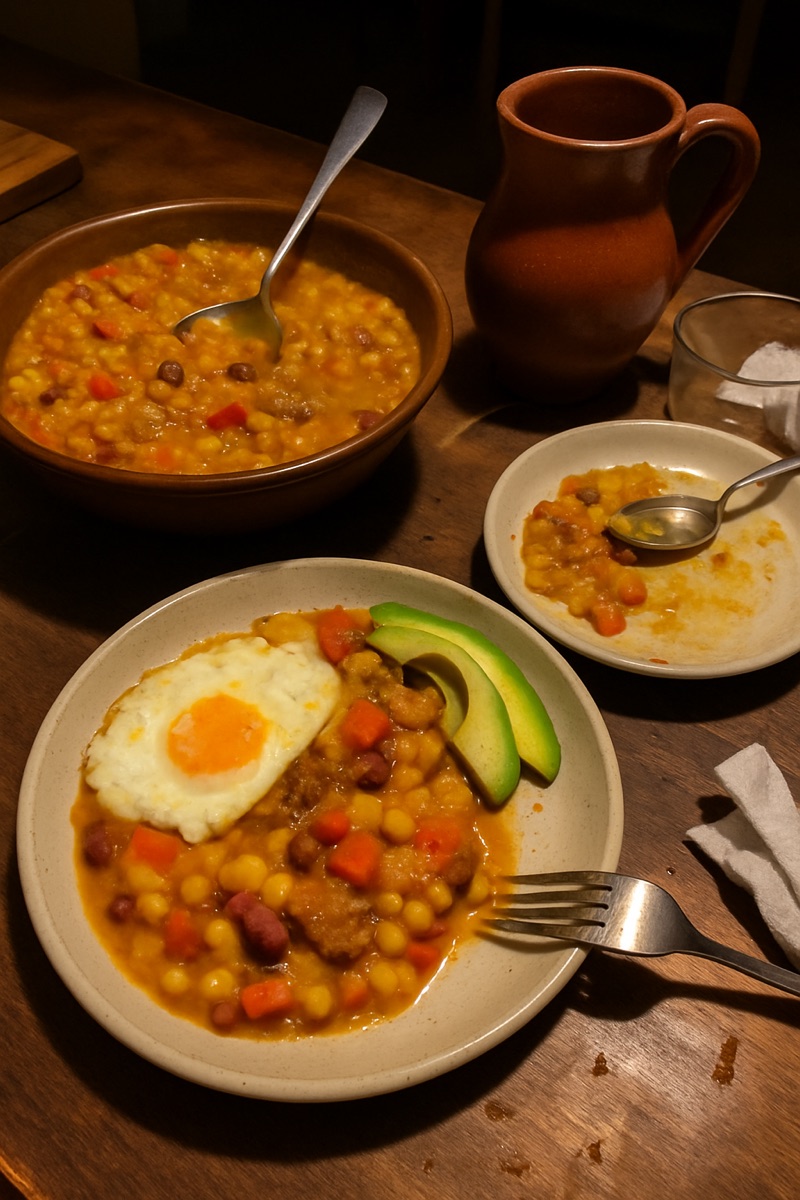 Catchupa🇬🇼 Guinea-Bissau · 16 hours and 25 minutes
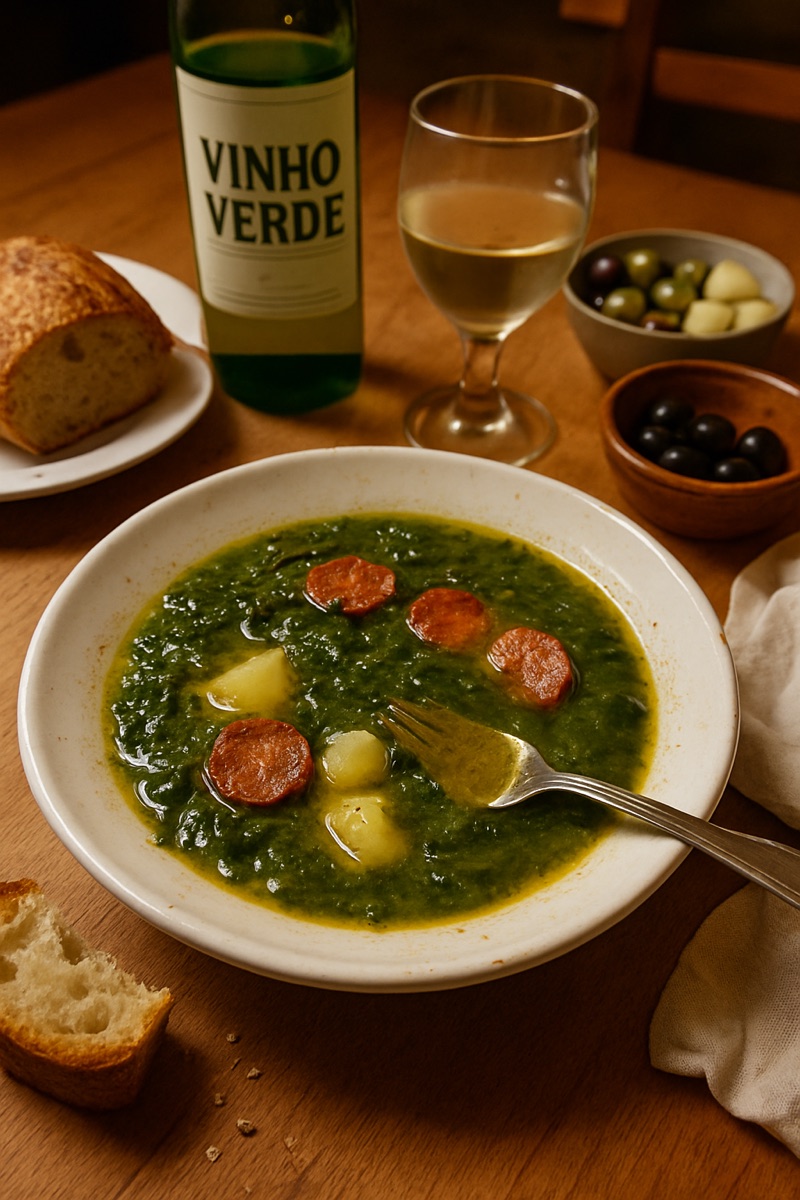 Caldo verde🇬🇼 Guinea-Bissau · 45 minutes
Questions people ask
What is the most popular food in Guinea-Bissau?
Rice with a caldo. Caldo de mancarra, the peanut stew, is the best-known dish and the one most often called the national dish; caldo de tchebem, made with palm fruit, and sigá, palm oil and okra, are the other everyday stews.
What does mancarra mean?
Mancarra is the word used in Guinea-Bissau for the peanut, the base of caldo de mancarra.
What do people in Guinea-Bissau eat for breakfast?
Three meals a day is the norm, and the sources do not single out a breakfast dish. Moni, a sweet corn flour porridge, and fried pastries such as fidjós and pastel are part of the everyday repertoire.
Is Bissau-Guinean food spicy?
It can be. Chillies, piripiri (malagueta) and Guinea pepper seeds are used in cooking, and caldo de citi is eaten with malagueta. In caldo de mancarra the hot pepper is optional, so the heat varies from cook to cook.
What do people drink in Guinea-Bissau?
Cashew juice (sumo de caju) and its fermented form, canjira, palm wine, baobab and hibiscus juices, and warga, a sweet green tea.
Keep reading
- What is the national dish of Guinea-Bissau?
- Traditional food of Benin: 13 dishes to know
- Traditional food of Burkina Faso: 11 dishes to know
- Traditional food of Cabo Verde: 13 dishes to know
- Traditional food of Côte d'Ivoire: 12 dishes to know
- Traditional food of The Gambia: 13 dishes to know