 COPPER
What is the national dish of Guinea-Bissau?
Guinea-Bissau has no official national dish, but caldo de mancarra is the one most often named. It is a peanut stew: mancarra is the Guinean word for peanut, which is ground to a paste with tomato and cooked with chicken, goat, beef or fish, then served with white rice.
What is caldo de mancarra?
Caldo de mancarra, also spelled caldo di mancarra, is one of the best-known dishes of Guinea-Bissau. It is also called sopa de amendoim, peanut soup, and mancarra is the local name for the peanut. It is the Bissau-Guinean form of the West African peanut stew known elsewhere as maafe.
No law or decree makes it the national dish. It is the dish that lists of national dishes give for Guinea-Bissau, and the one the African diaspora magazine FunTimes chose to celebrate Guinea-Bissau's Independence Day on 24 September. Copper does not have a caldo de mancarra recipe yet.
What goes into caldo de mancarra?
The ingredients are all easy to find in local markets:
- Mancarra (peanuts): crushed to a creamy paste; many modern recipes use peanut butter.
- Meat or fish: chicken most often, or goat, beef or fresh fish.
- Tomato, onion and garlic, with a stock cube.
- Candja (okra), as the Guinean Creole calls it, and optionally cassava, sweet potato or pumpkin.
- Heat: chillies, bay leaves and piripiri (malagueta).
- Optional: a piece of dried sea snail, Cymbium senegalense, for depth.
How caldo de mancarra is made
The chicken is cut up, seasoned with salt, piripiri and a large onion in rings, and cooked in a little water over low heat until almost no liquid is left.
Meanwhile the peanuts are crushed in a mortar to a powder, mixed with chopped tomatoes into a paste, thinned with water and pushed through a sieve to remove the larger pieces. This liquid goes over the chicken and simmers on low heat, stirred now and then so it does not stick, until it thickens into a creamy sauce.
It is served with white rice or rice cakes. Rice is the staple of Guinea-Bissau, especially in rural areas, and most traditional dishes are rice with a soup or stew.
Other stews and rice dishes of Guinea-Bissau
Peanut, palm oil and fish run through the rest of the menu:
- Caldo de tchebem: fish stew made with palm fruit extract, okra and vegetables.
- Caldo branco: a fish stew served with rice.
- Sigá: palm oil and okra sauce with meat or fish.
- Djambo: sweet potato leaves cooked with peanuts and beef or chicken.
- Cafriela de frango: chicken marinated with lemon, garlic and spices, then grilled or stewed.
- Arroz com iogurte (badadji): rice with plain yoghurt, often with palm oil.
- Yassa: chicken with mustard, citrus and onion, eaten on 12 September, the birthday of independence leader Amílcar Cabral.
Other dishes to know from Guinea-Bissau
Guinea-Bissau shares rice dishes with its neighbours Senegal and Guinea, and its Portuguese colonial past ties it to the other Portuguese-speaking African countries. Peanuts and cashews were pushed as cash crops under Portuguese rule; cashews are still grown for export, and the cashew fruit is drunk as sumo de caju or fermented into canjira.
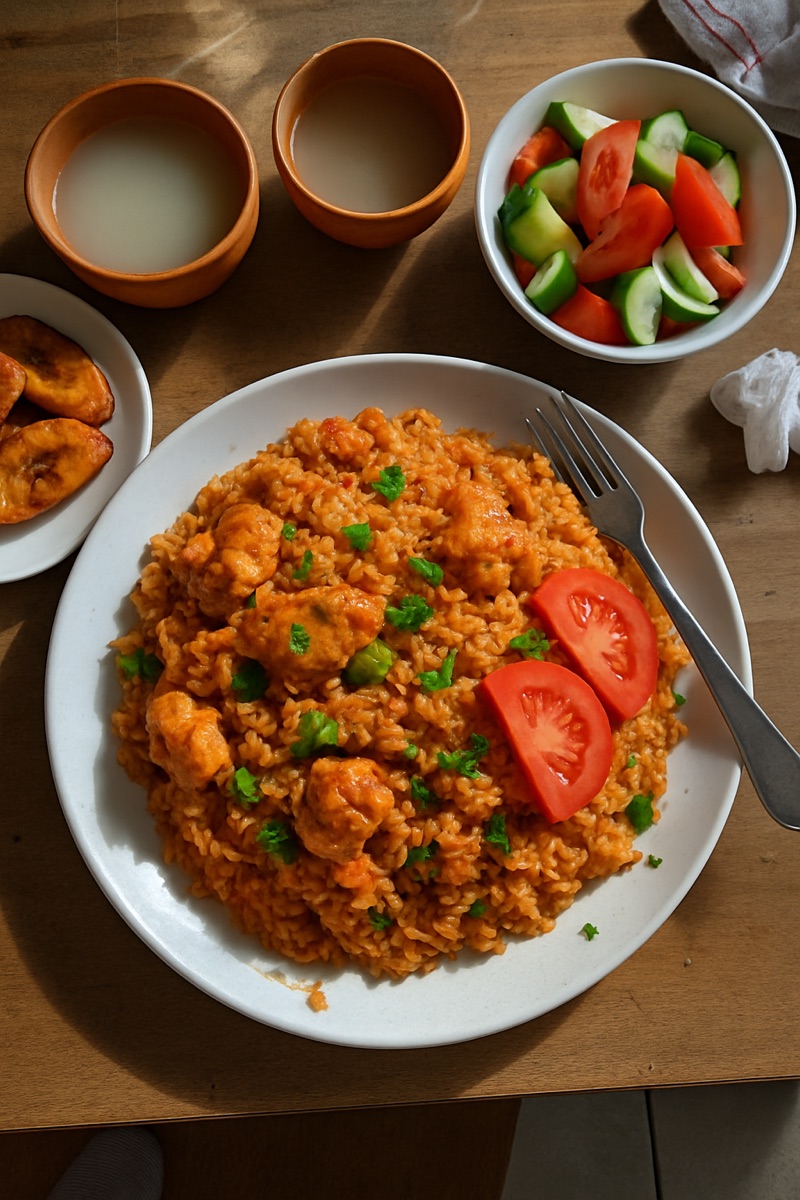
That double heritage shows in Copper's Bissau-Guinean collection. Jollof rice is the West African rice cooked in a tomato stew fried until the oil separates; Guinea-Bissau also knows the riz gras variant. Catchupa is the hominy and bean stew best known as the national dish of Cabo Verde. Caldo verde is the potato and collard green soup from the Minho region of northern Portugal.
For the Senegalese side of the story, see the national dish of Senegal. All three dishes are on our page about the food of Guinea-Bissau, and the region in our guide to West African food.
The recipes
- Jollof rice🇬🇼 Guinea-Bissau · 1 hour and 35 minutes
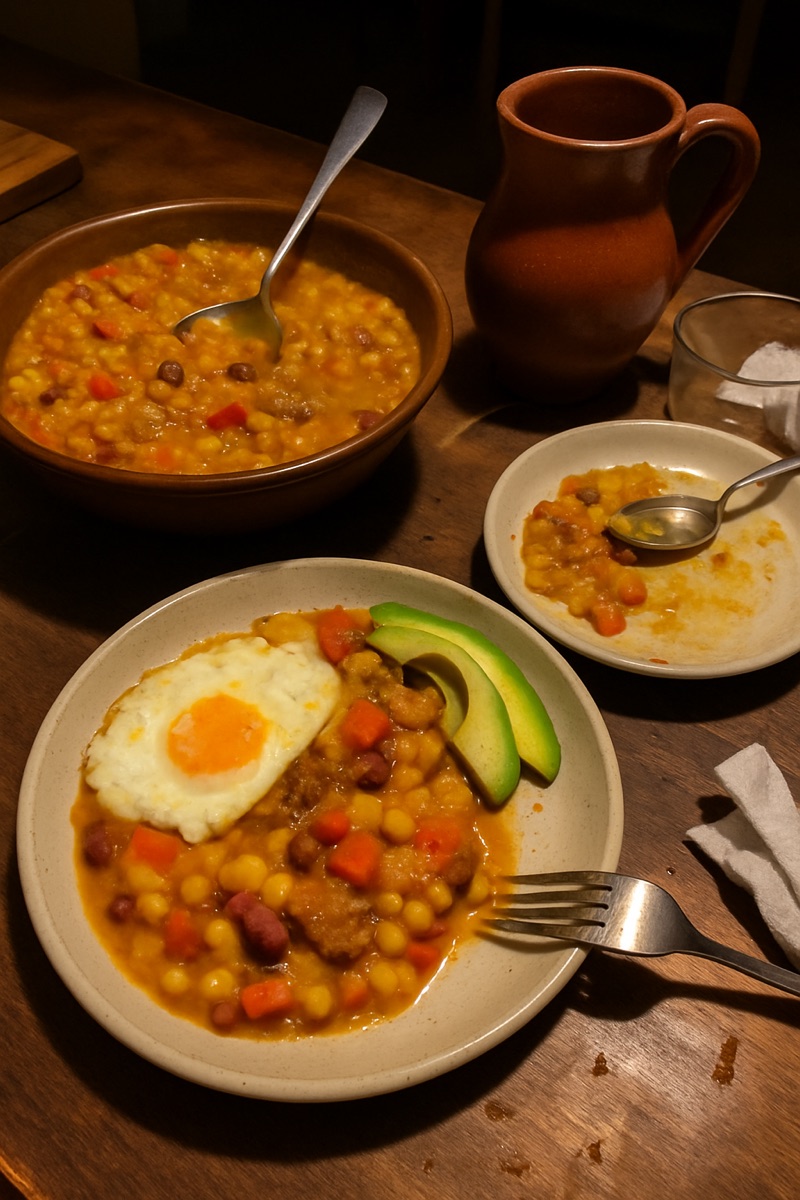 Catchupa🇬🇼 Guinea-Bissau · 16 hours and 25 minutes
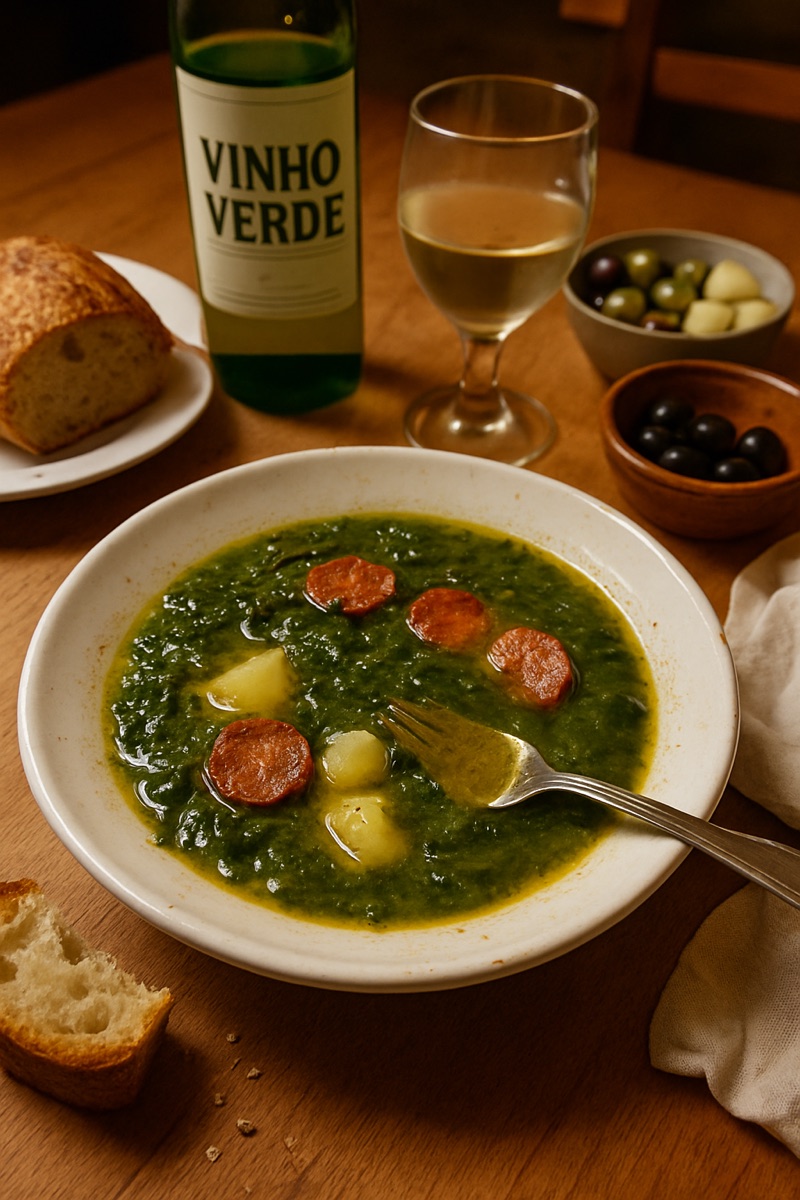 Caldo verde🇬🇼 Guinea-Bissau · 45 minutes
Questions people ask
Does Guinea-Bissau have an official national dish?
No. Caldo de mancarra, a peanut stew, is the dish most often named, but no law or decree makes it official.
What does mancarra mean?
Mancarra is the word used in Guinea-Bissau for the peanut, the main ingredient of caldo de mancarra.
Is caldo de mancarra the same as maafe?
It belongs to the same family. French-language references describe maafe as the dish called caldo de mancarra locally in Guinea-Bissau.
What is served with caldo de mancarra?
White rice, or rice cakes.
What do people eat in Guinea-Bissau on 12 September?
Celebrations of Amílcar Cabral's birthday on 12 September can include yassa, chicken prepared with mustard, citrus and onion.
Keep reading
- Traditional food of Guinea-Bissau: 12 dishes to know
- What is the national dish of Benin?
- What is the national dish of Burkina Faso?
- What is the national dish of Cabo Verde?
- What is the national dish of Côte d'Ivoire?
- What is the national dish of The Gambia?