 COPPER
What is the national dish of Benin?
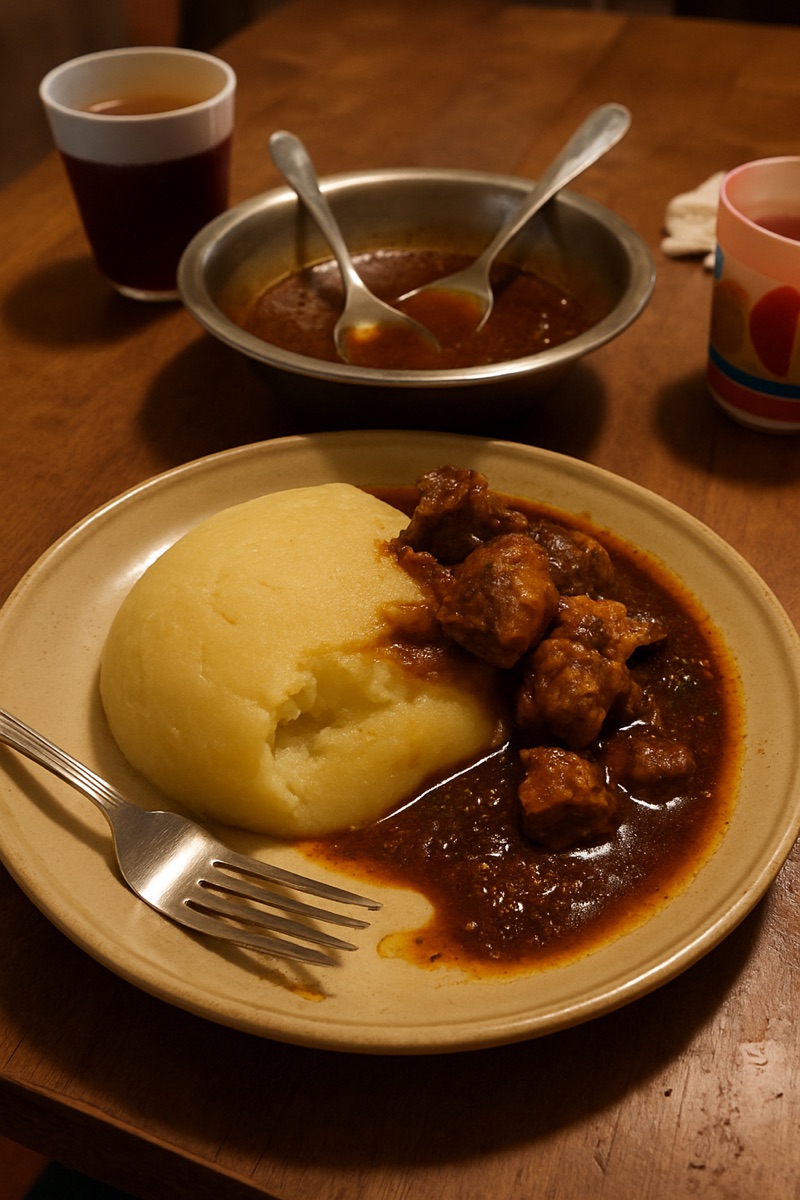
Benin has no official national dish. The one Beninese eat most is pâte (wɔ̌ in Fon), a firm dough of white corn flour and water, stirred hard in the pot and eaten by hand with a tomato, peanut or okra sauce. Wikipedia's list of national dishes names kuli-kuli, a fried peanut snack, but that is a street snack, not a meal.
Is pâte or kuli-kuli Benin's national dish?
No law or decree names a national dish for Benin. Two foods come up when people look for one.
Wikipedia's list of national dishes gives kuli-kuli: roasted peanuts ground to a paste, pressed to remove the oil, shaped and fried hard. It is a byproduct of making peanut oil, sold as a snack in Benin, Nigeria, Ghana and northern Cameroon, and it is generally traced to the Nupe people of Nigeria.
Kuli-kuli keeps for a long time, which is why it is sold in taxi parks to travellers. It is eaten on its own, with garri soaked in water and sugar, or ground into the spice mix for suya, the grilled meat skewers. Producing and selling it is traditionally women's work, and the money it earns is theirs.
French Wikipedia, which covers Beninese food in more detail, describes wɔ̌, the corn pâte, as the dish eaten most in Benin. This guide treats pâte as the honest answer and kuli-kuli as the name you will see on lists.
What is pâte made of?
Only two ingredients: white corn flour and water. No salt, no oil. All the seasoning comes from the sauce served with it.
The method has two stages. First, part of the flour is whisked into cold water and poured into boiling water to make a loose porridge, about 5 minutes. Then the rest of the flour goes in a handful at a time while the cook turns the paste with a wooden paddle, pressing it against the side of the pot for 10 to 15 minutes until it is smooth, firm and comes away cleanly. Portions are shaped with a wet ladle into smooth mounds. The full method, with quantities, is in our pâte recipe.
In quantities: 150 g of flour whisked into 400 ml of cold water, poured into 1.1 litres of boiling water, then the remaining 250 g rained in. That makes enough mounds for a family meal, each one eaten by pinching off a piece with the fingers and dipping it into the sauce.
Corn in the south, yam in the north
Benin's kitchen splits in two. In the south, corn is the main ingredient, made into dough and served with peanut or tomato sauces. Fish and chicken are the usual meats, fried in palm or peanut oil, and smoked fish is common.
In the north, yam is the staple, also served with peanut or tomato sauces, and beef and pork are more common. The north also has wagasi, a soft cows'-milk cheese with a red rind made by the Fulani and sold in towns such as Parakou. Across the country, afitin, a fermented seed condiment with a powerful smell, seasons many sauces.
The sauces that go with it
Pâte is never eaten alone. The usual partners, with their Fon names:
- Nùsúnnú: tomato sauce with fried meat or fish.
- Azin nùsúnnú: tomato sauce thickened with crushed peanuts.
- Févi: a slippery okra sauce.
- Nɛnúwì: a slippery sauce of adémè (jute) leaves.
- Mɔ̌yò: a mostly uncooked mix of tomato, onion and chilli, served with fried fish.
Pâte has many colours
Pâte changes with the region. Corn dominates in the south and yam in the north, so the same word covers several doughs:
- Amiwo: red pâte, corn flour cooked in a tomato sauce or with red palm oil.
- Piron: made from gari, toasted cassava meal.
- Telibɔ̌ wɔ̌: made from dried yam flour.
- Agǔ: boiled yam pounded in a mortar, close to fufu.
- Akassa: a smooth paste of fermented corn starch.
Other dishes to know from Benin
In the north, yam pounded in a wooden mortar is the staple. Our fufu recipe pounds the boiled yam hot for 15 to 20 minutes, adding spoons of its cooking water whenever it stiffens, until it stretches without tearing.
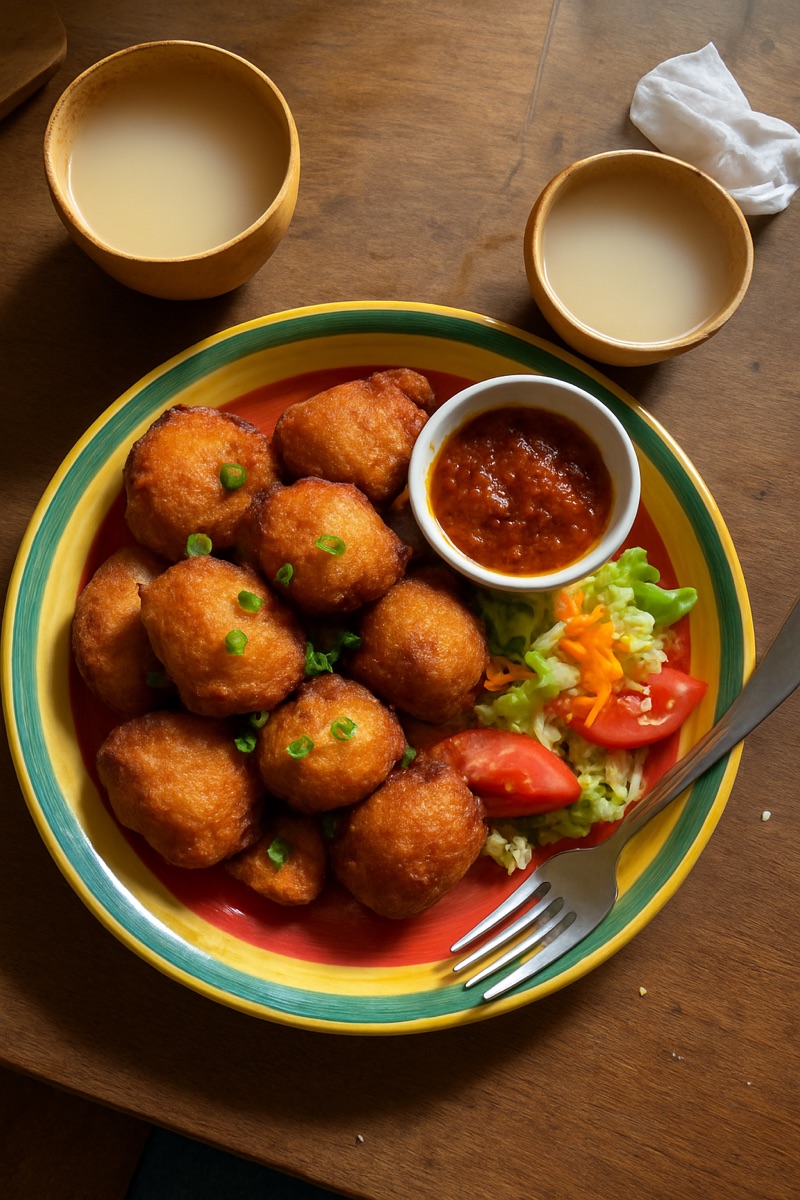
For a snack, Beninese buy bean fritters. Akara are made from black-eyed peas soaked, rubbed until every skin floats off, blended thick, whipped for 5 minutes and fried in red palm oil.
Northern Benin also eats dambou, the moringa couscous of the Zarma and Dendi, covered in our article on the national dish of Niger. The corn doughs continue next door, as in Togo's national dish.
You will find all three dishes, with step-by-step methods, on our page about the food of Benin, and the neighbouring kitchens in our guide to West African food.
The recipes
 Akara
Akara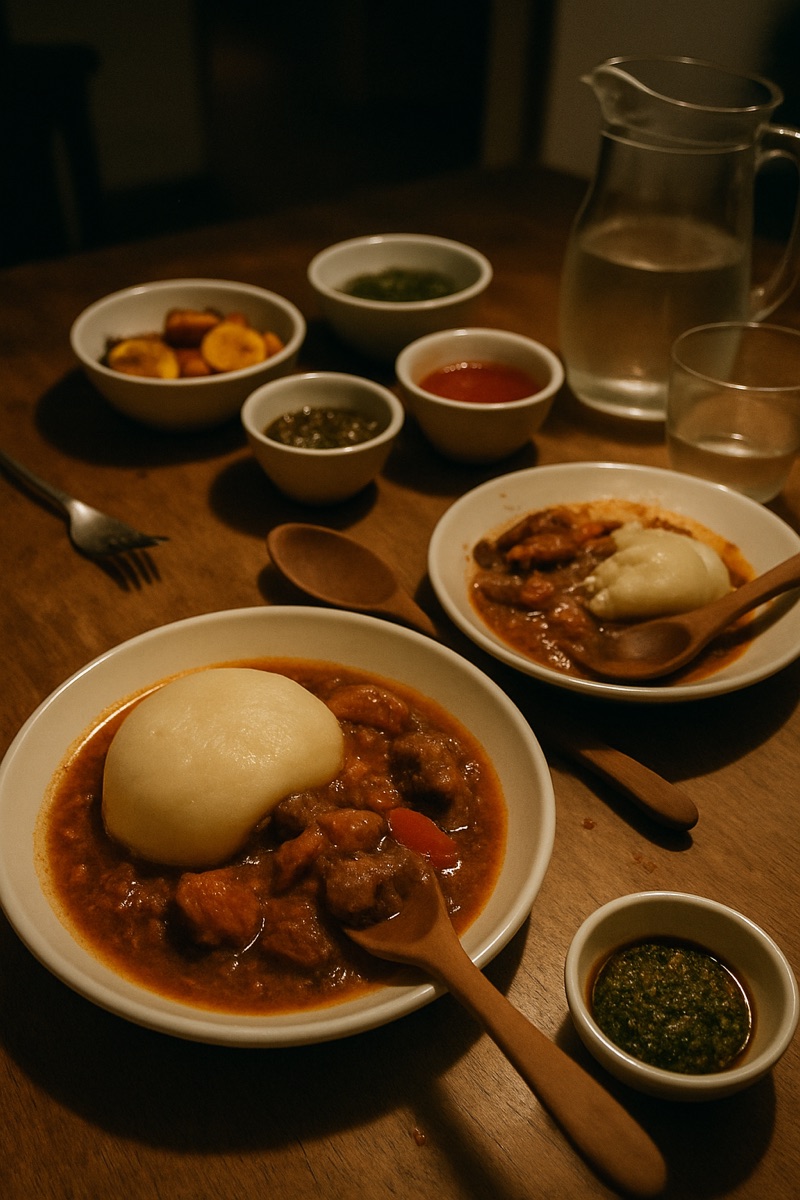 Fufu
FufuQuestions people ask
What is the most popular food in Benin?
Pâte (wɔ̌), a firm corn-flour dough served with sauce, is the dish eaten most in Benin. In the north, pounded yam plays the same role.
Is kuli-kuli the national dish of Benin?
Kuli-kuli appears on Wikipedia's list of national dishes, but it is a fried peanut snack shared with Nigeria and Ghana, not a meal. Benin has no official national dish.
What is pâte served with?
With a sauce: tomato with fried fish or meat, peanut, okra (févi) or green leaves. The pâte itself is not salted.
What is the difference between pâte and amiwo?
Plain pâte is white corn flour cooked in water. Amiwo is a red version cooked in a tomato sauce or with red palm oil.
How do you eat pâte?
Usually by hand, pinching off pieces to scoop up the sauce. In maquis, the small street restaurants, cutlery is often not provided.
Keep reading
- Traditional food of Benin: 13 dishes to know
- What is the national dish of Burkina Faso?
- What is the national dish of Cabo Verde?
- What is the national dish of Côte d'Ivoire?
- What is the national dish of The Gambia?
- What is the national dish of Ghana?