 COPPER
What is the national dish of Niger?
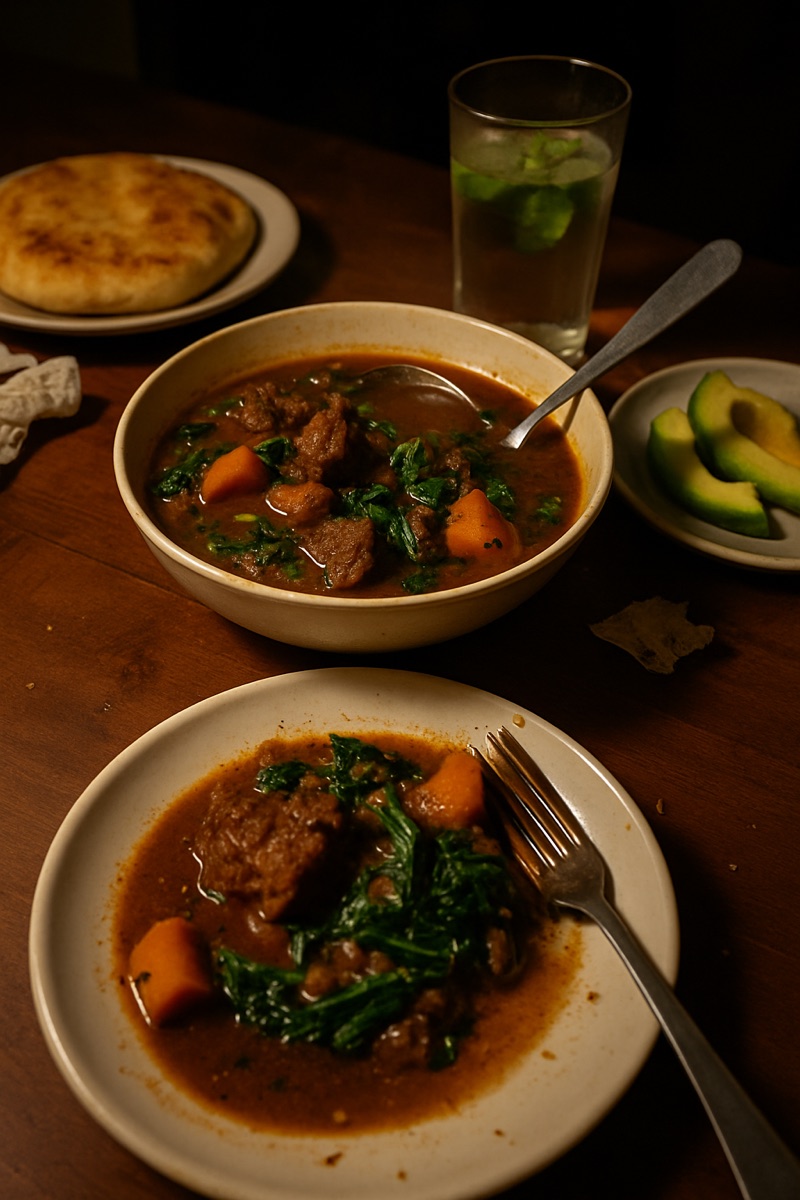
The national dish of Niger is dambou: a couscous of millet, rice or wheat, steamed, then mixed by hand with boiled moringa leaves, onion, chilli and crushed peanuts until the grain turns green. It comes from the Zarma and Songhai of south-western Niger and is served at namings and weddings. It has no official status but is the dish cited everywhere.
What is dambou?
Dambou (or dambu) is a variant of couscous whose colour and flavour come from moringa, the leaf of the drumstick tree. It was created by the Zarma and Songhai of south-western Niger, and is also eaten by the Dendi of northern Benin and in the Zongo settlements of West African cities where Songhai and Zarma travellers live.
Both the English and French Wikipedia lists of national dishes name dambou for Niger. No law declares it; it is the national dish by consensus.
Moringa is also called the drumstick tree, and its pods and flowers are edible too. In dambou it is the leaves that matter: they turn the whole grain green.
How dambou is made
The cereal varies with the cook: millet couscous, rice flour, fine wheat semolina or corn couscous. Our dambou recipe uses millet. The grain is moistened, rubbed between the palms so it separates, then steamed 20 minutes in a couscoussier.
Meanwhile the moringa leaves are stripped from their stems and boiled 5 minutes. They are tipped into the steamed grain and worked in by hand until the whole couscous is green. Onion and chilli fried with stock cubes, toasted crushed peanuts and salt go in last, and the dish steams another 10 minutes.
A French version of the recipe uses spinach alongside or instead of moringa, and aji dulce or green bell pepper for mild heat. In our version the quantities are 400 g of millet couscous, 300 g of moringa leaves and 100 g of groundnuts.
When dambou is eaten
Dambou can be eaten any day, but it is the dish of celebrations: naming ceremonies for newborns and weddings. Today it is also sold in restaurants, streets and markets, mostly by women. It is served with meat, fish or cowpeas on the side. Because it is also cooked by the Dendi, dambou appears in descriptions of northern Beninese food as well, where the everyday staples are otherwise corn dough in the south and pounded yam in the north.
What else Niger eats every day
Dambou is the festive plate, not the daily one. A typical Nigerien meal is a starch with a sauce or stew, and rice and millet are the starches eaten most. Couscous is saved for special occasions.
Niger's staples are millet, rice, cassava, sorghum, maize and beans. Farming depends on rainfall, and droughts have hit harvests in the past. Some spices, including ginger, nutmeg, cinnamon, saffron and cloves, arrived with Arab travellers, and tea is the everyday drink.
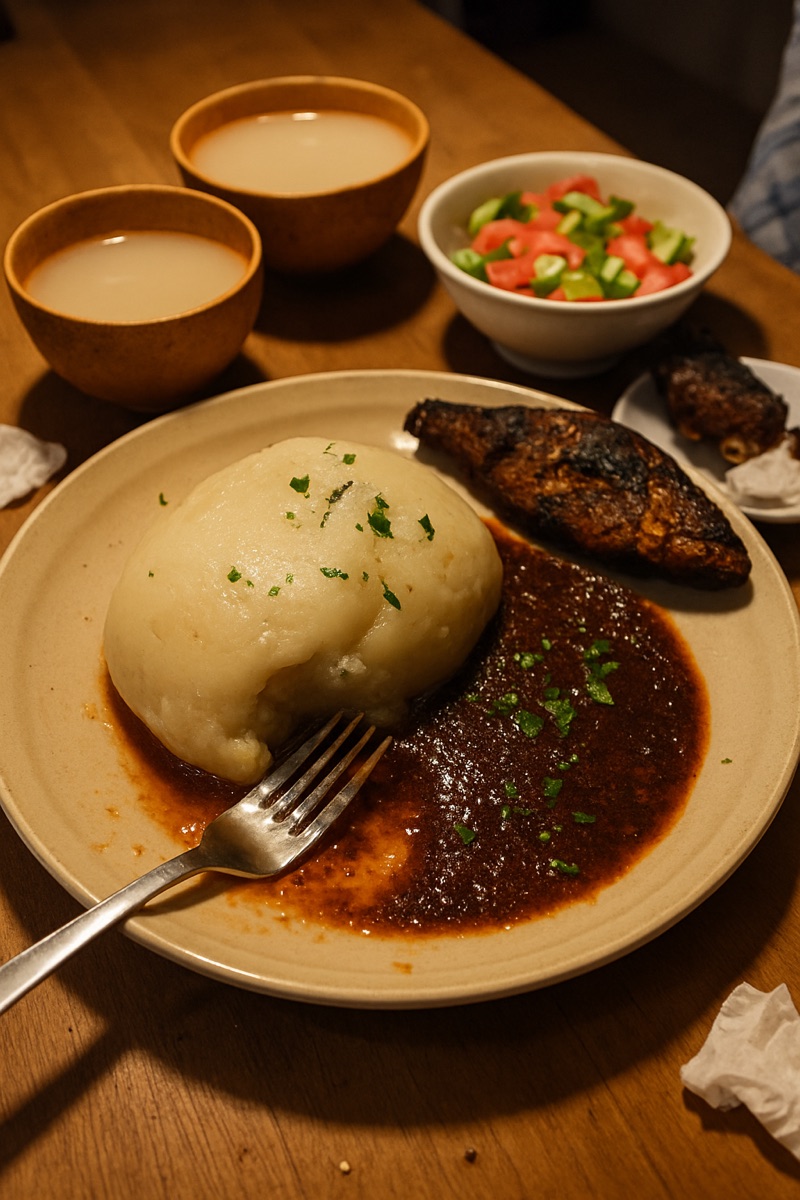
Across most of Niger, the starch is often tuwon shinkafa: soft local rice boiled until the grains burst, then beaten in the pot into a heavy paste and rolled into a ball. It is eaten with soups such as miyan kuka or miyan taushe. The same dish is eaten in northern Nigeria; see Nigeria's national dish.
Tuwo also comes in other grains: tuwon masara is made from maize flour and tuwon dawa from sorghum. In Ghana the rice version is called omo tuo.
Snacks and everyday foods
Meals in Niger often start with salads of seasonal vegetables, and grilled meat is common. Between meals, people eat porridge, wheat dumplings and beignets, the fried doughnuts sold in the street. Jollof rice is one of the best-known dishes in the country.
- Grains: millet, sorghum, rice, maize and fonio.
- Meat: beef, mutton, goat, chicken, guinea fowl and camel.
- Other foods: dates, tiger nuts, groundnuts, black-eyed peas and yogurt.
Other dishes to know from Niger
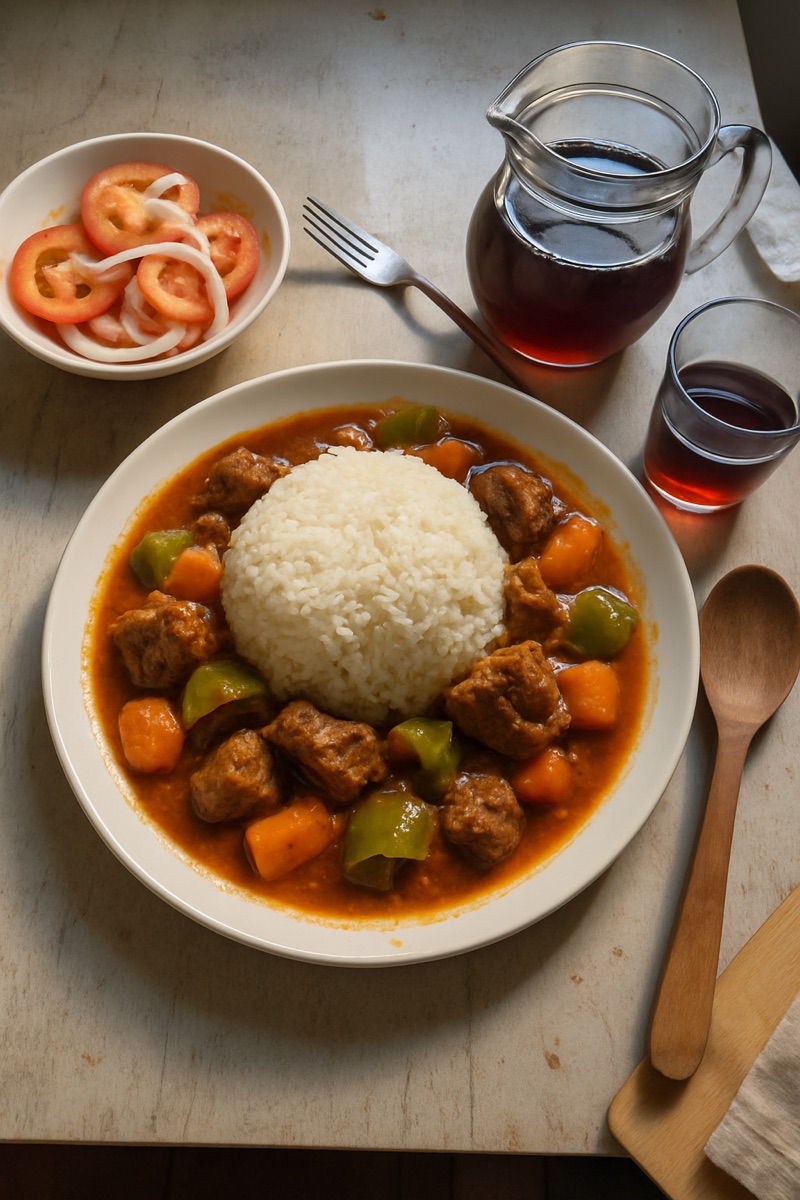
For guests, Nigerien cooks make riz au gras: mutton simmered 45 minutes in a broth reddened with fried tomato paste, then the rice cooked in that fatty broth, never in plain water, which is what au gras means. The proportions matter: 800 ml of broth for 400 g of rice, topped up with water if it has reduced too far, then 20 minutes covered on low heat. The meat, carrots and cabbage, cooked in the broth beforehand, are piled on top.
Neighbouring Mali shares the rice and millet base; see Mali's national dish.
You will find all three dishes, with step-by-step methods, on our page about the food of Niger, and more from the region in our guide to West African food.
The recipes
- Dambou🇳🇪 Niger · 45 minutes
 Tuwon shinkafa🇳🇪 Niger · 50 minutes
 Riz au gras🇳🇪 Niger · 1 hour and 40 minutes
Questions people ask
What is the national dish of Niger?
Dambou, a steamed couscous mixed with boiled moringa leaves and peanuts, is the dish cited as Niger's national dish. It has no official status.
What is moringa?
The leaves of the moringa tree, also called the drumstick tree. In Niger they are boiled and mixed into dambou.
Is Niger's food the same as Nigeria's?
They share some dishes, such as tuwon shinkafa, but Niger and Nigeria are different countries with different national dishes.
What cereal is dambou made with?
Millet couscous, rice flour, wheat semolina or corn couscous, depending on the cook.
When is dambou eaten?
Any day, but especially at naming ceremonies and weddings.
Keep reading
- Traditional food of Niger: 11 dishes to know
- What is the national dish of Benin?
- What is the national dish of Burkina Faso?
- What is the national dish of Cabo Verde?
- What is the national dish of Côte d'Ivoire?
- What is the national dish of The Gambia?