 COPPER
Traditional food of Niger: 11 dishes to know
Nigerien food is built on millet and rice, eaten as a starch with a sauce or stew, while couscous is kept for special occasions. Meals often start with salads of seasonal vegetables, grilled meat is common, and tea is the everyday drink. The most emblematic dishes are dambou, tuwon shinkafa with miyan kuka, kilishi and riz au gras.
What Nigerien food is built on
A typical meal in Niger is a starch with a sauce or stew, and the starches eaten most are millet and rice. The other staples are cassava, sorghum, maize and beans, with groundnuts, black-eyed peas, dates, tiger nuts and yogurt. Beef, mutton, goat, chicken, guinea fowl and camel are all eaten, and grilled meat is common. Meals usually start with colourful salads of seasonal vegetables, and moringa leaves are frequently used in them. Farming depends on rainfall, and droughts have hit harvests in the past.
Some spices, including ginger, nutmeg, cinnamon, saffron and cloves, were brought by Arab travellers, and hot spices are used too, sometimes to marinate meat. Tea is the common drink, and couscous is saved for special occasions.
Starches, rice and couscous
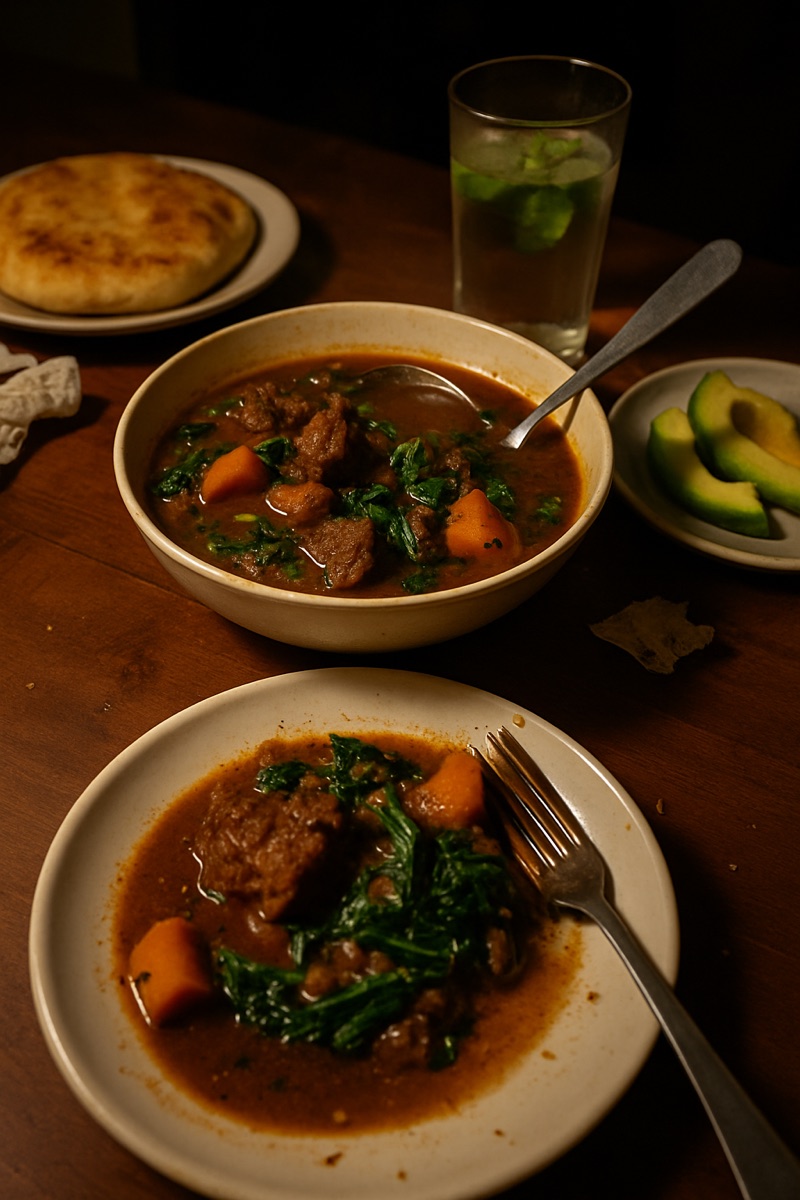
- Dambou — A couscous of millet, rice or wheat, steamed and mixed with boiled moringa leaves, onion, chilli and crushed peanuts until the grain turns green. It was created by the Zarma and Songhay of south-western Niger and is the dish of naming ceremonies and weddings. Today women sell it in restaurants, streets and markets, with meat, fish or cowpeas on the side.
- Tuwon shinkafa — A thick paste of soft, sticky local rice, boiled and beaten in the pot, then shaped into balls. It is eaten in Niger and northern Nigeria with soups such as miyan kuka or miyan taushe. The same swallow made from maize is tuwon masara, and from sorghum tuwon dawa.
- Watché — Rice and beans cooked together, a Hausa speciality of Niger also called doungouri. The same dish is atassi in Benin and ayimolou in Togo, and the choice of rice and bean changes its texture.
- Riz au gras — Rice cooked in the fatty broth of a meat and tomato stew rather than in water, with the meat and vegetables piled on top. Jollof rice, as this family of dishes is known in English, is one of the best-known foods in Niger.
Soups and sauces
Okra soups, made from fresh or dried okra, and stews of vegetables are the other everyday sauces, served over rice or a tuwo.
- Miyan kuka — A soup made from dried baobab leaves ground into powder, the usual partner of tuwo in Hausa cooking. Baobab leaves are rich in minerals, and the soup is eaten on both sides of the Niger–Nigeria border.
- Miyan taushe — A soup of pumpkin or squash, eaten with tuwo. In southern Niger it is also served with masa, the fermented rice cakes.
Meat, snacks and breakfast
- Kilishi — Thin strips of beef, or camel, lamb or goat, dried in the sun, coated in labu, a paste of groundnuts, onion and spices, dried again and roasted briefly over high heat. French Wikipedia attributes it to Niger, and Nigeriens who emigrated took it to Cameroon, Nigeria, Mali and Chad. It keeps for months, and is red when the paste contains red chilli.
- Kosai — Peeled beans shaped into balls and deep-fried, the Hausa name for akara. It is one of the classic Hausa breakfast foods.
- Masa — A cake of fermented rice, now also made with millet or a mix of both. It is eaten mostly at breakfast and as an afternoon snack, with porridge or beans, and in southern Niger with a spice mix called yaji or with soup. The Hausa spread it across the region, from Mali to Chad.
- Koko — A breakfast porridge of millet, maize or sorghum with tiger nuts. Porridges, wheat dumplings and fried beignets are among the most common snacks in Niger.
- Fura — Millet ground with ginger, cloves and chilli, pounded with water into a dough, shaped into balls, cooked and pounded again. It is eaten by the Zarma-Songhay, Fulani and Hausa of the Sahel. Mixed with nono, a fermented milk, it becomes fura da nono, a drink served on special occasions.
Hausa east, Zarma west
Two peoples shape most of Niger's cooking. The Hausa, more than half of the population, dominate the regions of Zinder, Maradi and Tahoua. Their land, Hausaland, straddles the border with northern Nigeria, so Hausa cooking is largely shared on both sides of it: tuwo made from rice, maize or sorghum, soups called miyan, kosai and masa for breakfast, and kilishi, a dried meat born of the need to preserve protein for traders crossing the Sahara.
The Zarma and Songhay, about a fifth of the population, dominate Dosso, Tillabéri and Niamey in the south-west, along the Niger river. They grow maize, millet, sorghum, rice and peanuts in the rainy season, from June to November, and some live from fishing. Dambou is their dish, and it travelled with them: it is also eaten by the Dendi of northern Benin and in the Zongo settlements of West African cities. Further east and north, the Kanuri dominate the Diffa region and the Tuareg the Agadez region in the north.
Cook Nigerien food at home
Dambou is the national dish of Niger, cooked for celebrations, while tuwo and rice with sauce are the daily meal. Copper has full recipes for dambou, tuwon shinkafa and riz au gras, with ingredients and step-by-step methods, on our page about the food of Niger, and the dishes of the neighbouring countries are in our guide to West African food.
Hausa dishes such as tuwo, miyan kuka and kosai are shared with the traditional food of Nigeria, and the rice and millet base with the traditional food of Mali.
The recipes
- Dambou🇳🇪 Niger · 45 minutes
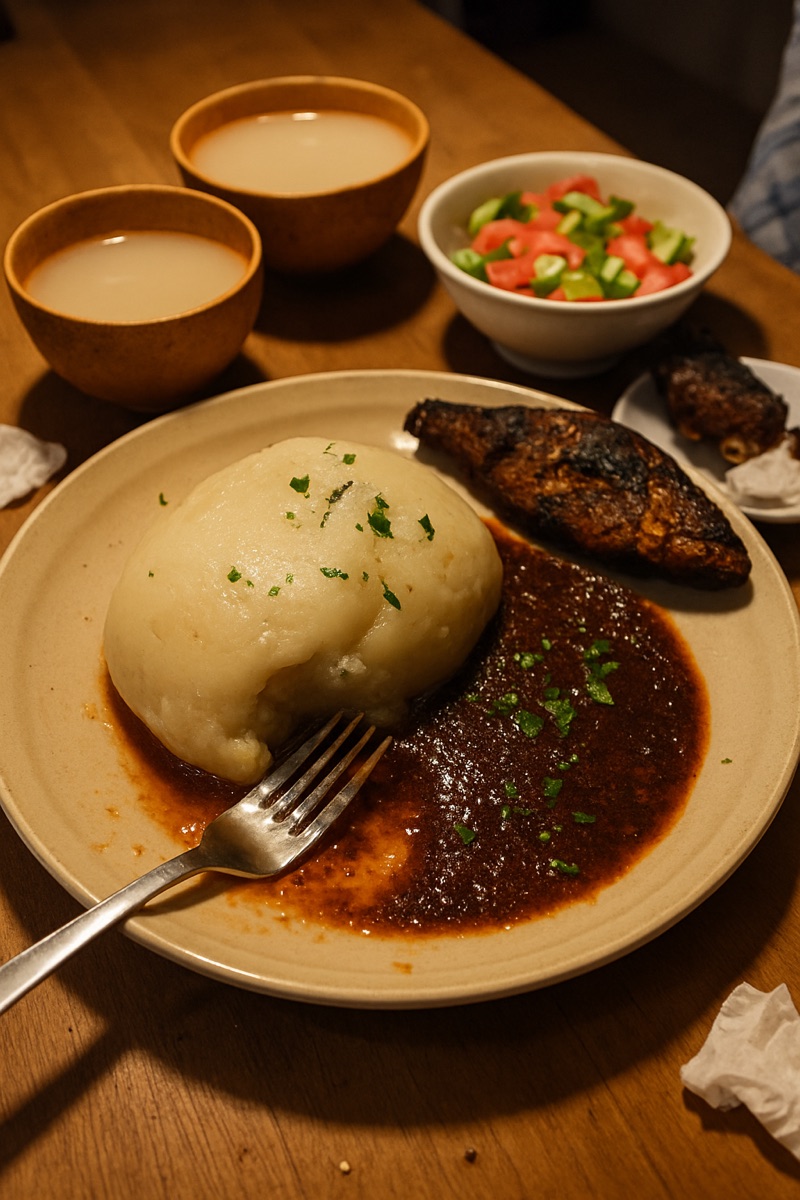 Tuwon shinkafa🇳🇪 Niger · 50 minutes
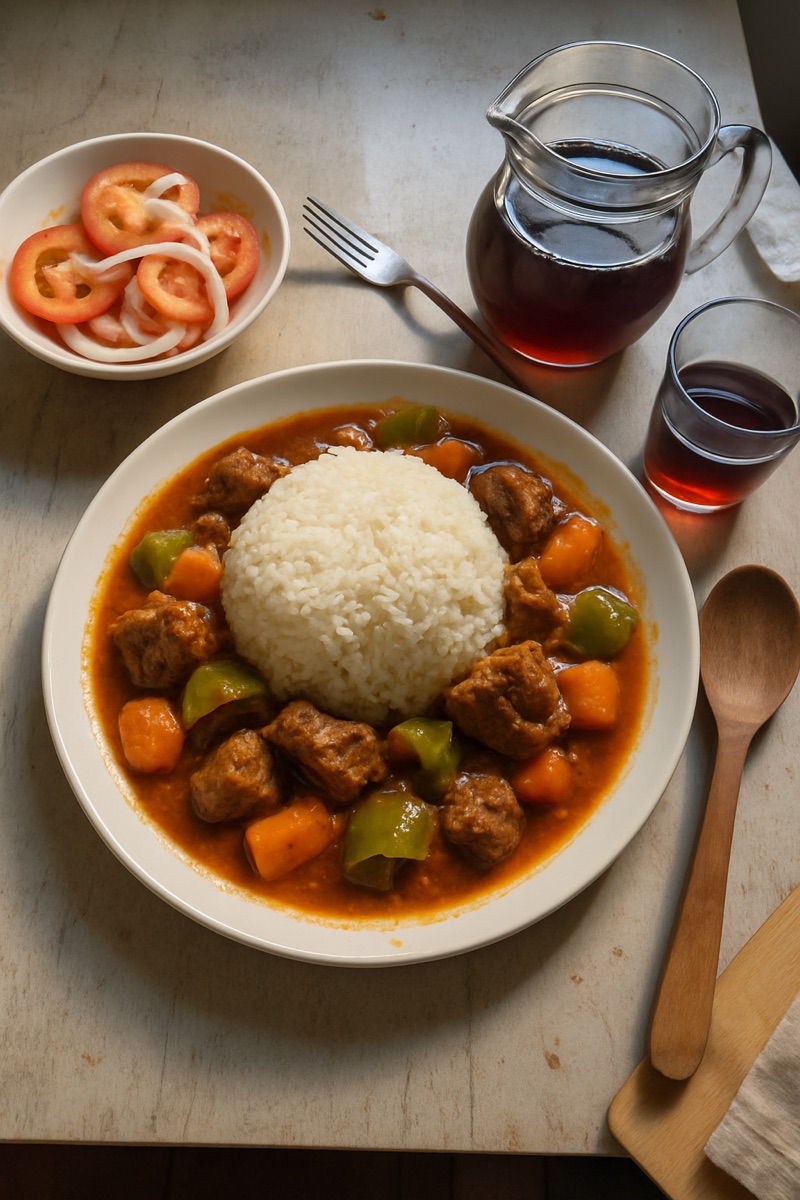 Riz au gras🇳🇪 Niger · 1 hour and 40 minutes
Questions people ask
What is the most popular food in Niger?
Rice or millet with a sauce or stew. Rice is the most common starch, eaten as plain rice, riz au gras or tuwon shinkafa, and dambou, a moringa couscous, is the national dish for celebrations.
What do people in Niger eat for breakfast?
In Hausa households, koko, a millet or maize porridge, with kosai bean fritters or masa, fermented rice cakes. Porridge and beignets are also common snacks through the day.
Is Nigerien food spicy?
Hot spices are used, sometimes to marinate meat, and chilli goes into dambou and fura. Masa is often eaten with yaji, a spice mix, and kilishi turns red when coated in a paste with red chilli.
What do people drink in Niger?
Tea is the everyday drink. Fura da nono, millet balls mixed with fermented milk, is a traditional drink of the Sahel, and zobo, an hibiscus drink, is part of Hausa cooking.
Is Nigerien food the same as Nigerian food?
They overlap. The Hausa of southern Niger and northern Nigeria share tuwo, miyan kuka, kosai and kilishi, but Niger also has Zarma and Songhay dishes such as dambou, and its own national dish.
Keep reading
- What is the national dish of Niger?
- Traditional food of Benin: 13 dishes to know
- Traditional food of Burkina Faso: 11 dishes to know
- Traditional food of Cabo Verde: 13 dishes to know
- Traditional food of Côte d'Ivoire: 12 dishes to know
- Traditional food of The Gambia: 13 dishes to know