 COPPER
Traditional food of Nigeria: 13 dishes to know
Nigerian food is built on yam, cassava, rice, beans and corn, cooked into thick soups and stews with palm oil or groundnut oil, crayfish and hot peppers. Starches are pounded into smooth "swallows" eaten by hand with soup. The most emblematic dishes are jollof rice, egusi soup with pounded yam, suya and moin moin.
What Nigerian food is built on
Nigerian cooking comes from 371 ethnic groups, each with its own methods, ingredients and ceremonies, so there is no single Nigerian cuisine. What they share is a base of crops native to the region, such as yam, African rice, black-eyed peas, millet, sorghum, okra, egusi melon seeds and palm oil, plus cassava and corn brought by trade. Nigeria, with Côte d'Ivoire, Ghana, Togo, Benin and Cameroon, produces 97% of Africa's yams.
A typical meal pairs a filling starch with a soup or stew and a protein: beef, goat, chicken or fish, often both fresh and dried. Many starches are served as a "swallow": a smooth dough such as pounded yam, eba (from cassava garri), amala or fufu, pinched off with the fingers and dipped in soup. Like other West African food, Nigerian food is savoury and spicy, with scotch bonnet peppers, ground crayfish and fermented locust beans giving it depth.
Rice dishes
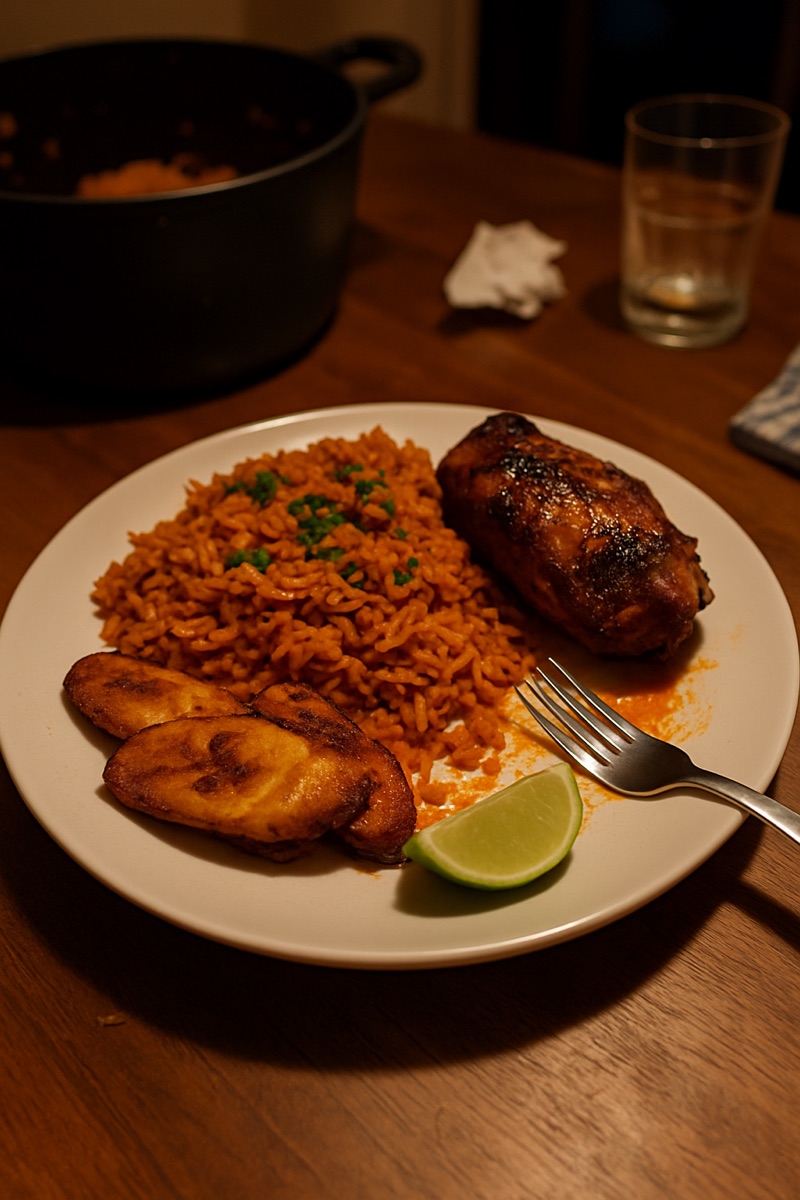
- Jollof rice — Parboiled long-grain rice cooked in a fried stew of tomato, red peppers, scotch bonnet and onion until it absorbs the stock. It is the dish of parties and celebrations, served with fried chicken and fried plantain, and the subject of a long friendly rivalry with Ghana.
- Ofada rice and ayamase — Ofada is an unpolished local rice grown in Ogun State, in the southwest, often a blend including African rice. It is eaten with ayamase, a stew of palm oil, unripe green peppers, beef, tripe, cow skin and locust beans, traditionally served in broad ewe leaves.
- Tuwo shinkafa — A thick, soft pudding of sticky local rice, eaten as a swallow in the north. It comes with soups such as miyan kuka, made from powdered baobab leaves and dried okra, or miyan taushe, a pumpkin stew. Versions made with maize and sorghum are called tuwo masara and tuwo dawa.
Soups, stews and swallows
- Pounded yam — Boiled white yam pounded in a mortar with a pestle until completely smooth, heavier than mashed potato. It is called iyán in Yoruba, sakwara in Hausa and utara-ji in Igbo, and is eaten by hand with egusi, efo riro, okra or ogbono soup.
- Egusi soup — A thick soup of ground melon seeds with leafy greens, palm oil, meat, dried fish and crayfish. Served with pounded yam, eba, fufu or amala, it makes one of the pairings most often named as Nigeria's national dish.
- Efo riro — A Yoruba stew of leafy greens, usually celosia or amaranth, cooked with peppers, onions, palm oil, meat and fish. A staple of the southwest, it is cooked at home and for traditional ceremonies and eaten with a swallow.
- Banga soup — A soup made from the juice of palm nuts, with stewed meat and smoked dried fish. It comes from the Niger Delta peoples, the Itsekiri, Isoko, Ijaw and Urhobo, and is eaten with eba, pounded yam or semolina, or as banga rice.
- Pepper soup — A light, spicy broth of meat or fish with chili, scent leaves and calabash nutmeg. Unlike most Nigerian soups it is eaten on its own, not with a swallow, as a starter at official gatherings or in the evening at bars, often with a cold beer.
Grills, snacks and street food
The common drinks are zobo, a cold infusion of hibiscus flowers; kunu, made from millet, sorghum or maize; fura, pounded millet or sorghum with a little milk, common in the north; and palm wine.
- Suya — Thin strips of beef coated in yaji, a spice mix of ground peanut cake, ginger and chili, threaded on skewers and grilled over an open flame. It comes from the Hausa north, is sold mostly in the evening, and is now found all over the country, served with raw onion and tomato.
- Nkwobi — Cooked cow feet in a thick, spicy palm oil sauce thickened with potash and flavoured with calabash nutmeg and utazi leaves. It is an Igbo dish from the southeast, found more often in restaurants and at social events than at home.
- Akara — Fritters of peeled black-eyed peas ground with pepper and onion, beaten to make them light and deep-fried in small balls. A Yoruba dish, it is often eaten for breakfast with ogi or eko, a corn pudding.
- Moin moin — A steamed pudding of peeled black-eyed peas blended with onions, red peppers, crayfish and oil, often enriched with egg or fish. Its pyramid or cylinder shape comes from the leaf or mould it is steamed in, and it is eaten across Yorubaland and beyond.
- Puff-puff — Balls of sweet yeast dough deep-fried until golden, sometimes rolled in sugar. The name comes from Nigeria, and the snack is sold across West Africa under other names. Chin chin, crunchy fried strips of flour, egg and butter dough, is another common snack.
Regional Nigeria
The north, home of the Hausa and Fulani, cooks with grains: tuwo of rice, maize or sorghum, masa rice cakes, millet drinks, and meat such as suya and kilishi, a sun-dried spiced jerky from Hausaland. The southwest, Yorubaland, is the land of amala and ewedu, gbegiri bean soup, efo riro, akara, moin moin and ofada rice. The southeast, among the Igbo, has ofe onugbu, ofe oha, nkwobi and okpa. In the south-south, the Efik and Ibibio make afang and edikang ikong soups, and the Niger Delta peoples make banga.
Cook Nigerian food at home
Jollof rice is the dish most often called the national dish of Nigeria, though pounded yam with egusi soup, tuwo shinkafa and suya are also named. Copper has full recipes for jollof rice, egusi soup and suya, with ingredients and step-by-step methods, on our page about the food of Nigeria, alongside other West African recipes.
Jollof, fufu, palm nut soup and pepper soup are shared with Nigeria's neighbours. Compare with the traditional food of Ghana and the traditional food of Cameroon.
The recipes
- Jollof rice🇳🇬 Nigeria · 1 hour and 50 minutes
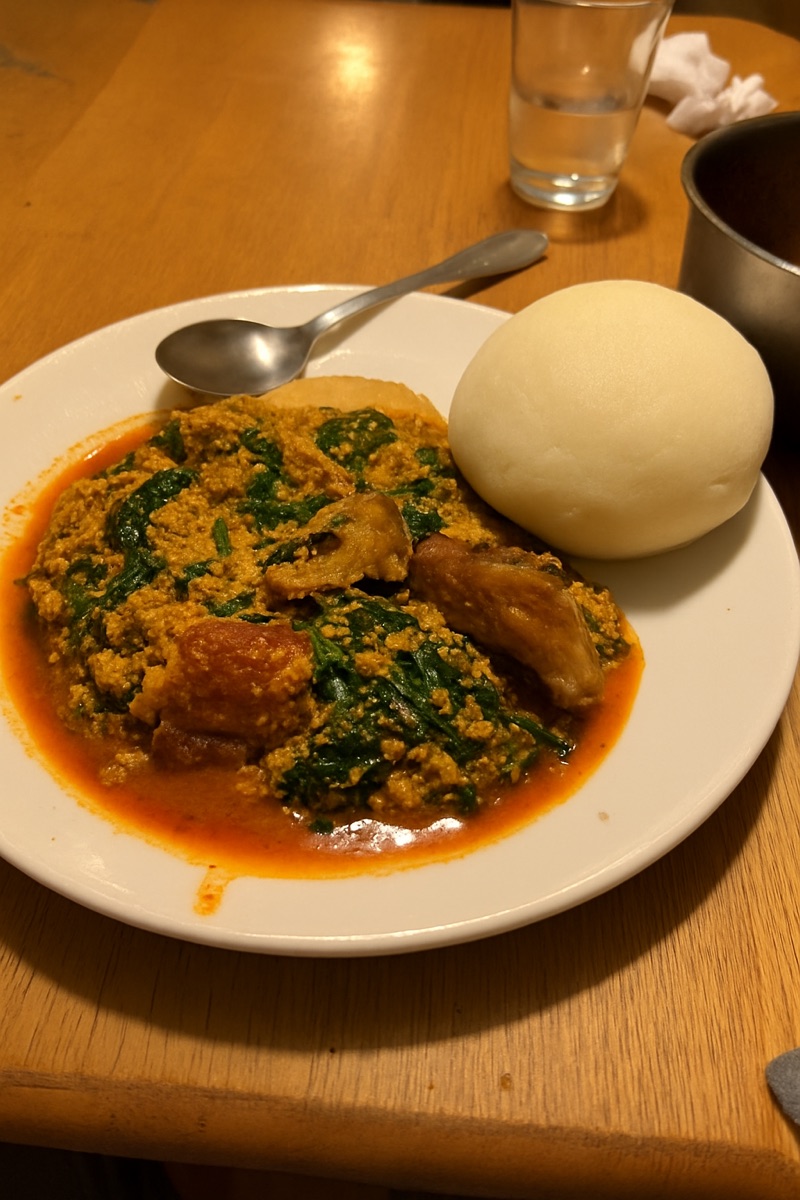 Egusi soup🇳🇬 Nigeria · 1 hour and 30 minutes
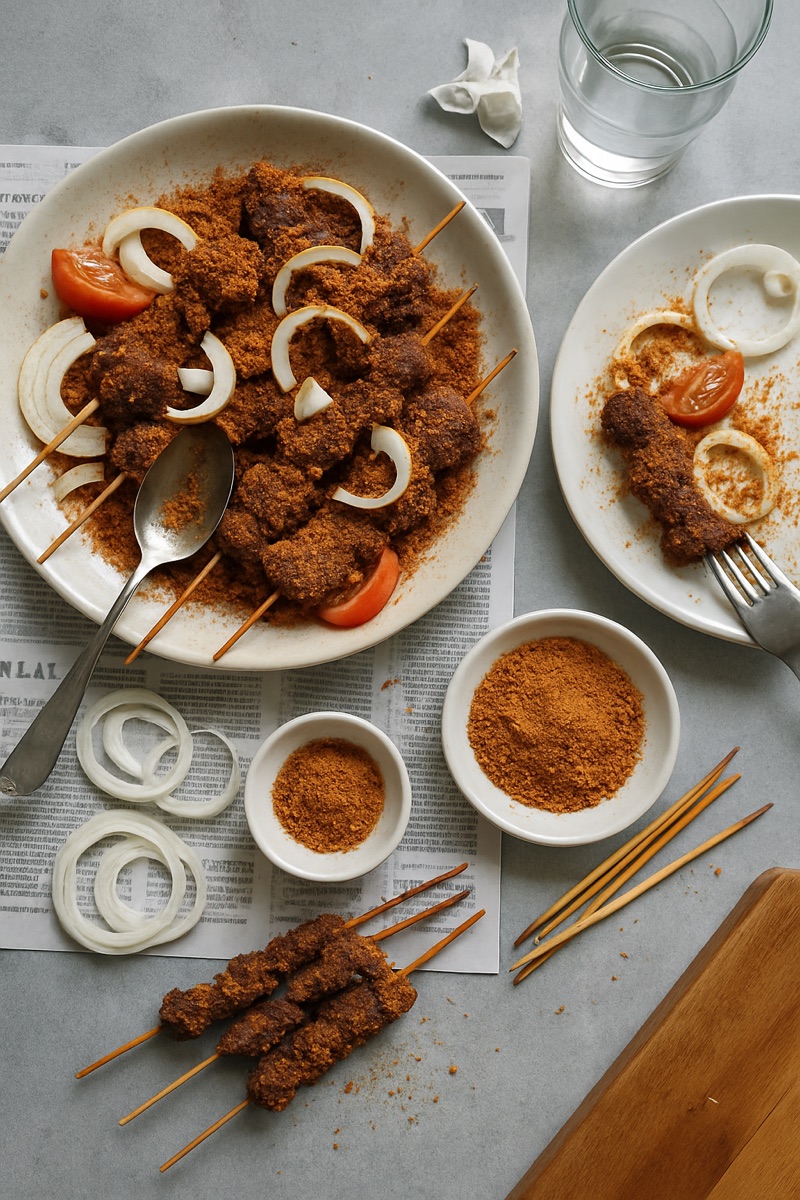 Suya🇳🇬 Nigeria · 1 hour and 40 minutes
Questions people ask
What is the most popular food in Nigeria?
Jollof rice is the dish most often named, especially at parties. Egusi soup with pounded yam and suya are close behind, and each region has its own favourites.
What do Nigerians eat for breakfast?
Common breakfasts are akara bean fritters with ogi or eko corn pudding, bread and tea, boiled or fried yam with stew or eggs, okpa in the southeast, and masa rice cakes in the north.
Is Nigerian food spicy?
Yes. Nigerian food is savoury and spicy, with hot peppers such as scotch bonnet in most stews and soups. Pepper soup in particular is very spicy.
What is a swallow in Nigerian food?
A swallow is a smooth, dense starch dough, such as pounded yam, eba, amala or fufu, pinched off with the fingers, dipped into soup and swallowed rather than chewed.
What do Nigerians drink with food?
Common traditional drinks are zobo, a cold hibiscus infusion, kunu and fura, made from millet or sorghum, and palm wine. Pepper soup is often eaten with a cold beer.
Keep reading
- What is the national dish of Nigeria?
- Traditional food of Benin: 13 dishes to know
- Traditional food of Burkina Faso: 11 dishes to know
- Traditional food of Cabo Verde: 13 dishes to know
- Traditional food of Côte d'Ivoire: 12 dishes to know
- Traditional food of The Gambia: 13 dishes to know