 COPPER
Traditional food of Cameroon: 13 dishes to know
Cameroonian food is built on cassava, plantain, cocoyam, maize, peanuts and red palm oil, with leafy greens cooked down into thick stews and many dishes steamed in banana leaves. Each region has its own specialities, but a few are known nationwide: ndolé, bitterleaf in peanut sauce, poulet DG, eru with water fufu, and achu with its yellow soup.
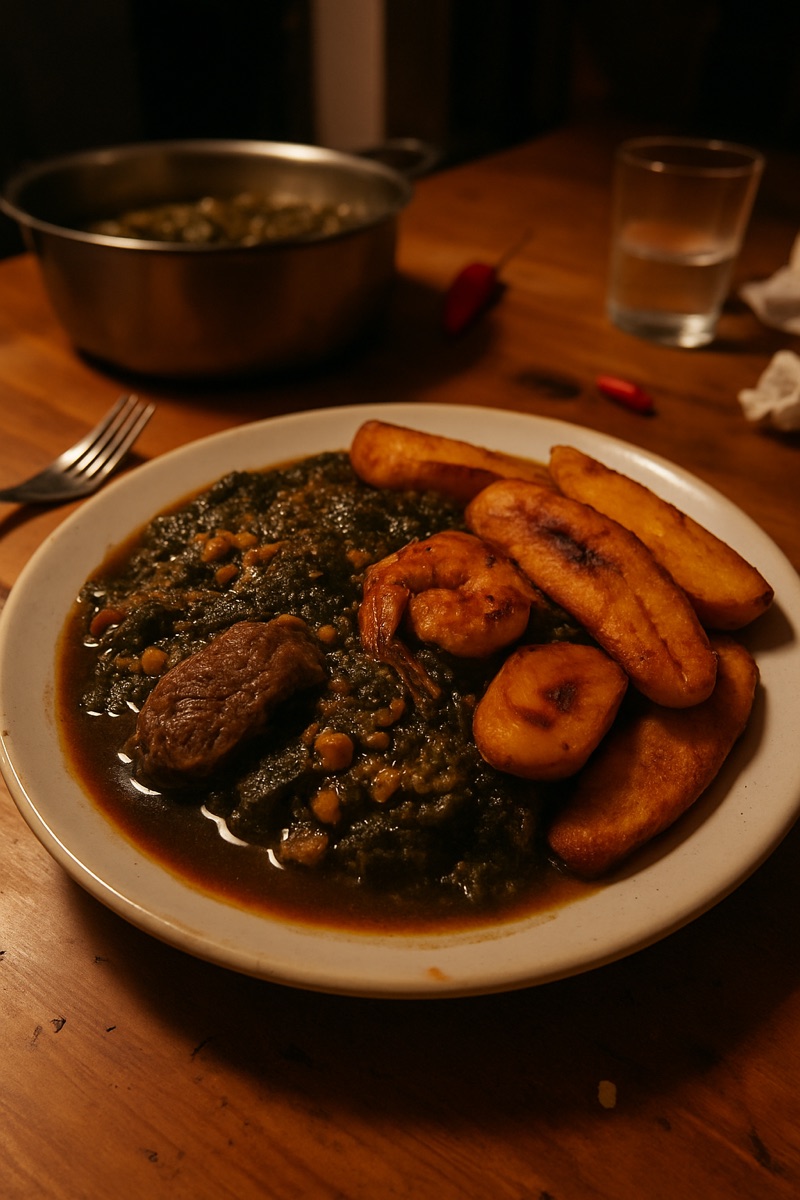
What Cameroonian food is built on
Cameroon sits where West, Central and North Africa meet, and its cooking reflects it: Bantu, Bamileke, Bamoun and Shuwa Arab traditions, plus German, French and British colonial influence. French Wikipedia goes as far as saying that the regional traditions are so many that it is hard to speak of a single Cameroonian cuisine. A handful of regional dishes, though, have become known across the whole country and abroad.
The base is vegetable: cassava, plantain, cocoyam (macabo and taro), yam, sweet potato, maize, millet and peanuts, with tropical fruit, meat, smoked or fresh fish and shrimp. Red palm oil, fresh peanut paste and ground crayfish carry the sauces, and the spice shelf is local: Penja white pepper, njangsa (djansan) seeds, pèbè, the garlic-scented country onion and the mbongo blend of ten spices. Most stews are eaten with a starch: boiled or fried plantain, fufu, or miondo and bobolo, sticks of fermented cassava steamed in leaves.
Leaf stews and sauces
- Ndolé — Bitterleaf (Vernonia) boiled in several changes of salted water to tame its bitterness, then stewed in a thick sauce of fresh ground peanuts with beef, smoked fish or shrimp. It was born in Douala, in the Littoral region, and is served with miondo, cassava or ripe plantains, boiled or fried.
- Eru — A dish of the Manyu people of the South-West region: finely shredded leaves of eru (Gnetum africanum) softened against waterleaf, then cooked with red palm oil, ground crayfish, smoked fish, beef and cow skin (kanda). It is eaten with water fufu, a soft cassava dough, or with garri.
- Okok — The same Gnetum leaf as eru, cooked the Beti way in the Centre and South: chopped fine and simmered in palm nut juice with peanut paste. The Eton add plenty of peanuts and sugar, while the Ewondo leave the sugar out and may add crayfish. It is served with cassava, bobolo or taro.
- Mbongo tchobi — The black stew of the Bassa people of the Centre and Littoral. Its colour comes from a blend of spices that can include garlic tree bark, four-corner spice (Tetrapleura), calabash nutmeg, country onions and njangsa seeds; *tchobi* means fish, the usual protein. It is eaten with steamed macabo, cassava or plantain.
- Achu and yellow soup — A dish of the North-West region, called taro in the West: cocoyams are boiled, peeled and pounded into a smooth dough, sometimes with unripe bananas. The soup is palm oil mixed with *nikki* (limestone or potash water), which turns the oil yellow, plus spices and meat stock, served with beef, cow skin or tripe. It is eaten with the fingers and is a centrepiece of family events and cultural celebrations.
Chicken, plantain and goat
- Poulet DG — Chicken browned and simmered in tomato sauce with carrots, green beans and peppers, with ripe plantains deep-fried on their own and folded in at the very end so they stay whole. DG stands for *directeur général*, a 1980s pun on a dish first reserved for people of standing. Along with ndolé, it is the Cameroonian dish most widely known at home and abroad.
- Kondre — A stew of unripe plantain and goat meat from the Bamileke of the West region, particularly Bafang, also made with beef or pork. It is seasoned with white and black pepper, pèbè (Cameroonian nutmeg), garlic, thyme and bay leaves, and French Wikipedia notes that it is known as the royal dish.
Steamed in leaves
- Koki — A golden cake of ground black-eyed peas (cowpeas), red palm oil and chili, wrapped in banana leaves and steamed, sometimes filled with taro or macabo leaves. It is claimed by peoples of the Littoral, South-West and West, starting with the Mbo of the Moungo, and is traditionally eaten with plantains. In 2021 it was listed among the 111 elements of Cameroon's national intangible cultural heritage.
- Ekwang — Freshly grated cocoyam rolled into small parcels in cocoyam leaves, then cooked with palm oil, crayfish, fresh or smoked fish and meat. It is native to the Bakweri, Bafaw and Oroko peoples of the South-West, and is also eaten across the border in south-eastern Nigeria.
- Kwacoco and banga soup — Kwacoco is pureed cocoyam wrapped and steamed in banana leaves; banga is a soup made from fresh palm nuts. Served with smoked fish, the pair is the traditional meal of the Bakweri (Kwe) people of the South-West, and a staple of rural communities.
Grills and street food
- Soya — Skewers or small pieces of beef, chicken or goat grilled on the barbecue. It is one of the classics French Wikipedia lists for the whole country, alongside poulet DG and peanut sauce.
- Poisson braisé — Fish, typically mackerel, sea bass or sole, rubbed with condiments and grilled over coals on the barbecue. With soya and poulet DG, it is one of the everyday classics found all over the country, served with plantain or another starch.
- Beignets and beans — Balls of dough made with flour, maize, cassava or banana, deep-fried and eaten with fried red beans or with a rice or maize porridge. The same fried dough is called puff-puff in Nigeria; in Cameroon it is simply beignet, and it often goes alongside savoury dishes.
Regional Cameroon
The Littoral, around Douala, is ndolé country, and shares koki with the West. The Centre and South, home of the Beti and Bassa, cook okok, mbongo tchobi, sanga (greens with palm nut juice and maize) and ndomba, meat or fish steamed in banana leaves, eaten with bobolo. The West has kondre, nkui, a slippery Bamileke sauce, and the Bamoun njapche made from nightshade leaves. The North-West cooks achu and kati kati chicken, and the South-West eru, ekwang and kwacoco. In the far north, the Adamawa, North and Far North regions eat couscous of maize, millet or sorghum with okra or baobab-leaf sauce.
Cook Cameroonian food at home
Ndolé is the dish most often given as the national dish of Cameroon, at least around Douala. Copper has full recipes for ndolé, poulet DG and eru, with ingredients and step-by-step methods, on our page about the food of Cameroon, next to other Central African recipes.
Bitterleaf, egusi, palm nut soup and ekwang cross the border with Nigeria, and Gnetum leaves are eaten all over Central Africa. Compare with the traditional food of Nigeria and the traditional food of Gabon.
The recipes
- Ndole🇨🇲 Cameroon · 2 hours and 10 minutes
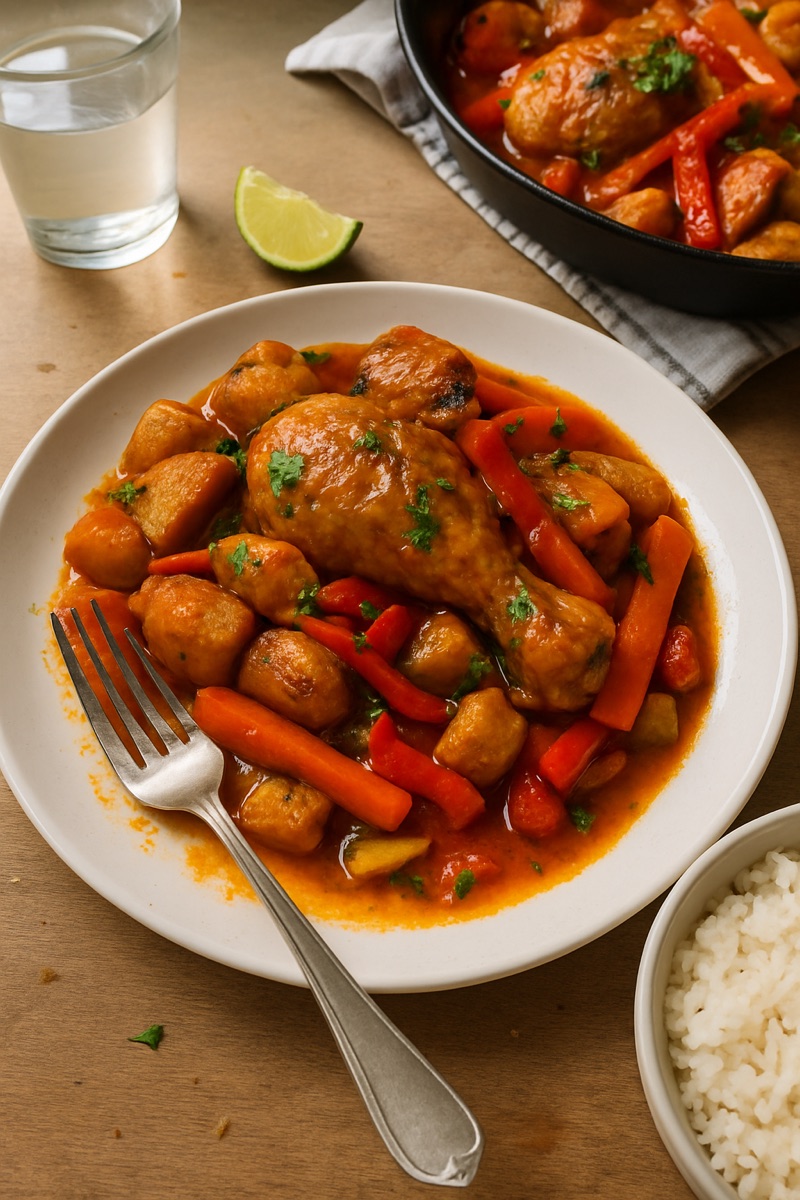 Poulet dg🇨🇲 Cameroon · 1 hour and 50 minutes
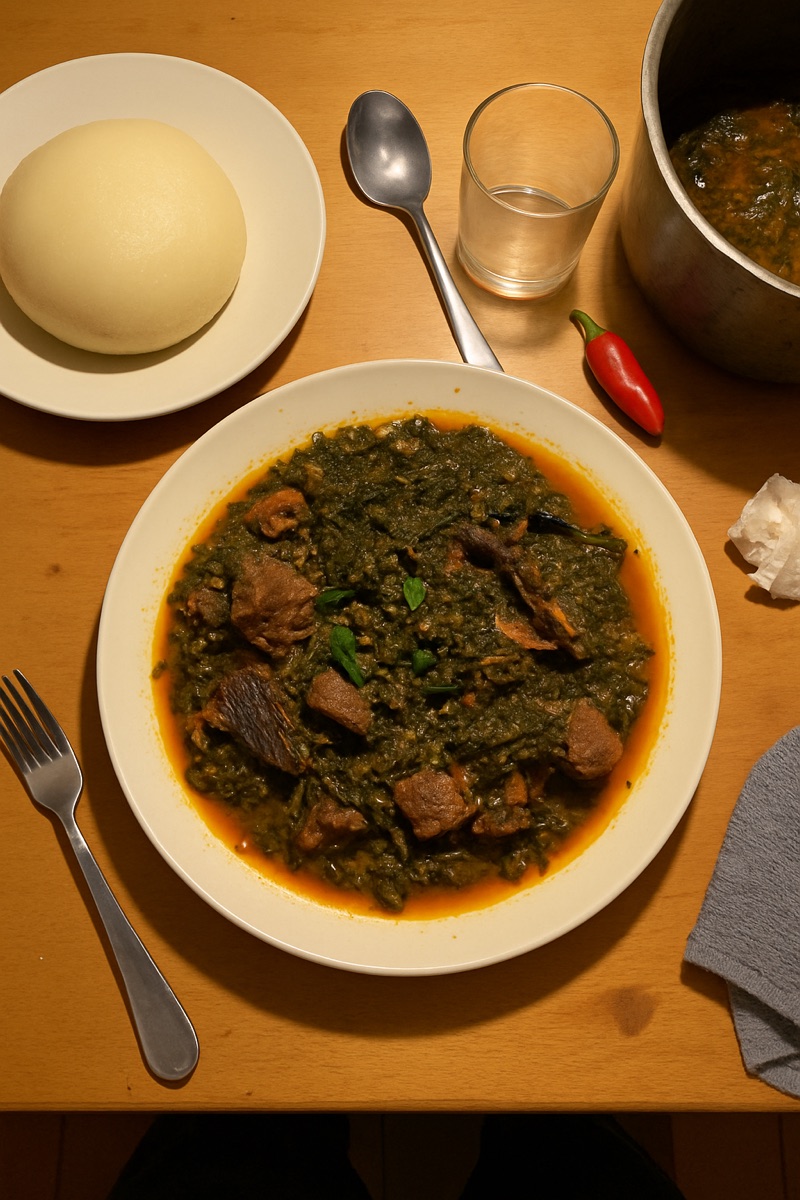 Eru🇨🇲 Cameroon · 2 hours and 30 minutes
Questions people ask
What is the most popular food in Cameroon?
Ndolé and poulet DG are the two dishes known across the whole country and abroad. Eru, achu, koki and grilled fish or soya are also widely eaten, but many dishes remain tied to one region.
What is the national dish of Cameroon?
Ndolé, a stew of bitterleaf greens in fresh peanut sauce with beef, fish or shrimp, is widely regarded as the national dish. It has no official status and comes from Douala, in the Littoral region.
Is Cameroonian food spicy?
Often, yes. Hot pepper is a staple ingredient and sauces lean on local spices such as Penja white pepper, njangsa and pèbè. Mbongo tchobi and ndolé are seasoned stews, but the heat varies from cook to cook.
Is eru the same as okok?
They use the same leaf, Gnetum africanum, but not the same recipe. Eru, from the South-West, is cooked with waterleaf, palm oil and crayfish; okok, from the Centre and South, is cooked in palm nut juice with peanut paste and sometimes sugar.
What are miondo and bobolo?
Both are sticks of fermented cassava paste wrapped in leaves and steamed. Bobolo is the Beti version; miondo is the smaller Douala version. They are the classic starch with ndolé and other sauces.
Why is achu soup yellow?
The soup is made with palm oil and nikki, a limestone or potash water. Stirred together, the alkaline water turns the red palm oil yellow.
Keep reading
- What is the national dish of Cameroon?
- Traditional food of the Central African Republic: 12 dishes to know
- Traditional food of Chad: 12 dishes to know
- Traditional food of the DR Congo: 13 dishes to know
- Traditional food of Congo: 10 dishes to know
- Traditional food of Equatorial Guinea: 12 dishes to know