 COPPER
Traditional food of Gabon: 12 dishes to know
Gabonese food is built on cassava, plantain, palm nuts, African eggplant, chilli and fish from the Atlantic and the rivers, with bushmeat in the forest. A handful of dishes are eaten all over the country: poulet nyembwe, chicken in palm nut sauce, cassava leaves, nkumu and sauces made with odika, the wild mango seed paste locals call indigenous chocolate.
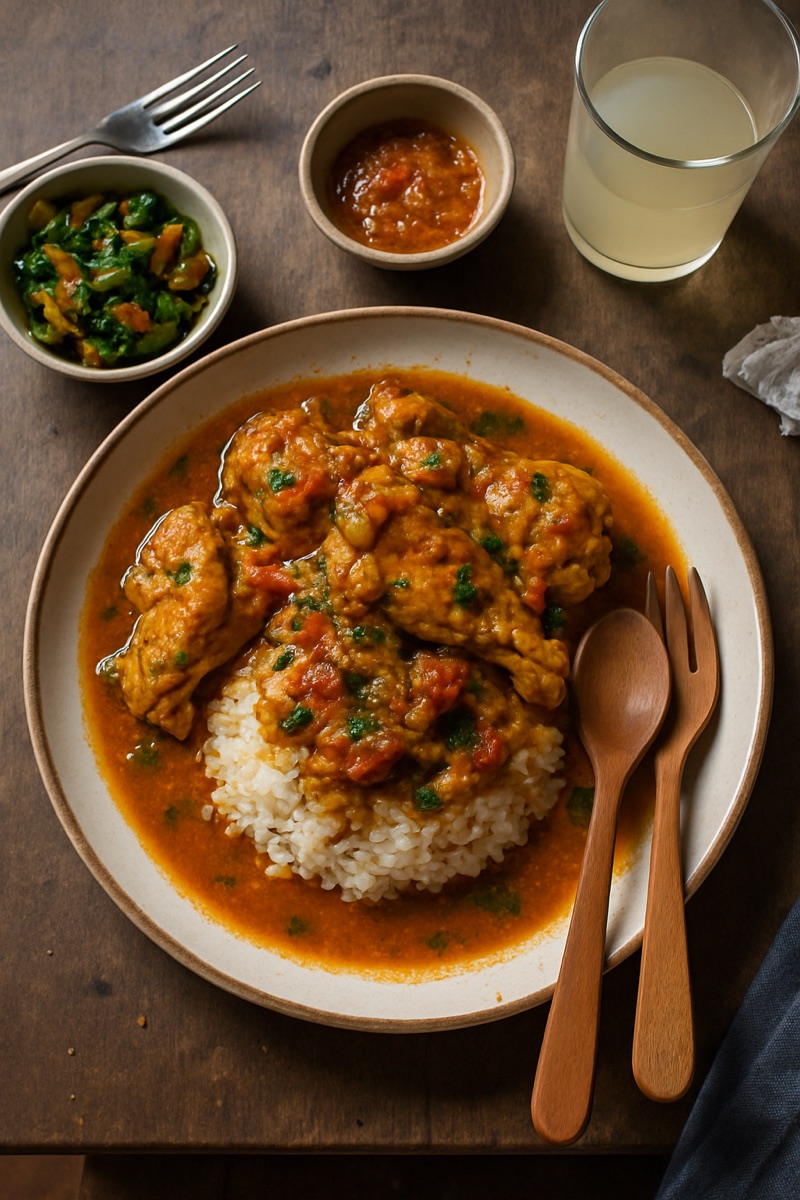
What Gabonese food is built on
Gabon is home to many peoples, Fang, Myene, Punu, Nzebi, Teke, Kota and others, each with its own food habits. French Wikipedia notes that migration and mixing have pushed a few dishes into national favourites, eaten all over the country: cassava leaves, nkumu, odika, the plantain boulette and nyembwe.
The base comes from the land, plantain, cassava and its leaves, African eggplant and chilli, and from the sea, with fish and shellfish of almost every kind. Bushmeat is popular, from antelope and porcupine to pangolin and crocodile, alongside chicken and guinea fowl. Local seasonings include *ofula*, an indigenous salt, *mufire*, Gabon's wild garlic, *andou*, a chilli powder, and Gabon nutmeg. In the larger cities, French dishes are easy to find.
The Atlantic coast has always shaped the menu. English Wikipedia notes that the Mpongwe and Séké traditionally caught and ate sardines, while the Baka preferred fish from the deep ocean. Bantu-speaking groups later brought New World crops such as cassava and papaya, which are now part of everyday cooking along with bananas, mangoes, guavas, pineapples, coconuts, avocados and peanuts.
Palm nut, odika and leaf sauces
- Poulet nyembwe — Chicken, usually smoked, simmered in the thick sauce pressed from boiled palm nuts. The dish comes from the Myene people, whose word *nyembwe* means palm oil, and French Wikipedia calls it the national dish *par excellence*. It is cooked without tomato. *Gabon* magazine already called it the national dish of Gabon in 2007, and it is served with foufou, bâton de manioc, plantain or rice.
- Odika sauce — Odika is a block of wild mango seeds roasted, pounded while warm and left to set; it is grated over meat or fish to make what Gabonese call a chocolate sauce, though it contains no cocoa. Most peoples use it, the Myene above all: porcupine in odika (*ngomba g'odika*) is a speciality of the Ogooué-Maritime.
- Cassava leaves (mayagha) — Pounded very fine, boiled and usually cooked with smoked fish. Almost everyone eats them, but not the same way: the Fang add sugar with the palm oil, the Bakota steam them in banana leaves, and the Bapunu cook them in palm or peanut oil with smoked fish or meat.
- Nkumu — The leaf of Gnetum africanum, a wild forest vine that is gathered rather than grown, cut into very thin strips. It belongs to the ancestral food of the Teke, Obamba and Ndumu of the Haut-Ogooué, is cooked in several ways (*nkumu ofula*, *nkumu andza*) and is most often eaten with bâton de manioc.
From the sea and the lagoons
- Soupe de poisson — A fish bouillon in which the fish makes its own broth, cooked with bitter white African eggplants, okra and whole chillies and very little water. Fish is the first protein along Gabon's coast.
- Mambo — Stuffed crabs, a speciality of the Mpongwe and Myene of the Estuaire province around Libreville. The same coast cooks *missénénés*, razor clams.
Cassava and plantain
- Foufou — Cassava pounded into a smooth, elastic paste; in our recipe it is steamed with green plantain first, then pounded in a wooden mortar. It is always eaten with a sauce, never on its own.
- Bâton de manioc — Fermented cassava paste wrapped in leaves and cooked into a stick, the classic partner for nkumu and leaf sauces. Each people has its own version: *agnizock* among the Fang, *oghuma* among the Myene, *pita* among the Nzebi, as well as Teke and Obamba styles.
- Boulette (ditouka) — A large ball of pounded plantain, cut into pieces at the table. It belongs above all to the Bapunu and is also popular with the Nzebi.
Snacks, sweets and street food
Sweet things come from every people: *mbwét*, a Fang maize purée, *mvali* from yam, *malobi*, a Bapunu cassava purée, grilled coconut balls, plantain and yam chips, and *nkima ngowè*, Myene biscuits of banana, peanut and coconut. To drink, Gabonese have Régab, the national beer, *tutu* or palm wine, *malamba*, fermented sugar cane wine, bissap and fresh ginger and pineapple juices.
- Atanga — The fruit of Dacryodes edulis, sometimes called bush butter, firm and oily. It is boiled and often spread on bread, sautéed in the Ogooué-Ivindo, or cooked in parcels (*oyaba*) in the Haut-Ogooué.
- Beignets — Deep-fried dough, very common across the country. French Wikipedia lists flour and banana beignets, *mekala me fon* made with maize and *abendjè*, the cassava beignets of the Myene.
- Brochettes — Grilled meat skewers, one of the common foods of Gabon. In the street, vendors also grill skewers of palm grubs.
Gabon province by province
Each of the nine provinces has its own specialities. In the Estuaire, the Mpongwe and Myene cook mambo crabs and razor clams. The Haut-Ogooué has nkumu, wild boar sautéed in its juice or in odika, and caterpillars in odika. In the Moyen-Ogooué, the Galoa cook *nkondo*, a broth of Ogooué carp, and fish parcels in odika. The Ogooué-Maritime, home of the Nkomi and Orungu, gave the country poulet nyembwe and cooks porcupine in odika and fresh or smoked sardines. The Nyanga has salt fish with eggplant and smoked porcupine with pumpkin seeds; the Ogooué-Ivindo has *soukouté*, a Kota parcel of pounded cassava leaves, fresh fish and raw crushed peanuts. In the Woleu-Ntem, Fang country, hen is cooked in peanut sauce and cassava leaves with peanuts, palm nuts and shrimp.
Cook Gabonese food at home
Our article on the national dish of Gabon explains poulet nyembwe in detail. Copper has full recipes for nyembwe, soupe de poisson and foufou, with ingredients and step-by-step methods, on our page about the food of Gabon, next to other Central African recipes.
Gnetum leaves, bâton de manioc and odika cross Gabon's borders. Compare with the traditional food of Cameroon and the traditional food of Equatorial Guinea, where odika is called modica.
The recipes
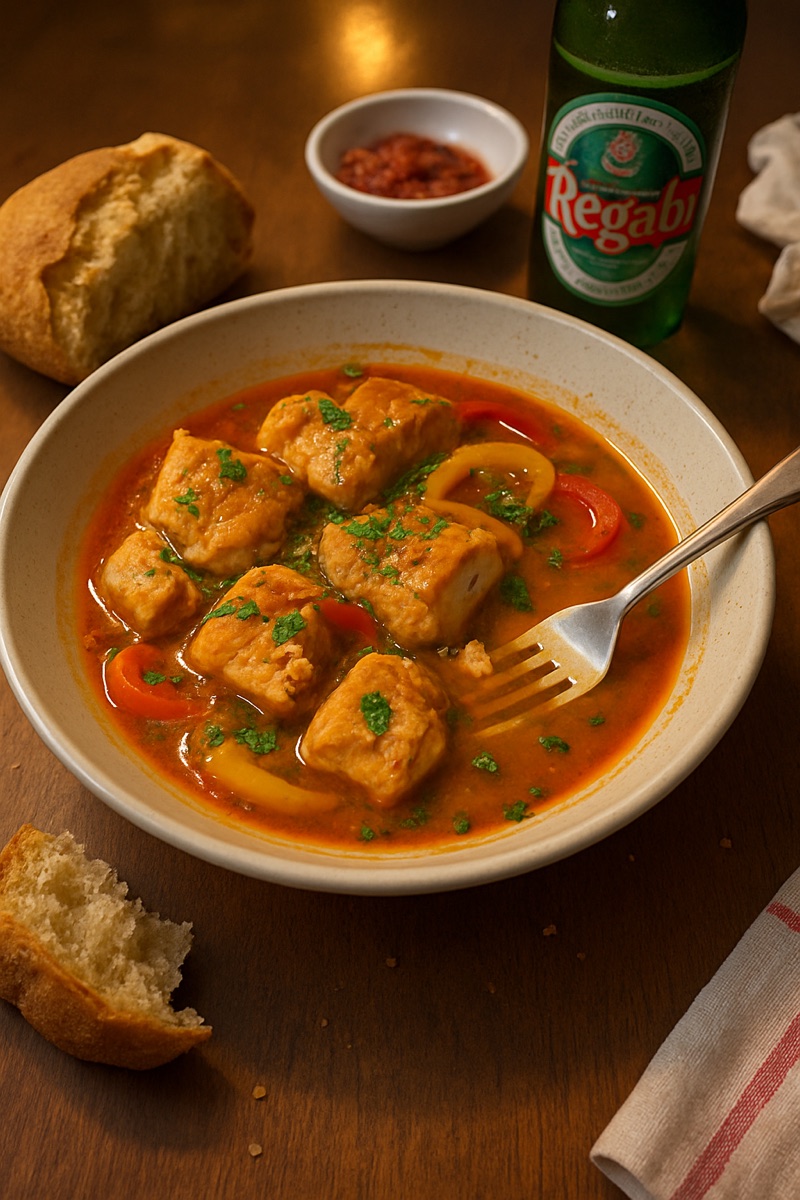 Soupe de poisson
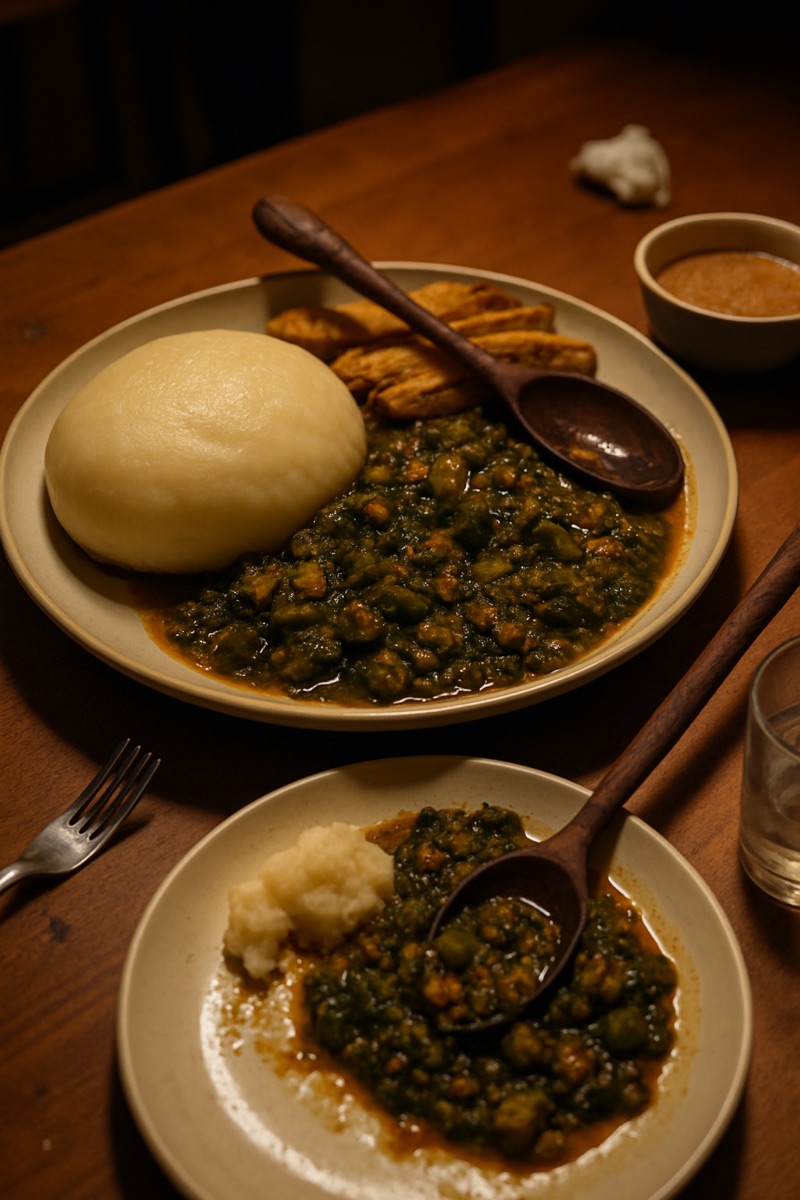 Fufu
FufuQuestions people ask
What is the national dish of Gabon?
Poulet nyembwe: chicken, usually smoked, simmered in a thick sauce of palm nut pulp. It comes from the Myene people and is eaten all over the country, although no law makes it official.
What is odika?
Odika is a block made from wild mango seeds, roasted and pounded while warm. It is grated into sauces for meat or fish and is nicknamed indigenous chocolate, though it contains no cocoa.
What is bâton de manioc?
It is fermented cassava paste wrapped in leaves and cooked into a stick, eaten with sauces like bread. Each Gabonese people has its own version, such as agnizock among the Fang.
What is nkumu?
Nkumu is the leaf of Gnetum africanum, a wild forest vine. Cut into very thin strips and cooked as a sauce, it is a traditional dish of the Teke, Obamba and Ndumu of the Haut-Ogooué, usually eaten with bâton de manioc.
Is Gabonese food spicy?
Chilli is one of the basic ingredients of Gabonese cooking, used fresh in sauces or ground into andou, a chilli powder. Soupe de poisson, for example, is cooked with whole chillies.
Keep reading
- What is the national dish of Gabon?
- Traditional food of Cameroon: 13 dishes to know
- Traditional food of the Central African Republic: 12 dishes to know
- Traditional food of Chad: 12 dishes to know
- Traditional food of the DR Congo: 13 dishes to know
- Traditional food of Congo: 10 dishes to know